Puppet MastersS


Propaganda

NYT propaganda at work: Russia wants innovation, but it's arresting its fraudsters

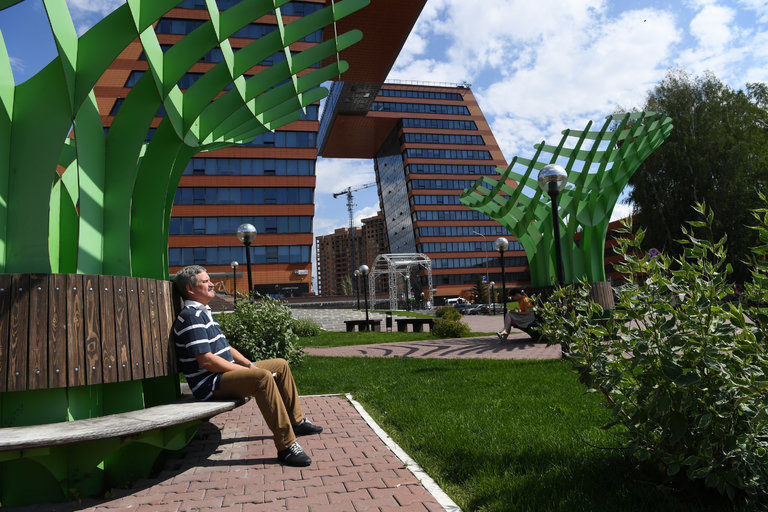
Dmitri Verkhoved
© James Hill for The New York TimesDmitri Verkhoved, a mathematician who was director of the technopark in Akademgorodok, a Russian town that is a Soviet-era sanctuary of scientific research.
Russia is BAD we are told on a daily base. It is hacking U.S. elections it is claimed, even when the evidence says it did not do so. The public is only mildly convinced by the anti-Russian propaganda campaign.

The attempt of the borg to reignite a cold war and to vilify Russia is hampered by the fact that Russia is no longer an ideological enemy of the "west". Russia is no longer communist and there are no soviets ruling it. Today's Russia is indeed capitalist and even neo-liberal.

The new way to vilify Russia must then proceed on a different route. "Yes, Russia is capitalist, but it is capitalist in a bad way." Thus we get this NYT headline and story: Russia Wants Innovation, but It's Arresting Its Innovators:
AKADEMGORODOK, Russia - Dmitri Trubitsyn is a young physicist-entrepreneur with a patriotic reputation, seen in this part of Siberia as an exemplar of the talents, dedication and enterprise that President Vladimir V. Putin has hailed as vital for Russia's future economic health.

Yet Mr. Trubitsyn faces up to eight years in jail after a recent raid on his home and office here in Akademgorodok, a Soviet-era sanctuary of scientific research that was supposed to showcase how Mr. Putin's Russia can harness its abundance of talent to create a modern economy.

A court last Thursday extended Mr. Trubitsyn's house arrest until at least October, which bars him from leaving his apartment or communicating with anyone other than his immediate family.
Noticed how bad Putin is? How very authoritarian his government thugs are? They even arrest an "entrepreneur with a patriotic reputation"!

Attention

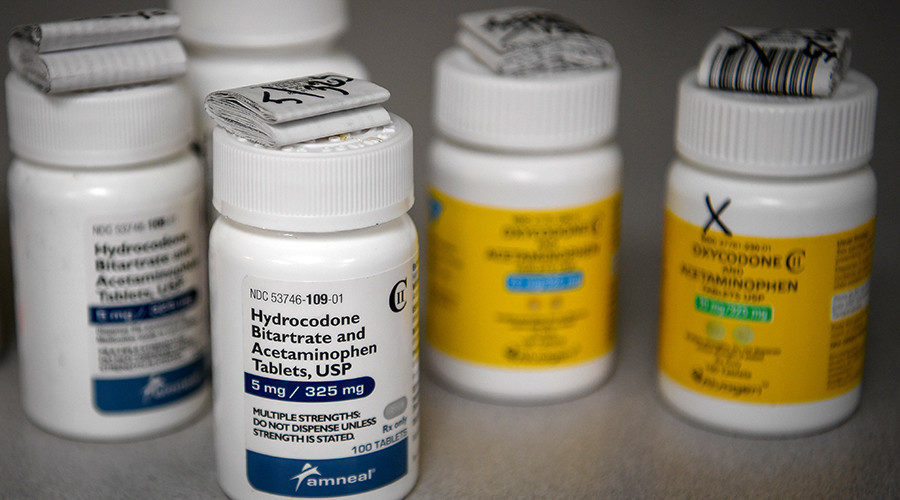
Trump declares opioid crisis a 'national emergency'

Bottles of several opioid based medication at a pharmacy in Portsmouth, Ohio
© Bryan Woolston / ReutersBottles of several opioid based medication at a pharmacy in Portsmouth, Ohio.
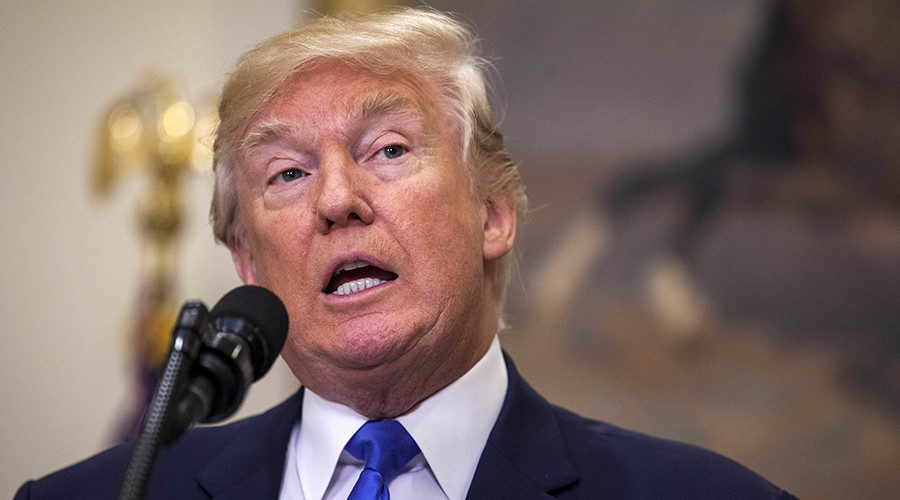
President Donald Trump has declared the opioid epidemic a national emergency and said his administration was drafting paperwork to make it official.

"The opioid crisis is an emergency, and I'm saying officially right now it is an emergency. It's a national emergency," President Trump told reporters before a security briefing on Thursday at his golf course in Bedminster, New Jersey.

"We're going to spend a lot of time, a lot of effort and a lot of money on the opioid crisis."

Trump told reporters the drug crisis afflicting the US is a "serious problem the likes of which we have never had" and said he's drawing up documents "to so attest."

Stock Down

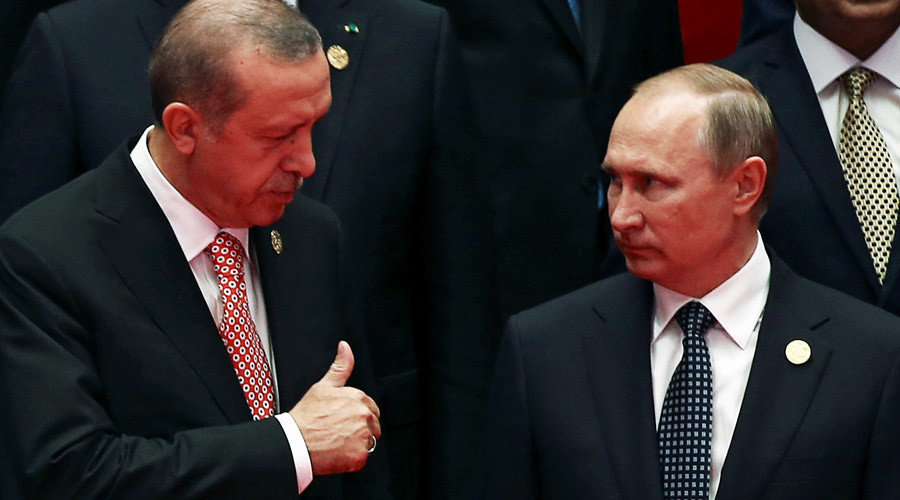
Turkey threatens Russia with countermeasures for banning vegetable imports

Russia's President Vladimir Putin interacts with Turkey's President Tayyip Erdogan Damir Sagolj/Reuters
© Damir Sagolj/ReutersRussia's President Vladimir Putin interacts with Turkey's President Tayyip Erdogan
Ankara says it could respond similarly to restrictions on imports of tomatoes and other vegetables imposed by the Russian government. Turkey has lost nearly two billion dollars due to the ban since 2015.

"We have not ensured the ease of visa procedures. As for transportation, even though Russia allows Turkish logistics companies to conduct transportation operations and drive trucks in the country, the high visa fees make it difficult to benefit from this permit," said Turkey's Economy Minister Nihat Zeybekci, citing pressure from exporters.

Russia's restrictions have triggered losses of at least $2 billion for Turkey so far, says Kirill Lanshin, an analyst at Russia's horticultural society. The expert added that 40 percent of the Turkish tomato crop was exported to Russia before the ban.

Snakes in Suits

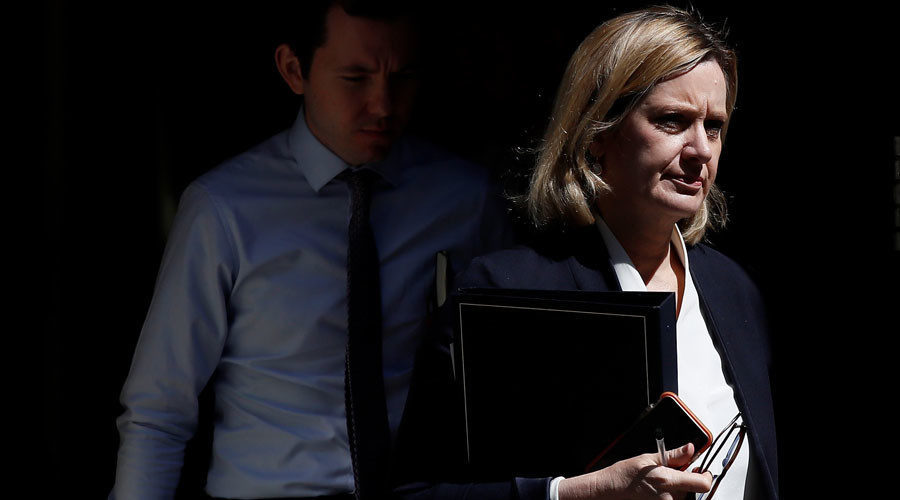
UK Home Secretary says critics are 'actively undermining' counter-terrorism efforts

Home Secretary Amber Rudd
© Stefan Wermuth / ReutersBritain’s Home Secretary Amber Rudd
Prevent, the British government's counter-radicalization strategy, should not be viewed negatively, Home Secretary Amber Rudd insists, despite accusations it is highly intrusive and disproportionately targets Muslims.

In an interview with the Rupert Murdoch-owned Sun tabloid, Rudd said the government's counter-terrorism efforts are being "actively undermined" by the critics of the Prevent program, who accuse the government of unnecessarily invasive surveillance methods.

"Stopping people committing appalling acts of terror is something we should all want. It should go without saying," said the Tory Home Secretary.

Light Sabers

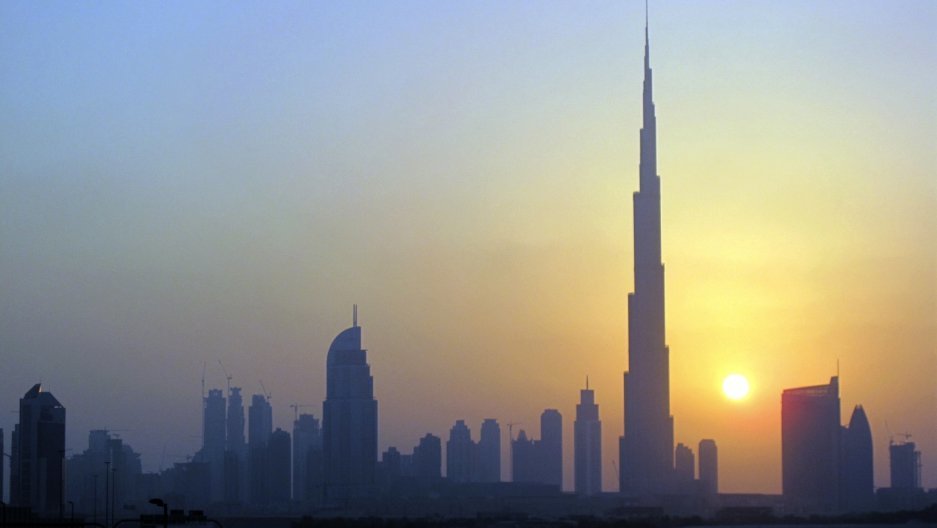
UAE reportedly 'blacklists' European banks with Qatari investments

United Arab Emirates
© Mosab OmarThe Burj Khalifa (C) skyscraper is seen as the sun sets over Dubai on Oct. 5, 2010.
The United Arab Emirates (UAE) has reportedly cut out Western banks with substantial Qatari investments from its state projects. The move is likely to tighten the embargo on Qatar, put in place by a group of Gulf countries in June.

According to UAE officials cited by the FT, major banks Credit Suisse, Deutsche Bank and Barclays won't get any significant mandates in Abu Dhabi in the near future, as large stakes in the lenders are held by Qatar's sovereign wealth fund along with members of the ruling family.

Qatar Holdings, an investment vehicle operating as a subsidiary of state-run Qatar Investment Authority, is currently Barclays' largest shareholder, with a 5.97 percent stake. The state fund is also the second biggest stockholder in Credit Suisse, with a 4.24 percent stake.

Comment: Further reading:


Map

'Huge economical boost': Syrian Army fights ISIS to break Deir ez-Zor siege

battle for Deir ez-Zor
© Ruptly
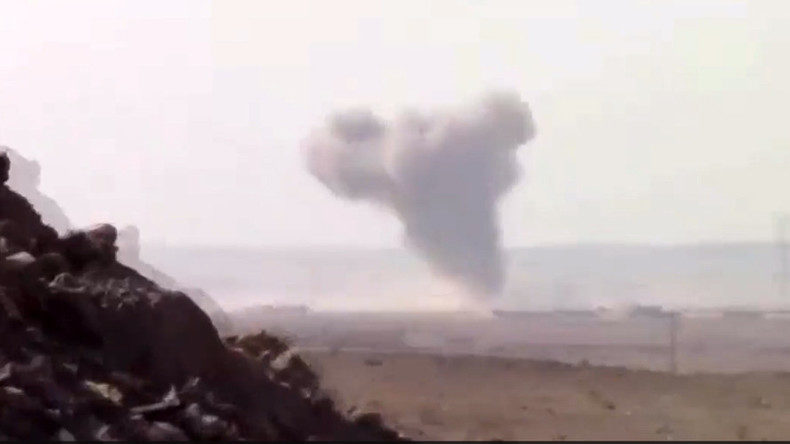
The Syrian Army has been fighting Islamic State (IS, formerly ISIS) militants as part of an operation to break the siege of the eastern city of Deir ez-Zor, which has remained encircled by the terrorist for more than two years.

Ruptly's footage from the scene showed armed troops, rockets being fired and huge explosions on the outskirts of the city.

Some 125,000 people reportedly remain in the city under siege since May 2015.

Despite frequent mortar attacks, the use of car bombs and suicide bombers, IS was never able to take full control of the city.

However, the humanitarian situation in Deir ez-Zor remains dire as supplies to the population can only be delivered by air.

Attention

Trump on North Korea: 'Fire and fury' wasn't tough enough

Donald Trump
© Zach Gibson / Global Look Press
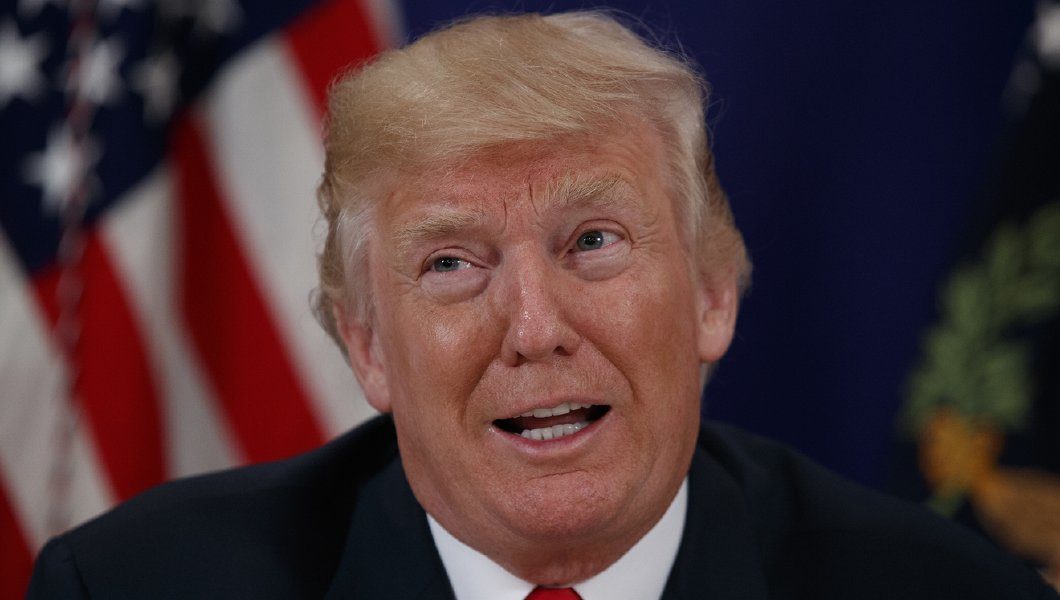
US President Donald Trump said his "fire and fury" warning to North Korea may not have been "tough enough," shrugging off domestic critics who accused him of reckless rhetoric.

Speaking to reporters at his Bedminster, New Jersey resort, the president said North Korea should "get their act together" or it will "be in trouble like few nations have ever been," according to AP.

North Korea should be "very, very nervous" if it does anything to the US, Trump told reporters, according to Reuters, adding that he thinks China can and will do a lot more to resolve the crisis.

"We'll always consider negotiations," the president added.

"I have great respect for what China and Russia did" in the Security Council, with a 15-0 vote for sanctions." He cautioned, however, that the sanctions may not be as effective as many expect.

"The people of our country are safe, our allies are safe," he concluded.

Gift 2

Trump thanks Putin for expelling 755 US diplomatic staff from Russia

Trump
© Evan Vucci/Associated PressThe diplomats and staff were expelled in response to a bill passed by Congress and signed by Trump that imposed new sanctions on Russia.
'We're going to save a lot of money'

President Trump thanked Russian President Vladimir Putin for expelling more than 700 U.S. diplomats and staff from Russia and said the expulsions will save the U.S. money.

"I want to thank him because we're trying to cut down our payroll and as far as I'm concerned I'm very thankful that he let go of a large number of people because now we have a smaller payroll," Trump told reporters Thursday at his golf club in Bedminster, N.J., according to a pool report. "There's no real reason for them to go back. I greatly appreciate the fact that we've been able to cut our payroll of the United States. We're going to save a lot of money."

Putin announced last month Russia will expel 755 U.S. diplomats and technical personnel in response to a bill passed by Congress and signed by Trump that imposed new sanctions on Russia.

Hourglass

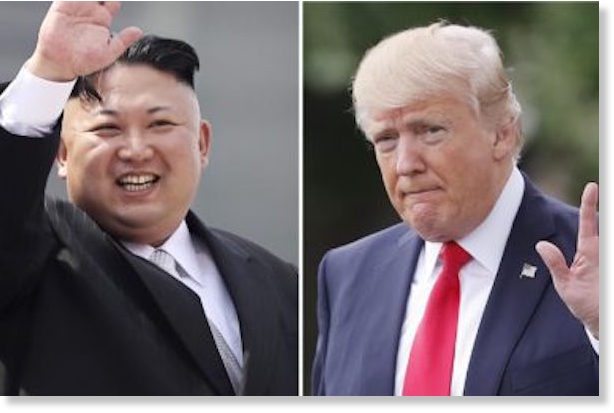
The US runs the risk of disaster with North Korea: It must begin talks with Kim Jong-un immediately

Donald and Kim
The alternative to negotiations with North Korea is an uncontrolled nuclear arms race in the north Pacific with an adversary whose capabilities the US has repeatedly and grossly underestimated and which it knows next to nothing about.

On 31st July 2017 I wrote an article for The Duran in which I said that the US is overreacting to the North Korean ballistic missile tests

Here is what I wrote in that article
......though the test launches of the Hwasong-14 missile represent an impressive technical achievement - all the more so because the missile is mobile and road launched - the missile appears to be still in its development stage, with its payload apparently small and with great uncertainty as to whether the North Koreans have miniaturised their nuclear warhead technology sufficiently to arm it. There is therefore still time before the missile enters service and does so in any quantity.

Beyond these questions there remains the overriding fact that even if North Korea does eventually field a number of operational missiles of this sort its nuclear capabilities will still be overwhelmingly dwarfed by those of the US, a fact which because of the immense industrial and technological disparity between the two powers will never change. What that means is that unless the entire North Korean leadership - including Kim Jong-un - are intent on a bizarre form of suicide, there is no possibility of North Korea launching nuclear armed Hwasong-14 missiles at the US except in self-defence.

The US can therefore afford to take these North Korean missile tests in its stride. By contrast threatening military action against North Korea - or worse still actually engaging in it - is the one thing that might actually provoke North Korea to strike against the US - or more realistically against one of the US's allies - of which in all other respects no risk exists.

Comment: In some ways this "standoff" between the U.S. and North Korea has a lot in common with the relationship Israel has to Iran. Israel is one of the driving forces in the demonization of Iran, and the accusation of Iran's developing nuclear weapons. The 'thought' goes that once Iran reaches such a capability, by virtue of its "hate" for Israel, it will then launch a catastrophic attack on the "only democracy in the Middle East" .

But it makes absolutely no sense.

As most of the world knows, Israel, like the U.S., has a nuclear arms program - and for Iran to suddenly launch an attack on Israel would mean certain destruction for Iran. Iran knows this full well, but the pathological propaganda against Iran would have you believe that Iran would like to strike Israel the first chance it gets!

It's almost as though the fever pitch of accusations from both the U.S. and Israel is meant to instigate conflict - no matter what the cost. Or at least justify the political and economic subjugation of those nations that refuse to bow down to imperial dictates.


Arrow Up

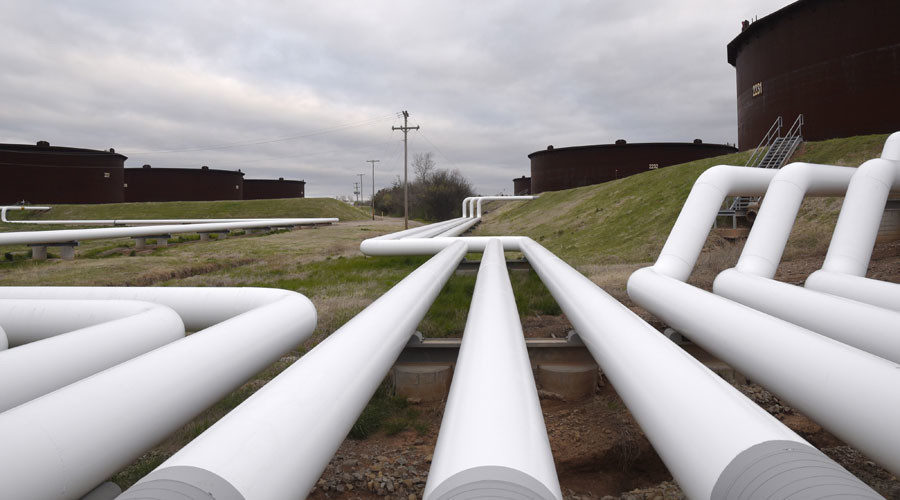
Natural gas prices poised to rise as exports boom

natural gas pipeline
© Nick Oxford / Reuters
New data from the Energy Information Administration (EIA) has brought some good news for advocates of US natural gas production. In three of the first five months of 2017, the United States exported more natural gas than it imported, reversing a trend of net-imports that's endured for nearly sixty years.

Rising exports, fueled by a the shale boom which has seen a marked increase in US natural gas production, have been facilitated by new infrastructure and rising demand outside the US, most notably in Mexico and eastern Canada.

The United States began importing large amounts of Canadian natural gas in 1958, when the TransCanada natural gas pipeline was completed. Significant quantities of Canadian natural gas continue to flow over the border, chiefly through pipelines in Idaho and Montana.