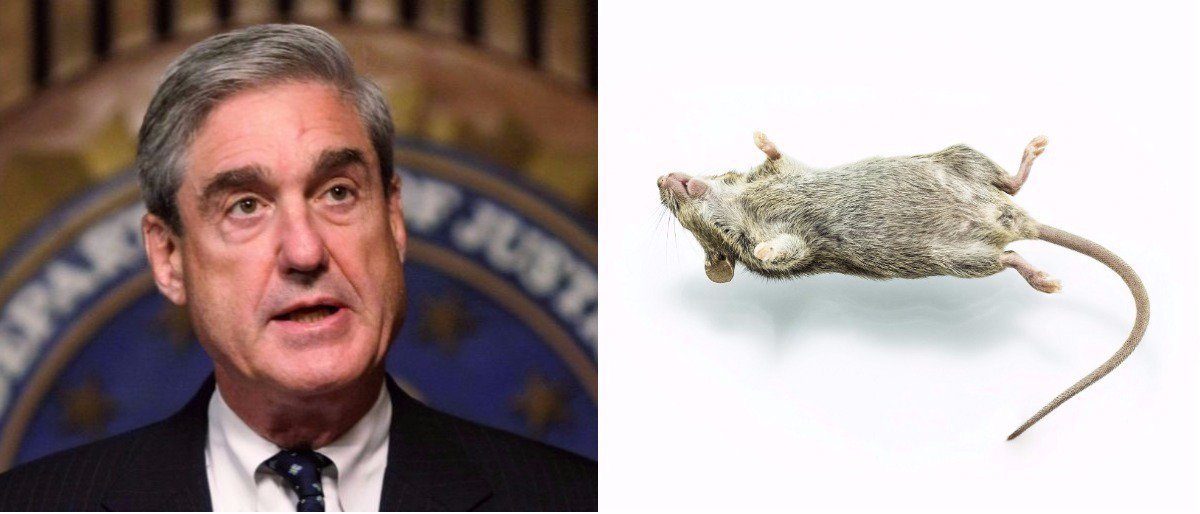
Like a headless turkey running around in circles, Special Counsel Robert Mueller's anti-Trump investigation is dead, even if he does not yet realize it. While his investigation stumbles onward, with life support provided by the
biased media, from a legal perspective the viability of
any criminal case that Mueller could possibly bring has been effectively gutted thanks to the news (
suppressed for months by Mueller's team) that the FBI's
"key agent" in both the Russia investigation
and the Clinton email probe was an ardent Hillary supporter with an
anti-Trump bias.
Under federal law, a prosecutor is
required "to disclose exculpatory and impeachment information to criminal defendants and to seek a just result in every case." Specifically, pursuant to
Giglio v. United States, prosecutors are
obligated to provide defendants with impeachment evidence,
which includes, according to the DOJ's guidelines, evidence of a witness's biases, "[a]nimosity toward defendant," or "[a]nimosity toward a group of which the defendant is a member or with which the defendant is affiliated."As a result, in any prosecution brought by Mueller against a Republican target, defense counsel would be entitled under the Constitution to
all evidence in the government's possession relevant to exploring the
apparent biases of FBI agent Peter Strzok and his animosity toward Trump and the Republican Party. This, in and of itself, could be a case-killer because it is very unlikely that Mueller or the DOJ would want defense counsel poring through all the records and documents, emails, and texts in the DOJ's and Strzok's possession revealing the agent's biases
since this could fatally undermine any other cases or investigations the agent has worked on-such as the FBI's decision to recommend charging General Flynn with lying to federal agents even though Hillary Clinton's besties, Cheryl Mills and Huma Abedin, were given a free pass despite apparently doing the same thing.
















Comment: