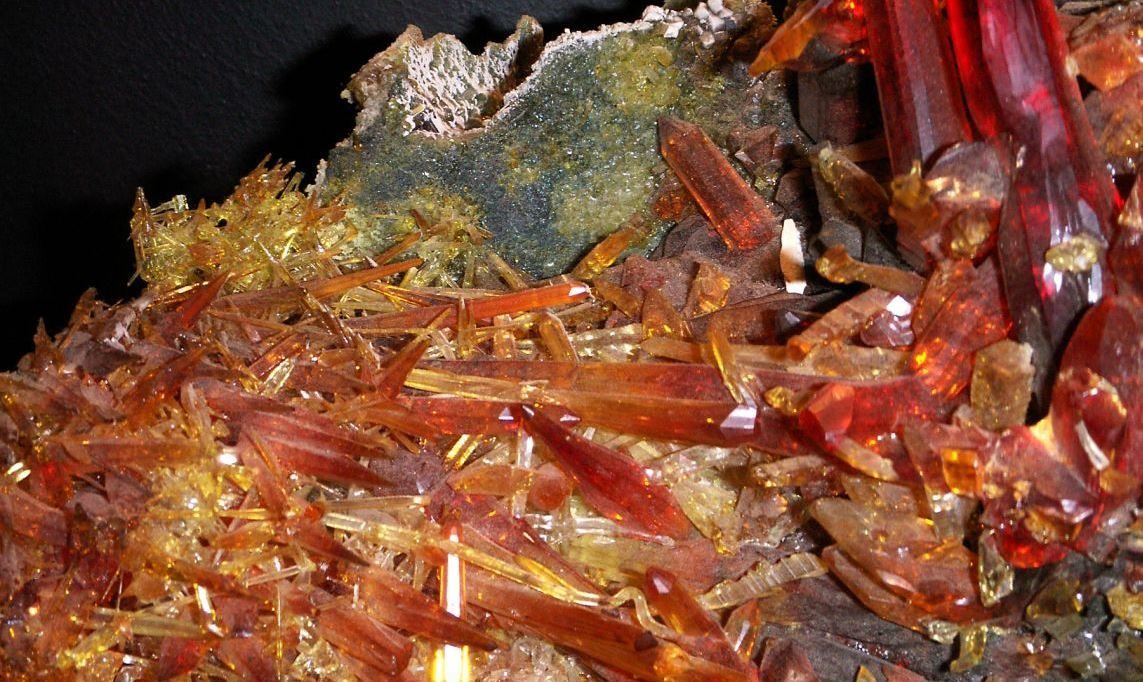
Just like the gold rushes of California between 1848 and 1855, Canada's Klonike of 1896 to 1899, and Western Australia's of the 1890s, the world is experiencing a frenzy to obtain mining rights in pursuit of today's "gold," namely rare earth minerals. Used for components of electric vehicle batteries, mobile telephones, flat-screen televisions, flash drives, cameras, precision-guided missiles, industrial magnets, wind turbines, solar panels, and other high-tech items,
rare earth minerals have become the type of sought-after commodity that uranium and plutonium were during the onset of the atomic age.Rare earth minerals do not easily roll off one's tongue in the same manner as gold, silver, and platinum. For example, yttrium oxide and europium, while sounding unimportant, are what provide the red hue in color televisions.
Nations around the world are scrambling to secure reserves containing rare earth minerals. China, where one-third of the planet's rare earth minerals are currently found, has severely restricted the export of the minerals to friends and competitors. One of the largest known reserves of rare earths is the Bayan Obo deposit in China's Inner Mongolia.










Comment: