Puppet MastersS


Attention

Flashback Strategic engineered migration serves as a weapon of war

Refugees Greece
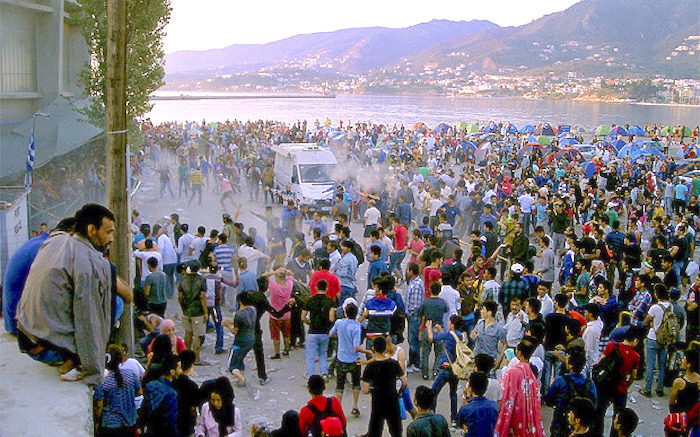
© EPA/STRATIS BALASKASMigrants and refugees protest at the port of Lesbos, Greece.
After reading the title, you may think it is describing the phenomenon that Europe has recently been facing: the hundreds of thousands of refugees, both victims of the hardships of civil wars and opportunists, who are invading the Balkans by land and by sea and then making their way further, trying to reach richer countries like Germany, France and Scandinavia by any means possible.

It would seem that this stream of refugees has objective reasons: armed conflicts and wars have been going on in Libya, Syria and Iraq for many years, while the situation is also turbulent in Palestine and Afghanistan. In Tunisia and Egypt, meanwhile, both of which experienced the Arab Spring, the situation also leaves much to be desired. Hardly anybody is taking notice of Bahrain, where opposition protests have been brutally suppressed for years, while in Yemen, air strikes are even being carried out on wedding processions. The location of these two states is not very convenient, however - there is simply nowhere to flee. There is also another important detail: camps are being built for Muslim refugees in Saudi Arabia, but nobody is going there for some reason. As a last resort, they stay in Jordan and Turkey.

Is there also some general reason for their frantic desire to flee so far from their homeland? Wealthy relatives who have already settled in the European Union, perhaps? Or stories about welfare benefits on which they will be able to live comfortably? After all, to make such a journey they have to pay handsomely for the services of smugglers. According to some reports, these smugglers take between $4,000 and $10,000 to transport a single refugee from Syria or Libya to Europe. Even if this person has wealthy relatives abroad, receiving money via bank transfer is impossible in war-torn Syria. Organising transportation on credit clearly involves certain guarantees, especially considering that the boats often sink in the Mediterranean.

Who is providing guarantees that encourage hundreds of thousands of people to rush from other continents to Europe and why?
Comment: Why would the US grant members of such questionable groups refugee and resident status under the official protection of the US government? What were the objectives they were brought in to fulfill?


Attention

EU omit? Not on the Iran exemption list, Europe vows to defy US sanctions

EUsanctionsflags
© financialtribune.com/KJN
European countries have vowed to maintain "effective financial channels" and to keep trading with Tehran after the US announced that the EU is not among those spared from its sweeping sanctions against Iran.

European countries suddenly discovered that they were not on the list of the 'lucky ones' that their ally, the US, decided to exempt from the new wave of all-encompassing sanctions it plans to unleash on Iran. The sanctions, targeting Iran's shipping, finance and energy sectors, which come into force on November 5, are also designed to punish those countries that dared to do business with the Islamic Republic in defiance of the US pressure.

Only eight nations were graciously granted exemptions by the US, according to Secretary of State Mike Pompeo. However, Pompeo made it clear that the EU as a single entity is not on the list, sparking an angry reaction from the US' western allies. Washington also specifically mentioned that it plans to target the special mechanism the EU has been creating to circumvent the restrictions, prompting its allies to fight back.


Comment: See also:


Star of David

Netanyahu opines: Khashoggi murder 'horrendous', but Riyadh's stability too important

MbS/StarDavid
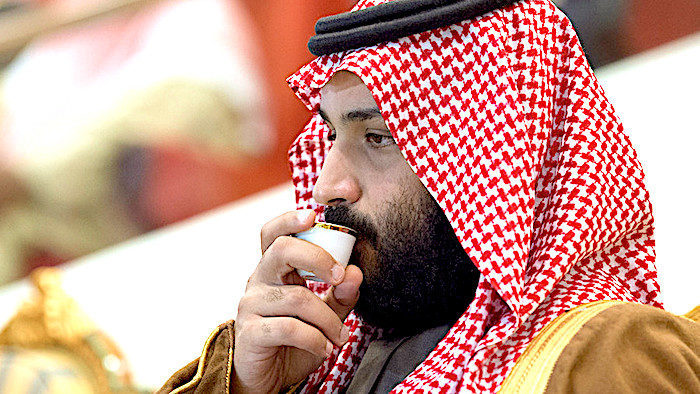
© UnknownSaudi Crown Prince Mohammed bin Salman
The Israeli PM has somewhat condemned the murder of Jamal Khashoggi though he stressed that Saudi Arabia is way too important as a counterbalance to Iran, which he sees as a far "larger problem" than one assassinated journalist.

After a month of silence, Benjamin Netanyahu has finally spoken out against the murder of the Washington Post columnist who was 'disappeared' upon entering the Saudi consulate in Istanbul on October 2. He echoed, however, the rhetoric of the US administration, which so far has been reluctant to say or do anything that could upset the Saudi monarchy, likely awaiting the blame to be shifted upon a group of rogue agents and officials who have nothing to do with the House of Saud.

Netanyahu said, speaking in the Bulgarian town of Varna:
"What happened in the Istanbul consulate was horrendous, and it should be duly dealt with. Yet at the same time I say it, it is very important for the stability of the world, for the region and for the world, that Saudi Arabia remain stable. I think that a way must be found to achieve both goals," Netanyahu stressed, "because the larger problem is Iran, and we have to make sure that Iran does not continue the malign activities."
While Israel and Saudi Arabia do not have official diplomatic relations, they are both close allies of the United States in the region. A reciprocal animosity towards Iran is one of the strategic, mutually uniting factors in this trilateral relationship and, over recent years, a number of reports have indicated behind-the-scenes intelligence cooperation between Tel Aviv and Riyadh.

Comment: The murder of Khashoggi and SA counterbalancing Iran - are incomparable situations, uneven levels. Netanyahu uses Khashoggi as the hook to bring Iran into his narrative. Interestingly, Bibi has remained unusually silent on this murder for a month. Does this pique curiosity?

More from Muslim Mirror 11/2/2018:
Israeli Prime Minister Benjamin Netanyahu and Egyptian President Abdel Fattah el Sisi have called on the White House to keep supporting Saudi Crown Prince Mohammed bin Salman, despite the murder of journalist Jamal Khashoggi by a hit squad sent from Riyadh, the Washington Post reported on Thursday.

According to The Post Netanyahu described the crown prince as a "strategic ally" in the Middle East. The Post said Egypt's president Sisi had conveyed a similar message.

Since MBS rose to power, the Saudi Arabia's pro Zionist policies have become an open secret.

Earlier in 2016 a retired Saudi general visited Israel, heading a delegation of academics and businessmen.

During the visit Dr. Anwar Eshki met with Foreign Ministry Director-General Dore Gold, the Coordinator of Government Activities in the Territories Maj.-Gen. Yoav Mordechai, and several Knesset members from the opposition.

Such a visit by former general Eshki, who was once a top adviser to the Saudi government, is an extremely rare occurrence. "While this wasn't an official visit, it was a highly unusual one, as Eshki couldn't have traveled to Israel without approval from the Saudi government," the newspaper report said.

In March top Israeli and Saudi Arabian officials reportedly held a series of secret meetings in Cairo. In 2017 Saudi and Israeli officials held a closed-door meeting together in Washington.

According to an AFP report the Crown Prince Emir Mohammed bin Salman secretly visited Tel Aviv in September last year.


Top Secret

US military's empire of secrecy

Pompeo Bagram
© Andrew Hamik/APSecretary of State Pompeo visits Bagram Air Base in Afghanistan, July 2018.
"Democracy dies in darkness." That's an old saying that The Washington Post recycled as its motto at the dawn of the Trump era. Truth is, the journalists at the Post don't know the half of it; nor do they bother to report on the genuine secrecy and increasing lack of transparency in the Department of Defense. Nothing against the Post - neither do any of the other mainstream media outlets.

But it's true: Right under most Americans' noses, the military has become more opaque over the last several years. Now, few outlets cover foreign policy with any particular gusto-after all, there's so much to say about Stormy Daniels or the Brett Kavanaugh drama. But this trend should concern all citizens.

Thing is, what the U.S. military is up to on any given day is done in your name. If civilians are killed, locals alienated or civil liberties restricted, then the global populace, including concerned U.S. citizens, aren't going to fix blame solely on the armed forces ... they're going to blame you! If for no other reason than this, citizens of 'an ostensible democracy' ought to be paying attention. The military is a fierce, potentially brutal instrument, and anyone who cares about liberty ought to watch it closely.

Comment: Equilibrium is rarely the forte of politics. Nor is status quo the best option for military in a changing global environment. This author has managed to identify, with bias, some of the problems but not the depth and breadth of attributable sources in a complex, multilayered, cover-yer-ass governmental structure that demands proper oversight, scrutiny and accountability as the servants to society and its well-being. To its credit, the Trump administration has brought to daylight many secretive issues, practices, networks and subterfuge to inform the public of the government's true nature and urge agencies to clean up their acts and return to their sworn purposes.


Attention

Ex-Pentagon analyst: 'Wheels are in motion' to replace MbS with someone more 'West compatible'

MohammedbinSalman
© Saudi Royal Court/Handout via ReutersSaudi Crown Prince Mohammed bin Salman
Following outrage over the killing of Jamal Khashoggi, Prince Mohammad bin Salman might face troubles at home. As analysts told RT, some in Saudi Arabia are keen to see the Crown Prince go.

Much of the mounting international outrage over the murder of journalist Jamal Khashoggi is attributed to Mohammad bin Salman, the 33-year-old Crown Prince who once famously vowed to reform his autocratic kingdom into a vibrant modern state. He recently assumed authority over the Saudi intelligence community - in addition to sweeping powers in defense and the economy - but it doesn't mean his position in the monarchy is rock solid, experts believe.

Michael Maloof, former senior security policy adviser in the Pentagon, told RT America that the young prince has made more enemies than friends among the Saudi royals, and "has upset the leadership so much." According to the analyst, there is a growing rebellion against MBS in the House of Saud.

"The wheels are already in motion to try and replace MBS with someone more compatible with the West."


Comment: See also:


Network

Huh? CIA's secret communications network cracked by Iranians using Google Search?

Googleye
© Global Look Press/Federico Gambarini
The web-based network which was used by the CIA to communicate with its sources was overcome by Iranians using text-book Google queries, a new exposé claims. The agency knew about the vulnerability, but failed to act on it.

Probably the biggest failure of US intelligence since 9/11 has been the compromise of the CIA's communication network, which it had used to keep in touch with agents and assets in foreign nations. The Chinese busted and executed dozens of US spies because of it. A new exposé by Yahoo News says a similar upheaval happened in Iran and that the Iranians managed to defeat the system relatively easily - because it was never intended for the purpose it was used for.

The internet-based platform was first used for war zones in the Middle East and was not designed for long-term communication or to stand up to any serious counter-intelligence effort. "The issue was that it was working well for too long, with too many people. But it was an elementary system," one former US intelligence official said.

So around 2010, the Iranians managed to penetrate it, and many at the CIA were shocked with how simple Tehran's approach was. The Iranians identified one of the websites used for the network through a double agent and then used Google Search to find sites with similar digital fingerprints. The visitors to those sites were then tracked, leading to an unravelling of the entire CIA network.

Comment: Iranians used Google to unravel the CIA's com network. The CIA used waterboarding and didn't get squat.


Handcuffs

Trump: If migrants throw rocks they will be arrested, not shot

Migrants rocks
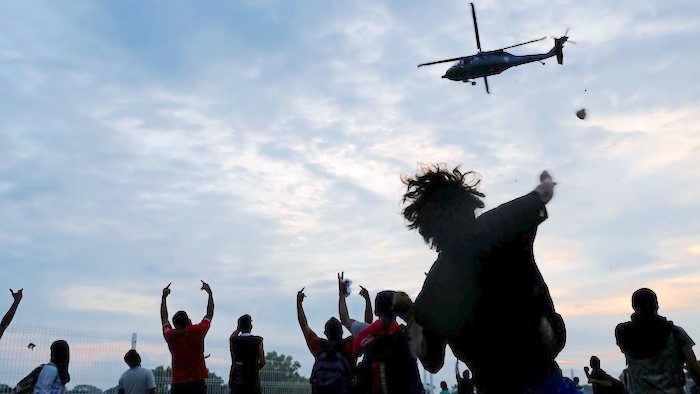
© Reuters/Carlos Garcia RawlinsMigrants from the US-bound Central American caravan throw stones at a police helicopter.
Walking back his previous comments, US President Donald Trump said that illegal migrants who attack the US military with rocks will not be fired upon, but will be detained.

Trump told reporters on Friday that all of his border enforcement actions are in compliance with existing US laws. He has vowed not to allow the caravans of migrants from El Salvador and Honduras, currently making their way north through Mexico, from entering the US [to enter the US.] .

Any asylum-seekers who cross the border illegally will be deported, and those who cross at points of entry will be held in tent cities with their families while they await adjudication, rather than be released into the US, Trump said on Thursday at the White House.

Comment: No matter what rules are set forth by the administration, the goal for each migrant is to get both feet on US soil - even if it is an arrest. Having demonstrated prior violence, there are by nature and intent no protection guarantees. Anything can happen.

See also:


Stop

Washington lifts sanctions on top Turkish officials after release of Pastor Brunson

Brunson
© AP/Emre TazegulAndrew Craig Brunson, pastor from Black Mountain, North Carolina arrives at his house in Izmir, Turkey.
The United States has lifted sanctions imposed on two senior Turkish officials over the detention of an American pastor who was released and returned to the United States earlier this month, the Treasury Department stated.

According to the Office of Foreign Assets Control's (OFAC) website, Turkish Justice Minister Abdulhamit Gul and Interior Minister Suleyman Soylu are no longer on the Global Magnitsky Act sanctions list.

The two Turkish officials were accused of human rights violations and sanctioned in August in response to the detention of American Pastor Andrew Brunson, who was released on October 12.

The Turkish Foreign Ministry has responded by removing sanctions from US Secretary of Homeland Security Kirstjen Nielsen and Attorney General of the United States Jeff Sessions, Turkey's Daily Sabah newspaper reported. The sanctions on Kirstjen Nielsen and Jeff Sessions included a travel ban to the country and freezing of assets in Turkey.

Cross

Kiev's Orthodox Patriarch rejects illegal property seizure - not for ethical reasons, but 'because Russia'

Patriarch Filaret
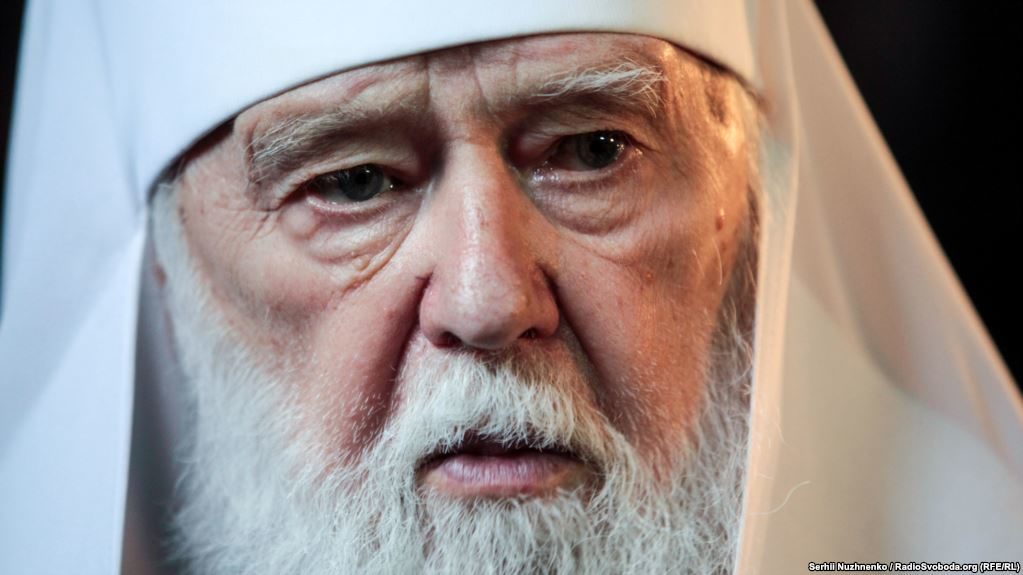
© Serhii Nuzhnenko / RadioSvoboda.orgPatriarch Filaret
The leader of the Ukrainian Orthodox Church of the Kyiv Patriarchate says steps toward independence from Moscow must be carried out carefully to avoid giving the Kremlin a pretext for further Russian incursions into Ukrainian territory.

Patriarch Filaret's statement came after a synod of the Ecumenical Patriarchate of Constantinople chaired by Patriarch Bartholomew I, who is considered the leader of the 300-million-strong worldwide Orthodox community, decreed on October 11 to "proceed to the granting of Autocephaly to the Church of Ukraine."

The synod, however, made sure to warn against violence and attempted property takeovers.

In an exclusive interview with RFE/RL, Filaret talked in detail about the process of establishing a fully independent Ukrainian church and the future status of the Moscow-loyal church in Ukraine.

Ukraine currently has three Orthodox denominations: the Ukrainian Orthodox Church of the Moscow Patriarchate, which remained subordinate to Russia after the breakup of the Soviet Union; and two breakaway entities -- the Ukrainian Orthodox Church of the Kyiv Patriarchate led by Filaret, and the Ukrainian Autocephalous Orthodox Church led by Metropolitan Makariy.

Comment: The Ukrainian Orthodox church is heading down a dangerous road, just like the rest of their country:


USA

Tucker Carlson: What's the message, what are Tuesday's mid-term elections about?

Tucker Carlson
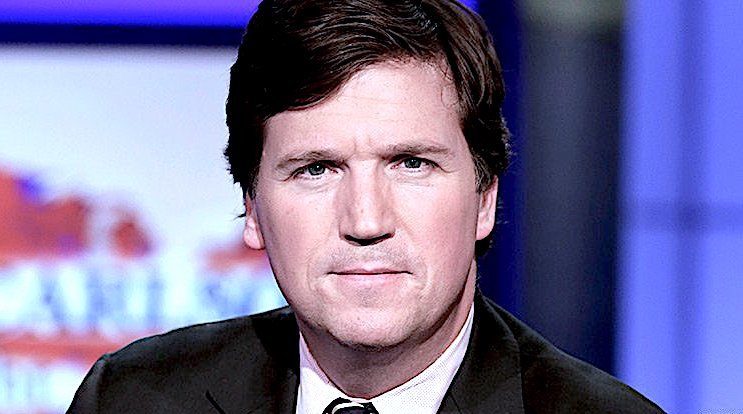
© Associated PressTucker Carlson
At the core of any political campaign is the message, what it's about. What exactly are next Tuesday's midterm elections about?

Well, on the one side, it's pretty clear. Donald Trump, who is the leader of the Republican party and in effect, it's only spokesman, says that a vote for Republican candidates is a vote for secure borders and against crime and chaos. You don't have to believe the president when he says this but it's definitely what Republicans are running on.

What are Democrats running on? That's less clear. They're against Trump, certainly. Democrats talk about the president even more than he talks about himself -- which is a lot! They don't like him at all. Fine. But despising someone isn't really a platform or path forward, at best it's a reaction.

What are the ideas that unite the Democratic Party, right now? For the answer to that, we go to the other cable stations which over the past couple of years have come to function much as the DNC used to function. It's the Democratic Party's brain trust and mouthpiece.

If you want to know what Democrats are thinking? Watch CNN and MSNBC. Wednesday night was especially instructive.