
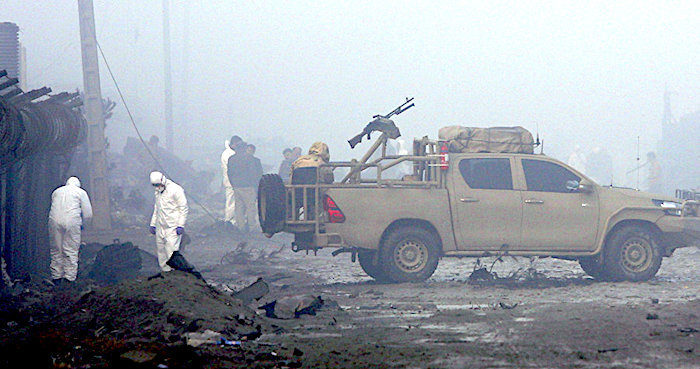
© AP/Rahmat GulKabul, Afghanistan, site of a suicide bomb attack November 29, 2018.
In 2001, the US invaded Afghanistan, quickly contributing to a boom in the so-called 'private security' business, a euphemism to describe the use of mercenary soldiers, according to reports.
Although the US is making moves toward giving up its 17-year Afghanistan war - a fight described last month by the US Joint Chiefs of Staff chairman, General Joseph Dunford, as a "stalemate" - widespread instability in Afghanistan remains, and there is a high demand for armed soldiers to guard foreign business operations, national embassies and even military bases, according to the BBC.
The nation's interior ministry created a Kabul-supervised Afghan Public Protection Force (APPF) in 2010, following a series of deadly accidents and scandals that came to light involving the indiscriminate killing of civilians by for-hire soldiers. The APPF, according to the nation's interior ministry, handles most of the current security missions in the country, including escorting foreign troops and guarding diplomats, businesspeople and NGO workers.
Variously tasked with protecting people, structures, installations and property, as well as standardizing policing and security methods in unstable regions, mercenary firms led by US-based Triple Canopy and UK-based G4S are paid unknown amounts of money to keep a semblance of order in what has become one of the most dangerous places on Earth, according to the BBC.












Comment: Proxies and mercenaries...war for hire. Not out of Afghanistan, just 'once removed'.