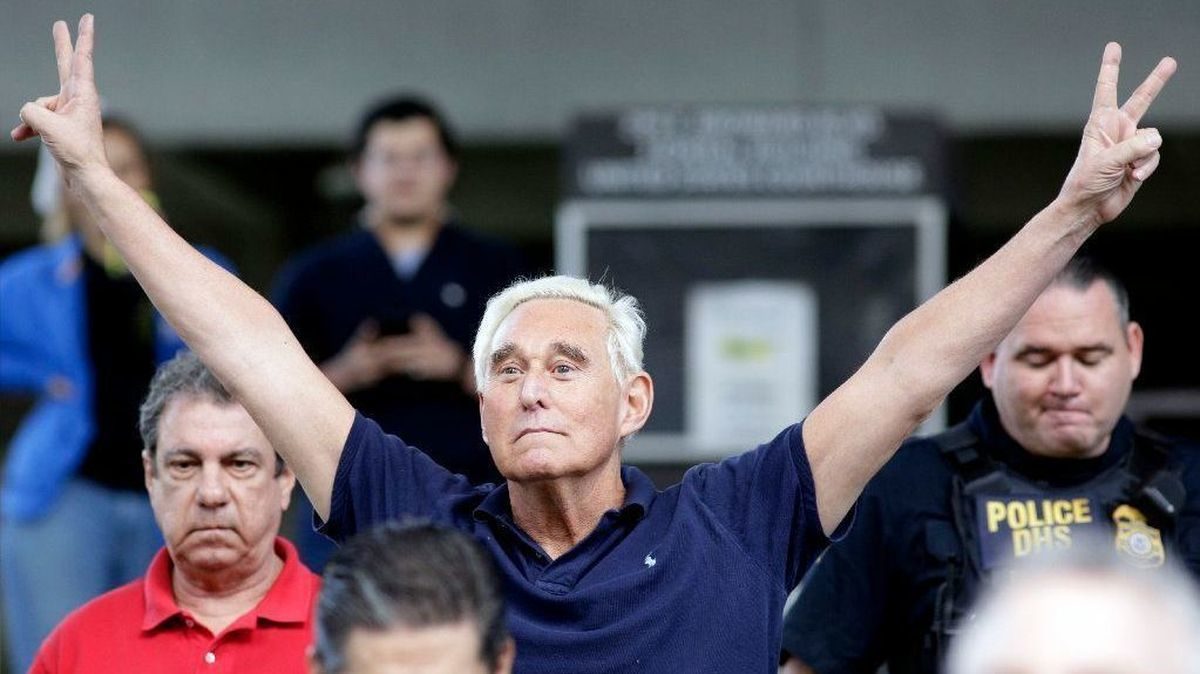
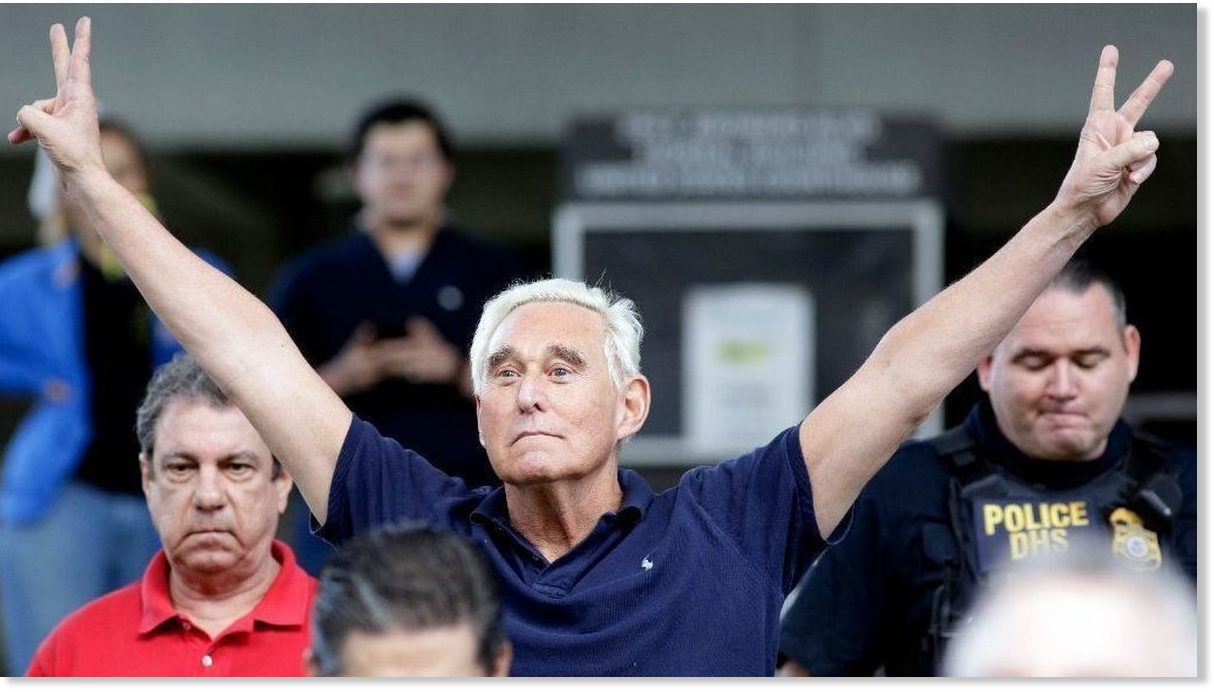
© Lynne Sladky / Associated PressRoger Stone
Roger Stone, a longtime aide and confidant of President Donald Trump, was arrested early Friday morning by the FBI after being indicted on charges he lied to Congress and obstructed the House Intelligence Committee's investigation of Russian interference in the 2016 election.
The seven-count
indictment alleges Stone misled lawmakers on the committee about his efforts to communicate with WikiLeaks and his contacts with the Trump campaign.
It also accuses Stone of attempting to intimidate another witness: radio host Randy Credico, who was in contact with WikiLeaks head Julian Assange in 2016.
Stone appeared Friday morning at the federal courthouse in Fort Lauderdale, Fla., after a Washington, D.C., grand jury approved the indictment Thursday. He was released on a $250,000 personal surety bond. Stone said Friday that he would be arraigned in D.C. next week.
The Stone indictment marks Mueller's biggest move yet against a Trump associate on grounds related to the release of stolen emails to sabotage Hillary Clinton's presidential campaign in 2016. It also reflects a stunning turn for Stone, a GOP operative and prominent Trump cheerleader whose relationship with the president spans nearly 40 years, making him a prime target for investigators to try to turn into a government witness.
Comment: There has been plenty of reaction from across the political spectrum to Stone's arrest. White House press secretary Sarah Sanders
stated that despite the media claims otherwise, Trump did nothing wrong: "There was no collusion on his part".
Stone's lawyer, Grant Smith,
claims his client is "vindicated" due to the fact that the indictment against him does not mention Russian collusion. Trump's legal counselor Jay Sekulow weighed in:
"The indictment today does not allege Russian collusion by Roger Stone or anyone else. Rather, the indictment focuses on alleged false statements Mr. Stone made to Congress".
Stone has
since said he will plead not guilty and that the charges against him are "politically motivated".
Jim Jatras, a former US Diplomat and GOP Senate policy adviser,
told RT:
the indictment shows "no collusion between the Trump campaign and Wikileaks, or the Russians or anyone else." Instead, the crimes are so-called 'process crimes', or crimes that occurred during the course of an investigation.
"This is what they do to put the squeeze on people to try to force them to make up things that aren't true. What they do is they throw all kinds of complex questions at you and if you don't have the relevant records, and any time you get a name wrong or a date wrong, they say 'that's a felony,' 'that's a felony, and we're gonna throw you in jail for the next fifty years unless you do what we say.'"
Charging Trump's associates with a barrage of process crimes, and broadcasting images of heavily armed federal agents raiding Stone's house are part of an attempt to "create an atmosphere of criminality" around Trump, Jatras said, with the end goal of supporting his impeachment.
The entire 'Russiagate' investigation, former Pentagon analyst Michael Maloof told RT, is "a waste of money, and a waste of time" being "perpetuated by the mainstream media, and the democrats in Congress, because they hate Trump period. That's what this is all about. They just hate Trump."
For more, see
Top takeaways from the Roger Stone indictment










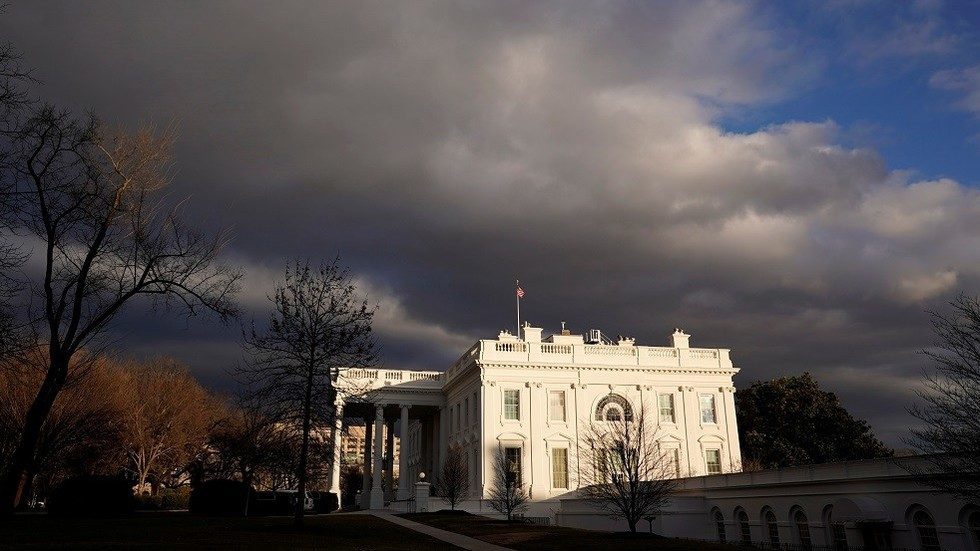


Comment: There has been plenty of reaction from across the political spectrum to Stone's arrest. White House press secretary Sarah Sanders stated that despite the media claims otherwise, Trump did nothing wrong: "There was no collusion on his part".
Stone's lawyer, Grant Smith, claims his client is "vindicated" due to the fact that the indictment against him does not mention Russian collusion. Trump's legal counselor Jay Sekulow weighed in: Stone has since said he will plead not guilty and that the charges against him are "politically motivated".
Jim Jatras, a former US Diplomat and GOP Senate policy adviser, told RT: For more, see Top takeaways from the Roger Stone indictment