Puppet MastersS


Calendar

Rohani: Iran gives Europe two months to save nuclear deal

Rouhani
© President/EPA-EFEIranian President Hassan Rouhani
Europe has two months to negotiate sanctions relief for Tehran, otherwise the country will initiate 'phase three' in its rollback of commitments under the 2015 nuclear deal, Iranian President Hassan Rouhani has said.

"Europe has another two-month deadline for negotiations, agreement, and a return to its commitments," Rouhani warned at a cabinet meeting on Wednesday.

Tehran has been calling on the EU to provide relief from the sweeping sanctions that were imposed by Washington after the US unilaterally left the 2015 deal, known as the JCPOA. Iranian officials have warned that they will gradually reduce their commitments under the agreement if this does not happen.

In early July, Iran activated the 'first phase' of this strategy by increasing its stockpile of enriched uranium beyond the 300kg limit imposed by the JCPOA. The 'second phase' - enriching uranium beyond 3.67 percent - was effected shortly afterwards. Rouhani didn't specify what the next step would be, but he hinted that it would play an important part in transforming the nation's nuclear program.

"The third step is of an extremely important nature, and will considerably accelerate the activities of the country's nuclear energy organization," he said. Rouhani stressed that the impact of the move "will be extraordinarily huge."

Comment: Additionally from RFE/RL, 4/9/2019: Rohani threatens 'extraordinary effects'
On September 3, reports suggested France was prepared to offer Iran $15 billion in credit lines until the end of the year -- guaranteed by oil -- in return for Tehran adhering again to the JCPOA's terms.

But that arrangement seemingly hinged on cooperation from Washington, which reimposed unilateral sanctions and has pressed other states to avoid doing business with Iran.

And Iran's state-run Press TV, without citing a source, said that country had rejected the $15 billion-credit proposal.

Earlier on September 4, Iranian Deputy Foreign Minister Abbas Araqchi was quoted as saying that "it is unlikely European countries can take an effective step" before a weekend deadline set by Iran.
From RFE/RL, 4/9/2019: France explores $15B relief plan, pending green light from Washington
French Foreign Minister Jean-Yves le Drian told Reuters talks on the credit lines were ongoing, but U.S. President Donald Trump must first approve it.

The idea is "to exchange a credit line guaranteed by oil in return for, one, a return to the JCPOA [nuclear deal]...and two, security in the [Persian] Gulf and the opening of negotiations on regional security and a post-2025 [nuclear program]," Le Drian told reporters. "All this [pre]supposes that President Trump issues waivers."

"No decision has ever been made to hold talks with the United States and there has been a lot of offers for talks but our answer will always be negative," Rohani said on September 3 in Iran's parliament.
And this from Sputnik, 4/9/2019: Tehran rejects $15B loan from France
According to reports, Tehran will only stop scrapping its obligations under the agreement if it sells as much oil as it used to before Washington re-imposed sanctions.

In the meantime, Iranian President Hassan Rouhani said Tehran was unlikely to reach a deal with European countries in the next few days and stated that Europe would have two months to fulfill its commitments under the accord. Rouhani also noted that Iran would announce the details of its retaliatory step on the deal later in the day, or tomorrow.


Propaganda

First Lady Melania Trump terribly treated by the media

Melania
© maristpoll.marist.eduFirst Lady Melania Trump
A new book comparing Melania Trump and Michelle Obama has brought out predictable slaps against the current first lady from bullies who seek to attack the president through his family.

Pitting two women against each other just never gets old, does it?

Melania & Michelle: First Ladies in a New Era, by Tammy R. Vigil, is presented as a mere bipartisan assessment of the public images of both women. But it thinly veils its criticism of one and its admiration of the other. No prizes for guessing who's who.

Vigil, a Boston academic, notes that Melania "ranks among the least liked of all modern first ladies, [and her] professional life prepared her to serve more as a visual adornment."

The afterword belatedly acknowledges that "pitting the two women against one another is a troublesome (though common) practice." But, hey, if it damages the Trumps, go for it.

Attention

Accusation: Google intentionally broke EU data-privacy laws; meanwhile YouTube fined $179M US violations

Google
© Google
Markets have only just opened in the US, and already Wednesday is shaping up to be a difficult day for Alphabet, the parent company of Google and YouTube.

First, the FT published a report based on leaks from the Irish data regulator, which has jurisdiction over Google's European operations since the company's European headquarters is based in Dublin. Google has allegedly been using 'hidden' web pages to feed personal data gleaned from its users to paying advertisers, circumventing the EU's GDPR privacy regulations in the process.

Google rival Brave said it submitted evidence of this arrangement to the company's regulators. Google collects sensitive user data, like the race, health status and political leanings of its users, then secretly harvests this data for use in targeting ads, something that's illegal in Europe.

Johnny Ryan, Brave's chief policy officer, told the FT that he discovered the secret web pages as he tried to monitor how his data were being accessed and used on Google's advertising exchange, which is the largest marketplace for ad sales space across the web.

Comment: See also:


Vader

US posts $15mn bounty for help with 'disrupting' finances of Iran's Revolutionary Guard Corps

Iranian revolutionary guard
© Reuters
The US government has offered a reward of up to $15 million for information that helps "disrupt" the financial operations of Iran's Revolutionary Guard Corps (IRGC), while slapping a new round of sanctions on Tehran.

The lavish bounty was announced on Wednesday as part of the Rewards for Justice program, run by the State Department, which offers financial incentives for information on alleged "terrorist activities" that target the US. The IRGC, an elite branch of Tehran's military, was designated by Washington as a terrorist organization in April.

The US State Department is seeking information on any companies and individuals who allegedly help the IRGC with "evading US and international sanctions" as well as those who merely "do business" with the military unit.

Apart from issuing the bounty notice, Washington has issued a new sanctions package against an "oil-for-terror" network - as they put it - allegedly run by the IRGC. The sanctions broadside targeted 16 companies and nine individuals, allegedly involved in supplying Iranian oil to Syria in breach of US sanctions. Six oil tankers linked to such activities were also placed on the list.

Red Flag

Afghan officials express concern over draft U.S.-Taliban peace deal

taliban attack
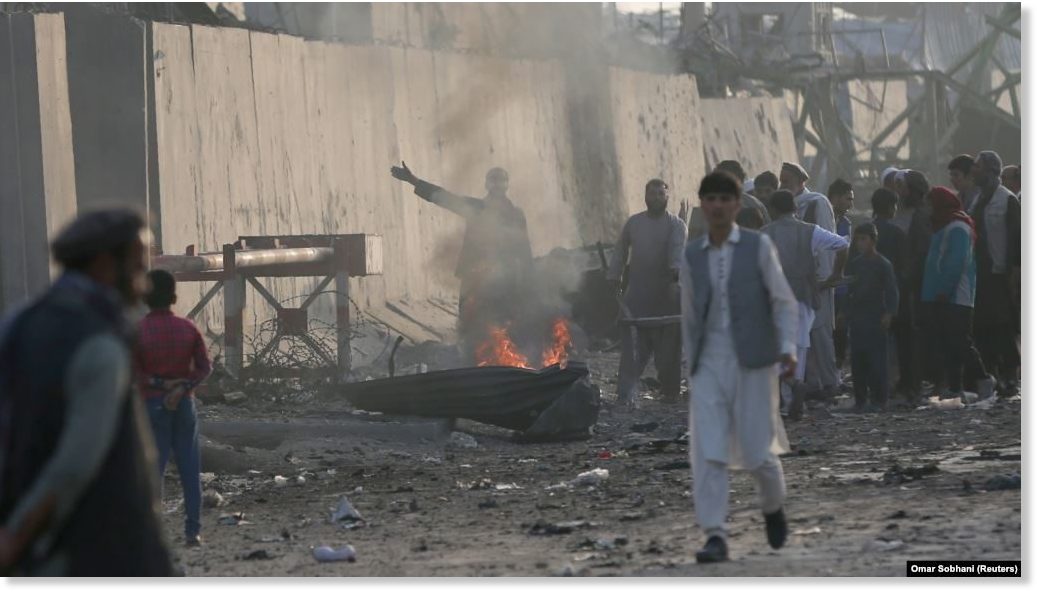
Angry Afghan protesters burn tires and shout slogans at the site of a Taliban attack in Kabul on September 3
Afghan officials say they support progress toward peace but are concerned about a draft agreement reached "in principle" between U.S. and Taliban negotiators on ending their 18-year conflict.

Afghan presidential spokesman Sediq Sediqqi said in a series of tweets on September 4 that despite seeing a draft accord, questions remained over the contents of a deal and how it would be implemented.

"The Afghan government supports any progress in the peace process that will lead to lasting peace and an end to the war in Afghanistan, but the main concern of the Afghan government in the U.S. agreement with the Taliban is that of the consequences and dangers. How will they be prevented?" he said.

Network

Ditching the dollar: National currency payments key to boosting Russia-India trade, says Putin

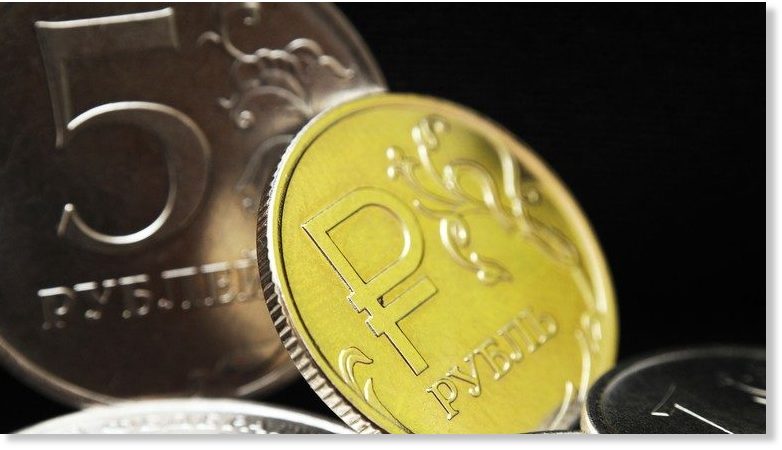
ruble
© Sputnik / Alexey Sukhorukov
Trade turnover between Russia and India - which grew by 17 percent last year, reaching $11 billion - has huge potential for further growth, Russian President Vladimir Putin said at the Eastern Economic Forum (EEF) in Vladivostok.

Putin held talks with Indian Prime Minister Narendra Modi, who arrived on Wednesday to the event, which promotes trade in Russia's Far East.

According to the Russian president, it is important to use national currencies in mutual settlements. "We consider the introduction of the practice of using national currencies in our settlements to be a key component of the work with our Indian partners, as well as ensuring smooth interbank transactions, which would help India join the Bank of Russia financial message transfer system," Putin said.

Russia is one of India's key partners in nuclear energy and is ready to develop their cooperation further, with at least 12 nuclear power units planned to be built over the next 20 years.

Magnet

'We share love for tigers': Indian PM Modi boasts of 'special chemistry' with Putin

putin and modi
© Kremlin via REUTERS / Grigory Sysoyev; Global Look Press / imageBROKER.com / Jürgen & Christine Sohns
Indian Prime Minister Narendra Modi said that a passion for protecting tigers is among many things he and Russian President Vladimir Putin have in common. The leaders are holding talks at an economic event on Wednesday.

Modi said that he and Putin are kindred spirits of sorts, given their love of the outdoors and nature. "I know that he is a physically very developed person, he leads an active lifestyle, keeps himself in shape. I love it," he told reporters on Tuesday, right before heading off for a trip to Russia.

"He is also interested in the environment, wildlife, the underwater world, especially interested in the problem of conservation of tigers and so on. I'm the same by nature. Therefore, it is natural that many things connect us."
In our relations there is a special chemistry, a special lightness.

Boat

Iran to release seven crew from British ship 'Stena Impero' for 'humanitarian reasons'

Stena Impero oil tanker
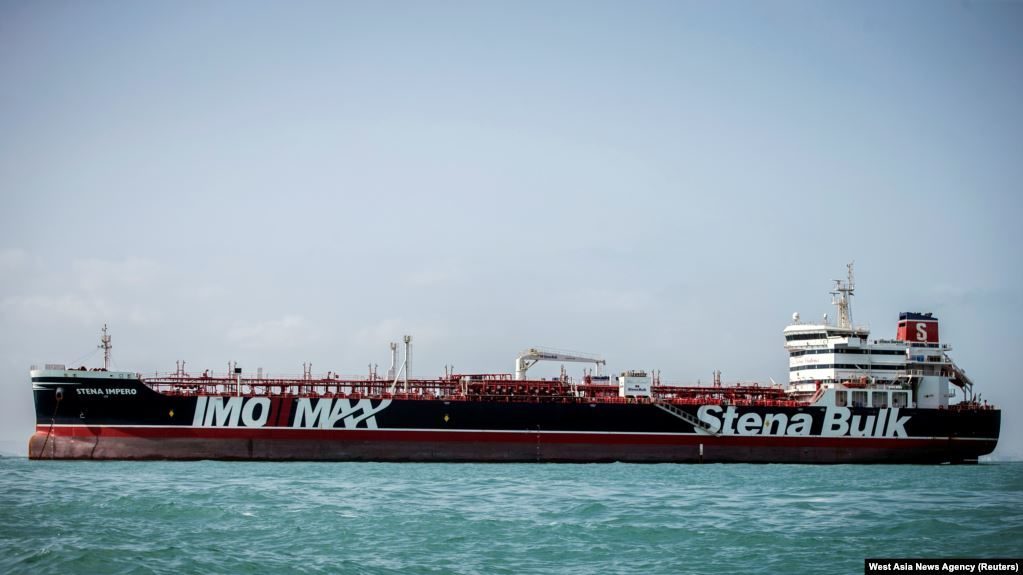
© West Asia News Agency/ReutersThe Stena Impero, a British-flagged vessel owned by Stena Bulk, is seen at undisclosed place off the coast of Bandar Abbas on August 22.
Iran says it is freeing seven crew members it detained after seizing the British tanker Stena Impero nearly two months ago.

Foreign Ministry spokesman Abbas Musavi said in a September 4 interview with Iranian state TV that the seven Russian and Indian nationals are being released on humanitarian grounds and could leave the country soon.

He added that the seven were chosen by the ship's captain.

The Stena Impero's 23 sailors are of Indian, Russian, Latvian, and Filipino nationality and the 16 remaining crew members will stay on board to operate the ship once it leaves, the Swedish company Stena Bulk, which owns the vessel, said.

Comment: More background:


Airplane Paper

Hezbollah planning to shoot down Israeli drone, undermining Israeli deterrence

netanyahu
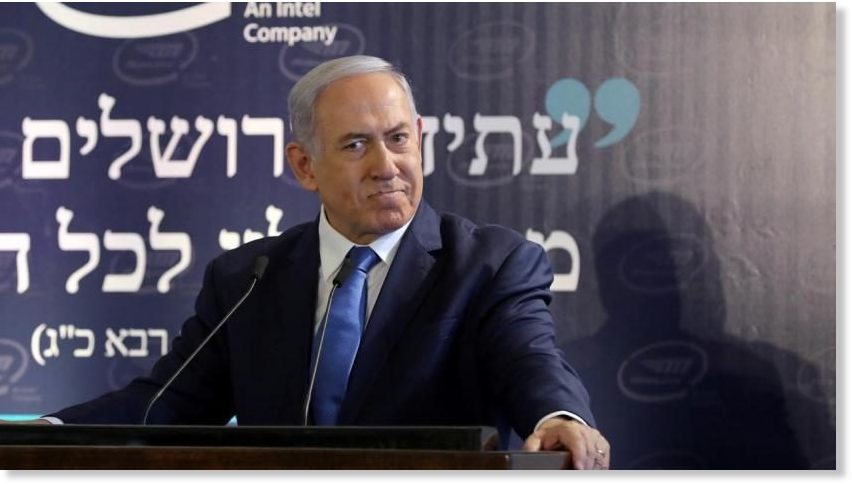
Hezbollah is preparing to down an Israeli drone in the coming days, after leaving time for Israeli politicians and media to increase their criticism and attacks on Prime Minister Benyamin Netanyahu, accused of undermining Israel's vital deterrence strategy in force since 1955.

The Secretary General of Hezbollah, Sayyed Hassan Nasrallah, has decided to make his own contribution to the forthcoming Israeli elections, expected on September 18, by backing the failure of Netanyahu's candidacy. Hezbollah achieved the first part of its two-part plan by hitting a military vehicle last Sunday on the 3.8 km road between Yiron and Avivim. The attack caused the destruction of the Israeli vehicle and inflicted casualties among the five soldiers inside - notwithstanding the Israeli denial of casualties. The hit was filmed by Hezbollah's cameras and shows the firing of two anti-tank Kornet guided missiles.

The attack came as retaliation against Israel's violation of UN resolution 1701 which in its first article stipulates "the immediate cessation by Israel of all offensive military operations". Indeed, Israel sent two suicide drones last month to blow-up a Hezbollah military asset in a suburb of Beirut, after killing two Hezbollah members in a direct targeted killing in Syria. That triggered an overt threat by Sayyed Nasrallah to hit back, which gave Israel ample time to take counter-measures. Israel deserted its military positions all along more than 100 kilometers of the UN blue-line separating Lebanon and Israel, to the extent of 4 to 5 kilometers and more. This was interpreted as an admission of cowardice by the Israeli Army, shaking its reputation as the "eighth strongest army in the world." This hide and seek followed a televised threat by a "non-state actor". Hezbollah doesn't have tanks or jets in Lebanon but its guerrilla skills gained through decades of experience, in particular in the Syrian war, have transformed it into a an organised, strong, "non-regular" army.

Comment: See also:


Bad Guys

Latest reports on recent tension in Korean-Japanese relations

korea helicopter
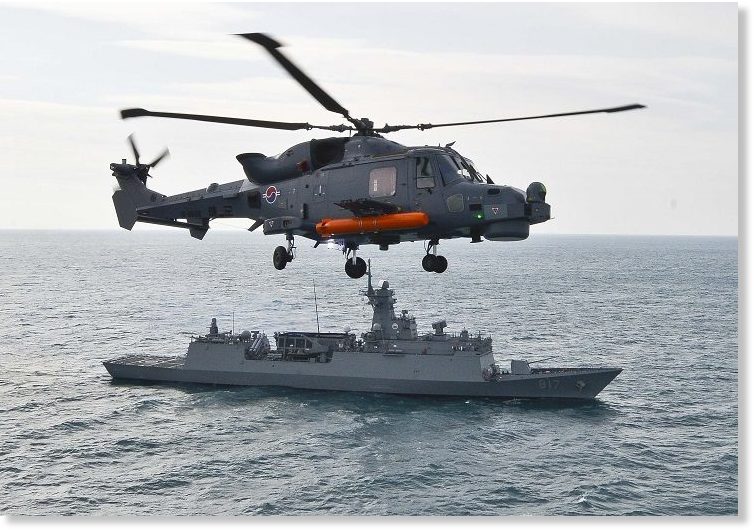
We are continuing to keep a close eye on the trade war between Japan and South Korea to provide you with coverage of the latest chapter of events as they unfold.

On August 6, Japanese Prime Minister Shinzo Abe made it clear that he was not going to consider holding a South Korean-Japanese summit until South Korea honored its commitment to the Treaty on Basic Relations between Japan and the Republic of Korea which was signed in 1965. South Korean First Vice Foreign Minister Cho Sei-young responded, saying Abe's words are proof that the measures of economic retaliation which Japan is taking are not symptomatic of a need to optimize export controls, but stem from the historical dispute between the two countries. According to Cho, Japan needs to stop taking an egocentric position which denies the past, ignores human rights and violates the rules of free trade.

On August 7, 2019, the Japanese government officially imposed legislative amendments which had South Korea removed from Japan's "white list" of countries with the status of trusted trading partners: 1194 strategic goods that Japan supplied to South Korea have been named and will be excluded from the category of items with preferential status and a simplified export approval procedure. From now on, each and every transaction to have one of these affected goods supplied will have to go through a separate approval procedure.

Nevertheless, Tokyo has decided not to supplement the list of goods which are exported with a special authorization. The list is still contains just three essential types of high-tech raw materials in the production of semiconductors. That being the case, a preferential system has been preserved that exempts companies which have received state certification of conformity with certain standards from having to obtain export permits for three years. In other words, if a South Korean enterprise makes a transaction with a Japanese company that has been certified, then the export procedure is similar to the procedure for countries on the list of trusted trading partners.

Comment: See also: