Puppet MastersS


Control Panel

Pompeo warns Trump 'fully prepared' for military action against Turkey

President Trump speaks during a cabinet meeting in Washington DC
© Reuters / Leah MillisPresident Trump speaks during a cabinet meeting in Washington DC
US President Donald Trump is "fully prepared" to use military force against Turkey if "needed," Secretary of State Mike Pompeo has declared, qualifying the statement by insisting Washington prefers to use its "diplomatic powers."

"We prefer peace to war," Pompeo told CNBC in a taped interview that aired Monday afternoon.
But in the event that kinetic action or military action is needed, you should know that President Trump is fully prepared to undertake that action.
He stopped short of revealing what action on Turkey's part would constitute such a "need."

Comment: And then there's Israel's somewhat thwarted plans in the region, which may have something to do with the plan to keep some American forces in tow:
The president added that at first US troops previously stationed in the northern part of the Arab Republic would be redeployed to "different areas", but would eventually return home. He clarified that a "small" number of American troops will remain in Syria, with one group staying behind in order to "secure the oil", while the others will be stationed near the borders with Jordan and Israel.

POTUS indicated that these troops will remain in the Arab Republic due to requests from the governments of Jordan and Israel.


Gingerbread

Trudeau wins second term in Canadian election with just one third of votes

trudeau election
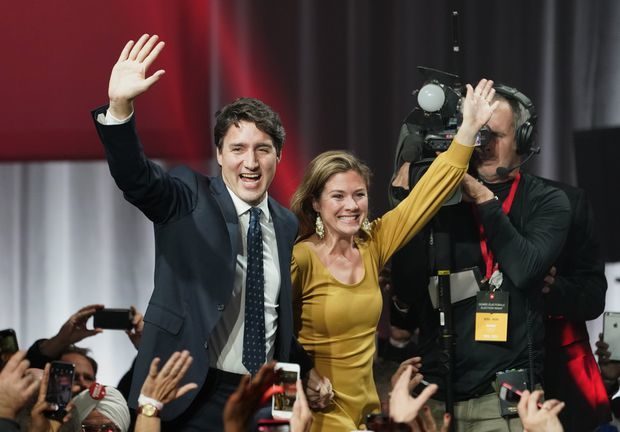
© THE CANADIAN PRESS/Paul ChiassonLiberal leader Justin Trudeau and wife Sophie Gregoire Trudeau wave as they go on stage at Liberal election headquarters in Montreal, Monday, Oct. 21, 2019.
Justin Trudeau's Liberals have retained enough seats to govern with a strong minority in the House of Commons as the result of a robust showing in Ontario, bringing an end to an acrimonious campaign and ushering in the uncertainty of a divided Parliament and a country split along regional lines.

The Liberals face significant challenges as they enter their second mandate: They won the most seats in the House, but lost the popular vote to the Conservatives. About 6.2 million Canadian voters - or 34.4 percent - chose Mr. Scheer's party over the 5.9-million voters - or 33.1 percent - who opted for Mr. Trudeau's Liberals. They were shut out in Alberta and Saskatchewan.


Comment: That's down to Canada's British-style 'first past the post system'. You won't hear a word now from liberals about how the popular vote is the real gauge of a party's popularity...

In any event, it's an interesting result: no more than a third of Canada is 'liberal', by which we mean fully lined up with the global warmist / neoliberal capitalist / humanitarian interventionist / social justice warrior agenda.

We suspect that's the ceiling in most Western countries. It's up to the rest of any given population to see through the liberal elites' agenda and unite against them.


The minority situation will force the Liberal Prime Minister, who swept to power in 2015 as a champion of progressive values but became tainted by ethical scandals and broken promises, to negotiate political alliances with the NDP or the Bloc Québécois to maintain power. Mr. Trudeau will face a resurgent Bloc, which was elected in 32 of Quebec's 78 seats late Monday, and the Conservatives holding a tight grip in the Prairies, where anger mounted at the Liberals for failing to get the Trans Mountain pipeline expansion built in their first four years in government and introducing new legislation that changed the rules for environmental reviews.

Comment: Soy shakes for everyone in Canada today!


Brick Wall

Best of the Web: Paul Craig Roberts: The American economy - may it RIP

economy rest in peace
"Permit me to issue and control the money of a nation, and I care not who makes its laws." — Mayer Anselm Rothschild, 1790
Thirty-eight years ago when I was in charge of United States domestic economic policy, the US Treasury and President Reagan believed that the purpose of economic policy was to serve the country, not Wall Street and the banks or the corporations or any of the various organized interest groups. Our idea was that policy could not be for this or that part of the economy. It had to be for everyone.

This changed in the last year of the Reagan administration after I was gone. The George H.W. Bush Republicans, who by then had taken over the Reagan administration, decided that economic policy had to serve the election of Bush as Reagan's successor. They created the "Plunge Protection Team," consisting of the Treasury and the Federal Reserve. Its purpose was to stand ready to intervene in financial markets and to support financial prices in the event of a stock market downturn for which the Bush Republicans had set themselves up to be blamed.

Reagan was elected because the post-war Keynesian demand management policy of pumping up consumer demand with money supply growth and easy credit, while maintaining high tax rates on work and investment, had broken down. The result was the rising inflation and unemployment trade-offs known as stagflation.

Russian Flag

Russia offers NATO some equipment advice: 'Read up on Stalingrad'

nato soldiers arctic warfare
© Reuters/Ints KalninsSoldiers of NATO's Enhanced Forward Presence battle group take part in the winter survival exercise in Adazi, Latvia February 8, 2018.
Russian diplomats have taken a swipe at NATO after the "purely defensive" alliance placed an order for 78,000 camouflage kits suitable for military operations in the freezing-cold Arctic.

NATO's Support and Procurement Agency is poised to buy "snow camouflage for winter operations," that includes 78,000 sets of trousers and jackets, along with the same number of backpack covers. The uniform, as outlined in the bid request, should withstand temperatures as low as -40 degrees Celsius, while shielding servicemen from "strong winds and snow drifts."

The request was originally posted in June and has seen no lack of bidders. Between July 1 and September 30, NATO awarded the lucrative contracts to the tune of €70 million to three companies from the UK, Greece and Slovakia.

Star of David

Bibi tells Israel's president he can't form government; now it's Gantz's turn to try

gantz netanyahu
© Carlos Latuff
Prime Minister Benjamin Netanyahu on Monday evening announced he had failed to muster a coalition after almost four weeks of effort, and therefore returned the mandate to form a government to President Reuven Rivlin. Netanyahu's 28-day deadline for building a government was due to expire on Wednesday.

Rivlin is now expected, probably on Tuesday morning, to charge Blue and White party leader Benny Gantz with the task of trying to muster a coalition that can win a Knesset majority. Blue and White said it was determined to build the "liberal unity government, led by Benny Gantz, that the people of Israel voted for."

Gantz now has 28 days to try and do what Netanyahu could not. If he fails, any MK will have 21 days to obtain the support of a Knesset majority to form a government. If no one succeeds, elections will be initiated automatically — a third round inside a year after April's and September's inconclusive votes.

Comment:


Snakes in Suits

Brexit: DUP to reject customs union compromise, Speaker will block vote on "same" EU deal

brexit
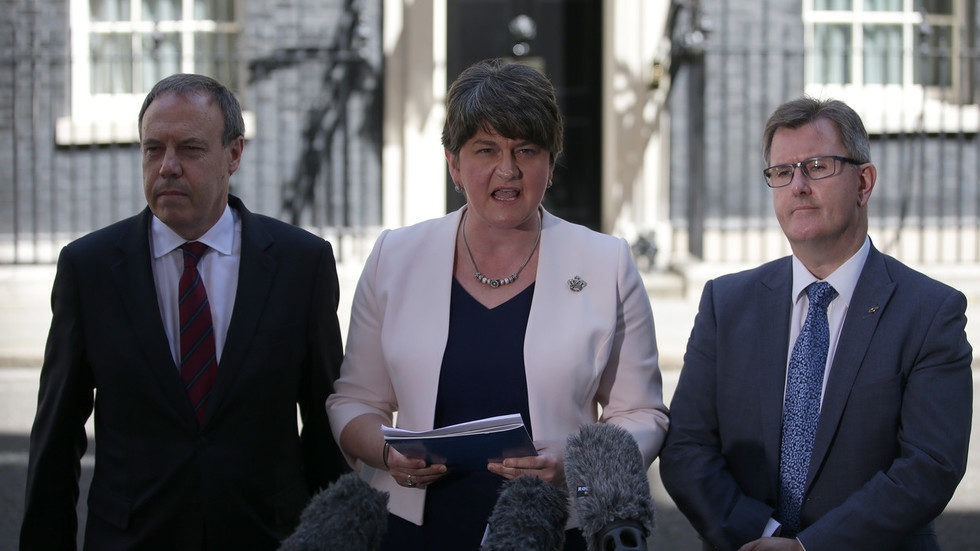
© AFP / Daniel Leal-Olivas(C) Democratic Unionist Party (DUP) leader Arlene Foster (L) DUP Deputy Leader Nigel Dodds and (R) DUP MP Jeffrey Donaldson
The Democratic Unionist Party (DUP), the UK government's Northern Irish key allies, have indicated that they will not back a customs union amendment to the Brexit Bill, in a set-back for opposition parties.

In what is a crucial week in the Brexit process, with UK PM Boris Johnson's Tory government looking to get their Withdrawal Agreement Bill (WAB) passed by lawmakers, the opposition parties appear to have hit a stumbling block as they seek to add amendments.

Labour and other parties opposed to Johnson's deal agreed with Brussels last week are expected to table a 'customs union' amendment as they look to secure a softer Brexit, but DUP MP Jim Shannon told Sky News on Monday that his party are against the proposition.

Comment: More from RT:
UK House Speaker Bercow blocks 'meaningful vote' on BoJo's Brexit deal

UK Speaker of the House John Bercow has rejected the UK government's request for a so-called "meaningful vote" on the Brexit deal agreed with the EU, in a further blow to PM Boris Johnson.

Bercow ruled that granting such a request would amount to debating the same matter twice. Speaking in the House of Commons on Monday he told MPs: "My ruling is that the motion will not be debated today as it would be repetitive and disorderly to do so."

He explained that it was clear that motions before the house are "in substance the same" and that the matter was ostensibly decided 48 hours ago.

Responding to Bercow's decision not to grant a "meaningful vote", the UK prime minister's spokesperson expressed their disappointment at the Speaker "yet again" denying "us a chance to deliver on the will of British people...[The] Public want Brexit done."

Attention now moves to the Withdrawal Agreement Bill (WAB), which will be published on Monday evening, as the UK government scrambles to tie up a Brexit deal before October 31 - when Britain is scheduled to leave the EU.

Voting on the bill, unamended and amended with a series of propositions, including a customs union and a second EU referendum, is expected to take place on Tuesday in the UK Parliament.

In the House of Commons on Saturday, an amendment proposed by former Tory cabinet minister Sir Oliver Letwin was passed by UK lawmakers. It ostensibly means that support for Johnson's deal with the EU will be withheld until formal ratification legislation of the WAB is passed by MPs in the lower house and by lords in the upper house.

It comes after the Court of Session in Edinburgh delayed ruling on whether Johnson acted unlawfully in his request for a Brexit delay from Brussels on Saturday.

Johnson sent European Council President Donald Tusk a total of three documents: an unsigned draft letter asking for a delay; a cover letter explaining that he was forced to do so; and a signed letter emphasizing that any extension would be a "mistake."
The public want Brexit, Parliament doesn't - that's democracy in 2019:


Newspaper

Turkey names banker US convicted of Iran sanctions-dodging as head of stock exchange

stock turkey
© Reuters / Murad Sezer
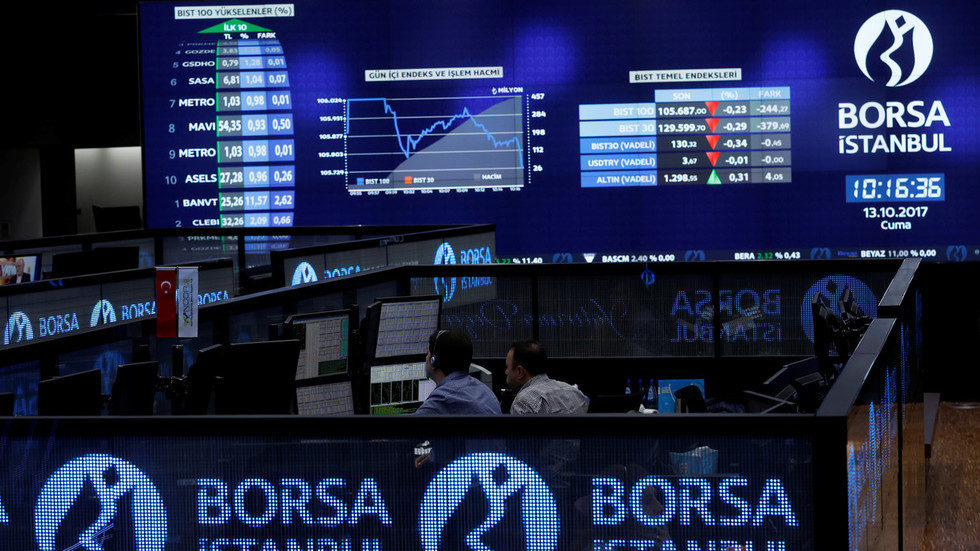
A Turkish banker convicted of helping Iran avoid US sanctions has been named head of the Turkish stock exchange in a defiant gesture to Washington as US President Donald Trump threatens Ankara with its own sanctions.

Hakan Atilla has been appointed general manager of Borsa Istanbul, Turkish Finance Minister Berat Albayrak announced on Monday. Atilla, a former deputy general manager at Turkish state-owned Halkbank, returned to Turkey in July after serving part of a 32-month prison sentence. He was convicted in 2018 of five counts of conspiracy and bank fraud related to his alleged involvement in a multibillion-dollar sanctions dodging scheme, but Turkey maintained his innocence throughout the trial proceedings, slamming the guilty verdict as "scandalous."

Comment: If the sanctions were illegitimate to begin with then is he really guilty of what he's accused of? Nevermind the questionable 'evidence' the US used to convict him.

See also: Putin-Erdogan meeting crucial for the future of Syria


Pocket Knife

Best of the Web: Hillary's attacks on Tulsi Gabbard offer more Democratic division than Moscow could ever imagine

HRClinton
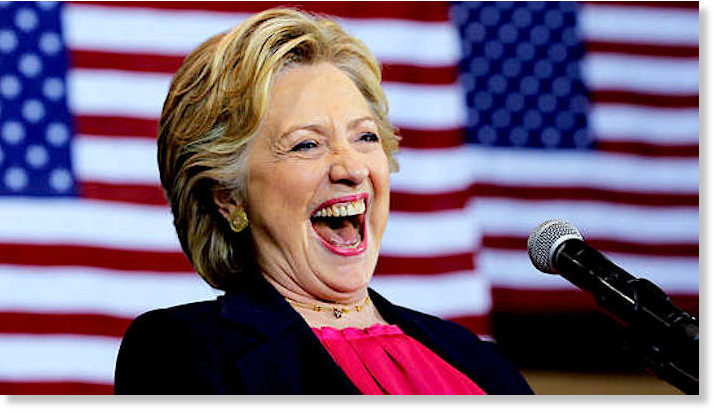
© Reuters/Brian Snyder"In her zeal!" Hillary Clinton on the campaign trail in 2016.
In her zeal to beat off challengers to her party's hardline anti-Russia orthodoxy, Hillary Clinton has only succeeded in sowing discord between the crop of Democratic presidential contenders. How very 'Putin-esque' of her.

Unfounded blaming of Russia for her own woes is nothing new from Hillary Clinton, who still blames the Kremlin for denying her the presidency three years ago. If it wasn't 'Russian hackers' leaking her emails, it was 'Russian bots' backing Bernie Sanders in the Democratic primary, or Vladimir Putin convincing the Green Party's Jill Stein to mount a third-party challenge. Though none of these accusations were founded in reality, Russia-bashing has become Clinton's stock in trade.

Her suggestion last week that "the Russians" were "grooming" 2020 candidate Tulsi Gabbard to run as a third-party candidate next year to split the Democratic vote was nothing surprising, especially as Gabbard's foreign policies - opposition to "regime change wars" and support for better Washington-Moscow ties - have seen her campaign smeared from the get go.

Aside from once again making Clinton the poster-child for 'Russiagate' delusion, that statement succeeded in causing some internal ructions within the party and its supporters in the media.

Comment: See also:


Newspaper

Best of the Web: Putin-Erdogan meeting crucial for the future of Syria

syria russia
In the first week of the month of October the US informed Turkey and Russia of its intention to withdraw from north-east Syria (NES). Turkish President Recep Tayyib Erdogan pulled out a plan prepared over a year ago to move forces into NES and take control of cities like Manbij, Ain al-Arab and Ras al-Ayn: an area 440 kilometres long and 35 kilometres wide. The US central command and the Russian military command, as well as other countries including Syria, were informed of the Turkish intention to move forward to fill in the gap. Turkey believes this incursion into the Syrian territory serves its national security and will relocate millions of Syrian refugees living in Turkey, and those who will move out of Idlib once the liberation of the city is in process. Erdogan considers it necessary to create a safe zone between the Turkish borders and that part of Syria under control of the Syrian branch of the PKK, the YPG, an organisation that figures in the US, Europe, NATO and Turkey lists of terrorism.

The quick reaction by Turkey caused alarm in Washington where President Donald Trump sent a letter - considered humiliating by Turkey - to his Turkish counterpart asking him "not to be a fool" and to wait before acting. Simultaneously, President Putin called a meeting for his National Security Council to discuss the US withdrawal and the Turkish intention to replace US forces in NES. Intelligence sources confirmed US withdrawal preparations. Syrian President Bashar al-Assad was consulted and informed about US and Turkish intentions.

Comment: See also:


Windsock

Everybody betrays everybody in Syria

Assad/flag
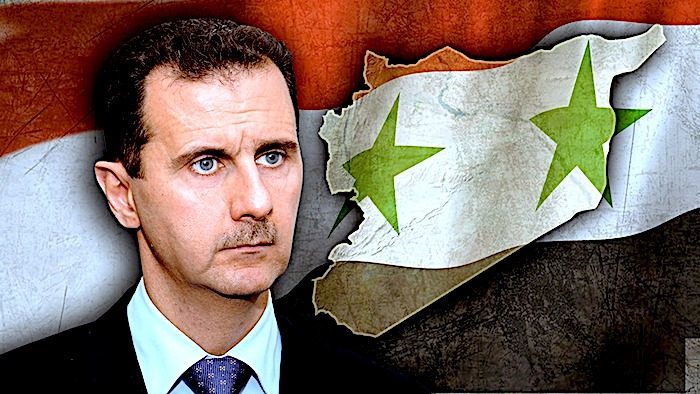
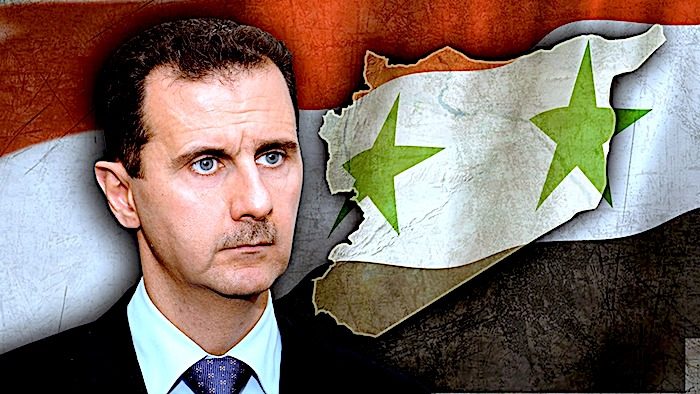
© Atriidim News Journal/WordPress.comSyrian President Bashar al-Assad
Just what have we witnessed in the recent events in Syria? It's hard to know, given the avalanche of superficial and over-the-top headlines in most U.S. media: betrayal of the Kurds, handing Syria over to Russia, caving to Turkey's President Recep Erdogan, bestowing a gift upon Iran, allowing ISIS to once again run wild, end of U.S. leadership.

Yet the bottom line of the story is that after some eight years of civil conflict, the situation in Syria is basically reverting to the pre-conflict norm. The Syrian government is now close to re-establishing its sovereign control again over the entire country. Indeed, Syria's sovereign control over its own country had been vigorously contested, in fact blocked, by many external interventions — mainly on the part of the U.S., Israel, Saudi Arabia, Turkey and a few European hangers-on — all hoping to exploit the early uprising against the regime of President Bashar al-Assad and overthrow it. In favor of what was never clear.

Much of this picture has a long history. The U.S. has been trying to covertly overthrow the Syrian regime off and on for some 50 years, periodically joined on occasion by Israel or Saudi Arabia or Iraq, or Turkey or the U.K. Most people assumed that when the Arab Spring broke out in Syria in 2011 that civil uprisings there too would lead to the early overthrow of another authoritarian regime. But it did not. This was in part due to Assad's brutal put-down of rebel forces, in part because of the strong support he received from Russia, Iran and Hezbollah, and in part because large numbers of Syrian elites feared that whoever might take Assad's place — most likely one or another Jihadi group — would be far worse, more radical and chaotic than Assad's strict but stable secular domestic rule.