OF THE
TIMES
I ACCUSE!This May 31 marks 10 years since Israeli commandos attacked the Gaza Humanitarian Flotilla in international waters and killed 10 people. Norman Finkelstein, one of the world's most effective critics of Israel, is observing the occasion with a persuasive indictment of Fatou Bensouda, the chief prosecutor of the International Criminal Court (ICC) in The Hague, for refusing to take legal action over Israel's lethal attack on the Mavi Marmara, the Flotilla's flagship.
Herewith a Proof Beyond Reasonable Doubt that ICC Chief Prosecutor Fatou Bensouda Whitewashed Israel
By Norman G. Finkelstein
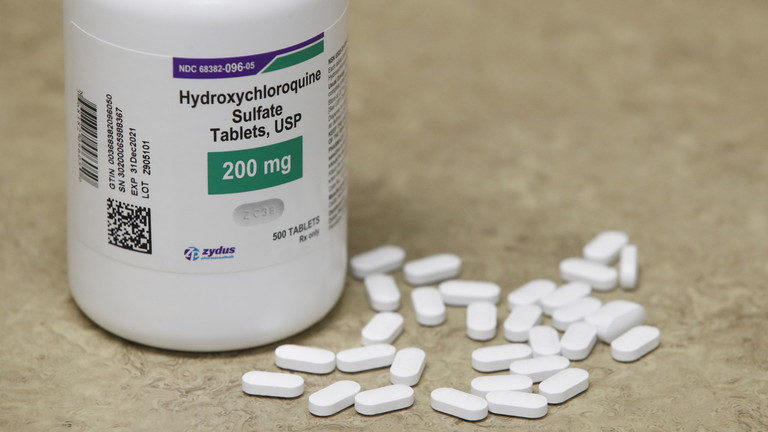
On Thursday, the Russian Health Ministry stated on its website that hydroxychloroquine's effectiveness and safety in the treatment of coronavirus is continually being monitored, but the ministry is not taking any steps towards outlawing it. This decision is in sharp contrast to moves made by some European countries which, due to safety concerns, have completely stopped the prescription of the drug to fight the coronavirus.Considering the decades that this drug has been in use, and to treat a variety of illnesses and patients, one wonders what it is that has caused some countries to suddenly become so concerned. Especially because other countries and its experts, noted above, obviously don't see sufficient evidence to be so concerned as to ban it outright.
"Several drugs are used to treat patients with Covid-19," a ministry statement said. "Among these drugs is hydroxychloroquine, which, due to its anti-inflammatory effect and effect on the immune system, has been used for decades to treat malaria, rheumatoid arthritis, and systemic lupus erythematosus."
According to the Health Ministry, recommendations to use HCQ have come from various foreign studies confirming its effectiveness, and it has been included in several national and international clinical guidelines, including in Russia. As it stands, Russian doctors are able to give the drug to patients who provide informed consent, taking into account potential side effects and risk factors.
"According to the results of monitoring the safety of hydroxychloroquine drugs during the Covid-19 pandemic in the Russian Federation, there were no fatal outcomes associated with rhythm disturbance in patients with HCQ," the ministry said.
Notably deaths from coronavirus in Russia have been extremely low when compared to many of those countries that have banned HCQ.
The drug, most often used to treat malaria, rose to prominence on March 19 when US President Donald Trump promoted the medication as a potential treatment for Covid‑19. On May 25, the World Health Organization (WHO) announced it would be suspending its hydroxychloroquine testing out of what it called an "abundance of caution." HCQ was just one part of a more extensive study of experimental coronavirus treatments.
Comment: Are the courts basing judgement on old paradigms of communication rather than the non-local/virtual platforms in use by today's society? Boundaries and formats have evolved since applicable laws were made. Evidence suggests at least one faction of the political arena is under ongoing attack. Time for new rules?
See also: