Puppet MastersS


Better Earth

The BRICS hit back: Trump's old tricks meet new world

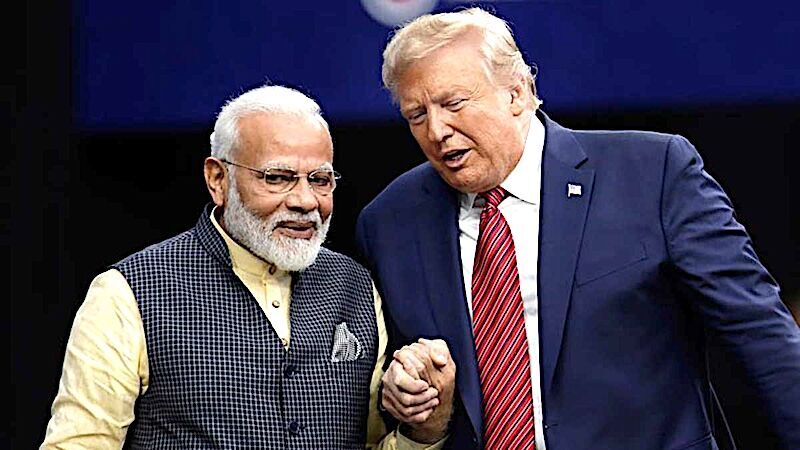
ModiTrump
© AP/FileUS President Donald Trump • India Prime Minister Narendra Modi
Washington's aggressive posture reveals a fundamental misreading of the multipolar world/

US President Trump has rattled Washington's ties with New Delhi to an unexpected degree. Countries, including, India were prepared for rough diplomatic weather after Trump won his second term, but did not anticipate the kind of onslaught he has unleashed on the global system and diplomatic norms.

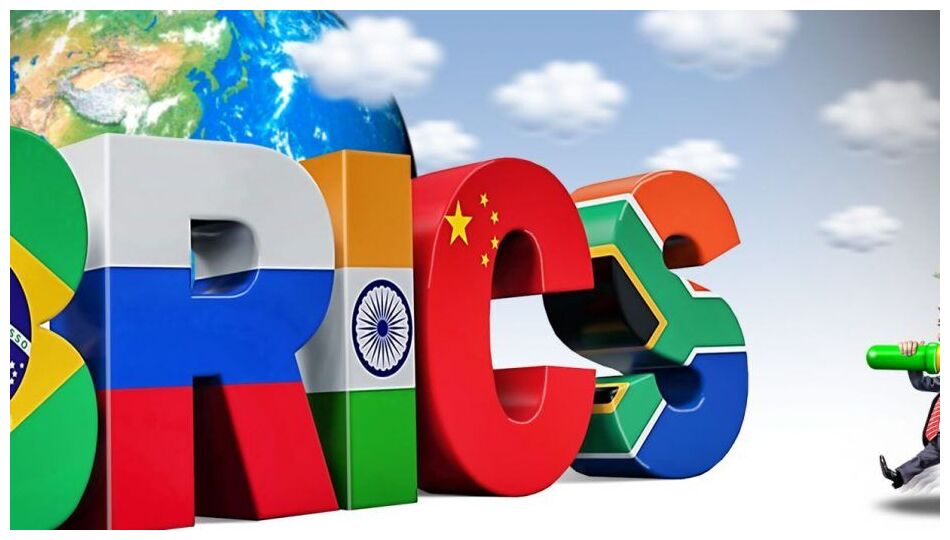
Trump's latest attack on India and the BRICS countries explains this underlying dynamic. The BRICS aspire to play a greater political, economic and financial role in global affairs. This aspiration is based on shifts of economic and concomitant political and financial power towards the so-called emerging powers or middle-income countries.

BRICS countries have already begun to use their national currencies in trading with each other as much as possible. The use of draconian financial sanctions on Russia by the West has accelerated this process.

Today, almost all trade operations between Russia and China are conducted in rubles and yuan. India too is encouraging the use of its national currency in payment transactions with select countries. A significant portion of the trade between India and Russia is now settled using a rupee-ruble mechanism.

Comment: Disengaging, from international policing, rescue, military response and non-US financial obligations, is the point. The US must address today's issues, solve its own problems, recalibrate its trajectory and above all - support and bring together the American people. If so, it would be the silver lining for Trump's thunder. If not, he deserves the critique.


Clipboard

Trump should get his new census — in 2030

Trump
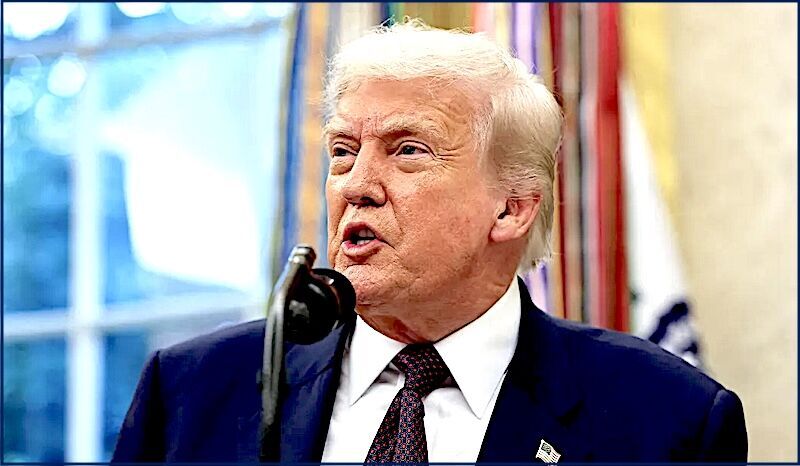
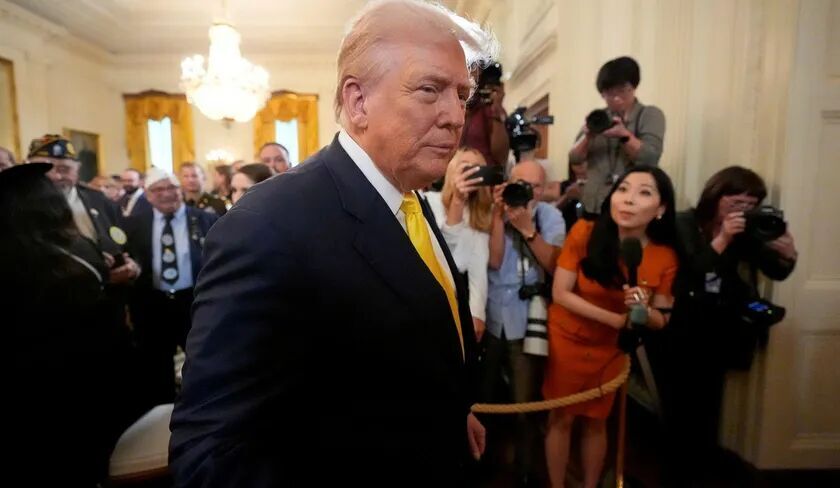
© Jonathan Ernst/ReutersUS President Donald Trump • White House • August 6, 2025
If he wants it sooner, in statistical terms, it'd be like launching D-Day after a month's preparation.

Trump wants a new census.

If, by this, he means a snap-census before the scheduled 2030 survey, he's demanding that the federal government undertake a gargantuan task with minimal planning and no discernible source of funding. In statistical terms, it'd be like launching D-Day after a month's preparation.

If the White Queen believes six impossible things before breakfast, that the Census Bureau could pull this off would qualify as one of them.

The agency couldn't even competently conduct the last, regularly scheduled census in 2020.

Given that conducting the census is a core function of the federal government — indeed, mandated by the Constitution — it is outrageous that the last survey missed so badly. It undercounted Florida and a handful of other red states (as well as Illinois) and overcounted New York and a number of blue states (plus, Ohio and Utah).

Comment: Perhaps the census bureau should get its act together. It has 4+ years. This is its purpose, its job.
See also:


Attention

Trump's trade tantrums and bullying hit a wall of solid BRICS

BRICS
© Public Domain
President Donald Trump's estimation of American power, like that of his own abilities, is increasingly seen to be badly overblown. This week, he threatened some 90 nations with tough trade penalties in the form of double-digit tariffs on their exports to the United States. It remains to be seen if he will actually implement the measures. Trump already cancelled a plan to impose worldwide tariffs back in April - his so-called Liberation Day - after no doubt realizing, or his more informed advisors realizing, that the U.S. cannot win a global trade war.

If there's one thing about Trump, it is that he is as quick to reverse threats as he is to issue them. The erratic behavior speaks of the muddled thinking and lack of coherent analysis in his so-called policies. Trump's reversals also speak of the limits to U.S. power as the world shifts to different realities in geopolitics and geoeconomics. The American power that Trump thinks exists is no longer.

This disconnect was evinced this week as Trump threatened tariffs on Brazil, Russia, India, and China. The so-called secondary levies were supposed to be related to Trump's deadline for Russia to reach a peace deal with Ukraine. Countries buying Russian oil are "fueling the war machine," he claimed. India hit back at what it called ridiculous hypocrisy, pointing out that the European Union purchased more Russian oil last year than India. The U.S. also buys billions of dollars-worth of Russian agricultural fertilizer, uranium, and other minerals.

In any case, the four countries targeted by Trump for secondary tariffs firmly rebuffed his threats. They dismissed Trump's intimidation and vowed to continue exercising their sovereign right to do business as they deem necessary for their national interests.

It is not clear what the White House will do next in the aftermath of such defiance. Trump's habit of extending deadlines for tariffs may postpone action.

The surprise announcement that Russian President Vladimir Putin is to meet Trump in person sometime next week, perhaps in the United Arab Emirates, may also persuade the American side to drop the secondary tariffs plan. Trump's egotistical craving to be seen as a peacemaker in Ukraine is such that a summit with Putin may be enough to appease his desire for headlines and a shot at winning the Nobel Peace Prize. His overblown claims about mediating peace between India and Pakistan, Azerbaijan and Armenia, and between Israel and Hamas show him to be driven by superficial success.

Gavel

Appeals court tosses contempt finding, rips Obama-appointed judge's legal abuse against Trump Admin

Boasberg
© Valerie Plesch/Bloomberg via GettyJames Boasberg, incoming chief judge of the U.S. District Court, in Washington, D.C., on Monday, March 13, 2023.
Obama-appointed Judge James Boasberg exceeded his authority when he threatened the Trump administration with criminal contempt, an appeals court found on Friday.

In a 2-1 decision, the D.C. Circuit Court of Appeals sided with the Trump administration, tossing Boasberg's order finding probable cause for contempt over the administration's decision not to turn planes around.

Boasberg claimed administration officials violated a March 15 temporary restraining order (TRO) directing them not to remove alleged members of a foreign gang to El Salvador by sending out planes that same day. He initiated contempt proceedings even after the Supreme Court tossed his initial TRO in a 5-4 ruling in April.

Comment: Boasberg has been a thorn in the administration's side from the get-go. The Xitterati have some thoughts on Boasberg:


Wolf

The '1619 Project' is a brazen deception in the service of statism

Nikole Hannah-Jones 1619 project book
© Associação Brasileira de Jornalismo InvestigativoNikole Hannah-Jones
Phillip Magness's new book debunks the political project — disguised as history — for its deliberate lies and hidden agenda.

It is useful to have frequent reminders that people often resort to deception to peddle their beliefs. The book The 1619 Project Myth by Phillip W. Magness is highly valuable in that regard, as it devastates the historical accuracy of "The 1619 Project" published by The New York Times.

That long magazine piece was the brainchild of one of its writers, Nikole Hannah-Jones, who used it to make her breathtaking claim that the true date of America's founding was not 1776, but rather 1619, the year when the first slaves were landed in North America.

Comment: A little more on race grifter Nikole Hannah-Jones:


Star of David

Israeli military plans to occupy Gaza City in major escalation of war

north gaza IDF soldiers destruction
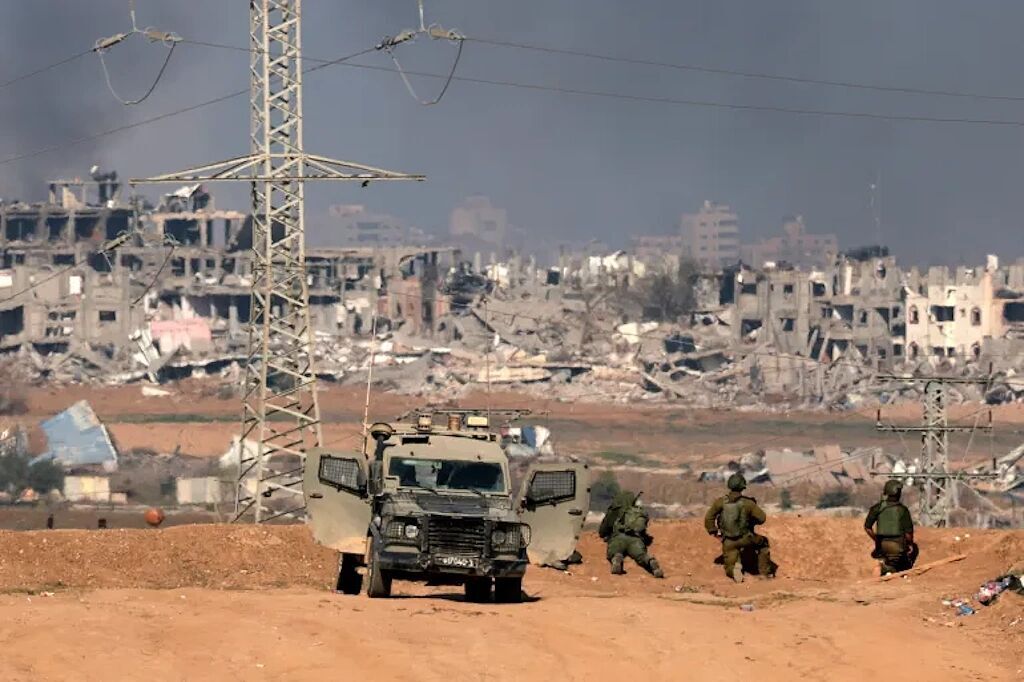
© Menahem Kahana/AFThis picture taken from the Israeli border with the northern Gaza Strip shows Israeli soldiers looking over the destruction in Gaza City on January 1, 2024
Prime Minister Benjamin Netanyahu suggested earlier that Israel's military will 'take control of all Gaza'.

Israel's security cabinet has approved a plan by Israeli Prime Minister Benjamin Netanyahu for the military occupation of Gaza City, located in the north of the Palestinian enclave.

"The [Israeli military] will prepare to take control of Gaza City while providing humanitarian aid to the civilian population outside the combat zones," Netanyahu's office said in a statement early on Friday announcing the takeover plan.

Two Israeli government sources told the Reuters news agency that any resolution by the security cabinet would now need to be approved by the full government cabinet, which may not meet until Sunday.

Comment: The Arab nations want no part of Israel's plan.


Star of David

Report: Trump yelled at Netanyahu in call on Gaza aid, said advisers showed him proof of starvation

President Donald Trump
© Mark Schiefelbein/APU.S. President Donald Trump departs an event to mark National Purple Heart Day in the East Room of the White House, Thursday.
During the call, which a former U.S. official reportedly described as 'a direct, mostly one-way conversation about the status of humanitarian aid,' Netanyahu told Trump that reports of famine in Gaza were false. Netanyahu's office described the report as 'complete fake news'

U.S. President Donald Trump yelled at Prime Minister Benjamin Netanyahu during a phone call after the latter said Hamas had fabricated reports of hunger in Gaza, NBC News reported Friday.

According to the report, Netanyahu demanded a phone call with Trump after the U.S. president rebutted his statements, saying that children in Gaza "look very hungry" during his Scotland visit, adding that "you can't fake that."

"We're giving a lot of money and a lot of food, and other nations are now stepping up," Trump said while visiting Scotland last week.

Stop

Zelensky says 'it's time to end the war'

Zelensky
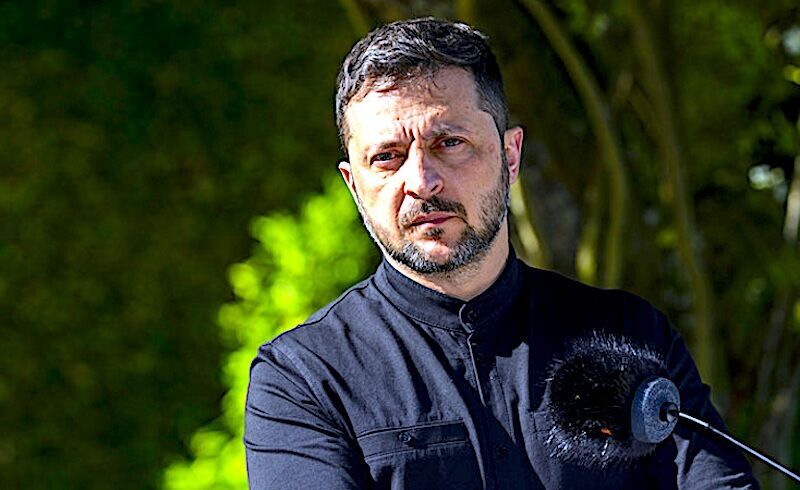
© Martin Sylvest Andersen/Getty ImagesVladimir Zelensky
The comments came shortly after Moscow said Vladimir Putin and Donald Trump could meet as early as next week.

Ukraine is open to talks with Russia on settling the conflict, including in a format with a third party, Vladimir Zelensky has said.

In a post on Telegram on Thursday, the Ukrainian leader said he had spoken with German Chancellor Friedrich Merz to discuss ending the conflict in what he described as "a dignified peace" that would "determine the security conditions for Europe for decades."

He also reported a discussion the previous day which focused on "potential formats for meetings for peace at the level of leaders in the near future," including two bilateral and one trilateral framework.

"Ukraine is not afraid of meetings and expects the same bold approach from the Russian side. It is time to end the war," he said.

Comment: Believe it when we see it.


Calendar

Putin-Trump meeting could happen next week - Kremlin

Yury Ushakov
© Alexander Kazakov/SputnikRussian Presidential Aide Yury Ushakov
Russian President Vladimir Putin could meet his US counterpart, Donald Trump, as soon as next week, Kremlin aide Yury Ushakov told journalists on Thursday. A venue for the summit has already been agreed, he added.

Expectations for an in-person meeting between Putin and Trump increased following a visit to Moscow by US special envoy Steve Witkoff this week, which the White House described as producing better results than expected.

Ushakov said details of the proposed meeting would be revealed later, but an agreement in principle has already been reached that it would happen soon. Witkoff also proposed the idea of a trilateral meeting involving Ukraine's Vladimir Zelensky, which Moscow declined to comment on, according to Ushakov.

Previous reports in the US media said the Trump administration was looking for a meeting with Putin next week and had proposed extending an invitation to Zelensky. The Ukrainian leader claims he needs to talk directly with the Russian president to make progress in the peace talks.

Dollar

Trump's tariffs to cost global economy $2 trn

cargo
© shaunl/Getty Images
The US president's trade policy is slowing investment and reshaping supply chains, according to the outlet.

The global fallout from US President Donald Trump's tariffs is set to wipe out $2 trillion from the world's economy by 2027 as a result of trade and investment disruptions, Bloomberg reported on Monday.

Since returning to office in January, Trump has embarked on a tariff campaign aimed at protecting US manufacturers and overturning trade deficits. In April, he introduced a blanket 10% tariff on all imports and higher tariffs on specific countries deemed to have unfair trade practices. Some tariffs were paused for trade negotiations, set to take effect in August.

The overall level of US tariffs is now the highest since the 1930s, about six times what it was when Trump took office, according to Bloomberg. The policy is already causing companies to freeze capital spending, reroute supply chains, and trim margins to absorb rising costs, the outlet claims.

"The hit to the world economy will reach $2 trillion by the end of 2027 relative to its pre-trade war path," the article says.

Comment: Meanwhile, Russian currency has passed a foreign trade threshold:
The share of the Russian ruble in payments for Russian exports surpassed 50% for the first time earlier this year, according to central bank data.

In May, the ruble accounted for 52.4% of export settlements, up slightly from April's 52%, as Moscow accelerated its shift away from Western currencies under sanctions pressure. Both months marked the first time the ruble has exceeded 50% across all major trade regions.

Tatiana Belyanchikova, a finance professor at Plekhanov Russian University of Economics commented:
"Notably, the rise in ruble payments coincides with a decline in the use of currencies from so-called 'friendly' countries. Trading partners - aside from those using major global currencies such as the US dollar or euro - increasingly prefer rubles to avoid conversion costs and secure better terms."
Oceania led with 94.2% of export payments in rubles, followed by the Caribbean (92.1%) and Africa (84.6%). Europe and North America reached 59.8% and 51.9%, respectively.

The ruble's dominance and a shift towards national currencies is even more pronounced in trade with neighboring states and key partners. Nearly 90% of settlements with nearby countries were conducted in national currencies by the end of May, while ruble-yuan trade with China hit 95% in late 2024, according to central bank figures.

Analysts say the data underscores Moscow's accelerating de-dollarization drive as sanctions reshape global financial flows, with strategic partners increasingly adopting the ruble to bypass restrictions.