Puppet MastersS


Red Flag

Taibbi: No doubt left... Russiagate was a cover-up

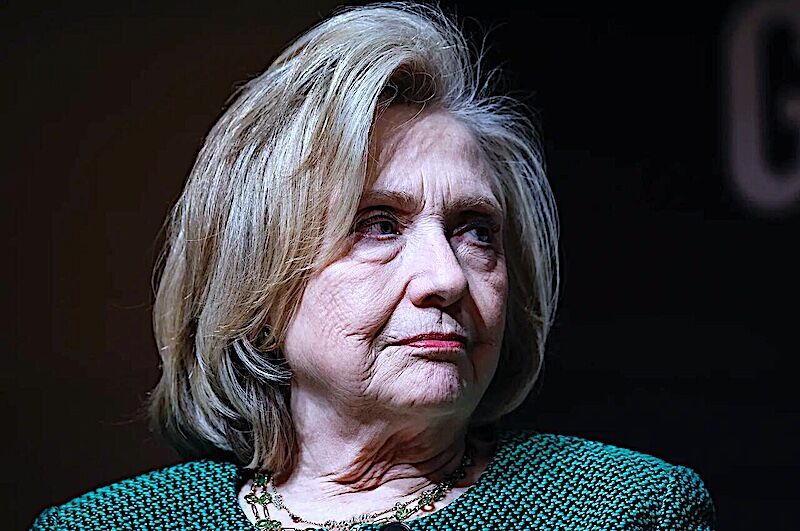
Hillary
© Anna Moneymaker/Getty ImagesHillary Clinton
The most infuriatingly complex scandal of all time has just been reduced to a page or two, thanks to another declassified release...

It was a cover-up.

The Russiagate scandal has long been one of the most convoluted, hard-to-follow news stories of all time. It even has multiple names thanks to its peculiar chronology. From 2016 until April 2019 — while Democrats still held out hope of "presidency-wrecking" revelations that would topple Donald Trump — it was generally known as the Trump-Russia scandal. After Special Counsel Robert Mueller broke the hearts of MSNBC audiences by issuing a report without new indictments, attention began to be cast on the scandal's fraudulent construction, how it was propped up by political spying, illegal leaks, and WMD-style intelligence fakery. Trump and others began to call it Spygate or the Russia hoax, but the name that stuck was Russiagate.

Those of us who covered the story from the start had a difficult time explaining to audiences what it was, as we ourselves didn't know. Now we do, after a month of disclosures, capped yesterday by the release of an explosive (and inexplicably long-classified) annex to the report of Special Counsel John Durham. Finally, it seems, we can explain how the idea that Donald Trump was "gaffing his way toward treason" through a secret love affair (really!) with Vladimir Putin and extensive "ties" or "links" with Russia suddenly became The Biggest Story in the World in the summer of 2016.

Arrow Down

Europe's last security project is quietly collapsing

OSCE photographer
© Heinz-Peter Bader/AP/FileCatch it before it vanishes!
This week marks the 50th anniversary of a landmark event in European diplomacy. In 1975, the leaders of 35 countries, including the United States, Canada, and almost all of Europe, gathered in the Finnish capital Helsinki to sign the Final Act of the Conference on Security and Cooperation in Europe (CSCE). The agreement capped years of negotiation over peaceful coexistence between two rival systems that had dominated world affairs since the end of the Second World War.

At the time, many believed the Final Act would solidify the postwar status quo. It formally recognized existing borders - including those of Poland, the two Germanys, and the Soviet Union - and acknowledged the spheres of influence that had shaped Europe since 1945. More than just a diplomatic document, it was seen as a framework for managing ideological confrontation.

Fifty years later, the legacy of Helsinki is deeply paradoxical. On the one hand, the Final Act laid out a set of high-minded principles: mutual respect, non-intervention, peaceful dispute resolution, inviolable borders, and cooperation for mutual benefit. In many ways, it offered a vision of ideal interstate relations. Who could object to such goals?

Comment: Change lurks in the shadows of complacency and stagnation (too little, too late).


Footprints

US to pilot $15,000 visa deposit scheme

paperwork
© Ivan Balvan/Getty Images
The move is part of President Donald Trump's crackdown on illegal immigration, which many warn could hurt the economy.

The US is launching a pilot program that will require foreign nationals from certain countries to pay up to $15,000 for a tourist or business visa, according to a notice posted in the Federal Register on Tuesday.

US President Donald Trump has made illegal immigration a central focus of his presidency, vowing to deport millions of undocumented migrants. His administration has expanded border security, tripled Immigration and Customs Enforcement detention funding, cut humanitarian programs, and detained thousands of illegal migrants.

In June, Trump also fully or partially barred entry for citizens of 19 nations on security grounds and imposed a mandatory "integrity fee" on all nonimmigrant visa applicants.

Under the new program, which begins August 20, US consular officers may require visa bonds of $5,000 to $15,000 from certain travelers. Running for a year, the program applies to B-1 and B-2 travelers from countries with high visa overstay rates, limited vetting data, or citizenship-by-investment programs without residency requirements. Bond amounts will be based on applicants' 'personal circumstances', including travel purpose, employment, income, skills, and education.

Comment: Thank Biden's signature stamp for the set-up. There are financial detriments whether migrants stay or leave and financial detriments if Americans have no jobs. Trump's mandate is to protect and fortify an income future for legal Americans, with or without migrants.


Fire

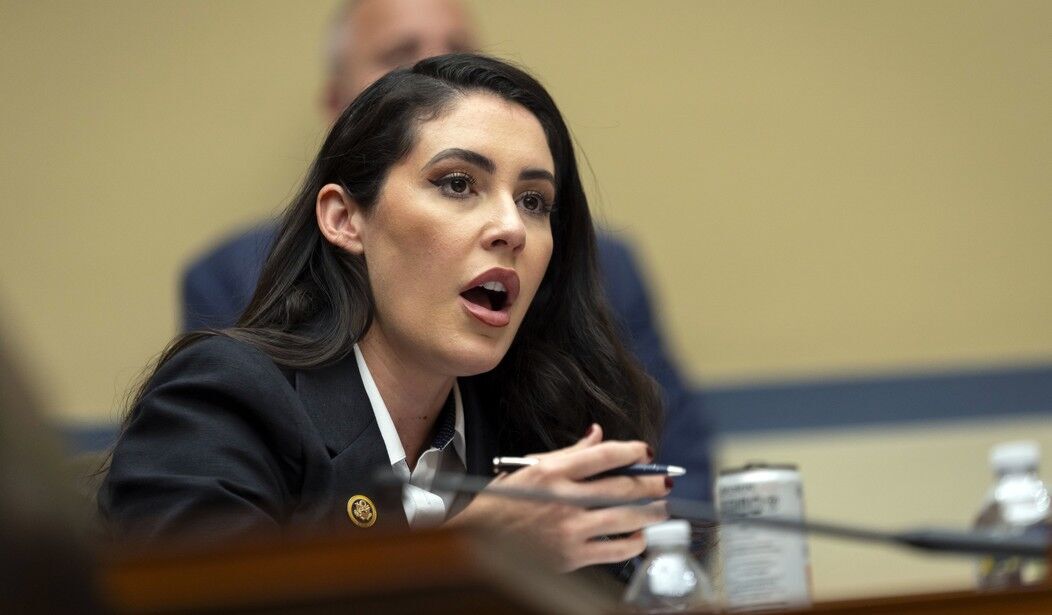
FBI 'burn bags' had way more than Russiagate files in them

Rep. Anna Paulina Luna (R-Fla.)
© AP Photo/Ben Curtis/FileRep. Anna Paulina Luna (R-Fla.)
Last month we learned that FBI Director Kash Patel uncovered a hidden SCIF room at FBI headquarters — sealed off since the Comey era — stuffed with thousands of Trump-Russia documents and burn bags. Among the most damning finds? The classified annex to the Durham report.

"Just think about this," Patel said. "Me, as director of the FBI, the former 'Russiagate guy,' when I first got to the bureau, found a room Comey and others hid from the world in the Hoover Building — full of documents and computer hard drives no one had ever seen. They locked the door, hid access, and just said, 'No one's ever gonna find this place.'"

But there was something else in those burn bags besides Russiagate documents.

Bad Guys

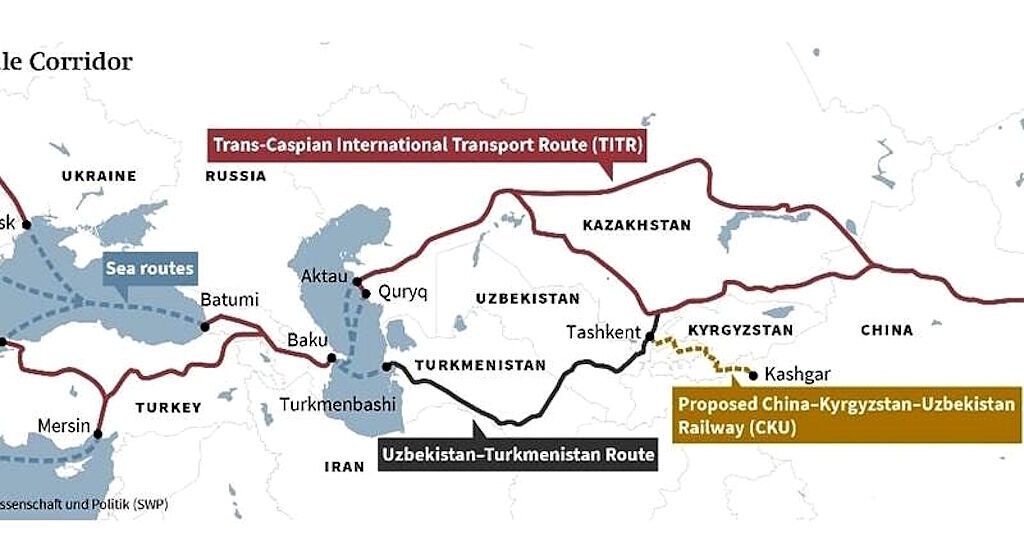
Azerbaijan: A pawn on the West's chessboard?

Azerbaijan pipelines central asia oil british petrolum resource grab
In The Grand Chessboard, Zbigniew Brzezinski, a major influence on U.S. foreign policy, referred to Azerbaijan as "the vitally important 'cork' in the bottle containing the riches of the Caspian Sea basin and Central Asia."1 His metaphor, laden with imperialist undertones, vividly captures Azerbaijan's strategic value as a gateway to vast energy and mineral resources. At the time of the book's publication in 1997, Azerbaijan's potential as a major gas and oil producer was already well-known (the Baku oil boom started in the 1870s, when the country was part of the Tsarist empire). Its importance as an energy corridor and critical node in global trade emerged later, but it was already clear that the West would seek to leverage Azerbaijan's position not only to gain an edge in energy and trade, but also to extend its reach in the region in an attempt to undermine Russian security and interests.

During the Cold War, the Caucasus was largely off-limit to Western shenanigans, but following the Soviet Union's dissolution in 1991, this region re-emerged as a contested space. The spike in the number of reports published by US/UK/EU think tanks after the 2020 Nagorno-Karabakh War, along with other indicators, suggest a surge in attention to the South Caucasus and Central Asia.

Attention

The Other Summit: What the West forgot to cover about Tianjin

With the NATO summit in Washington having dominated headlines with its rituals of unity and deterrence, something more transformative was taking shape in Tianjin, China.
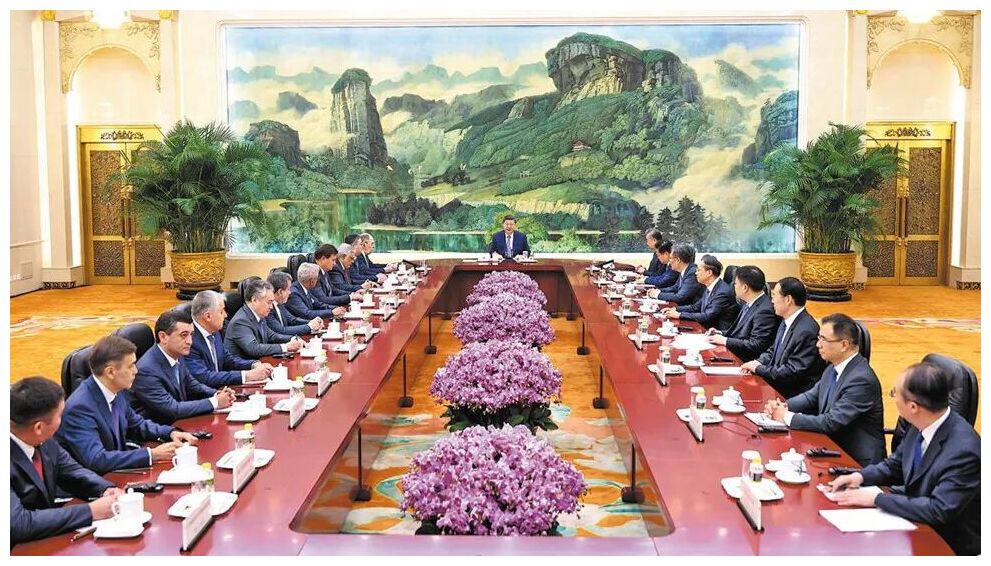
Tianjin Summit
© New Eastern Outlook
There, away from the cameras and choreographed soundbites, a new security architecture was being drawn not by force, but by consensus. This alliance now presents an existential threat to the old world order.

Blueprints for a Post-Western Order

On July 15, 2025, while most Western media outlets were fixated on NATO posturing in Washington, a very different kind of summit took place in Tianjin, China. There, the foreign ministers of the Shanghai Cooperation Organization (SCO) member states gathered under the quiet but firm leadership of China's Wang Yi. Iran's Abbas Araghchi, Russia's Sergey Lavrov, and India's Subrahmanyam Jaishankar joined ministers from Central Asia, Belarus, and Pakistan to lay the foundations for what Tehran called an "anti-NATO" vision for Eurasian security.

Notably, the Iranian delegation was not at the conference as guest observers. Iran came with a plan. And Abbas Araghchi delivered a strategic blueprint to transform the SCO from a cautious regional forum into a vehicle for sovereign resilience and multipolar order. His proposals included:
  1. A permanent coordination mechanism to track hybrid warfare
  2. A Shanghai Security Forum for intelligence exchange
  3. A sanctions-resistance center
  4. Cultural defenses against Western information hegemony
The Iranian minister invoked UN Charter violations and Resolution 487 to argue that the so-called "rules-based order" has become a mask for coercive diplomacy and unchecked aggression.

Wang Yi's keynote echoed those priorities but expanded the frame: he warned of deepening global fragmentation, accused unnamed powers of weaponizing international law, and called for a rebirth of multilateralism anchored in the "Shanghai Spirit", mutual respect, diversity, and civilizational pluralism.

The meeting also produced a series of draft resolutions for the upcoming Tianjin Heads of State summit, including a decade-long SCO development strategy. And while the world looked elsewhere, China's foreign minister stood with Iran's top diplomat to announce that more than 20 heads of state and 10 international organizations would join the Tianjin Summit from August 31 to September 1.

Newspaper

FM Sergey Lavrov's article 'The Helsinki Act's 50th anniversary: Expectations, reality, and future,' Rossiyskaya Gazeta, Aug. 1, 2025

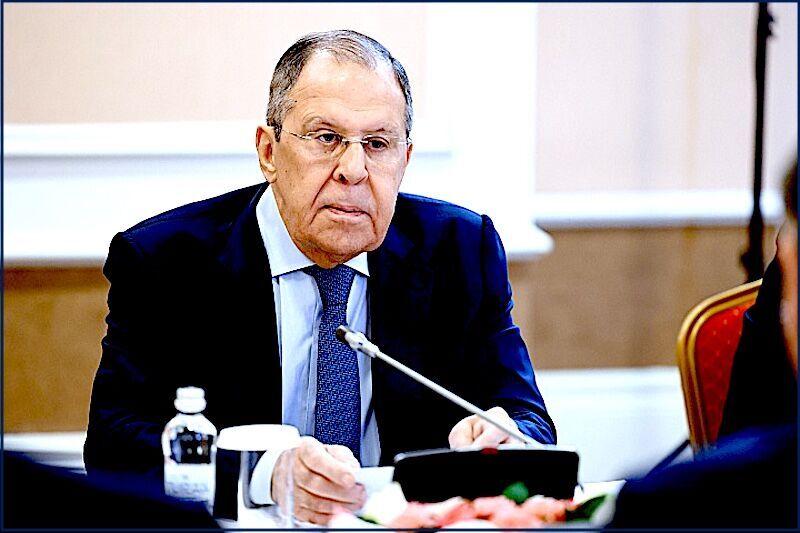
Lavrov
© UnknownRussian Foreign Minister Sergey Lavrov
Marking the 80th anniversary of Victory in the Great Patriotic War and World War II in 2025 serves as an occasion for us to recall and reaffirm the importance of peace which came at such a high cost for our forefathers. We must also be mindful of how fragile this peace architecture is. In fact, its integrity hinges upon the ability of countries and their people to engage in coordinated collective action. Back in 1945, the year of Victory, major powers realised the need to overcome their differences for the sake of the humankind as a whole. This paved the way for establishing the United Nations as one of the key derivatives of this vision. In fact, the purposes and principles set out in the UN Charter remain relevant to this day and are in step with the reality of an emerging multipolar world order.

Comment: Truth to purpose and purpose to truth...it doesn't get any better than this.


Warning

Suspicious Minds

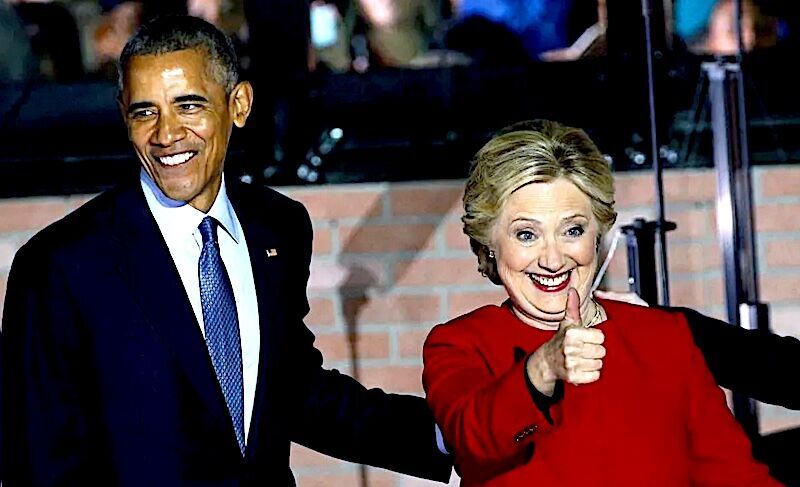
Barack Hillary
© UnknownBarack Obama • Hillary Cllinton
"It was a coup, and I'm using that term literally ... One egregious felony after another."
— Stephen Miller
America is tired of being driven insane, of having absurdities crammed into our collective consciousness. Reality is an agreement about what is going on in the world. That act of faith requires such an agreement be based on what is demonstrably true. Without it, society dissolves into chaos and failure.

The RussiaGate psychodrama is about an agreement based on lies. It started with Hillary Clinton's desperate ploy to save her floundering 2016 election campaign. Her emails somehow got sent to Wikileaks, a radical news org dedicated to revealing government secrets, implicating misconduct. It was easy to declare the Russians did it, by hacking — when it was much more likely, in fact, proven by a forensic audit, that a Clinton campaign insider downloaded the info on a thumb drive, perhaps one Seth Rich, found murdered on a DC sidewalk soon thereafter.

Comment: Bear in mind, it's not over...it has just begun.


Whistle

New whistleblower report drops as pressure mounts in Russia case

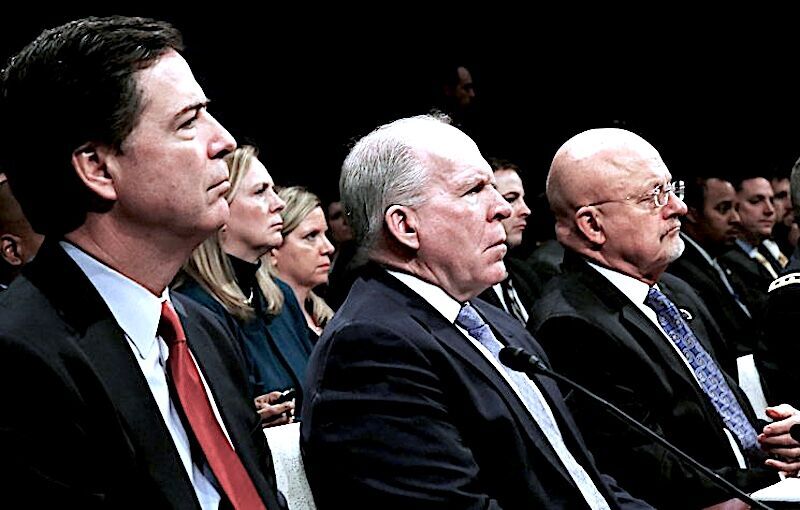
comey brennan clapper
© Gary Cameron/ReutersJames Comey • John Brennan • James Clapper
How many intelligence chiefs fit in the back of a Volkswagen?

I arrived in Washington for an event last night, trying to finish the story about former CIA official Susan Miller's disputed biography on my phone, when new information dropped from Director of National Intelligence Tulsi Gabbard's office. Before heading home today (with a pause to record America This Week from a hotel), I wanted to catch readers up on new developments, and explain some of what we'll be publishing in the next week or so, as a wall of nonsense enters crumble mode.

Tulsi's new document is a whistleblower statement, from a former "Deputy National Intelligence Officer (DNIO) at the National Intelligence Council (NIC)." The former official's story mostly surrounds his suppressed objections to the use of unverifiable evidence in the Russiagate assessment, and subsequent odyssey through the whistleblower bureaucracy. A tale I'd never heard before, that the dossier material was inserted during a car ride involving James Comey, James Clapper, and John Brennan, makes a cameo.

Comment: It's all unraveling...thread by thread, con by con...and gaining speed.


Rocket

Why Russia and the US are bound to cooperate beyond Earth

2 spacemen
© Dasha Zaitseva/Gazeta.RuSharing common ground
In orbit, not in opposition: Moscow and Washington find rare common ground in space.

The head of Roscosmos, Dmitry Bakanov, has made a rare visit to the United States - his first official trip since assuming the top job at Russia's space agency. The occasion? To attend the launch of Russian cosmonaut Oleg Platonov aboard a SpaceX spacecraft and to meet with his counterpart, acting NASA Administrator Sean Duffy.

Whether or not he meets Elon Musk remains to be seen. But this trip is significant far beyond the question of private handshakes.

This was, first and foremost, a political and diplomatic visit - the kind that's planned months in advance and requires high-level approval. That it's taking place now, in the midst of a direct confrontation between Moscow and Washington over Ukraine, speaks volumes. It marks the first in-person meeting between the heads of Roscosmos and NASA since 2018, when Dmitry Rogozin hosted Jim Bridenstine at Baikonur.