Puppet MastersS


Syringe

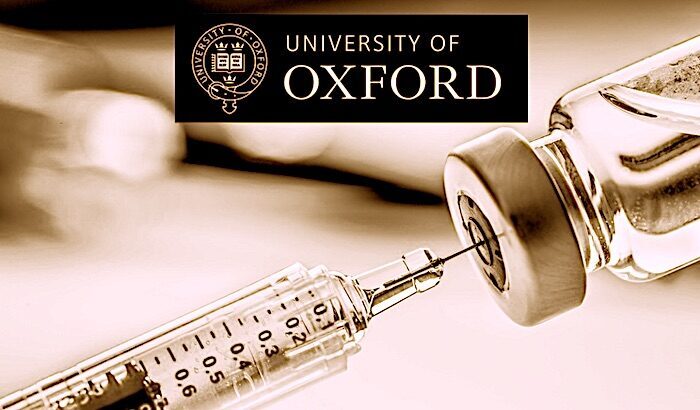
Developers of Oxford-AstraZeneca vaccine tied to UK eugenics movement

U of Oxford vaccine
© University of Oxford, screenshot
The developers of the Oxford-AstraZeneca vaccine have previously undisclosed ties to the re-named British Eugenics Society as well as other Eugenics-linked institutions like the Wellcome Trust.

On April 30th, AstraZeneca and Oxford University announced a "landmark agreement" for the development of a COVID-19 vaccine. The agreement involves AstraZeneca overseeing aspects of the development as well as manufacturing and distribution while the Oxford side, via the Jenner Institute and Oxford Vaccine Group, researched and developed the vaccine. Less than a month after this agreement was reached, the Oxford-AstraZeneca partnership was awarded a contract from the US government as part of Operation Warp Speed, the public-private COVID-19 vaccination effort dominated by the US military and US intelligence.

Though the partnership was announced in April, Oxford's Jenner Institute had already begun developing the COVID-19 vaccine months before, in mid-January. According to a recent BBC report, it was in January that the Jenner Institute first became aware of how serious the pandemic would soon become, when Professor Andrew Pollard, who works for both the Jenner Institute and heads the Oxford Vaccine Group, "shared a taxi with a modeler who worked for the UK's Scientific Advisory Group for Emergencies." During the taxi ride, "the scientist told him data suggested there was going to be a pandemic not unlike the 1918 flu." Due to this sole encounter, we are told, the Jenner Institute then began to pour millions into the early development of a vaccine for COVID-19 well before the scope of the crisis was clear.

For much of 2020, the Oxford-AstraZeneca vaccine was treated as an early front-runner, though its lead would later be marred by scandals related to its clinical trials, including the death of participants, sudden trial pauses, the use of a problematic "placebo" with its own host of side effects and the "unintentional" mis-dosing of some participants that skewed its self-reported efficacy rate.

Bullseye

Best of the Web: The threat of authoritarianism in the US is very real. And it has nothing to do with Trump

Bezos Cook Pichai Zuckerberg
© Bertrand Guay/Tobias Schwarz/Angela Weiss/Mark Ralston/AFP/Getty ImagesFacebook CEO Mark Zuckerberg • Google CEO Sundar Pichai
Apple CEO Tim Cook • Amazon Founder and CEO Jeff Bezos
Asserting that Donald Trump is a fascist-like dictator threatening the previously sturdy foundations of U.S. democracy has been a virtual requirement over the last four years to obtain entrance to cable news Green Rooms, sinecures as mainstream newspaper columnists, and popularity in faculty lounges. Yet it has proven to be a preposterous farce.

In 2020 alone, Trump had two perfectly crafted opportunities to seize authoritarian power — a global health pandemic and sprawling protests and sustained riots throughout American cities — and yet did virtually nothing to exploit those opportunities. Actual would-be despots such as Hungary's Viktor Orbán quickly seized on the virus to declare martial law, while even prior U.S. presidents, to say nothing of foreign tyrants, have used the pretext of much less civil unrest than what we saw this summer to deploy the military in the streets to pacify their own citizenry.

Comment: Small correction: Orban did not declare any more than every other Western govt in 2020. In fact, in the 'authoritarian stakes', Hungarians - and eastern Europe in general - had a far easier time of it in 2020 than their western European and anglophone counterparts.


Arrow Down

America has given up on arms control, withdrawn from treaties to try to achieve 'global supremacy' says Russian Defense Ministry

US Navy destroyer
© SputnikUS Navy destroyer Carney in the Black Sea
A senior Russian official has accused Washington of changing its priorities, rejecting stability, and attempting to gain supremacy - in particular, of leaving arms control agreements so it can build up its military potential.

Speaking to Moscow's newspaper of record, Rossiyskaya Gazeta, Deputy Minister of Defense Alexander Fomin expressed the hope that the US would change its stance once President-elect Joe Biden took office in January.
"The United States has been pushing ahead with a policy aimed at building up its military power for a long time. Under far-fetched pretexts, the American side renounces its arms control treaty obligations that prevent the achievement of global dominance."
On February 5, 2021, the New START nuclear arms reduction treaty between the US and Russia is due to expire, with President Donald Trump believing its terms to be unfair on Washington and therefore not renewing it. America's reluctance to extend the agreement is the latest in a series of deals to which the White House has put an end.

Telescope

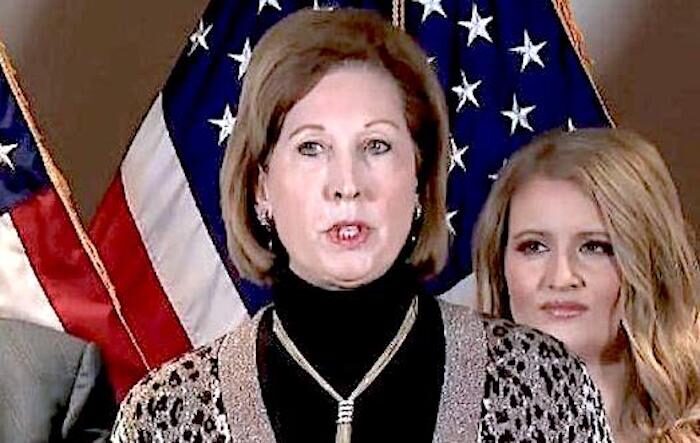
Why Sidney Powell gets the Galileo treatment

Sidney Powell
© screenshotLegal council Sidney Powell
Observers of human history might have to go back all the way to Galileo to find a ruling class as determined to cancel someone as much as today's is to cancel Sidney Powell in response to her single-minded devotion to bringing the truth of the full scale of the 2020 election fraud to light.

Galileo broke the news/discovery that the earth wasn't the center of the universe, and in fact revolved around the sun, and that just didn't comport with what the ruling class, including church authorities, were prepared or willing to accept. Galileo rocked their world -- probably deeply threatening their hold of authority over the masses if they were exposed as so fundamentally wrong -- so their solution wasn't to deal with the truth but to put Galileo under house arrest and demand that he renounce his discovery.

The American ruling class of 2020 is bizarrely opposed to allocating any oxygen to what Sidney Powell has discovered and is alleging about Dominion Voting Systems (and others), about vote-shifting algorithms and partial decimal vote counts, and about vote manipulation showing up throughout the country. Even Rudy Giuliani, the President's attorney, and Mark Meadows, the President's Chief of Staff, seem hellbent on publicly keeping their distance from Powell -- and on keeping President Trump from getting too close to or aligned with Powell.

Other elements of the ruling class -- such as SCOTUS and much of the rest of the federal judiciary -- won't even look at the evidence Powell has assembled. They just 'don't want to go there', and so they make up legal excuses -- e.g., lack of standing -- and wave off the substance of the allegations.

What gives? Why are they behaving this way?

Comment: See also:


Jet5

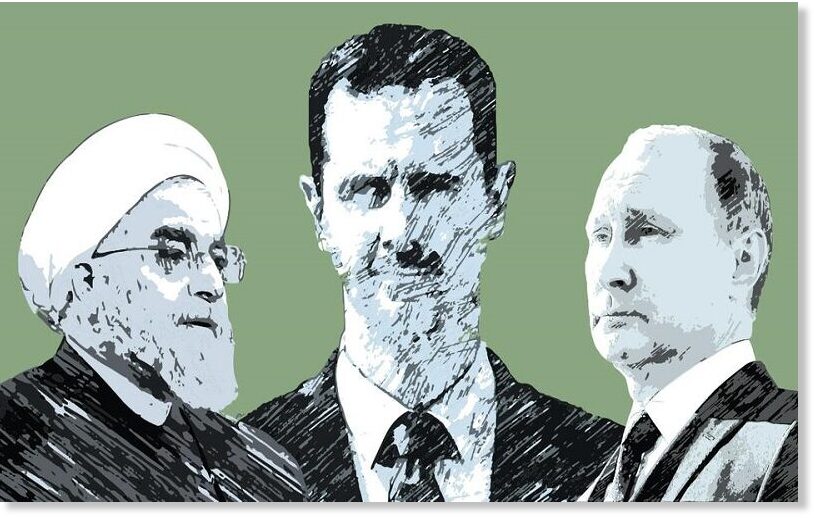
Russian & Iranian experts finally discussed their differences over Syria

rouhani assad putin
The Russian International Affairs Council (RIAC) and the Institute for Iran-Eurasia Studies (IRAS) published a joint report addressing their nations' differences over Syria which finally breaks the taboo about openly discussing them and will hopefully inspire more regular expert interactions on these important issues.

Breaking The Taboo


It had hitherto been taboo for many in the Alt-Media Community to discuss the differences between Russia and Iran in Syria for fear of unwittingly playing into the West's divide-and-rule scheme against two of its main rivals, yet the failure to publicly discuss them led to the creation of an alternative reality whereby many people felt pressured by the community's gatekeepers to imagine that no such differences even exist. This "political correctness" amounted to a de facto policy of censorship that in turn led to the creation of terribly inaccurate analyses about those two's relations in the Arab Republic. That's thankfully beginning to change, however, after experts from the Russian International Affairs Council (RIAC) and the Institute for Iran-Eurasia Studies (IRAS) published a joint report last week titled "Russia and Iran in Syria and Beyond: Challenges Ahead". This publication sends the message that it's finally acceptable to publicly discuss their problems in Syria, especially Russia's close relations with "Israel", and will hopefully inspire more regular expert interactions on these issues.

Three Main Challenges

The 32-page document is much too detailed to concisely summarize so interested observers should read it in full at their convenience. For those who don't have the time to do so, then the main point is that Russian-Iranian relations in Syria have thankfully shown more resilience than their critics expected, but some serious divergences remain despite several significant convergences. Both sides for the most part have shared views on multipolarity, anti-terrorism, and regional security, but they don't see eye-to-eye when it comes to Syria's ultimate political settlement, the countries participating in Syria's reconstruction, and Russia's excellent relations with "Israel". These three issues serve as a major impediment to their closer coordination in that conflict, yet the Russian side seems to underestimate just how uncomfortable the last two issues make Iran feel. This is obvious after reading the report, which is divided into a jointly published introduction followed by a comprehensive elaboration of the Iranian and Russian points of view.

Map

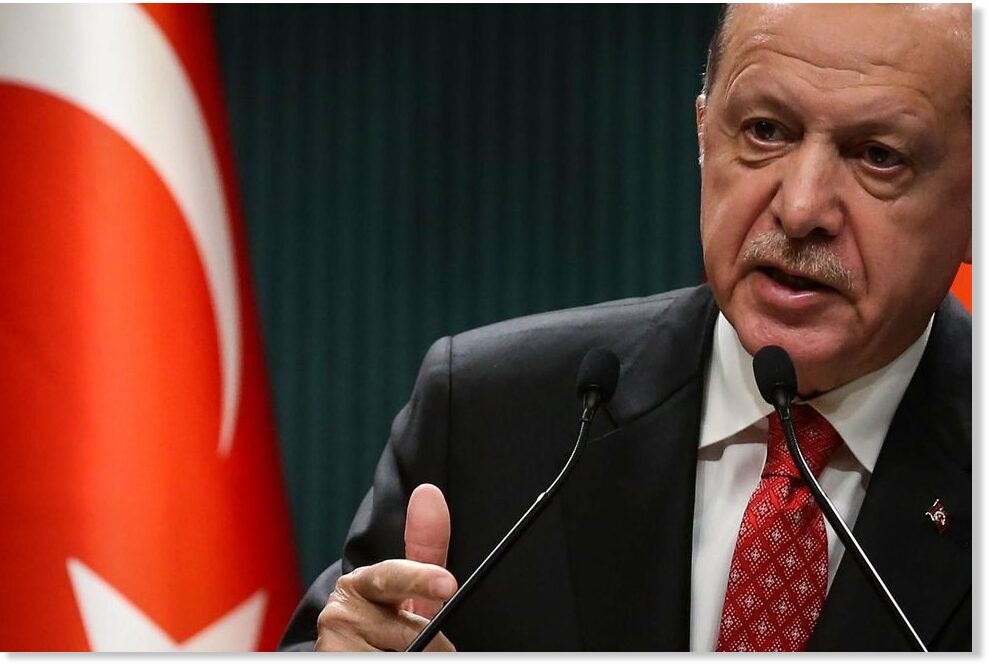
Turkey pivots to the center of a New Great Game

Erdogan
Turkish leader Erdogan is making all the right moves to win from fast-shifting EurAsian alliances and antagonisms

When it comes to sowing - and profiting - from division, Erdogan's Turkey is quite the superstar.

Under the delightfully named Countering America's Adversaries Through Sanctions Act (CAATSA), the Trump administration duly slapped sanctions on Ankara for daring to buy Russian S-400 surface-to-air missile defence systems. The sanctions focused on Turkey's defence procurement agency, the SSB.

Turkish Foreign Minister Mevlut Cavusoglu's response was swift: Ankara won't back down - and it is in fact mulling how to respond.

The European poodles inevitably had to provide the follow-up. So after the proverbial, interminable debate in Brussels, they settled for "limited" sanctions - adding a further list for a summit in March 2021. Yet these sanctions actually focus on as-yet unidentified individuals involved in offshore drilling in Cyprus and Greece. They have nothing to do with S-400s.

What the EU has come up with is in fact a very ambitious, global human-rights sanctions regime modeled after the US's Magnitsky Act. That implies travel bans and asset freezes of people unilaterally considered responsible for genocide, torture, extrajudicial killings and crimes against humanity.

Comment: See also:


Chess

EU states unanimously back Brexit trade and security deal

eu flag
© Yves Herman/Reuters
The post-Brexit trade and security deal has been unanimously backed by EU member states, paving the way for the new arrangements to come into force on 1 January.

At a meeting of ambassadors in Brussels, the 27 member states gave their support for the 1,246-page treaty to be "provisionally applied" at the end of the year. The decision will be formally completed by written procedure at 3pm central European time (1400 GMT) on Tuesday.

A spokesman for the German presidency of the EU, organising the bloc's affairs, said the treaty had been given the green light.

The only obstacles standing in the way of the deal coming into force are votes by MPs and peers in the House of Commons and the House of Lords. The UK parliament has been recalled to sit on Wednesday 30 December to debate and vote on the legislation.

Bad Guys

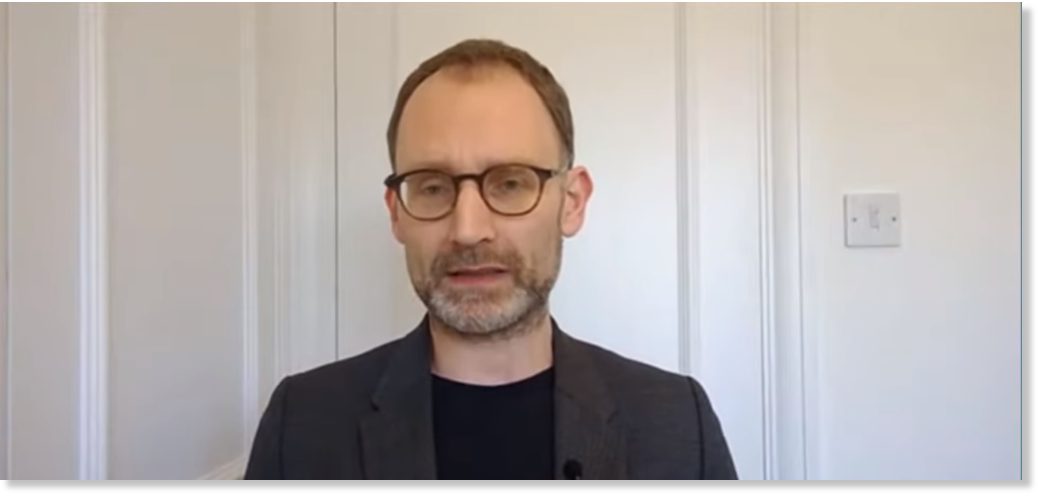
Neil Ferguson: China's totalitarian lockdown 'changed what was possible' in the West

ferguson
Professor Ferguson in our April interview on LockdownTV
Professor Neil Ferguson has given an extraordinary interview to Tom Whipple at The Times, in which he confirms the degree to which he believes that imitating China's lockdown policies at the start of 2020 changed the parameters of what Western societies consider acceptable.

"I think people's sense of what is possible in terms of control changed quite dramatically between January and March," Professor Ferguson says. When SAGE observed the "innovative intervention" out of China, of locking entire communities down and not permitting them to leave their homes, they initially presumed it would not be an available option in a liberal Western democracy:
It's a communist one party state, we said. We couldn't get away with it in Europe, we thought... and then Italy did it. And we realised we could.
He almost seems at pains to emphasise the Chinese derivation of the lockdown concept, returning to it later in the interview:
These days, lockdown feels inevitable. It was, he reminds me, anything but. "If China had not done it," he says, "the year would have been very different."
To those people who, still now, object to lockdowns on civil liberties principles, this will be a chilling reminder of the centrality of the authoritarian Chinese model in influencing global policy in this historic year.

Comment: Ferguson is a hack and a totalitarian scumbag. Notice the language he uses: "we couldn't get away with it." He knows lockdowns are a crime. He just doesn't care.


Dominoes

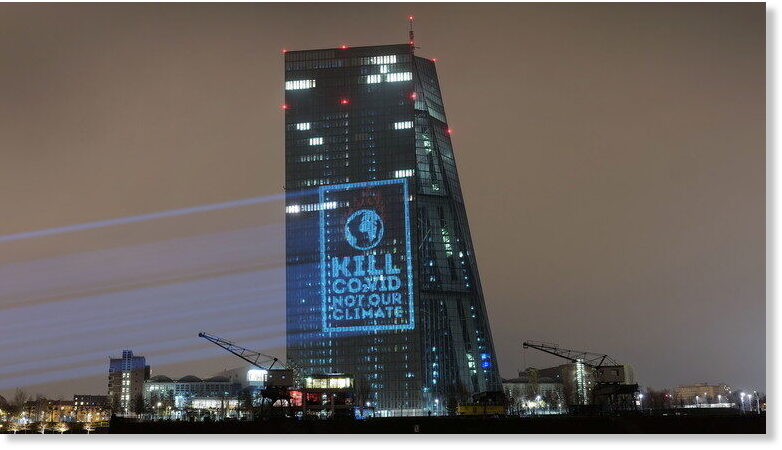
Sacrificing freedom for the environment? German MP suggests restrictions 'similar' to Covid-19 lockdowns to fight climate change

activist slogan ecb
© Reuters / Kai Pfaffenbach
Humanity should sacrifice "personal freedom" just as many nations did during the Covid-19 pandemic in order to successfully fight climate change, a German MP has said, adding that there will "never" be a vaccine against CO2.

Germany had barely started its coronavirus vaccination campaign when a Social Democratic MP, Karl Lauterbach, warned that his compatriots need to brace themselves for yet another challenge: global warming.

"We need measures to deal with climate change that are similar to the restrictions on personal freedom [imposed] to combat the pandemic," the professor of health economics and epidemiology at the University of Cologne wrote in a guest piece for Die Welt newspaper. He added that he hoped climate change issues would play "a dominant role" during the upcoming election campaign ahead of the federal ballot scheduled for September 2021.

Comment: Once you give tyrants an inch, they'll take a foot. This is what happens once people allow their governments to restrict their freedoms.


NPC

Lefties gloat as Trump's favorite tabloid counsels conceding, but didn't they dismiss NY Post as peddlers of 'Russian propaganda'?

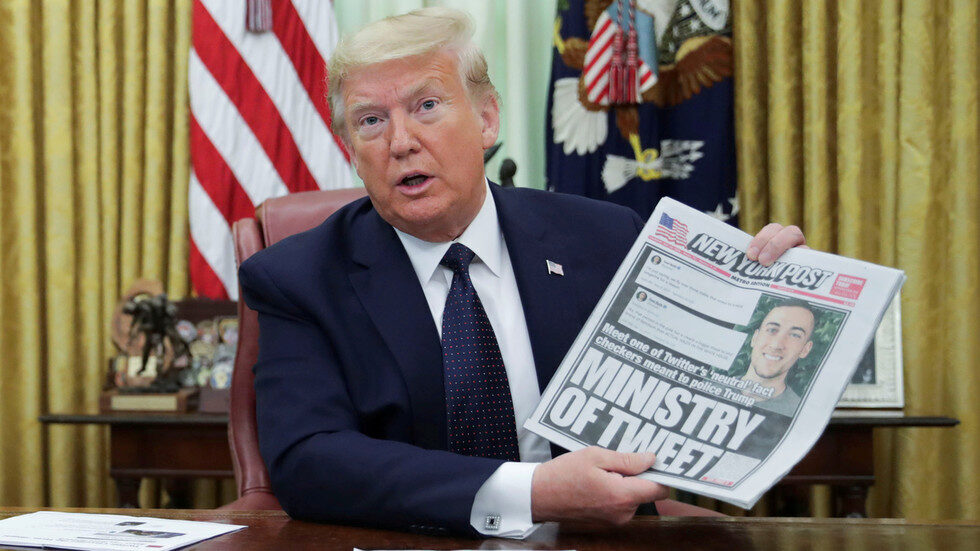
trump new york post cover
© REUTERS / Jonathan ErnstDonald Trump holds up a front page of the New York Post.
The New York Post ran a no-nonsense editorial telling Donald Trump to concede and secure a GOP-controlled Senate. The Left rushed to quote the juiciest parts, seemingly putting into a memory hole their attacks against the paper.

The conservative-leaning tabloid minced no words when it called on the US president to "stop the insanity" and finally concede his defeat to Joe Biden. The Sunday editorial mocked Donald Trump as "King Lear of Mar-a-Lago, ranting about the corruption of the world," and spending the last days of his presidency "not as a revolutionary, but as the anarchist holding the match."

Comment: Oy. The world will run out of popcorn before we see the end of the circus.