Puppet MastersS


Arrow Up

The war on Iran is not over

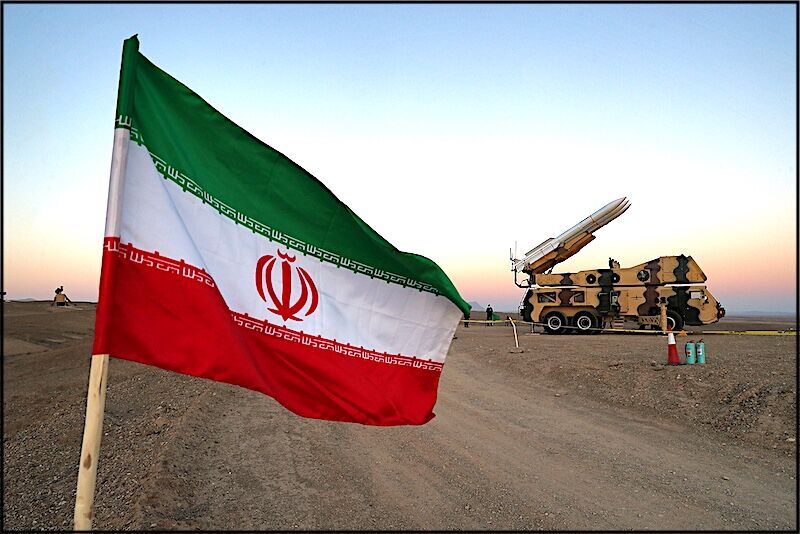
Iran flag
© WANA/ReutersFlag of Iran
Once again, the E3 powers — Britain, France, and Germany — are marching in lockstep with Washington and Tel Aviv, hiding behind hollow pretexts to reimpose sanctions on Iran.

Let's call this what it is: regime change dressed up in pseudo-diplomacy. West Asia could be plunged into yet another cycle of war. And if Gulf states do not truly step up to stop this reckless manoeuvring, they could bear the brunt equally.

The E3 marches towards war

On August 28, the United Kingdom, France, and Germany issued a joint statement announcing the initiation of the so-called snapback mechanism to reimpose United Nations sanctions on Iran — sanctions that had been lifted following the 2015 Joint Comprehensive Plan of Action (JCPOA). Citing United Nations Security Council Resolution 2231, the E3 formally triggered a 30-day process that, if completed, would result in the full restoration of all UN sanctions lifted under the nuclear agreement. The move was immediately endorsed by the United States, marking a pronounced escalation in Europe's efforts to increase pressure on Tehran. It also underscores a deliberate alignment with Washington's hardline approach, exposing the contradictions and political posturing surrounding the JCPOA.

Star of David

Moral arguments fade as Israel pursues power

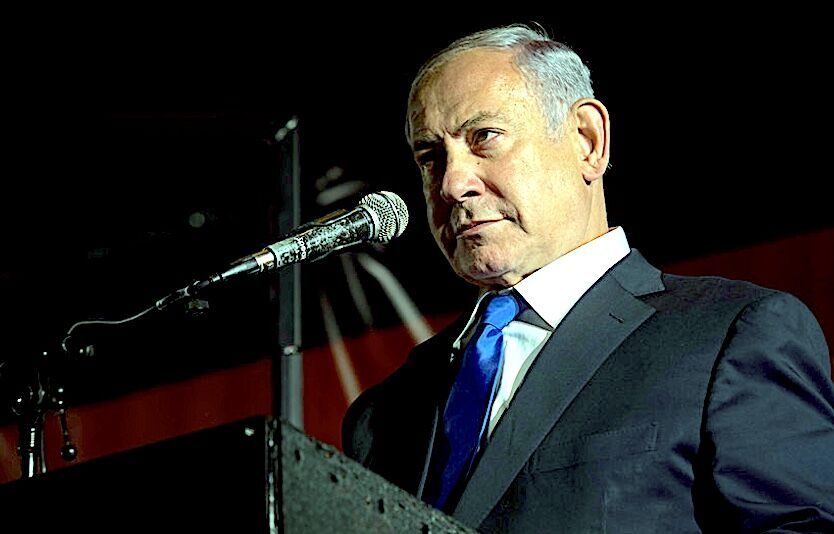
Netanyahu
© Amir Levy/Getty ImagesIsraeli PM Benjamin Netanyahu
The Gaza offensive shows how far West Jerusalem will go without restraint.

"Israel relies on its ability to use force against all opponents at once."

This could serve as a motto for the moment. Israel's ground assault on Gaza City, launched with Washington's blessing, shows how completely the country has embraced the doctrine of "peace through strength." US Secretary of State Marco Rubio gave the nod during his recent visit, though he urged them to hurry. For Donald Trump, the concern is less about Gaza itself than about optics: the longer the fighting drags on, the more it complicates his own political calculus.

One such complication was Israel's strike on Doha, capital of Qatar, a US ally which hosts Hamas negotiators. The stated aim was to eliminate Hamas leaders. That failed, and Benjamin Netanyahu retroactively rebranded it as a "signal." The message was blunt: there are no safe havens for radicals, and Israel does not recognize anyone's right to harbor them.

Diplomatic niceties no longer restrain Israel. Military superiority, backed by US indulgence, is the only currency.

Arrow Up

A new stage of Russian-Syrian relations: Stability and adaptation

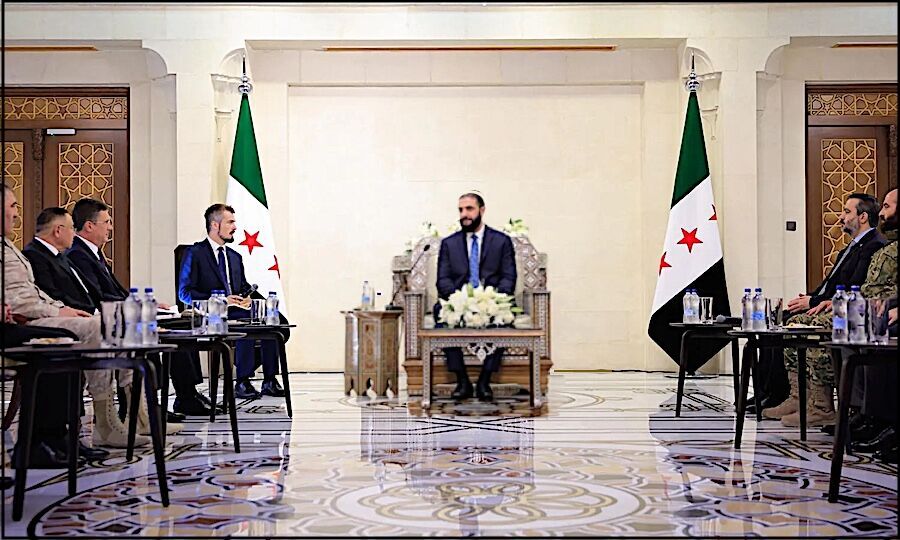
Ahmad al-Sharaa
© Syrian Foreign MinistrySyrian President Ahmad al-Sharaa meets Russian Deputy Prime Minister Alexander Novak in Damascus • September 9, 2025
The visit of Russian Deputy Prime Minister Alexander Novak to Damascus is a symbol of the stability and transformation of Russian-Syrian relations against the background of radical changes in Syria following the overthrow of Bashar al-Assad.

The recent visit of Russian Deputy Prime Minister Alexander Novak to Syria has evoked a wave of commentaries and reactions in local and regional media outlets. Following the December 2024 overthrow of Bashar al-Assad, Syria is transitioning from more than half a century's worth of authoritarianism to a new stage, which has yet to be formulated.

At such a critical time, writes the Syrian Al-Hurriyah, the arrival of a high-level Russian delegation in Damascus is of extraordinary importance. Despite all the hardships and challenges Syria has been facing recently, Moscow remains an important partner.

In assessing the weight of the visit for bilateral relations, local authors refer to the long history of these relations and try to make predictions for the future.

Question

Answering Ron Paul's 'What if...' speech

Ron Paul
© Gage SkidmoreDr. Ron Paul
On February 12, 2009, Dr. Ron Paul (R-TX) delivered one of his most striking speeches on the floor of the U.S. House of Representatives. Since referred to as the "What If..." speech, Paul's remarks offer a precise distillation of the libertarian critique of U.S. foreign policy. At a time when military interventionism was still very much in vogue among Republican voters, Paul was willing to call a spade a spade and dismantle the faulty logic driving America's misguided overseas adventures.

Paul's oratory is persuasive because he posits a series of hypotheticals that aren't really hypotheticals. The scenarios Paul describes underscore the political, intellectual, and moral bankruptcy of the American ruling class. Case in point, Paul begins his speech by posing the following questions:
"What if it's true that the Federal Reserve is the primary cause of the boom-bust cycle and the massive inflation we now face?

What if the government's attempt to solve the financial crisis is only making matters worse?

What if foreign interventionism is a primary cause of the hatred directed at America?

What if the War on Terror is a war that can never be won, a war that only perpetuates more terror and instability?

What if the real threat to our liberties comes not from foreign enemies, but from our own government?"

Star of David

UC Berkeley hands over private staff and student information for Trump's 'antisemitism' probe

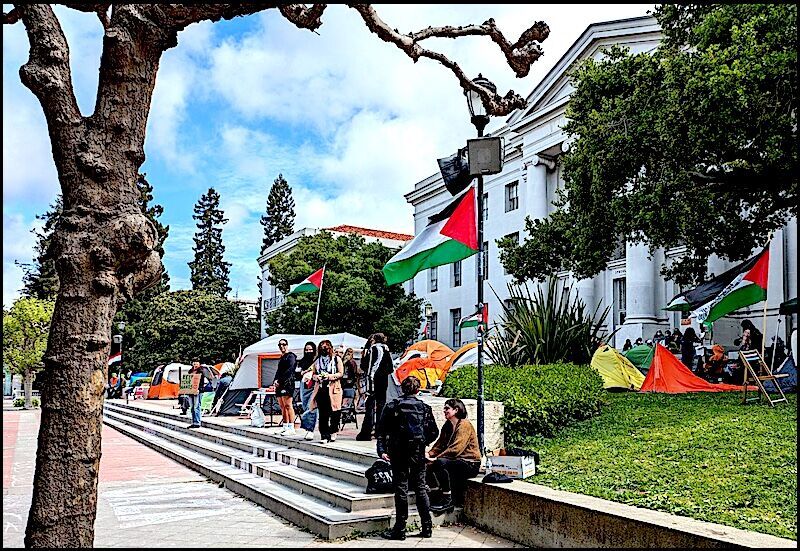
Sproul Hall
© Wikimedia CommonsFree Palestine encampment • Sproul Hall • University of California Berkley • April 25, 2024
The University of California, Berkeley has provided the federal government with the private information of more than 150 students, staff, and faculty. The university is being slammed for caving to the Trump and his war on Palestine activism.

The move comes in response to the Trump administration's investigation into alleged campus antisemitism, which is widely viewed as a means to crack down on campus Palestine activism.

The Daily Californian reports that the school's Office of Legal Affairs sent emails to those impacted on September 4.
"As part of its investigation, OCR required production of comprehensive documents, including files and reports related to alleged antisemitic incidents. This notice is to inform you that, as required by law and as per directions provided by the UC systemwide Office of General Counsel (OGC), your name was included in reports as part of the documents provided by OGC to OCR for its investigation on August 18, 2025."
Students say they received the notification two weeks after their info had been handed over to the Department of Education's Office of Civil Rights.

Comment: To not stand up for rights is to lose them for everyone.


Arrow Up

Sanctions: The West's strategic blunder - More sanctions means more onshoring

Iran has started exporting MGT-70 gas turbines to Russia. Moscow ordered forty of them to replace the German Siemens V94.2 turbines that sanctions made unavailable. These Iranian-made turbines will boost Russia's electricity production by an additional 5 GW. The kicker? They're basically reverse-engineered Siemens products now being exported by Iran to Russia at competitive prices.

MGT-70 gas turbines
© Gold and Geopolitics
The sanctions were supposed to isolate Russia.
The sanctions were supposed to prevent Russia from buying European technology.
The sanctions were supposed to crush their economy.

But instead they have created a thriving new export market for Iran while Siemens loses billions in revenue. Europe imposed these restrictions to weaken its adversaries, but actually strengthened Iran's industrial capabilities, providing Russia with the equipment it needs, and permanently damaging European market share in both countries.

In Eurocrat's language: we are winning!

This pattern repeats across industry after industry. Sanctions don't work the way their architects imagine. Shocker! Instead of creating dependency and compliance, they accelerate technological independence and spawn new competitors. Too often, the West ends up harming themselves more than their targets, and we're seeing this dynamic play out in real time across multiple sectors.

Gavel

Appeals court rules RFK Jr. cannot proceed with overhaul of health agencies

U.S. Health and Human Services Secretary Robert F. Kennedy
© Jonathan Ernst | ReutersU.S. Health and Human Services Secretary Robert F. Kennedy Jr., testifies before a Senate Finance Committee hearing on President Donald Trump’s 2026 health care agenda, on Capitol Hill in Washington, D.C., U.S., September 4, 2025.
Kennedy's plans involved cutting 10,000 employees and centralizing some functions across HHS agencies.

A federal appeals court on Sept. 17 declined to lift a preliminary injunction blocking a plan by Health and Human Services (HHS) Secretary Robert F. Kennedy Jr. to overhaul the department in line with the Trump administration's policy priorities.

Attorneys general from 19 states and the District of Columbia filed a lawsuit in May challenging Kennedy's restructuring of HHS, including layoffs and the reorganization of several agencies, arguing that the changes violate federal law and the U.S. Constitution.

On Wednesday, a three-judge panel of the Boston-based First U.S. Circuit Court of Appeals rejected the Trump administration's claim that the states could not show they would be immediately harmed if the injunction were lifted pending an appeal. The panel noted that the lower court relied on hundreds of pages of testimony from state officials.

Comment: So the court presumes it can run the Executive Branch better than the Executive. Or more likely the ruling is part of an overall campaign to get rid of RFK.


Mr. Potato

Florida judge strikes Trump's $15B defamation lawsuit against New York Times, reporters for being 'too long'

Tampa US District Judge Steven D. Merryday
© FlaLawOnlineTampa US District Judge Steven D. Merryday
TL;DR: Shorten your suit.

A Florida federal judge tossed President Trump's $15 billion defamation lawsuit against the New York Times for excessive length Friday, writing in a blistering decision that a civil complaint shouldn't be "a megaphone for public relations."

Tampa US District Judge Steven D. Merryday gave Trump 28 days to file a new, shorter version of the complaint that "must not exceed" 40 pages in length.

A Trump spokesman said in a statement that the commander in chief wasn't backing down from the case but would respect the judge's order on "logistics."

Comment: Trump can still sue, but his lawyers will have to streamline his complaint. It's their job after all.


Arrow Down

The 'golden billion' has lost its crown

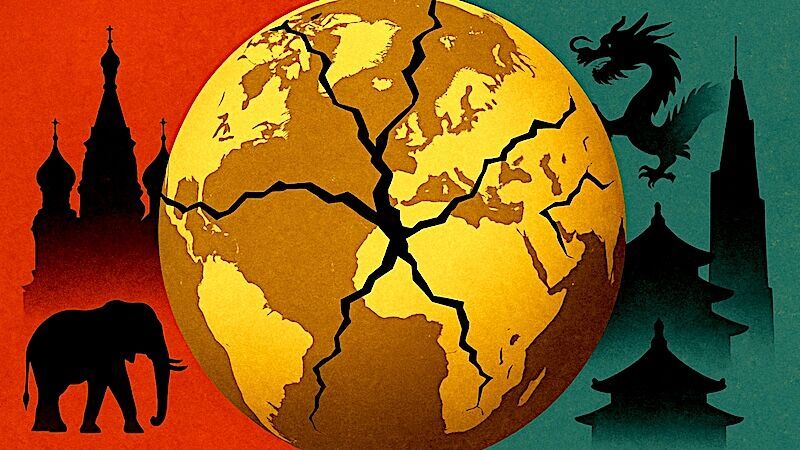
globe cracking up
© UnknownCracking Up
In economics and sociology, there's a well-known observation called the Pareto Principle. Named after the Franco-Italian thinker Vilfredo Pareto, it is often summarized as the "80/20 rule": 20 percent of efforts yield 80 percent of results, while the remaining 80 percent of efforts account for just 20 percent. Over time, this idea inspired Western "elite theory," a convenient justification for why every society contains an active minority that dominates a passive majority - why 20 percent of the population holds 80 percent of the wealth.

Today, the principle has outgrown national borders. In diplomacy, it has come to symbolize a deeper conflict: the "global minority" versus the "global majority."

The first group, sometimes called the "golden billion," began to take shape in the late 20th and early 21st centuries under the Democratic administrations in the United States and their allies in the G7 and NATO. This group gradually solidified its position through exploiting globalization in their favor. In contrast, the latter group, resisting the formation of a unipolar world and advocating for a more equitable multipolar global order, has gained increasing significance on the world stage. This momentum has been fueled not only by the individual efforts of nations like Russia, China, and India but also through the establishment of fundamentally new institutions for multilateral diplomacy such as BRICS, the SCO, and others.

Star of David

Israel moves to embrace its isolation

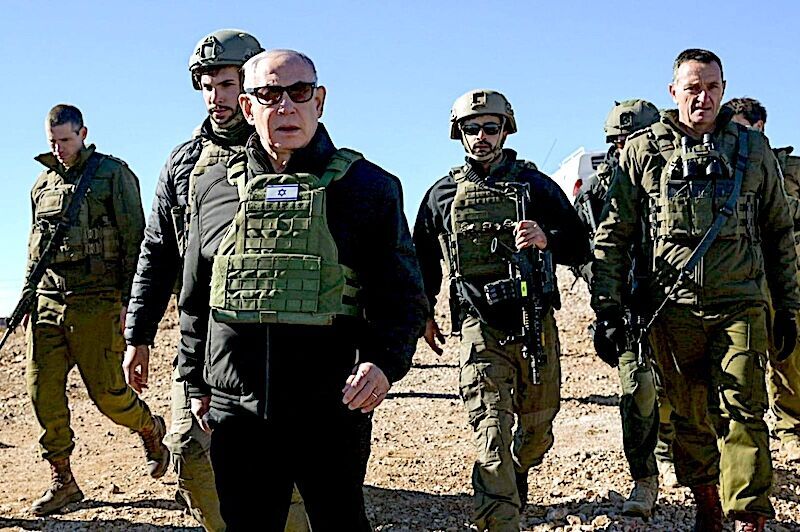
Neti and troops
© Israeli Prime Minister Office/APA ImagesIsraeli PM Benjamin Netanyahu • Mount Hermon • Defense Minister Israel Katz • former Army Chief of Staff Herzl Halevi • Dec. 12, 2024
Benjamin Netanyahu's recent comments that Israel must start making its own weapons and become a self-sufficient "super Sparta" signals that the small colony might be willing to embrace its isolation — all in the name of annihilating Palestine.

History in the small colony of Israel has a way of circling back on itself, presenting old dilemmas in new clothing. Prime Minister Benjamin Netanyahu's recent remarks — warning of Israel's growing isolation and the need to evolve into a kind of "super-Sparta" with an autarkic economy — echo back across decades. To hear him speak of a self-reliant arms industry freed from the grip of foreign politics is to hear the ghost of the Lavi fighter jet, haunting Israel's present.

In the 1980s, the Lavi project embodied Israel's quest for independence in the skies. Washington served as both patron and skeptic, underwriting its development while questioning its logic. Why, American officials asked, should Israel pursue its own advanced fighter when U.S.-made F-16s were cheaper, readily available, and already battle-tested? The Lavi's story became a paradox: an ally's money nourished the dream, while the same ally's strategic interests sharpened the knife that would kill it.

That paradox has not vanished.

Comment: The chosen chose. What's to be made of it has been made.