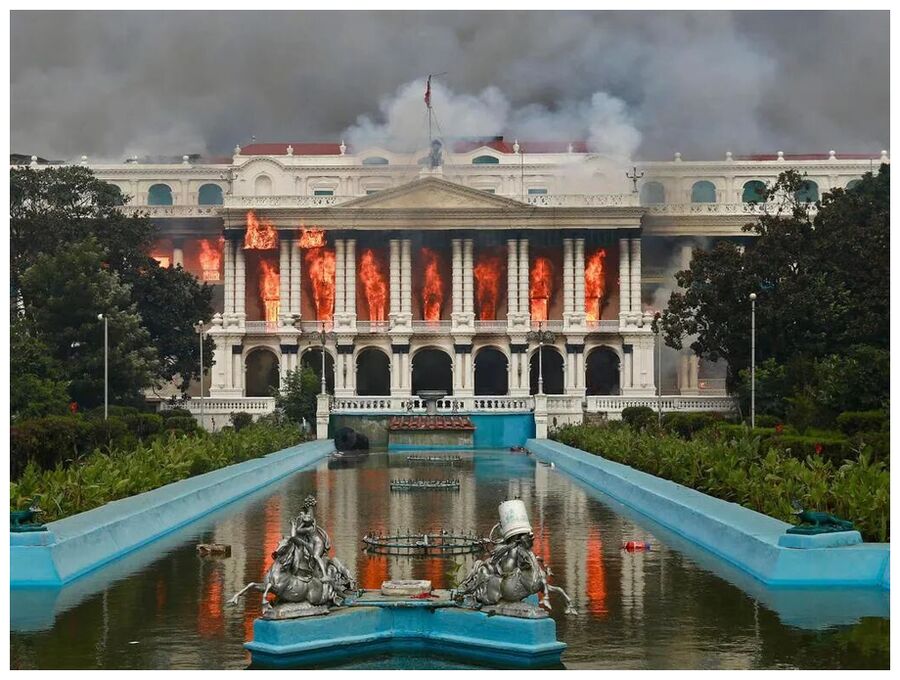
© Global Delinquents
Over recent weeks, chaos has
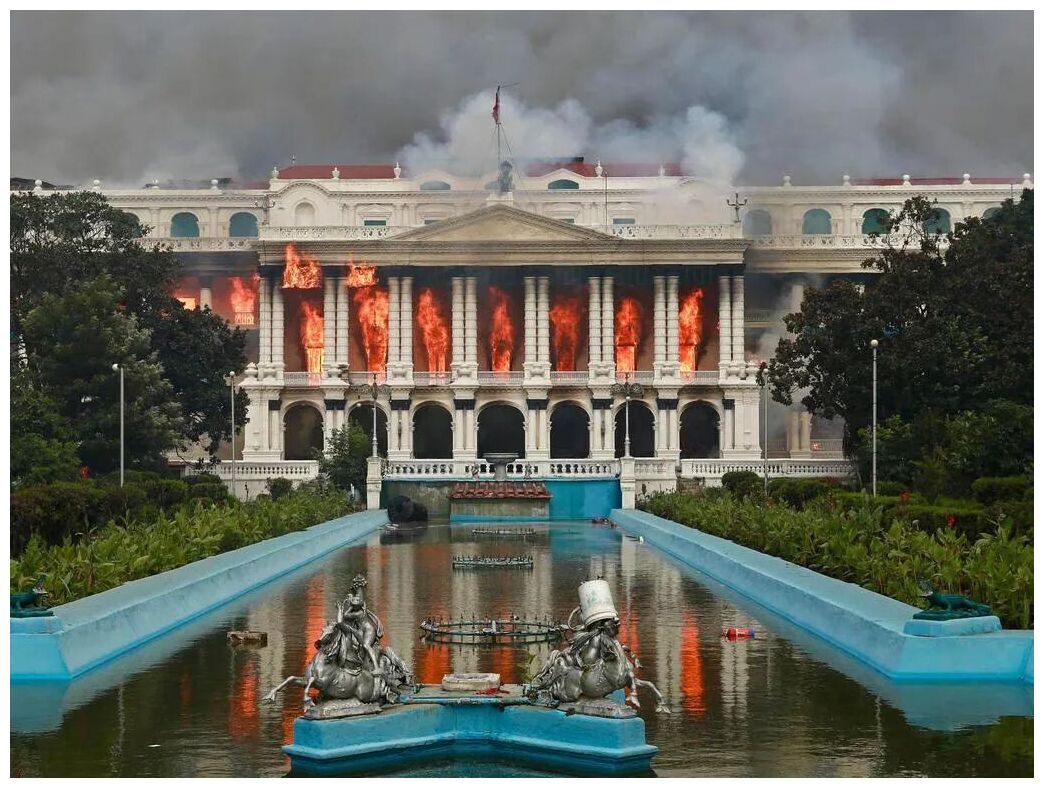
engulfed Nepal. Public and private buildings have been set ablaze, with dozens of civilians
reportedly killed. On September 9th, Prime Minister K. P. Sharma Oli
resigned. The Western media has
universally framed the upheaval as
spontaneous revolutionary fervour on the part of Kathmandu's "Gen Z", motivated by anger over official corruption, unemployment, state efforts to censor social media, and more.
However, there are unambiguous indications the insurrectionary disarray has long-been in the making, and assisted by spectral, foreign forces.The "Gen Z" protests comprise a cluster of local youth activist groups, and are
widely dubbed "leaderless", although
Hami Nepal has clearly emerged at the movement's forefront. English language
Nepali Times has reported the hitherto
unknown NGO "played a central role in guiding the demonstrations, using its Instagram and Discord platforms to circulate protest information and share guidelines." The group was established to assist victims of earthquakes - a
common occurrence in the country - and provide food, medical and other aid to disadvantaged Nepalese communities.
Subsequently, Hami Nepal oversaw the election of Kathmandu's interim premier Sushila Karki on September 12th, via the highly unorthodox, and completely unprecedented, expedient of an online vote via Discord. The NGO's chat group
reportedly boasts 145,000 members, although it's unclear how many people ultimately voted for Karki. The
Western media, and local journalist Prayana Rana, a
fervent supporter of the unrest who considers the palace coup to be wholly legitimate and organic,
has acknowledged choosing a leader in this manner to be deeply problematic:
"It is much more egalitarian than a physical forum that many might not have access to. Since it is virtual and anonymous, people can also say what they want to without fear of retaliation. But there are also challenges, in that anyone could easily manipulate users by infiltration, and using multiple accounts to sway opinions and votes."
Karki has
firmly pledged to only serve six months in the post, until elections are held. She herself has an impressive revolutionary history,
having participated in the 1990 People's Movement that successfully overthrew Nepal's absolute monarchy, for which she was jailed. In
June 1973, her husband hijacked a plane, stealing vast sums of money to fund armed resistance against the country's brutal regency, which similarly landed him in prison. Karki's commitment to seriously tackling corruption as Nepal's Chief Justice led to her
politically-motivated impeachment in June 2017, after just one year.
It is entirely uncertain who and/or what will replace Karki, and by which mechanism they will attain office. Nonetheless, that Hami Nepal, a previously obscure NGO with no history of political activism has played such an outsized role in ousting the government of a country of 30 million people and installing its new ruler within mere days, should give us pause.
While the organisation's activities appear benevolent, its rollcall of "brands that support us" contains some entries that are puzzling, if not outright concerning.












Comment: La définition de la folie!