
© Gold and Geopolitics
The sanctions were supposed to prevent Russia from buying European technology.
The sanctions were supposed to crush their economy.
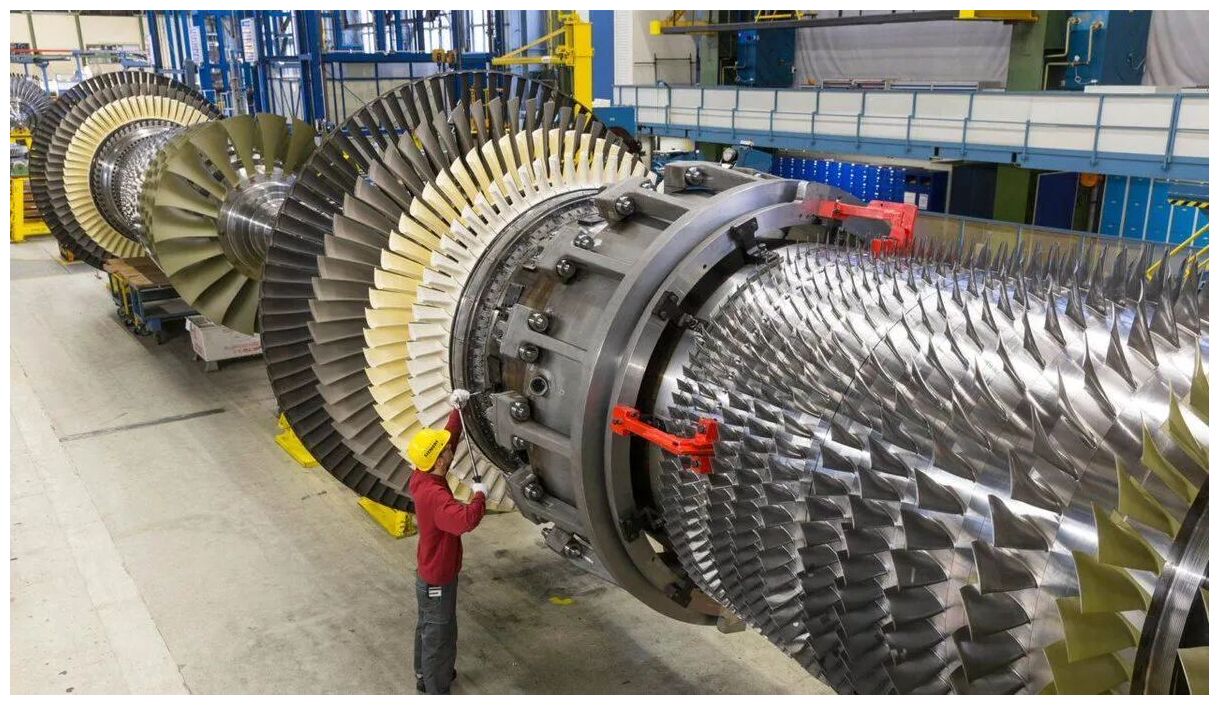
But instead they have created a thriving new export market for Iran while Siemens loses billions in revenue. Europe imposed these restrictions to weaken its adversaries, but actually strengthened Iran's industrial capabilities, providing Russia with the equipment it needs, and permanently damaging European market share in both countries.
In Eurocrat's language: we are winning!
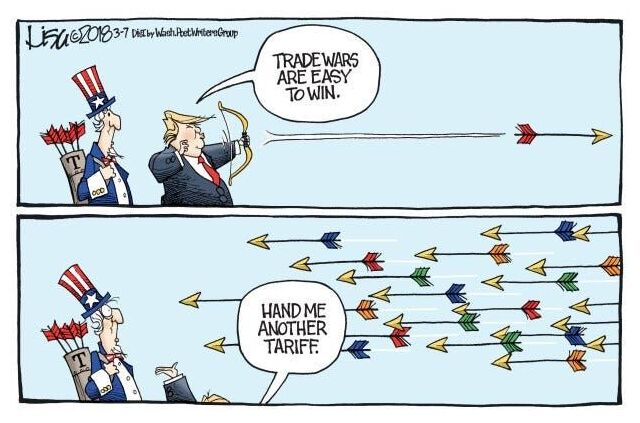
This pattern repeats across industry after industry. Sanctions don't work the way their architects imagine. Shocker! Instead of creating dependency and compliance, they accelerate technological independence and spawn new competitors. Too often, the West ends up harming themselves more than their targets, and we're seeing this dynamic play out in real time across multiple sectors.
Of course Iran's MAPNA Group didn't develop world-class gas turbine technology overnight. They spent years reverse-engineering Siemens equipment, understanding every component and manufacturing process. When sanctions disrupted the original supply relationships, MAPNA was ready. Their MGT-70 turbines now achieve a 36.4% efficiency — slightly exceeding Western competitors while costing significantly less. And above all: Iran controls the entire production chain domestically, making them immune to future restrictions.
The numbers are brutal for Europe. Siemens saw its Russian revenues collapse 96% from 6.32 billion rubles to just 278.8 million rubles. Complete liquidation. Meanwhile, Iran secured an $8+ billion turbine contract while MAPNA Group now ranks among the world's top five turbine manufacturers. Brilliant strategy, Brussels!
But wait, there's more! Russia's aviation industry delivers another spectacular example of sanctions backfiring. When Western restrictions cut off aircraft components, Russia had to completely "Russify" its commercial aviation sector. The Sukhoi Superjet 100, originally stuffed with French engines and hundreds of Western components, got rebuilt from scratch with domestic alternatives.
The first fully Russian Superjet completed test flights in March '25, powered by indigenous PD-8 engines. Sure, it's heavier and less efficient than Western-equipped versions, but it flies, it's serviceable, and it's completely independent. Russia's MC-21 aircraft follows the same trajectory, ditching Pratt & Whitney engines for Russian powerplants. Aeroflot plans 200 MC-21s by 2033, with domestic aircraft comprising half its fleet.
These breakthroughs happened faster under sanctions pressure than they ever would have through normal market evolution. When survival depends on alternatives, humans will achieve the impossible. Russia seized 400 Western-leased aircraft following the introduction of these sanctions, but those machines were nearly obsolete anyway. Though the domestic replacements may be less sophisticated, they're available and supportable.
Now for the pièce de résistance: China's semiconductor revolution. Last week, China banned its own tech companies from purchasing NVIDIA chips. Read that again. Three years after the United States imposed export controls designed to cripple Chinese AI development, China now prohibits American chip imports. It's a largely symbolic gesture as domestic alternatives start to make them unnecessary.
© Gold and Geopolitics
Huawei's Ascend 910C processors compete directly with NVIDIA's best offerings. China produces 750,000 advanced AI chips annually despite comprehensive sanctions, while domestic foundry SMIC achieves 7-nanometer production through creative workarounds. DeepSeek's R1 model rivals OpenAI's capabilities while claiming training costs under $6 million — a fraction of GPT-4's reported billions.
The reversal is complete. Chinese regulators actively discourage NVIDIA purchases, having concluded domestic processors exceed the capabilities of deliberately weakened American chips designed for Chinese markets. NVIDIA recorded a $5.5 billion quarterly charge from halted exports while former customers develop competing products. Well, I guess we're still winning!
Academic research confirms what these examples illustrate. The Peterson Institute finds sanctions against autocracies succeed only half as often as those against democracies. Large, complex economies like Russia, China, and Iran possess extensive adaptation capabilities while developing alternative partnerships that circumvent these artificial restrictions entirely.
And it's not like history didn't teach us this. South Africa developed advanced military and nuclear capabilities during apartheid-era sanctions, yet handed over Africa's strongest economy when restrictions ended. Japan's post-war technological isolation drove innovations that created global dominance in shipbuilding, electronics, and automobiles.
The economic costs fall disproportionately on sanctioning countries. Western companies suffered over $107 billion in write-downs from their Russian market exits. European suppliers lost access to both Russian and Iranian markets permanently while alternative suppliers captured their former customers with competitive performance, lower costs, and sanctions immunity.
Market fragmentation creates a lasting disadvantage for Western companies. GE Vernova, Siemens Energy, and Mitsubishi Power control two-thirds of the global turbine market but lost access to those regions that represent ~15-20% of global demand. Sanctioned installations cannot be serviced anymore by Western companies, so service networks regionalize. This creates a permanent barrier even if the restrictions inevitably lift.
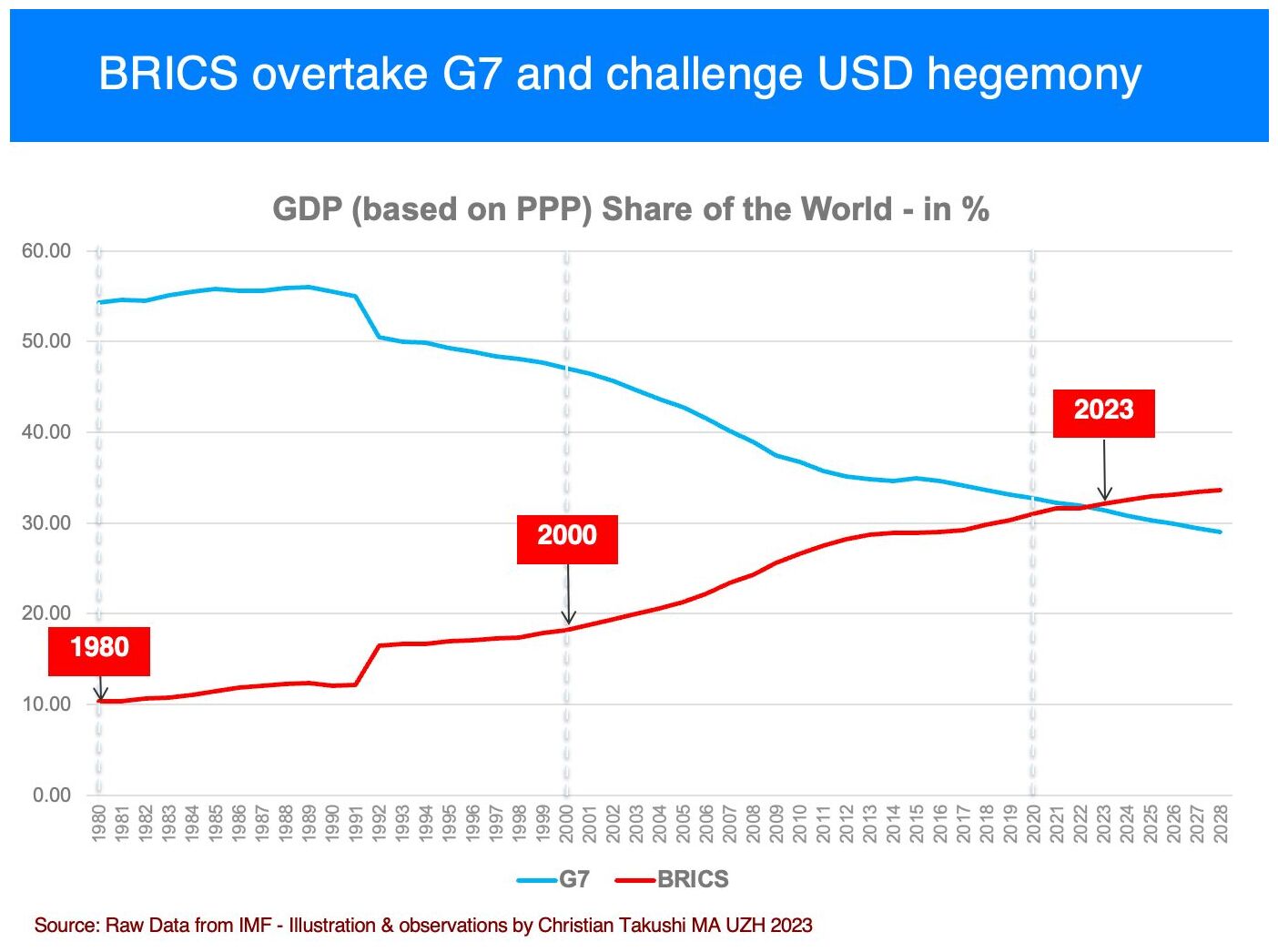
Alternative financial architecture accompanies technological independence. BRICS payment systems and central bank digital currencies reduce dependence on Western infrastructure. With BRICS representing 37.9% of global GDP compared to the G7's 27.8%, these systems gain sufficient scale to challenge established dominance.
© Gold and Geopolitics
America and Europe still possess tremendous advantages: innovative capacity, rule of law, and deep capital markets. But they systematically undermine these strengths through policies that prioritize political theater over strategic coherence. Every alternative supplier found, every transaction bypassing Western systems, every central bank accumulating gold rather than treasuries represents a vote of no confidence.
Sanctions designed to maintain technological dependence instead generate competitors that makes the original product unnecessary. Iran's turbines replace their German counterparts, Russia's aircraft are built with domestic components, and China's chips outcompete American alternatives. They all demonstrate the same principle. Human ingenuity circumvents obstacles faster and more completely than anyone anticipated.
The question isn't whether innovation will overcome sanctions — it's how quickly alternatives advance once barriers force their development. Based on current evidence: much faster than the architects of these policies ever imagined.





As a side note, the "famous" German car manufacturers operate in the red with their manufacturing business for about two decades now. But they made plenty of money with financing, and spare parts & repair services instead ...