Puppet MastersS


Question

A sceptical take on the Ukraine crisis

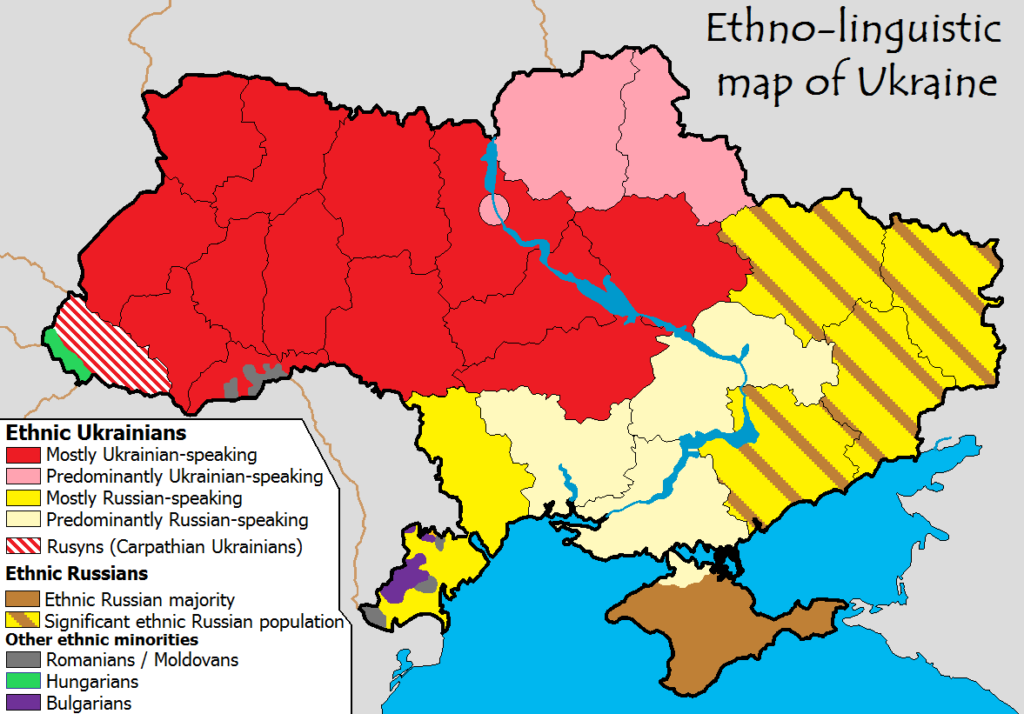
linguistic map ukraine russian speakers ukrainian speakers
In a recent post for the Daily Sceptic, Toby claims the received wisdom on the Ukraine crisis is basically right, noting that he's "experienced the unusual sensation of feeling more in step with the mainstream media than I have with my sceptical friends". While he makes some good points, I don't think he really steelmans the sceptical position.

Toby concludes by saying that "when a strongman leader uses his country's superior military force to subjugate an independent sovereign state to his will my natural inclination is to side with the underdog". But this isn't the right way to frame the issue. I'm certainly not on Putin's "side".

Incidentally, Toby says he supported the war in Iraq, even though that involved a leader (whom some people consider a kind of strongman) using "his country's superior military force" to invade and occupy "an independent sovereign state".

Cookie

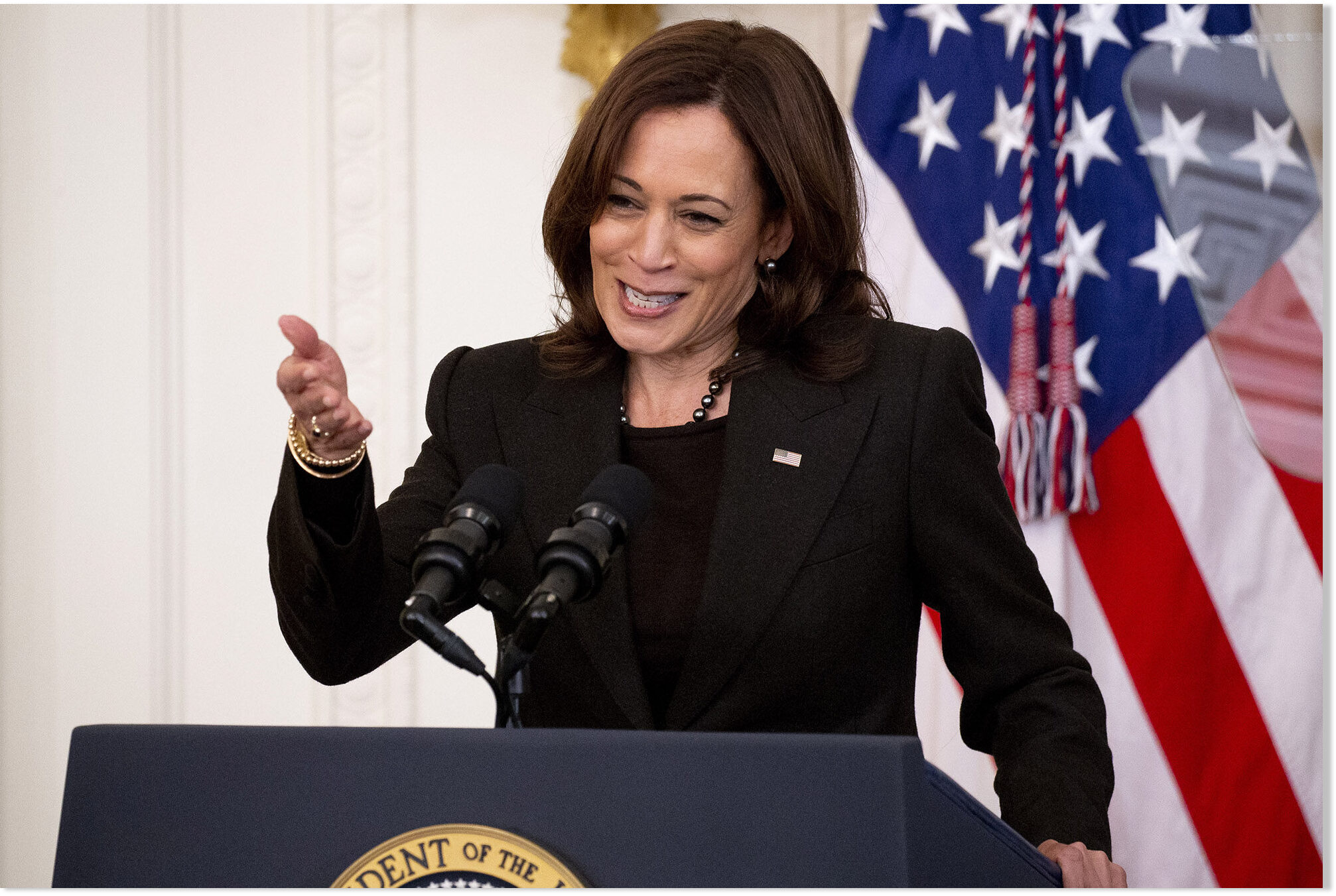
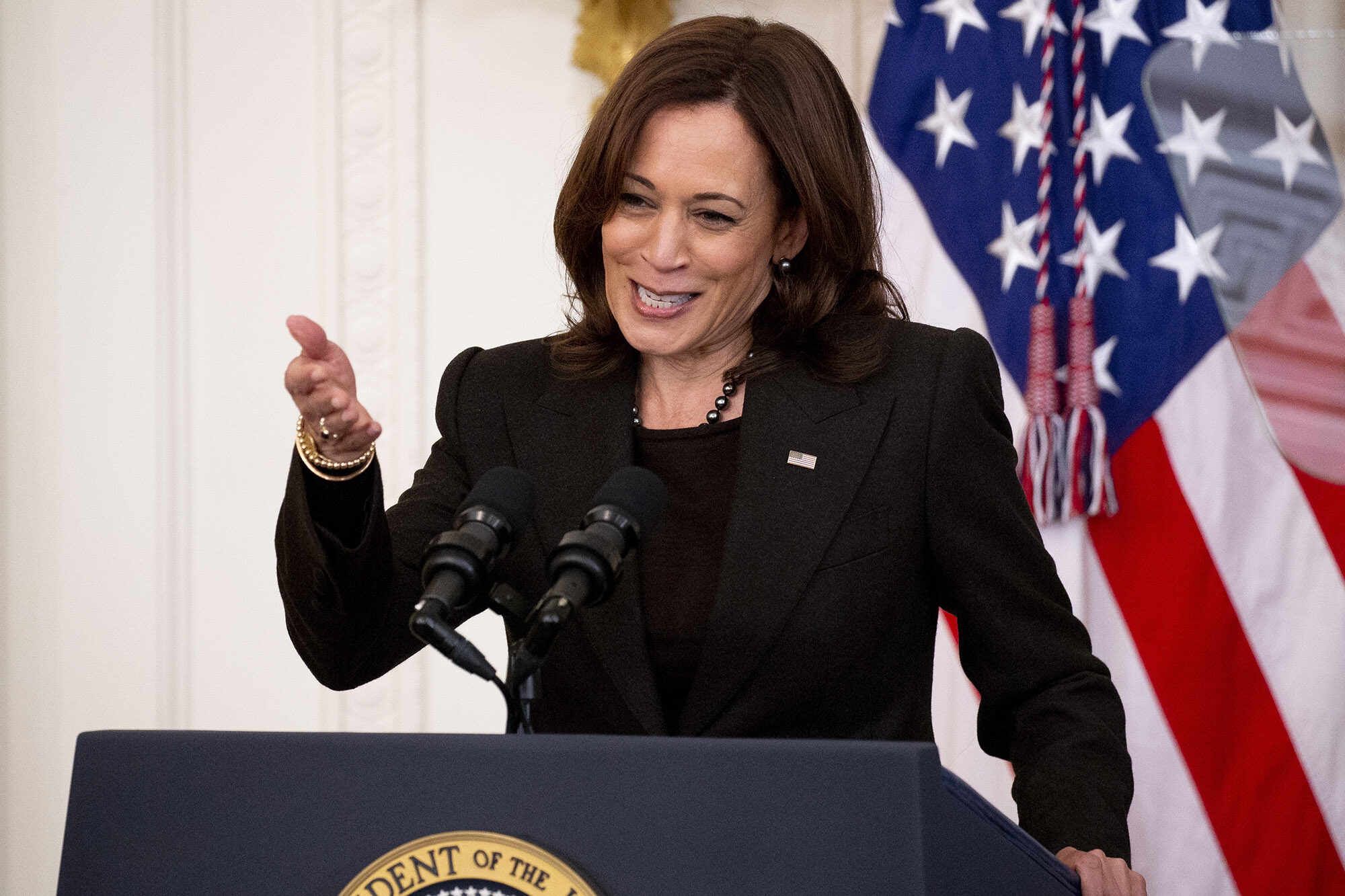
Kamala Harris mocked for child-like explanation of Russia-Ukraine war

Vice President Kamala Harris
© EPA/MICHAEL REYNOLDSVice President Kamala Harris was asked to summarize Russia’s invasion of Ukraine in elementary terms on the “Morning Hustle” radio program.
Kamala Harris just took dumbing down to a whole new level.

During an appearance on the syndicated "Morning Hustle" radio program, Harris was asked by co-host Headkrack to explain the conflict "in layman's terms for people who don't understand what's going on and how can this directly affect the people of the United States?"

Speaking slowly, Harris began, "So, Ukraine is a country in Europe."

"It exists next to another country called Russia," she continued. "Russia is a bigger country. Russia is a powerful country. Russia decided to invade a smaller country called Ukraine. So, basically, that's wrong, and it goes against everything that we stand for."

Conservative critics laid into the vice president on social media Tuesday for her overly simplistic explanation of Russia's invasion of Ukraine, with one commenter comparing it to an episode of children's TV program "Peppa Pig."

Washington Examiner executive editor Seth Mandel described Harris' statement as "terrifying."

Comment: And she's just one heartbeat away from being the next puppet-in-chief. God help us all. Really.


Wolf

Flashback How a network of Ukrainian ultra-nationalists penetrated Canada's Conservative Party to lobby for military conflict

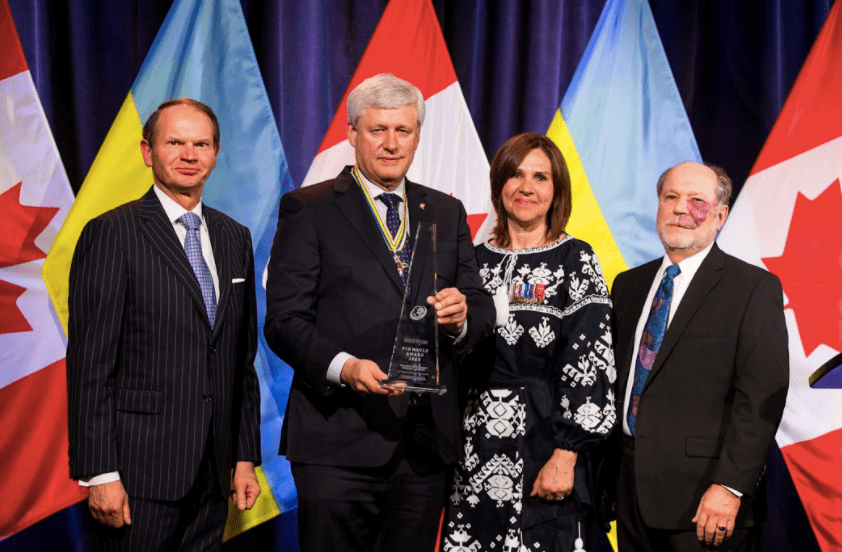
Ukrainian lobbyists canada
(L-R) LUC president Roman Medyk, Stephen Harper, LUCW president Halyna Vynnyk, ICSU president Borys Potapenko
Once an underground network of fascist ideologues shunned by the Ukrainian Canadian community for "criminal ideas," Canada's ultra-nationalist Bandera lobby is today a major political player. It recently rubbed shoulders with former PM Stephen Harper and top contenders for the leadership of his Conservative Party.

A month ago in Toronto, former Canadian Prime Minister and Conservative Party heavyweight Stephen Harper called out to an audience of Ukrainian Canadians, "Slava Ukraini!"

Harper's audience responded to his cry of "Glory to Ukraine!" by completing the salutation of the Ukrainian Nationalist movement once led by the notorious fascist Stepan Bandera: "Heroyam Slava!" In other words, "Glory to the Heroes!" who, in fact, collaborated with Nazi Germany during its occupation of Ukraine in World War Two.

Comment: The ultra-nationalist loons must have been over the moon with Chrystia Freeland's rise in the Canadian government.


Biohazard

Russia prevents Washington from unleashing biological warfare

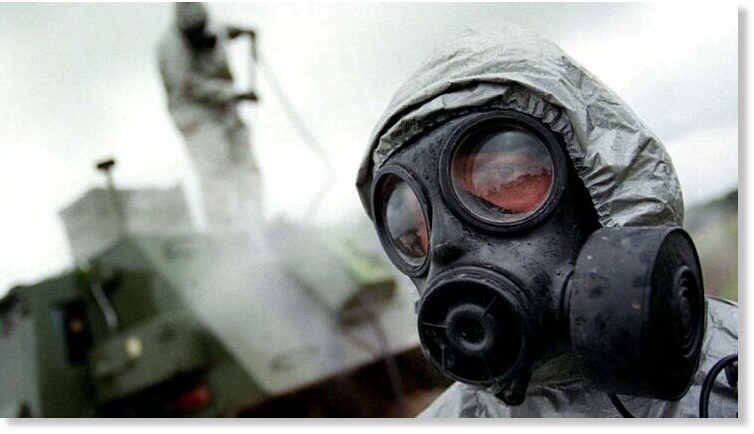
soldier in gas mask
In view of the unrest that US intelligence services have been actively initiating lately, whether in Central Asia, Transcaucasia or other areas bordering Russia and China, the risk of a biological disaster from multiple secret military biological laboratories deployed by the US in potentially politically and socially unstable regions is objectively increasing. In this regard, the issue of the US preparing a biological time bomb in Kazakhstan has been raised many times before. The growing risk of the Pentagon initiating biological warfare using over 400 US biological laboratories located overseas around the world and the need for a clear response to the risk of worldwide biological disaster from such secret US overseas facilities has been repeatedly pointed out. After all, these biological laboratories employ some 13,000 "employees" who are busy creating strains of killer pathogens (microbes and viruses) that are resistant to vaccines.

It is no secret nowadays that the US has set up such biological laboratories in 25 countries around the world: in the Middle East, Africa, South-East Asia. Only within the former Soviet Union there are US military biological laboratories in Ukraine, Azerbaijan, Armenia, Georgia, Kazakhstan, Kyrgyzstan, Moldova and Uzbekistan.

Comment: See also:


Bad Guys

It was well known that NATO expansion would lead to war, we are now paying for its arrogance - The Guardian

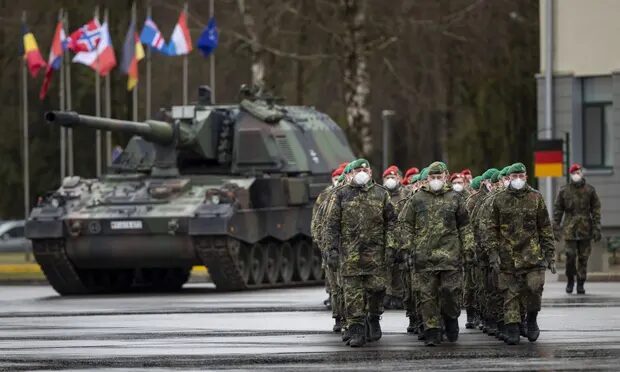
NATO military
© Mindaugas Kulbis/AP‘Washington’s attempt to make Ukraine a Nato political and military pawn (even absent the country’s formal membership in the alliance) may end up costing the Ukrainian people dearly.’

Comment: Even The Guardian, a newspaper co-opted by the UK's secret service and that is consequently riddled with state propaganda, has to admit that the West's provocations against Russia are to blame for the current situation.


Russia's military offensive against Ukraine is an act of aggression that will make already worrisome tensions between Nato and Moscow even more dangerous. The west's new cold war with Russia has turned hot. Vladimir Putin bears primary responsibility for this latest development, but Nato's arrogant, tone‐​deaf policy toward Russia over the past quarter‐​century deserves a large share as well. Analysts committed to a US foreign policy of realism and restraint have warned for more than a quarter‐​century that continuing to expand the most powerful military alliance in history toward another major power would not end well. The war in Ukraine provides definitive confirmation that it did not.


Comment: Evidently NATO's supremacy as the 'most powerful military alliance' has been neutralised.


Thinking through the Ukraine crisis - the causes

Comment: Since it was well known decades in advance that the result of the West's actions would be a potentially explosive clash with Russia, the reasonable conclusion is that this was, at least in part, the intention all along: Also check out SOTT radio's: NewsReal: The Truth About The Russia-Ukraine War


Snakes in Suits

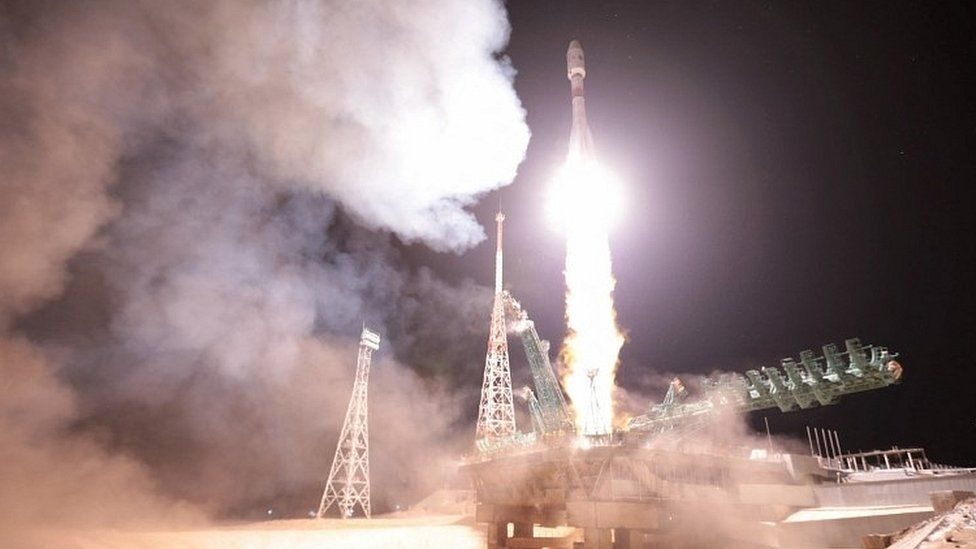
UK gov't pressures its OneWeb satellites to call off Russian rocket launch, Roscomos says it will oblige highlighting West's sanctions

OneWeb  Russian rocket
ReutersImage caption, OneWeb uses Russian rockets to get its satellites into orbit
The UK government has been urged not to allow a rocket used by a company it part-owns to lift off from a Russian-run launch pad later this week.

A Soyuz rocket carrying 36 satellites for the internet firm OneWeb is set to go up from the Baikonur Cosmodrome in Kazakhstan on Friday.

But Commons business committee chair Darren Jones called it inappropriate following Russia's invasion of Ukraine.

Asked to comment, the government said it was in conversation with OneWeb.

Comment: CNN reports on Russia's response:
The business fallout from the war in Ukraine is about to extend to outer space.

OneWeb, a London-based satellite startup striving for global internet connectivity and a key competitor to Elon Musk's StarLink satellite internet constellation, was set to launch a batch of 36 internet satellites Friday as part of its plan for a 648-satellite constellation. But those plans are now in jeopardy as Roscosmos, Russia's space agency, appears set to roadblock the effort.

A Russian-built Soyuz rocket operated by France's Arianespace SA was meant to deliver the satellites into low Earth orbit, launching from Russia-owned Baikonur Cosmodrome in Kazakhstan. OneWeb and Russia inked a multi-year deal for satellite launches, with the company launching its satellites exclusively on Russia's Soyuz rocket.

But Dmitry Rogozin, Director General of Roscosmos and a former Deputy Prime Minister with a flair for inflammatory rhetoric, is refusing to go ahead with what should be a routine launch in response to UK sanctions on Russia following the invasion of Ukraine. The agency is requiring that the UK government sell all stakes in OneWeb and that the company guarantees the satellites will not be used for military purposes, according to an ultimatum spelled out on Twitter from Roscosmos' offical account. Roscosmos stressed the demands are "due to the UK's hostile stance towards Russia" on Wednesday. The deadline for requests to be met is 9:30 pm Moscow time Thursday, Rogozin said in an interview with Russia 24.


Rogozin has tweeted flamboyant statements in the past in response to Western sanctions -- namely in 2014 after the Russian annexation of Crimea. "After analyzing the sanctions against our space industry, I suggest to the USA to bring their astronauts to the International Space Station using a trampoline," Rogozin said at the time on Twitter following US sanctions against Russia's space sector.


Why would Rogozin become inflammatory after Russia reuniting with Crimea? CNN seems to intentionally omit that 2014 was the US backed bloody coup in Ukraine, that's in part what Rogozin was responding to.


Despite Rogozin's flamboyant tweets and interviews, the United States and Russia have historically cooperated in space. While tensions on Earth have led to threats of premature exit, Rogozin has promised Russia will remain NASA's partner at the International Space Station at least until the station is eventually retired.

British lawmakers shown no sign of bending to Roscomos and submitting to demands.


Note that Rogozin's is responding to the West's actions, this isn't just Russia concocting demands on a whim.


"There's no negotiation on OneWeb: the UK Government is not selling its share," tweeted Kwasi Kwerteng, UK Business and Energy Secretary on Wednesday. "We are in touch with other shareholders to discuss next steps..." OneWeb did not immediately respond to CNN's request for comment.
Note that the US is completely reliant on Russia's rocket technology, and apparently so is the UK; and, as Rogozin recently pointed out, the US' recent refusal to cooperate with Russia on the International Space Station is actually putting lives at risk: 'Who will prevent a deorbit impact?' Russian space chief warns US that sanctions could have disastrous effect on International Space Station cooperation

Also check out SOTT radio's: NewsReal: The Truth About The Russia-Ukraine War


UPDATE: Roscosmos announced reciprocal sanctions today, with Rogozin stating: "In this situation, we can no longer provide the US with the best rocket engines in the world. Let them fly on something else - their brooms."


Putin

Putin: Crazy like a fox

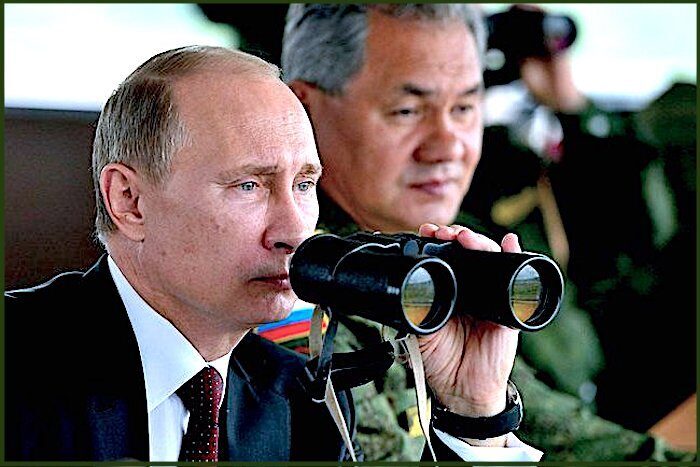
PutinShoygu
© Kremlin.ru, CC BY 4.0, Wikimedia CommonsPresident Vladimir Putin with Minister of Defense, Army General Sergey Shoygu, 2013
As the Russian invasion of Ukraine goes on, the world wonders what the reason was behind such a precipitous act. The pro-Ukraine crowd has put forth a narrative constructed around the self-supporting themes of irrationality on the part of a Russian president, Vladimir Putin, and his post-Cold War fantasies of resurrecting the former Soviet Union.

This narrative ignores that, far from acting on a whim, the Russian president is working from a playbook that he initiated as far back as 2007, when he addressed the Munich Security Conference and warned the assembled leadership of Europe of the need for a new security framework to replace existing unitary system currently in place, built as it was around a trans-Atlantic alliance (NATO) led by the United States.

Moreover, far from seeking the reconstitution of the former Soviet Union, Putin is simply pursuing a post-Cold War system which protects the interests and security of the Russian people, including those who, through no fault of their own, found themselves residing outside the borders of Russia following the collapse of the Soviet Union.


X

EU cuts off seven major Russian banks from SWIFT

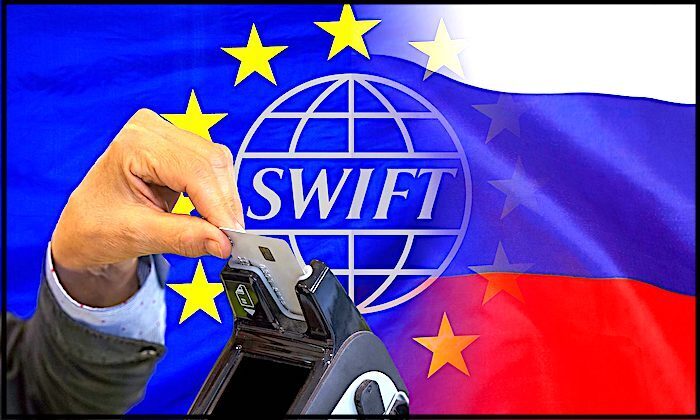
SWIFT
© pymnts.comEU • Russia • SWIFT
The European Union has disconnected Russian banks subject to sanctions from the SWIFT global payment network. Seven major lenders in the country have been targeted, including VTB, Rossiya, Otkritie, Novikombank, Promsvyazbank, Sovcombank, and VEB.RF. Russia's largest bank, Sberbank, is not on the list for now. The news was announced in the EU's official journal on Wednesday.

The banks now have 10 days to stop their SWIFT operations. According to a senior EU official, those on the list were selected based on their connections to the Russian government:
"All these banks that we have listed under SWIFT... are all [included] based on their connection to the state and the implicit connection to the war effort. We have not gone for a blanket ban across the whole banking system."
Neither Sberbank nor Gazprombank has so far been targeted, as they are the main channels for payments for Russian oil and gas, which have not yet faced EU penalties. The two will be subject to other sanctions, however, the official stated.

Comment: As sweeping financial changes are taking place, Russia will not be the only victim. Knee-jerk decisions impact the EU's global commerce and financial structures as well:
Russia's key state bank has revealed that it will pull out of the European Union's financial markets, citing threats to the safety of employees and its branches in the wake of Moscow's attack on Ukraine. Sberbank announced that the decision had been made as a result of its subsidiary banks facing "an abnormal outflow of funds."
"Due to the instruction of Russia's Central Bank, Sberbank [Russia] will not be able to supply liquidity to its European subsidiaries."
However, it offered reassurances that its subsidiary banks had "a high level of capital and quality of assets," and that customer deposits were "insured in line with local legislation." Sberbank had been operational in a number of EU member states, including Germany, Austria, Croatia, and Hungary, and boasted European assets worth €13bn (over $14.4bn) at the end of 2020.

Brussels revealed on Wednesday that the EU had disconnected embargoed Russian banks from the global payment network SWIFT. A number of major lenders, including VTB and Rossiya, are subject to the cut-off.
-
DHL is the latest international logistic giant to stop deliveries to Russia and Belarus, the company confirmed on Wednesday. FedEx and UPS announced suspensions of service earlier this week. Germany's DHL, in an alert published on its website, said:
"Our inbound services to Russia and Belarus have been suspended, which is why we are also not accepting shipments to those countries until further notice."
DHL's offices and operations in Ukraine have also been closed until further notice.

US-based UPS announced a temporary suspension of all international shipping services to and from Russia, Belarus and Ukraine on Monday, saying that packages already in transit will be returned to senders free of charge.

FedEx however is continuing exports from Russia with the exception of time-critical shipments, a notice on its website says, though deliveries to Russia have also been put on halt until further notice. The US-based company suspended all shipping to and from Ukraine last week.
-
The war in Ukraine and the ensuing sanctions against Russia could harm Europe's energy supplies and stall its economic growth, European Commissioner for Economy Paolo Gentiloni warned on Wednesday. Europe may encounter problems in the supply of energy resources - more precisely, the supply of Russian gas - and needs to be ready for such an outcome. He said:
"Russia's invasion of Ukraine will likely impact growth negatively, including through repercussions on financial markets, further energy price pressures, more persistent supply chain bottlenecks, and confidence effects that we should not under-evaluate."
EU's statistical office, Eurostat, reported on Wednesday that inflation within the bloc had soared to a new high of 5.8% in February.
-
European natural gas prices spiked above $2,200 per 1,000 cubic meters on Wednesday for the first time in market history. The escalating crisis between Russia and Ukraine has raised fears of supply shortages.

The April futures at the TTF hub in the Netherlands soared from around $1,500 to $2,226 per 1,000 cubic meters, or $213 per megawatt-hour in household terms by 09:30 GMT, hitting an all-time high, data from the London ICE exchange shows.

A huge increase in applications is raising the price by the minute, Kaushal Ramesh, senior analyst at Rystad Energy, told Vesti. He said it had also been affected by fears of supply outages due to possible damage to infrastructure in Ukraine, through which the majority of Russian gas is delivered to Europe, and the possibility of supply restrictions on Russian oil and gas.


Arrow Down

France threatens to 'cause the collapse of the Russian economy'

Le Maire
© Gonzalo Fuentes/ReutersBruno Le Maire
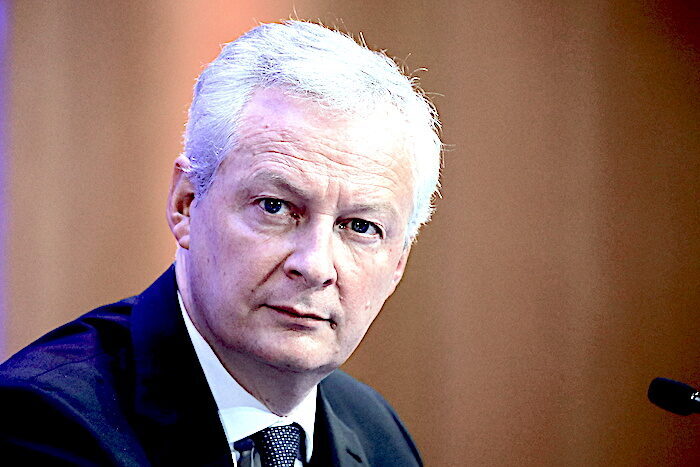
Bruno Le Maire, France's Minister of the Economy, has pledged that his country will "wage a total economic and financial war on Russia," outlining how Europe will seek to punish Moscow and President Vladimir Putin over the invasion of Ukraine.

Speaking to France Info on Tuesday, the government minister was clear that sanctions will be "applied" to individuals and entities until "Vladimir Putin returns to better intentions in Ukraine."

Stating that "488 personalities" have been added to the list of individuals currently under European sanctions over the conflict, Le Maire says France will "target the heart of the Russian system," including Putin and oligarchs, making clear that the "Russian people will also pay the consequences."

Comment: It's become a feeding frenzy. Come one, come all. At least one country is showing savvy and grace:
Mexico won't be taking part in the international pile-on to sanction Russia over its invasion of Ukraine, as President Andres Manuel Lopez Obrador has said he seeks to keep his country on peaceful terms with all nations. He told reporters on Tuesday:

"We are not going to take any sort of economic retaliation because we want to maintain good relations with all the governments of the world." He added that remaining neutral will put Mexico in a position to "talk with the parties in conflict."

The Mexican leader's position on the Ukraine crisis marks a novel diplomatic strategy as other nations around the world - including former Warsaw Pact nations such as Bulgaria and Romania - join the US in trying to punish Russia. Choosing neutrality could strain Mexico's close relationship with Washington, but Lopez Obrador has been critical of US foreign policy.

Even as it tries to avoid alienating its dominant trading partner, the US, Mexico also aims to maintain economic ties with Russia and Moscow's Latin American allies. Russia's Lukoil this year bought into an offshore oil project in Mexico, and Lopez Obrador said on Monday that his country will keep its airspace open for Aeroflot's flights to Mexico City.

Mexican Tourism Minister Miguel Torruco was widely criticized this week for posting a Twitter message offering "warm greetings" to Aeroflot and noting that "tourism is synonymous with peace, friendship and understanding between peoples." He added that Russian tourist visits to Mexico more than doubled last year to over 75,000.

Lopez Obrador criticized censorship of Russian media outlets, including RT, by governments and social media companies.
"I don't agree with the fact that media from Russia or any country is censored."


Footprints

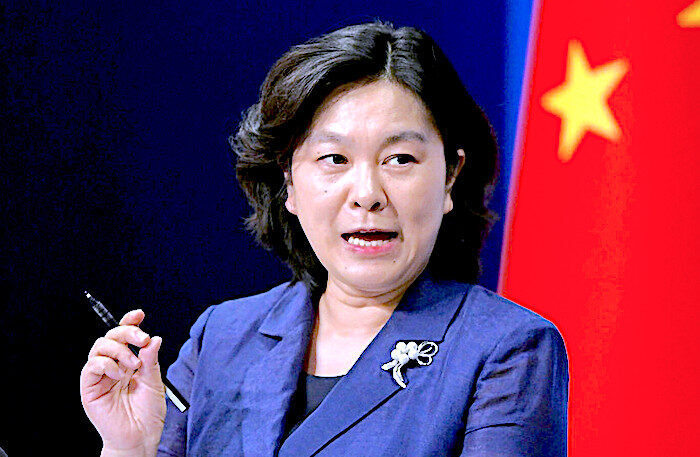
"They actually want Russia to invade" - Beijing slams Biden for allegedly provoking Putin

Hua Chunying
© DiglogsSpokeswoman for Chinese Ministry of Foreign Affairs Hua Chunying
Amid mixed headlines in the western press that war in Ukraine is straining ties (as opposed to tightening them) between Russia and China, one thing has been constant: the CCP's communications apparatus has continued to slam the US and NATO for doing 'everything in their power' to provoke Russia and President Vladimir Putin into invading Ukraine.

In a Twitter thread, Foreign Ministry spokeswoman Hua Chunying cited several US news reports which she claimed supported her contention that President Biden could have potentially averted the invasion by simply promising that Ukraine would never be admitted to NATO. NATO infamously promised Ukraine in 2008 that it would eventually become a member of the alliance after the country applied for membership in the early 2000s, but most western leaders fear that actually admitting it could potentially provoke Russia in an even more aggressive posture.

In support of this notion, she shared a couple of clips from Fox News, including one slip of the tongue from a State Department Spokesman who said "this is not the outcome we sought to prevent," apparently a mistake.

Comment: Human life doesn't matter as long as the M|C keeps revenue rolling in. War is the prolific provider.