Puppet Masters
The new penalties forbid American citizens from business dealings with Iranian entities affiliated with the country's space initiative, including the Iran Space Agency itself and two of its research institutes, the Iran Space Research Center and the Astronautics Research Institute.
Secretary of State Mike Pompeo announced the new penalties in a statement on Tuesday, describing the Iranian space initiative as a "threat" to the US and saying that "the United States will not allow Iran to use its space launch program as cover to advance its ballistic missile programs."
The decision comes in the wake of Tehran's failed satellite launch last week, which Pompeo claimed only "underscores the urgency of the threat."
A second State Department missive further explained the decision, noting that "Space launch vehicle (SLV) technologies, such as those developed by Iran's space program, are virtually identical and interchangeable with those used in ballistic missiles," although Tehran insists its space program has no military dimension.
From her influential post at the Treasury Department, Sigal Mandelker has vowed to defend "our great partner, Israel" by sanctioning Iran. Her actions have resulted in FBI interrogations of US citizens who attended a conference in Iran and the likely liquidation of a bank that partnered with the US government.
Several US citizens have been questioned by the FBI and threatened with arrest for their participation in New Horizon, a public media conference held each year in Iran.
The interrogations and threats are the result of orders apparently delivered by Under Secretary for Terrorism and Financial Intelligence Sigal P. Mandelker, a militantly pro-Israel lawyer with longstanding ties to right-wing political networks.
Mandelker was reportedly involved in brokering the infamous Florida deal that allowed the wealthy child sex trafficker Jeffrey Epstein to avoid federal charges.
Since Mandelker's appointment as Under Secretary of Treasury in 2017, she has been described on pro-Israel news sites as a "former Israeli" and "Israeli-born."
Asked by The Grayzone if Mandelker currently holds Israeli citizenship, and if so, whether she was given a special exemption that allowed her to obtain a security clearance, the US Department of Treasury did not reply.
Mandelker's actions against the US citizens who participated in New Horizon represent an under-acknowledged but significant escalation in the Trump administration's strategy of "maximum pressure" to bring about regime change in Iran. As the Atlantic noted, Mandelker is "the one with her hand on the lever" of Trump's unilateral sanctions policy against Iran.
Comment: See also:
- Sigal Mandelker, Israel-born Treasury official at the center of US policy on Iran
- US sanctions Iran-linked entities, individuals in Oman and Lebanon
- US Treasury: Washington freezes Russian assets worth hundreds of millions of dollars
- Washington sanctions two Hezbollah lawmakers for doing 'Iran's bidding'
- Press TV anchor Marzieh Hashemi jailed in US on unspecified charges
- Another political prisoner: Iran's Foreign Ministry spokesman blasts US detention of PressTV anchor Marzieh Hashemi
"Europe has another two-month deadline for negotiations, agreement, and a return to its commitments," Rouhani warned at a cabinet meeting on Wednesday.
Tehran has been calling on the EU to provide relief from the sweeping sanctions that were imposed by Washington after the US unilaterally left the 2015 deal, known as the JCPOA. Iranian officials have warned that they will gradually reduce their commitments under the agreement if this does not happen.
In early July, Iran activated the 'first phase' of this strategy by increasing its stockpile of enriched uranium beyond the 300kg limit imposed by the JCPOA. The 'second phase' - enriching uranium beyond 3.67 percent - was effected shortly afterwards. Rouhani didn't specify what the next step would be, but he hinted that it would play an important part in transforming the nation's nuclear program.
"The third step is of an extremely important nature, and will considerably accelerate the activities of the country's nuclear energy organization," he said. Rouhani stressed that the impact of the move "will be extraordinarily huge."
Comment: Additionally from RFE/RL, 4/9/2019: Rohani threatens 'extraordinary effects'
On September 3, reports suggested France was prepared to offer Iran $15 billion in credit lines until the end of the year -- guaranteed by oil -- in return for Tehran adhering again to the JCPOA's terms.From RFE/RL, 4/9/2019: France explores $15B relief plan, pending green light from Washington
But that arrangement seemingly hinged on cooperation from Washington, which reimposed unilateral sanctions and has pressed other states to avoid doing business with Iran.
And Iran's state-run Press TV, without citing a source, said that country had rejected the $15 billion-credit proposal.
Earlier on September 4, Iranian Deputy Foreign Minister Abbas Araqchi was quoted as saying that "it is unlikely European countries can take an effective step" before a weekend deadline set by Iran.
French Foreign Minister Jean-Yves le Drian told Reuters talks on the credit lines were ongoing, but U.S. President Donald Trump must first approve it.And this from Sputnik, 4/9/2019: Tehran rejects $15B loan from France
The idea is "to exchange a credit line guaranteed by oil in return for, one, a return to the JCPOA [nuclear deal]...and two, security in the [Persian] Gulf and the opening of negotiations on regional security and a post-2025 [nuclear program]," Le Drian told reporters. "All this [pre]supposes that President Trump issues waivers."
"No decision has ever been made to hold talks with the United States and there has been a lot of offers for talks but our answer will always be negative," Rohani said on September 3 in Iran's parliament.
According to reports, Tehran will only stop scrapping its obligations under the agreement if it sells as much oil as it used to before Washington re-imposed sanctions.
In the meantime, Iranian President Hassan Rouhani said Tehran was unlikely to reach a deal with European countries in the next few days and stated that Europe would have two months to fulfill its commitments under the accord. Rouhani also noted that Iran would announce the details of its retaliatory step on the deal later in the day, or tomorrow.
Pitting two women against each other just never gets old, does it?
Melania & Michelle: First Ladies in a New Era, by Tammy R. Vigil, is presented as a mere bipartisan assessment of the public images of both women. But it thinly veils its criticism of one and its admiration of the other. No prizes for guessing who's who.
Vigil, a Boston academic, notes that Melania "ranks among the least liked of all modern first ladies, [and her] professional life prepared her to serve more as a visual adornment."
The afterword belatedly acknowledges that "pitting the two women against one another is a troublesome (though common) practice." But, hey, if it damages the Trumps, go for it.
First, the FT published a report based on leaks from the Irish data regulator, which has jurisdiction over Google's European operations since the company's European headquarters is based in Dublin. Google has allegedly been using 'hidden' web pages to feed personal data gleaned from its users to paying advertisers, circumventing the EU's GDPR privacy regulations in the process.
Google rival Brave said it submitted evidence of this arrangement to the company's regulators. Google collects sensitive user data, like the race, health status and political leanings of its users, then secretly harvests this data for use in targeting ads, something that's illegal in Europe.
Johnny Ryan, Brave's chief policy officer, told the FT that he discovered the secret web pages as he tried to monitor how his data were being accessed and used on Google's advertising exchange, which is the largest marketplace for ad sales space across the web.
The lavish bounty was announced on Wednesday as part of the Rewards for Justice program, run by the State Department, which offers financial incentives for information on alleged "terrorist activities" that target the US. The IRGC, an elite branch of Tehran's military, was designated by Washington as a terrorist organization in April.
The US State Department is seeking information on any companies and individuals who allegedly help the IRGC with "evading US and international sanctions" as well as those who merely "do business" with the military unit.
Apart from issuing the bounty notice, Washington has issued a new sanctions package against an "oil-for-terror" network - as they put it - allegedly run by the IRGC. The sanctions broadside targeted 16 companies and nine individuals, allegedly involved in supplying Iranian oil to Syria in breach of US sanctions. Six oil tankers linked to such activities were also placed on the list.

Angry Afghan protesters burn tires and shout slogans at the site of a Taliban attack in Kabul on September 3
Afghan presidential spokesman Sediq Sediqqi said in a series of tweets on September 4 that despite seeing a draft accord, questions remained over the contents of a deal and how it would be implemented.
"The Afghan government supports any progress in the peace process that will lead to lasting peace and an end to the war in Afghanistan, but the main concern of the Afghan government in the U.S. agreement with the Taliban is that of the consequences and dangers. How will they be prevented?" he said.
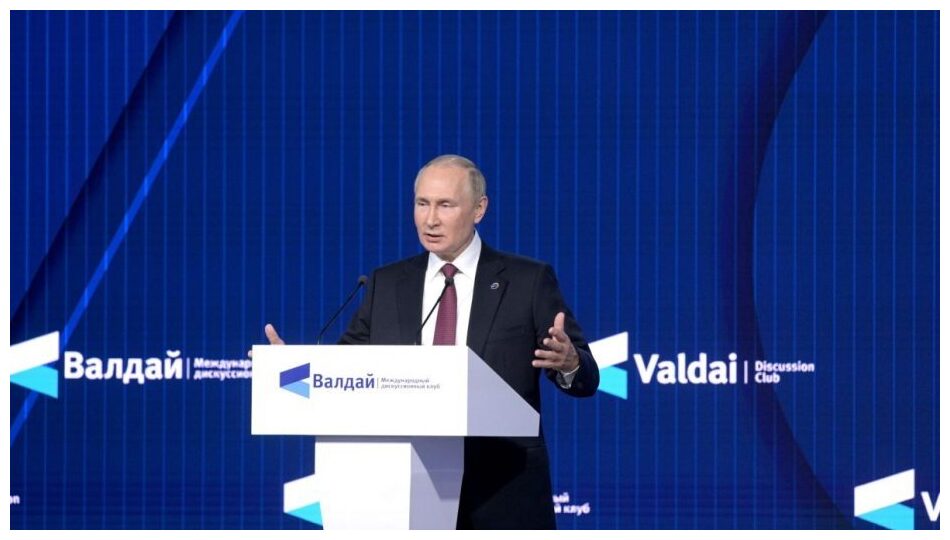
Putin held talks with Indian Prime Minister Narendra Modi, who arrived on Wednesday to the event, which promotes trade in Russia's Far East.
According to the Russian president, it is important to use national currencies in mutual settlements. "We consider the introduction of the practice of using national currencies in our settlements to be a key component of the work with our Indian partners, as well as ensuring smooth interbank transactions, which would help India join the Bank of Russia financial message transfer system," Putin said.
Russia is one of India's key partners in nuclear energy and is ready to develop their cooperation further, with at least 12 nuclear power units planned to be built over the next 20 years.

Modi said that he and Putin are kindred spirits of sorts, given their love of the outdoors and nature. "I know that he is a physically very developed person, he leads an active lifestyle, keeps himself in shape. I love it," he told reporters on Tuesday, right before heading off for a trip to Russia.
"He is also interested in the environment, wildlife, the underwater world, especially interested in the problem of conservation of tigers and so on. I'm the same by nature. Therefore, it is natural that many things connect us."
In our relations there is a special chemistry, a special lightness.

The Stena Impero, a British-flagged vessel owned by Stena Bulk, is seen at undisclosed place off the coast of Bandar Abbas on August 22.
Foreign Ministry spokesman Abbas Musavi said in a September 4 interview with Iranian state TV that the seven Russian and Indian nationals are being released on humanitarian grounds and could leave the country soon.
He added that the seven were chosen by the ship's captain.
The Stena Impero's 23 sailors are of Indian, Russian, Latvian, and Filipino nationality and the 16 remaining crew members will stay on board to operate the ship once it leaves, the Swedish company Stena Bulk, which owns the vessel, said.
Comment: More background:
- IRGC announces Iranian confiscation of British tanker in Strait of Hormuz
- Hypocrites: Critics of UK tanker seizure should 'tell Britain the same thing' - Iran
- Iran releases 9 of 12 Indian crew members from seized tanker
- Iran's high-risk deterrence policy: Trading tankers, withdrawal steps from the JCPOA - Magnier


Comment: More from RFE/RL, 4/9/2019: Zarif dismisses US Space-Agency sanctions Additional from RT, 4/9/2019: 'Stop imitating Thanos, Trump!' Tehran blasts US for sanctioning space agency