Science & TechnologyS


Moon

Radioactive iron from a supernova discovered on the moon

moon
© SkyLine / FotoliaSince the moon generally provides a better cosmic record than Earth, the scientists were also able to specify for the first time an upper limit for the flow of 60Fe that must have reached the moon.
A dying star ends its life in a cataclysmic explosion, shooting the majority of the star's material, primarily new chemical elements created during the explosion, out into space.

One or more such supernovae appear to have occurred close to our solar system approximately two million years ago. Evidence of the fact has been found on Earth in the form of increased concentrations of the iron isotope 60Fe detected in Pacific ocean deep-sea crusts and in ocean-floor sediment samples.

Saturn

Awesome images of Saturn taken from 'Cassini'

Cassini photos of Saturn rings
© ESA
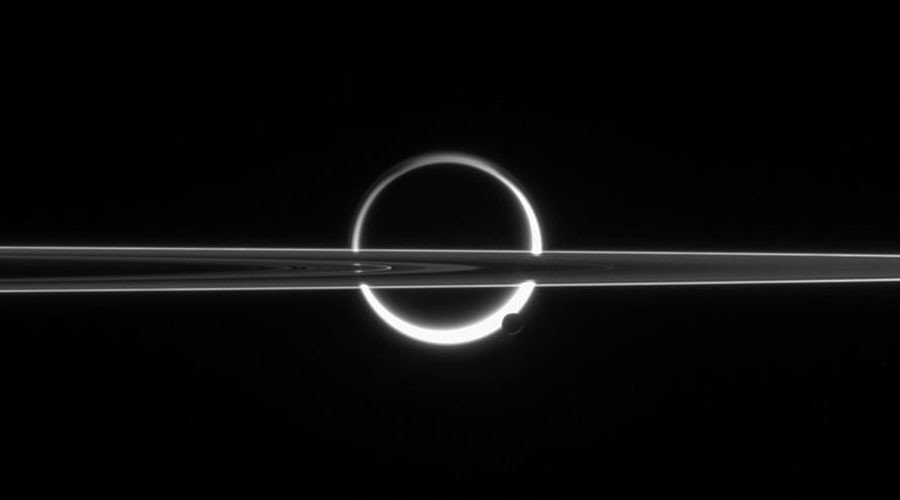
The European Space Agency has shared an incredible picture of Saturn showing the planet's rings against two of its moons.

It brings scientists one step closer to determining how the planet's fascinating rings formed.

As the ESA explains, the rings have been a "source of mystery" since their discovery by Galileo Galilei in 1610 and, while it's still not yet known exactly how they formed, some possibilities have come to light.

One theory is that they simply formed along with Saturn, while another is that they are leftover debris from a moon that got too close to the burning planet and was "ripped apart".

A striking image of the rings cutting across two of the planet's "most fascinating" moons, Titan and Enceladus, was captured by the Cassini spacecraft's narrow-angle camera.

Titan is the larger of the two satellites - 10-times larger, in fact, measuring 5150km (3,200 miles) in diameter to Enceladus' 504km (313 miles).

The image, while shared by the ESA this week, was taken by Cassini on June 10, 2006, some 3.9 million km from Enceladus and 5.3 million km from Titan.

NASA also shared an image of Saturn this week, taken by Cassini, to show just how huge Saturn's rings are.

Fireball

72 new asteroids discovered near Earth, says NASA

Asteroid's Near Earth
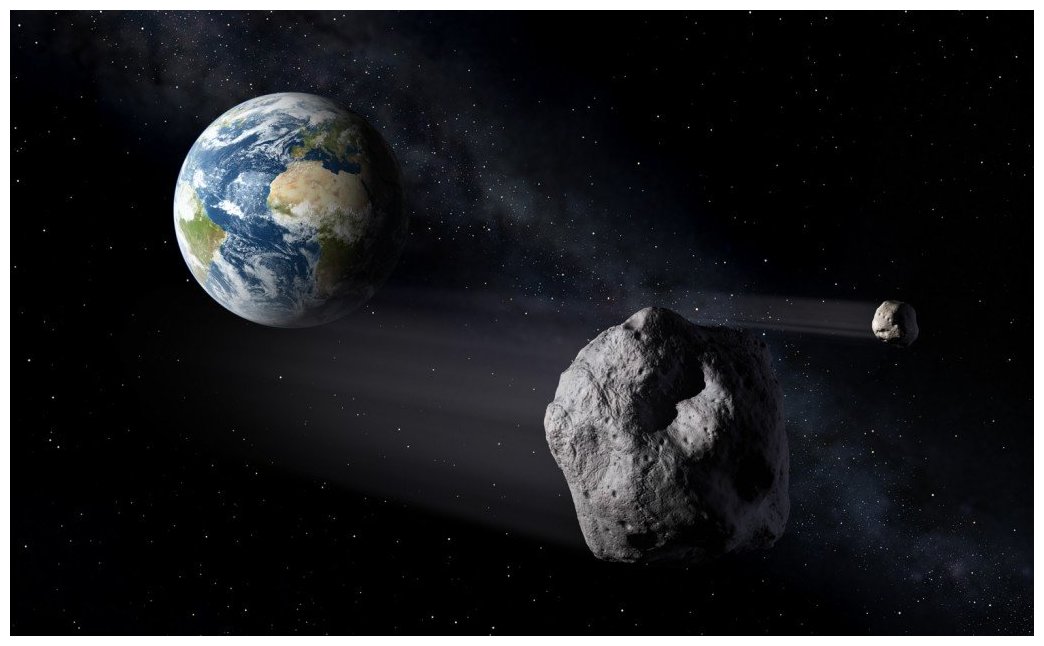
© ESAArtist's impression of a Near-Earth Asteroid passing by Earth.
Of the more than 600,000 known asteroids in our Solar System, almost 10 000 are known as Near-Earth Objects (NEOs). These are asteroids or comets whose orbits bring them close to Earth's, and which could potentially collide with us at some point in the future. As such, monitoring these objects is a vital part of NASA's ongoing efforts in space. One such mission is NASA's Near-Earth Object Wide-field Survey Explorer (NEOWISE), which has been active since December 2013.

And now, after two years of study, the information gathered by the mission is being released to the public. This included, most recently, NEOWISE's second year of survey data, which accounted for 72 previously unknown objects that orbit near to our planet. Of these, eight were classified as potentially hazardous asteroids (PHAs), based on their size and how closely their orbits approach Earth.

Originally launched back in 2009 as the Wide-field Survey Explorer (WISE), the spacecraft relied on its infrared telescope to look for previously undetected star clusters and main belt asteroids. In February of 2011, the mission ended and the spacecraft was put into hibernation. As of December 2013, it was reactivated for the purpose of surveying Near-Earth Objects (i.e. comets and asteroids) for the remainder of its service life.

Galaxy

Astronomical mystery: Why are the jets of these supermassive black holes aligned?

black hole jets aligned
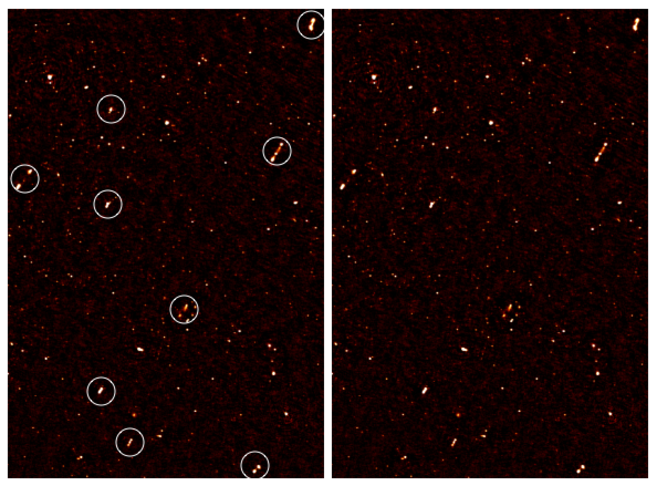
© Russ TaylorA deep radio map covering the ELAIS-N1 region with aligned galaxy jets circled in white in the image on the left.
Jets blasting from 64 supermassive black holes in a distant patch of the Universe appear to be lined up, like needles on compasses

In a distant patch of the Universe has emerged a mysterious phenomenon: the jets blasting from the centre of 64 supermassive black holes in galaxies are all aligned.

Three years of radio images snapped by the Giant Metrewave Radio Telescope in India and analysed by a pair of astronomers in South Africa picked up the faint signatures of jets pointing in the same direction like compass needles, and may give clues about the structure of the primordial Universe when the black holes formed.

"Since these black holes don't know about each other, or have any way of exchanging information or influencing each other directly over such vast scales, this spin alignment must have occurred during the formation of the galaxies in the early Universe," says study co-author Russ Taylor from the University of the Western Cape.

Comment: The Electric Universe theory has already provided a plausible explanation of the alignment of quasars. Perhaps it can also be extended to black holes?

Electric universe? "Spooky" alignment of quasars across billions of light-years


Network

Russian scientists develop novel approach for long-range secure quantum communication system

ITMO University in Saint Petersburg, Russia
A group of scientists from ITMO University in Saint Petersburg, Russia has developed a novel approach to the construction of quantum communication systems for secure data exchange. The experimental device based on the results of the research is capable of transmitting single-photon quantum signals across distances of 250 kilometers or more, which is on par with its cutting edge analogues, the ITMO press-service said.

"Now the researchers are on the mission to create a full-fledged quantum cryptographic system, which will generate and distribute quantum keys and transmit useful data simultaneously", ITMO said.

Information security is becoming more and more of a critical issue not only for large companies, banks and defense enterprises but even for small businesses and individual users. However, the data encryption algorithms we currently use for protecting our data are imperfect - in the long-term, their logic can be cracked. Regardless of how complex and intricate the algorithm is, getting round it is just the matter of time. Contrary to algorithm-based encryption, systems that protect information by making use of the fundamental laws of quantum physics, can make data transmission completely immune to hacker attacks in the future. Information in a quantum channel is carried by single photons that change irreversibly once an eavesdropper attempts to intercept them. Therefore, the legitimate users will instantly know about any kind of intervention.

Ornaments

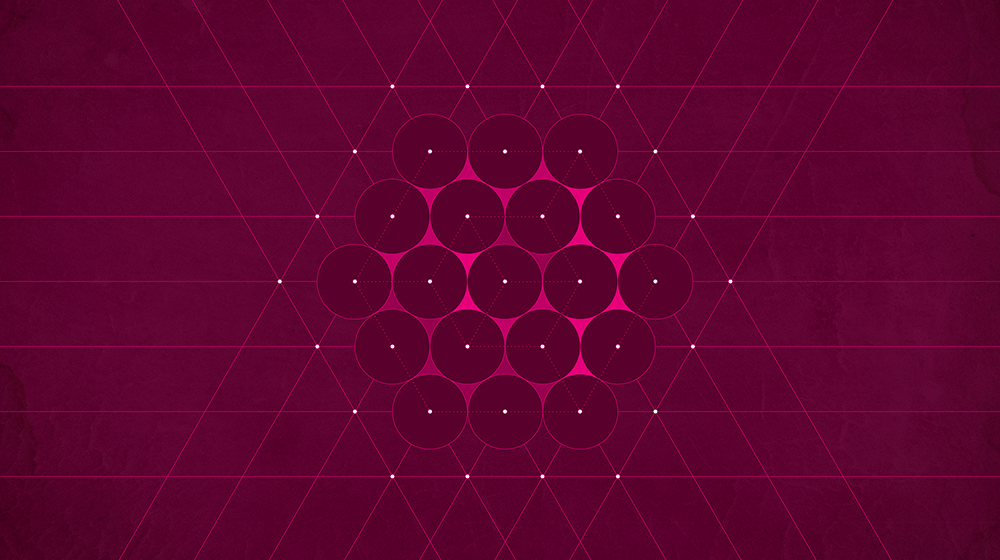
Sphere packing solutions found in dimensions eight and 24

sphere packing
© Michael Paukner
In a pair of papers posted online this month, a Ukrainian mathematician has solved two high-dimensional versions of the centuries-old "sphere packing" problem. In dimensions eight and 24 (the latter dimension in collaboration with other researchers), she has proved that two highly symmetrical arrangements pack spheres together in the densest possible way.

Mathematicians have been studying sphere packings since at least 1611, when Johannes Kepler conjectured that the densest way to pack together equal-sized spheres in space is the familiar pyramidal piling of oranges seen in grocery stores. Despite the problem's seeming simplicity, it was not settled until 1998, when Thomas Hales, now of the University of Pittsburgh, finally proved Kepler's conjecture in 250 pages of mathematical arguments combined with mammoth computer calculations.

Higher-dimensional sphere packings are hard to visualize, but they are eminently practical objects: Dense sphere packings are intimately related to the error-correcting codes used by cell phones, space probes and the Internet to send signals through noisy channels. A high-dimensional sphere is easy to define — it's simply the set of points in the high-dimensional space that are a fixed distance away from a given center point.

Finding the best packing of equal-sized spheres in a high-dimensional space should be even more complicated than the three-dimensional case Hales solved, since each added dimension means more possible packings to consider. Yet mathematicians have long known that two dimensions are special: In dimensions eight and 24, there exist dazzlingly symmetric sphere packings called E8 and the Leech lattice, respectively, that pack spheres better than the best candidates known to mathematicians in other dimensions.
"Somehow everything just fits perfectly together, and it's sort of a miracle," said Henry Cohn, a mathematician at Microsoft Research New England in Cambridge, Mass. "I don't have a simple, gut-level explanation of what it is about."
For reasons that mathematicians don't fully understand, E8 and the Leech lattice have connections to a wide range of mathematical subjects, including number theory, combinatorics, hyperbolic geometry and even areas of physics such as string theory. They form "a nexus where lots of different areas of mathematics come together," Cohn said. "Something wonderful is happening, and I'd like to understand what it is."

Mathematicians have amassed compelling numerical evidence that E8 and the Leech lattice are the best sphere packings in their respective dimensions. But until now, that evidence came just short of a proof. Researchers have known for more than a decade what the missing ingredient in the proof should be — an "auxiliary" function that can calculate the largest allowable sphere density — but they couldn't find the right function.

Now, in a paper posted online on March 14, Maryna Viazovska, a postdoctoral researcher at the Berlin Mathematical School and the Humboldt University of Berlin, has come up with the missing function in dimension 8. Her work uses the theory of modular forms, powerful mathematical functions that, when they can be brought to bear upon a problem, seem to unlock huge amounts of information. In this case, finding the right modular form allowed Viazovska to prove, in a mere 23 pages, that E8 is the best eight-dimensional packing.

Satellite

Hawking backs project to launch space probe to Alpha Centauri

New York — Stephen Hawking wants humanity to reach the stars.

The famed cosmologist, along with a group of scientists and billionaire investor Yuri Milner, unveiled an ambitious new $100 million project today (April 12) called Breakthrough Starshot, which aims to build the prototype for a tiny, light-propelled robotic spacecraft that could visit the nearby star Alpha Centauri after a journey of just 20 years.

"The limit that confronts us now is the great void between us and the stars, but now we can transcend it," Hawking said today during a news conference here at One World Observatory.

"With light beams, light sails and the lightest spacecraft ever built, we can launch a mission to Alpha Centauri within a generation," he added. "Today, we commit to this next great leap into the cosmos. Because we are human, and our nature is to fly."

The Starshot spacecraft will consist of a wafer-size chip attached to a super-thin sail. This paired duo will be launched to space aboard a mothership, and then propelled to the stars by laser light beamed from a high-altitude facility here on Earth.

Such a craft, Milner said, could be accelerated up to 20 percent the speed of light — fast enough to make it to the Alpha Centauri system, which lies 4.37 light-years away, just two decades after launch. (It would take a conventionally propelled probe about 30,000 years to make such a trip.)

"We call it the Nanocraft," Milner said. "Our interstellar sailboat."

Bad Guys

Chemical fertilizer industry: An evil to rival Monsanto

pesticide
© Wikimedia CommonsSelf-propelled row-crop sprayer applying pesticide to post-emergent corn.
What do you know about the worldwide chemical fertilizer industry? If you're like most people, not much.

There's plenty of press coverage and consumer awareness when it comes to genetically engineered food and crops, and the environmental hazards of pesticides and animal drugs. But the fertilizer industry? Not so much—even though it's the largest segment of corporate agribusiness ($175 billion in annual sales), and a major destructive force in polluting the environment, disrupting the climate, and damaging public health.

Learning the facts about chemical fertilizers and the companies who produce them will give you yet another reason to boycott chemical/GMO/factory farmed foods and choose organic and grassfed animal products instead. Remember, organic standards established by the U.S. Department of Agriculture (USDA) prohibit the use of chemical fertilizers, pesticides, GMOs, or animal drugs.

Here's a list of underreported facts that raise disturbing environmental and regulatory questions about Monsanto's Evil Twin—the chemical fertilizer industry.

1) Chemical Fertilizer is the Largest Industry in Global Agribusiness

According to the ETC group, a watchdog organization that researches the socioeconomic and ecological impacts of industrial agriculture and GMOs, the world's seven dominant pesticide, GM, and seed companies (including Monsanto, DuPont, Dow, Bayer, and Syngenta) represent a $93 billion market. The global, energy-intensive chemical fertilizer industry is almost twice as large, at $175 billion.

Like most of the other multinational players in Big Food Inc., the fertilizer industry has secretive, vertical or "cartel" like qualities that obscure operations and make regulation difficult. Increasingly, seed and GMO companies, farm equipment producers, pesticide/herbicide makers and crop and soil data producers work in each others' interest seamlessly and behind the scenes, according to ETC.

As ETC points out: "With combined annual revenue of over $385 billion, these companies call the shots. Who will dominate the industrial food chain? And what does it mean for farmers, food sovereignty and climate chaos?"

Industrially mined phosphorus and potash, along with synthetic nitrogen, are major components of the fertilizer industry. Up to 85 percent of the world's known phosphate rock reserves are located in Morocco. About 70 percent of potash comes from former Soviet states and Canada.

Comment: Poisoned agriculture & human extinction


Satellite

Satellite expert says GPS is making us stupid

GPS system
© unknown
In 2008, a Syrian truck driver was faithfully following his satellite navigation system and ended up 1,600 miles away from where he was supposed to be. He'd meant to go to Gibraltar, off the south coast of Spain. He arrived at Gibraltar Point, England, surrounded by a group of befuddled birdwatchers.

That's a pretty extreme blunder. But stories like this have gotten satellite expert Roger McKinlay thinking about whether we've become too dependent on GPS and other satellite navigation devices — particularly now that so many adults rely on their smartphones rather than their brains to get around unfamiliar territory.

For starters, these devices don't always work as well as we think they do, and can fail in surprising ways. That could become an even bigger problem as we push for driverless cars and other self-navigating vehicles. Worse, our reliance on GPS might be causing our innate navigational capabilities to atrophy over time, leaving us helpless when technology fails and we're forced to orient ourselves. "We've become overdependent," McKinlay says.

Comment: See also:


Network

Say goodbye to server centers; data storage in DNA molecules

DNA pictures
© gizmodo.comPicture retrieval from DNA storage unit. The pink smear in the test tube contains 10K GB of digital data equivalent to images, movies, emails and other digital files from more than 600 smartphones.
Our genes can come in handy when trying to store digital information. This isn't genetic memory, but actually turning DNA molecules into data storage units. A group of researchers from the University of Washington (UW) teamed up with Microsoft experts to address space containment issues for digital data, because in just four years the amount of all of the world's data will reach 44-trillion gigabytes.

Solutions? We could either build six stacks of computer servers that would reach up to the moon (over 370,000 kilometers) or alternatively try to store all of this data in DNA molecules. The latter option would save a ton of space, both in the digital and geographic sense of this term.

Scientists at UW came up with a new technology that would allow to "successfully encode four image files worth of digital data into the nucleotide sequences of snippets of synthetic DNA," Tech Times reported.
It seems surreal, but researchers retrieved the right sequences of encoded digital data from a DNA pool and reconstructed the four images without losing an information byte, the source said.

Comment: Scientists were able to encode four digital images into strings of DNA. This required converting the 1s and 0s of the files into the four basic elements of DNA - adenine, guanine, cytosine, and thymine. But even more challenging was reversing the process without any errors.


​"Life has produced this fantastic molecule called DNA that efficiently stores all kinds of information about your genes and how a living system works — it's very, very compact and very durable," said Luis Ceze, one of the scientists who worked on the project, as cited by Science Alert. In the future giant server farms will not have to be built to store data, with DNA data coding, billions of gigabytes could be squashed into a space the size of an apple.

Comment: Claims are one gram of DNA can hold 455 Exobytes of information, more than all the current digital data in the world. Accessing it for practical usage...that might prove more difficult.