Science & TechnologyS


Info

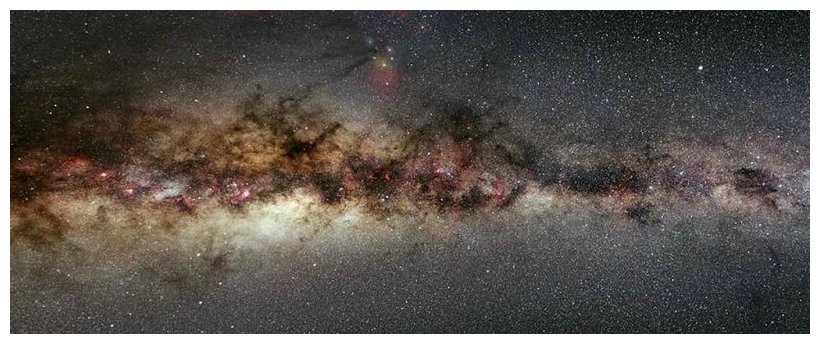
New discovered huge galaxy orbiting our own Milky Way

Milky Way
© ESO
A huge galaxy orbiting our own Milky Way has seemingly appeared out of nowhere. The newly spotted dwarf galaxy, which has been named Crater 2, sits around 400,000 light-years away, and has already earned the title of the fourth largest known galaxy circling our own.

So how does a galaxy that big stay hidden for so long? Crater 2 has always been there, quietly circling our own giant galaxy. But its stars are so diffuse that it's incredibly dark, and it's been masked up until now by its brighter neighbours. In fact, it's one of the dimmest galleries every detected in the Universe.

"This is indeed a very rare discovery," lead researcher Vasily Belokurov from the University of Cambridge in the UK told The Huffington Post. "A galaxy like Crater 2 is a sort of invisible object."

As far as we know, the Milky Way is orbited by 49 other galaxies, but this research suggests that perhaps there are other dark galaxies, inside our own cosmic neighbourhood, that have remained hidden because of their diffuse, ghostly appearance.

Crater 2 was first detected in January, when astronomers used a computer algorithm to study images taken by the Very Large Telescope in Chile, and then pinpoint regions where there might be unusual clustering of stars - one of those clusters turned out to be Crater 2.

Cell Phone

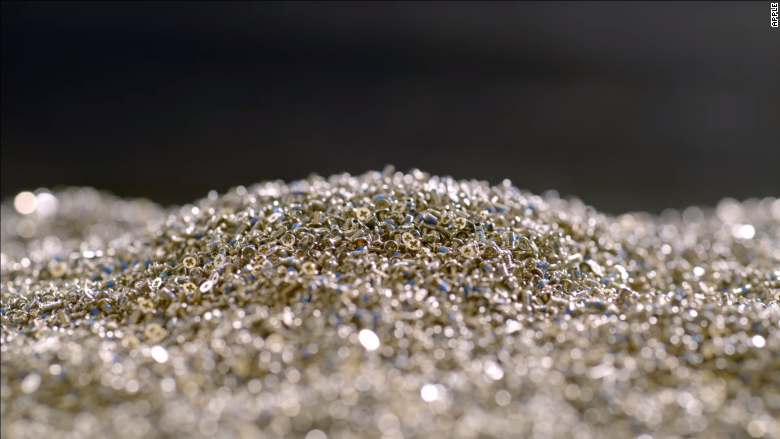
Apple scavenged over 2,000 pounds of gold from old iPhones last year

gold bits
Materials Apple recovered from old iPhones.
As if Apple needed the cash, the company has discovered a way to make tens of millions of dollars off of old, broken, unwanted iPhones.

In its annual environmental report released this week, Apple said it recovered 2,204 pounds (more than a ton) of gold from recycled iPhones, iPads and Macs last year. That's $40 million worth.

Gold is used in consumer electronics because it is highly averse to corrosion and an excellent conductor of electricity. Silver is actually the best conductor, but it corrodes easily. Copper is super-cheap, but it moves electrons too slowly for some of the most important computing tasks.

Bulb

The ovillanta: A safe, non-toxic way to trap mosquitos

ovillanta mosquito trap
Ovillanta mosquito trap
With summer approaching and concerns over Zika virus growing, a study performed in Guatemala is providing a timely and cost-effective solution to mosquito control.

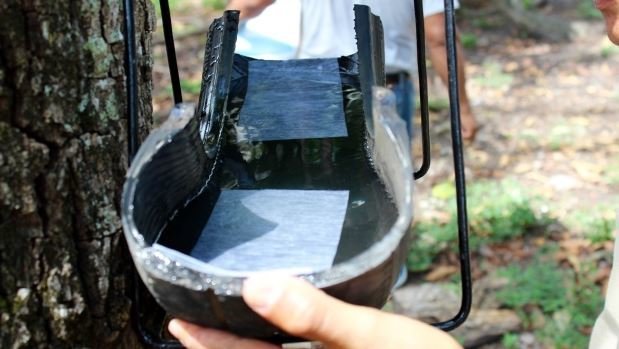
Researchers developed a highly effective mosquito trap, called an ovillanta, using nothing more than 20-inch cut tire pieces hung in a certain fashion with a pheromone-laden non-toxic solution poured into the bottom, and a piece of floating wood or paper where female mosquitoes are drawn to lay their eggs.

This egg raft is removed twice a week, and the eggs are destroyed. The solution is drained out of a valve on the bottom of the tire piece, filtered and then reused in the tire. The trap is completely environmentally friendly, as no pesticides are sprayed.

The study will prove beneficial to South and Central American communities at higher risk of dengue, chikungunya, and Zika virus transmission.

Water

Company invents water bottle that fills itself with vapor from the air

fontus water bottle
© Fontus
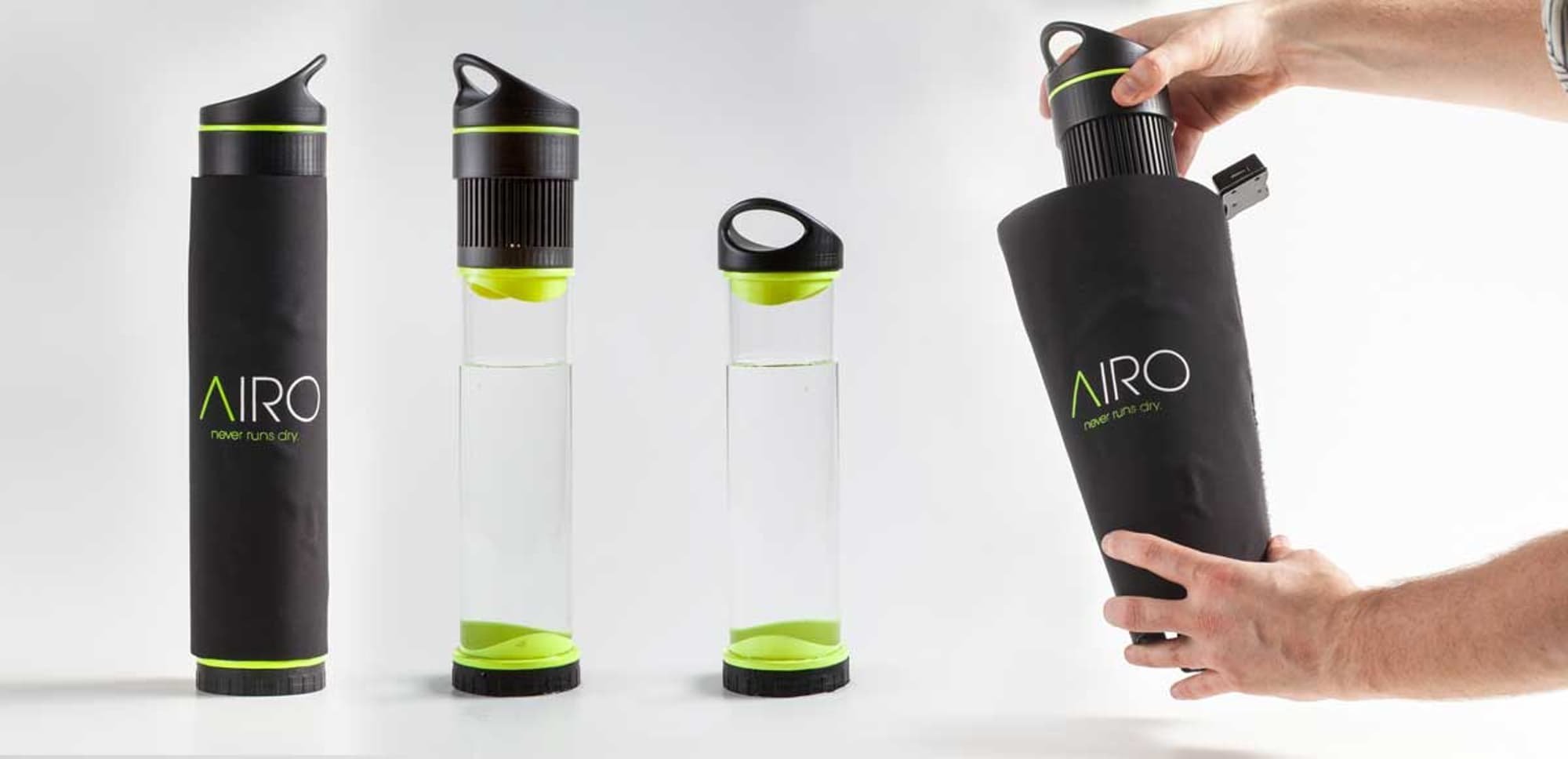
Sports enthusiasts, green tech entrepreneurs, and the general public will all be impressed by a novel water bottle that literally pulls water vapor out of the air to fill itself. According to GizMag, the Austrian startup Fontus is responsible for developing the innovative bottle which was a finalist for the Dyson award in 2014.

The design uses solar energy to create a condensation chamber that converts humidity extracted from the air into drinking water. When human air flows into the device, a series of hydrophobic surfaces keep dust, bugs, and debris out while causing water droplets to form.

The user is left with pure water which can be drunk on the go, during endurance sporting, or while out in the wilderness camping.

Binoculars

High-tech specs, man can read after 20 years

OrCam technology visual impairment
© OrCam
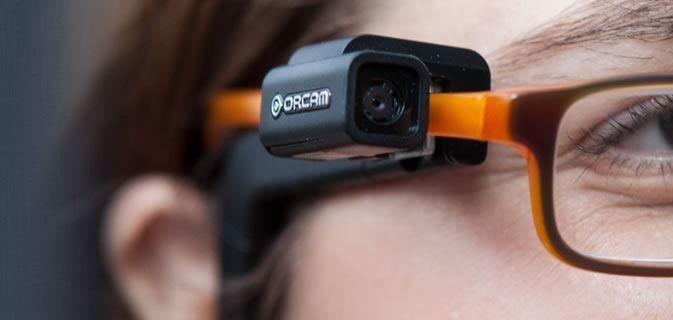
A pair of glasses has enabled a blind man to read for the very first time in 20 years. The high-tech specs are the invention of OR-Cam, an intuitive wearable device with a smart camera, is designed to assist people who have a visual impairment.

Luke Hines, aged 27, became blind in one eye and has only 3 per cent vision in the otherafter he underwent an operation to remove a brain tumor in 1997. In an interview with The Sun newspaper, Luke, from Devon, England said: "Something as simple as going to Tesco I used to hate doing because I would just go, get the same things every time and get out of there." However, with his new specs, shopping has now become a completely different experience. "Now I can spend hours up there just trying to read everything. It's really nice being able to do it without having to rely on someone else."

The Or-Cam device is a small camera that can be worn in the same way as Google Glass. It is connected by a thin cable to a portable computer and can fit in the wearer's pocket. This then clips onto the wearer's glasses via the use of a magnet, which then offers clear speech as it reads aloud the words or objects pointed to by the user. Priced at just US$2,500 — it recognizes English-language text.

Luke has suffered greatly due to his handicap and was unable to go to school because of his visual impairment. However, life has taken a turn for the better and through the use of Or-Cam, Luke is now able to do so much more. He is hoping to go onto college and eventually become a gardener. In an interview with The Sun, Luke's mother, Jane Jinen said: "It's such a delight because if it can give Luke a quality of life that we have got and he can go to college, it would just be overwhelming."


Robot

New interactive robot Jia-Jia, unveiled in east China

Jia-Jia
© Xinhuanet
The University of Science and Technology of China welcomed a truly unique face to its campus on Friday: a fully-functional, female robot.

"Hello everyone, I'm Jia Jia. Welcome!" the fembot said to an audience of curious college students at the university's multimedia center.

The life-like robot can move and speak in sync with her lip movement. The USTC research team that developed her even wired her to express "micro-emotions."

The fembot resembles a woman in her 20s, and she seems to carry herself like one too.

Info

Waking supervolcano in North Korea prompts rare collaboration with Western scientists

Mount Paektu in North Korea
© Raymond Cunningham/GettyThe crater atop Mount Paektu

Rare example of collaboration with isolationist regime's researchers helps reveal secrets of one of the world's largest volcanoes


If it blows again, it could make Vesuvius look like a tea party.

Now, in a ground-breaking collaboration between the West and North Korea, vulcanologists are gaining new insights into Mount Paektu, on North Korea's border with China, and whether it might blow its top any time soon.

If it does, the outcome could be catastrophic. Paektu's last eruption, a thousand years ago, is the second largest ever recorded, topped only by the eruption of Mount Tambora in Indonesia in 1815.

"If it erupted, it would have impacts way beyond Korea and China," says James Hammond of Birkbeck, University of London, one of the scientists involved.

In 946 AD, the eruption of Mount Paektu, Korea's highest mountain, blasted 96 cubic kilometres of debris into the sky, 30 times more than the relatively puny 3.3 cubic kilometres that Vesuvius spewed over Pompeii in AD 79.

Yet despite is size and the potential impact of an eruption, little is known about this enigmatic volcano.

Better Earth

The water you drink may be older than the sun

water droplets
© Biwa Studio/Getty ImagesThe water you drink is older than the planet you’re standing on.
Every Friday, we'll offer a Trilobite talking point to help you bring a bit more science to your weekend conversations.

Earth is old. The sun is old. But do you know what may be even older than both? Water.

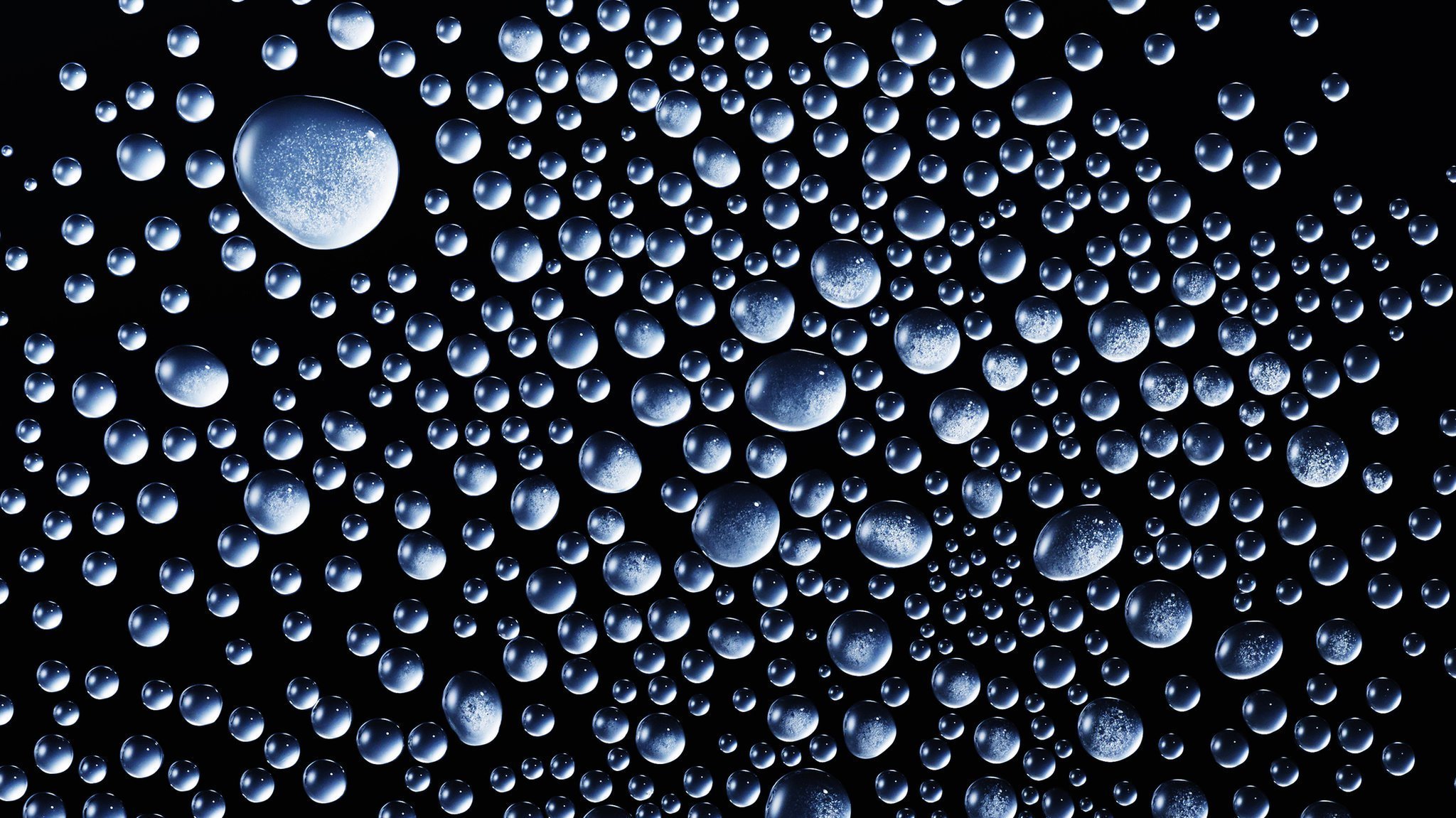
It's a mystery how the world became awash in it. But one prevailing theory says that water originated on our planet from ice specks floating in a cosmic cloud before our sun was set ablaze, more than 4.6 billion years ago.

As much as half of all the water on Earth may have come from that interstellar gas according to astrophysicists' calculations. That means the same liquid we drink and that fills the oceans may be millions of years older than the solar system itself.

Comment: For more see:


Sun

Russia rolls out unique flexible solar battery

Flexible solar panel
© National University of Science and Technology MISiS
A sophisticated solar panel has been developed by a group of researchers from the Moscow-based National University of Science and Technology, according to information published on its website.

A group of researchers from the National University of Science and Technology (MISIS) in Moscow, in cooperation with their colleagues from the University of Texas at Dallas, managed to develop a flexible solar battery which is at least three times cheaper than its silicon analogues, the MISIS website reported.

Led by Professor Anvar Zakhidov, MISIS scientists created a thin-filmed photoelectric cell based on hybrid metal-organic compounds called perovskites, which in turn made it possible to hammer out an advanced solar battery, according to the website.

Cassiopaea

Supernova explosion showered Earth with radioactive debris

Cassiopeia A
© NASA/JPL-CaltechFalse color image of Cassiopeia A using Hubble and Spitzer telescopes and Chandra X-ray Observatory.
By discovering supernova iron on the moon, a team of researchers has confirmed that a star died near our solar system in the ancient past.

A dying star ends its life in a cataclysmic explosion, shooting the majority of the star's material, primarily new chemical elements created during the explosion, out into space.

One or more such supernovae appear to have occurred close to our solar system approximately two million years ago. Evidence of the fact has been found on the earth in the form of increased concentrations of the iron isotope 60Fe detected in Pacific ocean deep-sea crusts and in ocean-floor sediment samples.

This evidence is highly compelling: The radioactive 60Fe isotope is created almost exclusively in supernova explosions. And with a half-life of 2.62 million years, relatively short compared to the age of our solar system, any radioactive 60Fe originating from the time of the solar system's birth should have long ago decayed into stable elements and thus should no longer be found on the earth.

This supernova hypothesis was first put forth in 1999 by researchers at the Technical University of Munich (TUM) who had found initial evidence in a deep-sea crust. Now their claim has received further substantiation: Physicists at the TUM and their colleagues from the USA have succeeded in demonstrating an unusually high concentration of 60Fe in lunar ground samples as well.