Science & TechnologyS


Map

How internet mapping turned living on one Kansas farm into hell...

ip address
© Elena Scotti/FUSIONThe hills have I.P.'s
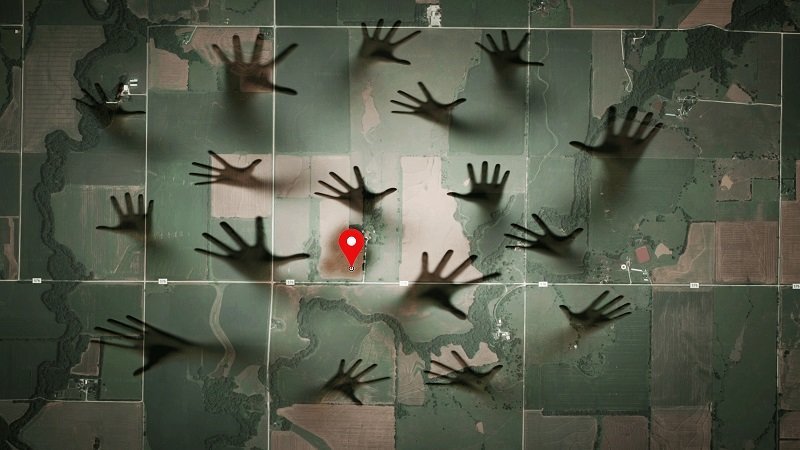
An hour's drive from Wichita, Kansas, in a little town called Potwin, there is a 360-acre piece of land with a very big problem.

The plot has been owned by the Vogelman family for more than a hundred years, though the current owner, Joyce Taylor née Vogelman, 82, now rents it out. The acreage is quiet and remote: a farm, a pasture, an old orchard, two barns, some hog shacks and a two-story house. It's the kind of place you move to if you want to get away from it all. The nearest neighbor is a mile away, and the closest big town has just 13,000 people. It is real, rural America; in fact, it's a two-hour drive from the exact geographical center of the United States.

But instead of being a place of respite, the people who live on Joyce Taylor's land find themselves in a technological horror story.

For the last decade, Taylor and her renters have been visited by all kinds of mysterious trouble. They've been accused of being identity thieves, spammers, scammers and fraudsters. They've gotten visited by FBI agents, federal marshals, IRS collectors, ambulances searching for suicidal veterans, and police officers searching for runaway children. They've found people scrounging around in their barn. The renters have been doxxed, their names and addresses posted on the internet by vigilantes. Once, someone left a broken toilet in the driveway as a strange, indefinite threat.

All in all, the residents of the Taylor property have been treated like criminals for a decade. And until I called them this week, they had no idea why.

To understand what happened to the Taylor farm, you have to know a little bit about how digital cartography works in the modern era—in particular, a form of location service known as "IP mapping."

Comment: It's great that companies are working to fix the problem, but given the sheer number of how many people could be affected, it's unfortunate to think so many have endured this type of techno-harassment.


Evil Rays

Coming soon to a classroom near you: DARPA's portable EEGs

DARPA Logo
© Wikimedia Commons
According to the benevolent and loving Defense Advanced Research Projects Agency, "there is a great need for inexpensive and easy to use neural recording devices" aka a cheap EEG brain electrical activity recording smart app "to allow widespread use by schools and average citizens" because "having EEGs in every classroom in America would engage students in science and technology in a way not previously possible in the field of neuroscience..." and with it "students could record their own brain activity and download the data to their iPad" right there in the classroom! Because the government is all about spending millions on a completely benevolent fostering of a love of science. Riiiiiiiiiiiiiiiiight.

Comment: Other ways DARPA is showing their love for humanity:


Books

What happens to your brain while reading?

natural reading
Neuroscientists have for the first time have come up with a way to observe brain activity during natural reading, the reading of actual text and not just individual words. The findings are already helping settle some ideas about how we read.

Says John Henderson, a psychology professor at the University of California, Davis:
"It's a key advance in understanding reading in the brain, because people are just reading normally."
Until now, neuroscientists have only measured brain activity as a volunteer fixes his or her attention on individual words. The signals of brain activity from functional magnetic resonance imaging, or fMRI, last for several seconds—too slow to keep up with natural reading, which processes several words a second.

Footprints

Virus-fighting protein triggering genetic mutations may have sped up human evolution

DNA, anti-viral proteins
© iStockSome of the body's antiviral proteins can mess with our DNA—for better or worse.
A virus-fighting protein in humans and other primates triggers an explosion in genetic mutations that may have sped up the evolution of our species, according to a new study.

"In some sense, this is scary," says Kelley Harris, a geneticist at Stanford University in Palo Alto, California, who was not involved with the work. Random mutations are often harmful. But there could be a silver lining: These changes also "provide raw material for evolution to happen" and that may enable individuals besieged by viruses to come up with better antiviral defenses, she says. "The paper doesn't prove that it's beneficial for humans to mutate their own DNA when they are infected by viruses, but it's an interesting possibility."

Since the beginning of time, viruses have been inserting their genetic material into the genomes of their hosts, tricking the cell's machinery into making more virus. Today, our genomes are riddled with these interlopers, called retroviruses and transposable elements, but many now just sit there, unable to generate additional copies of themselves. That's because our bodies have a group of proteins that have mutated this DNA. These so-called APOBEC proteins seek out certain combinations of the letters that make up DNA (called bases), and, in DNA of viral origin, chemically convert the base cytosine into the base uracil—a change in the genetic alphabet from C to U that can disrupt a gene.

Comet 2

Sott Exclusive: Nemesis, not 'Nibiru' - Clarifying mainstream reports about 'a large ninth planet' that periodically sends comets our way

comet earth
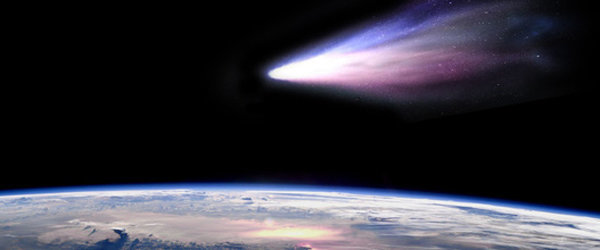
There are historical records of comets taking up the whole night sky...
A number of tabloids recently revived an astronomical theory about a large 'ninth planet' orbiting the outer reaches of the solar system and periodically crashing through a comet field - in this case, the Kuiper Belt - to send 'icy' space rocks our way. What makes the story remarkable for us is not the intriguing nature of the information it conveys - Sott.net has been covering a more well-founded variant of this theory for many years - but that even Rupert Murdoch's slimy British publication, The Sun, which thankfully bears no relation whatsoever to Sol, ran with it (albeit in super-dumbed-down form).

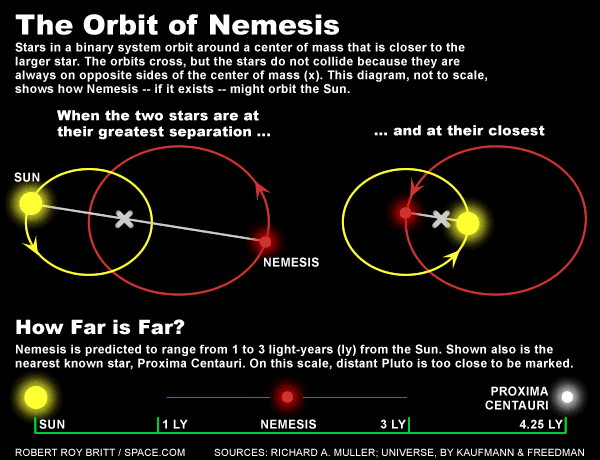
This is not the first time astronomers have suggested that something periodically disturbs comets situated somewhere on the outer rim of our solar system, sending some (or many, depending on your perspective) of them our way. 'Planet X' a.k.a. 'Nibiru' would be far too small to account for the effects attributed to it. Rather than speculating about 'a ninth planet', other astronomers have posited that such a space body is more likely to be a second sun - albeit a smaller, dark, 'dwarf' one. Its orbit would be so big that it would take it half-way to the nearest star. The theory goes that it disturbs comets in the Oort Cloud - which is basically an extension of the Kuiper Belt - as it 're-enters' the solar system.

nemesis
Nemesis, not such 'pseudo-science quackery' after all
The History Channel's The Universe TV series aired this episode - 'Nemesis: The Sun's Evil Twin' - back in 2011:


Info

Movement of water around the world contributes to Earth's rotational wobbles says NASA

Earth's Spin Axis
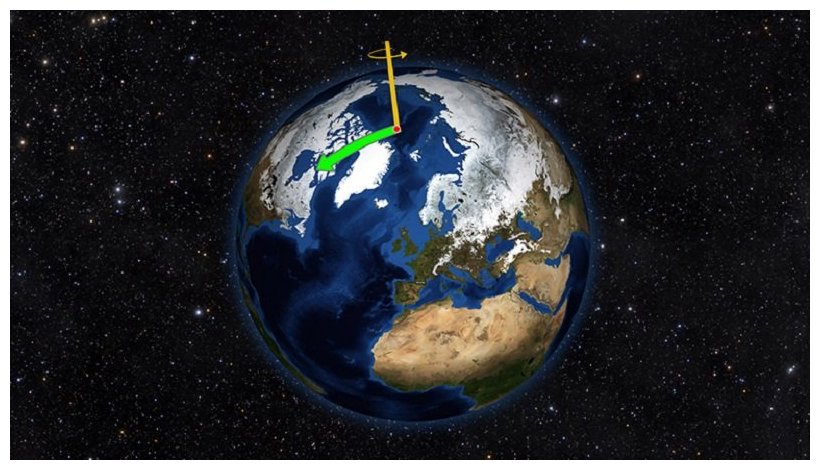
© NASA/JPL-CaltechEarth does not always spin on an axis running through its poles. Instead, it wobbles irregularly over time, drifting toward North America throughout most of the 20th Century (green arrow). That direction has changed drastically due to changes in water mass on Earth.
Using satellite data on how water moves around Earth, NASA scientists have solved two mysteries about wobbles in the planet's rotation -- one new and one more than a century old. The research may help improve our knowledge of past and future climate.

Although a desktop globe always spins smoothly around the axis running through its north and south poles, a real planet wobbles. Earth's spin axis drifts slowly around the poles; the farthest away it has wobbled since observations began is 37 feet (12 meters). These wobbles don't affect our daily life, but they must be taken into account to get accurate results from GPS, Earth-observing satellites and observatories on the ground.

In a paper published today in Science Advances, Surendra Adhikari and Erik Ivins of NASA's Jet Propulsion Laboratory, Pasadena, California, researched how the movement of water around the world contributes to Earth's rotational wobbles. Earlier studies have pinpointed many connections between processes on Earth's surface or interior and our planet's wandering ways. For example, Earth's mantle is still readjusting to the loss of ice on North America after the last ice age, and the reduced mass beneath that continent pulls the spin axis toward Canada at the rate of a few inches each year. But some motions are still puzzling.

Rocket

Mission accomplished: SpaceX Falcon rocket returns from delivering supplies to ISS, successfully lands on ocean drone platform (VIDEO)

SpaceX
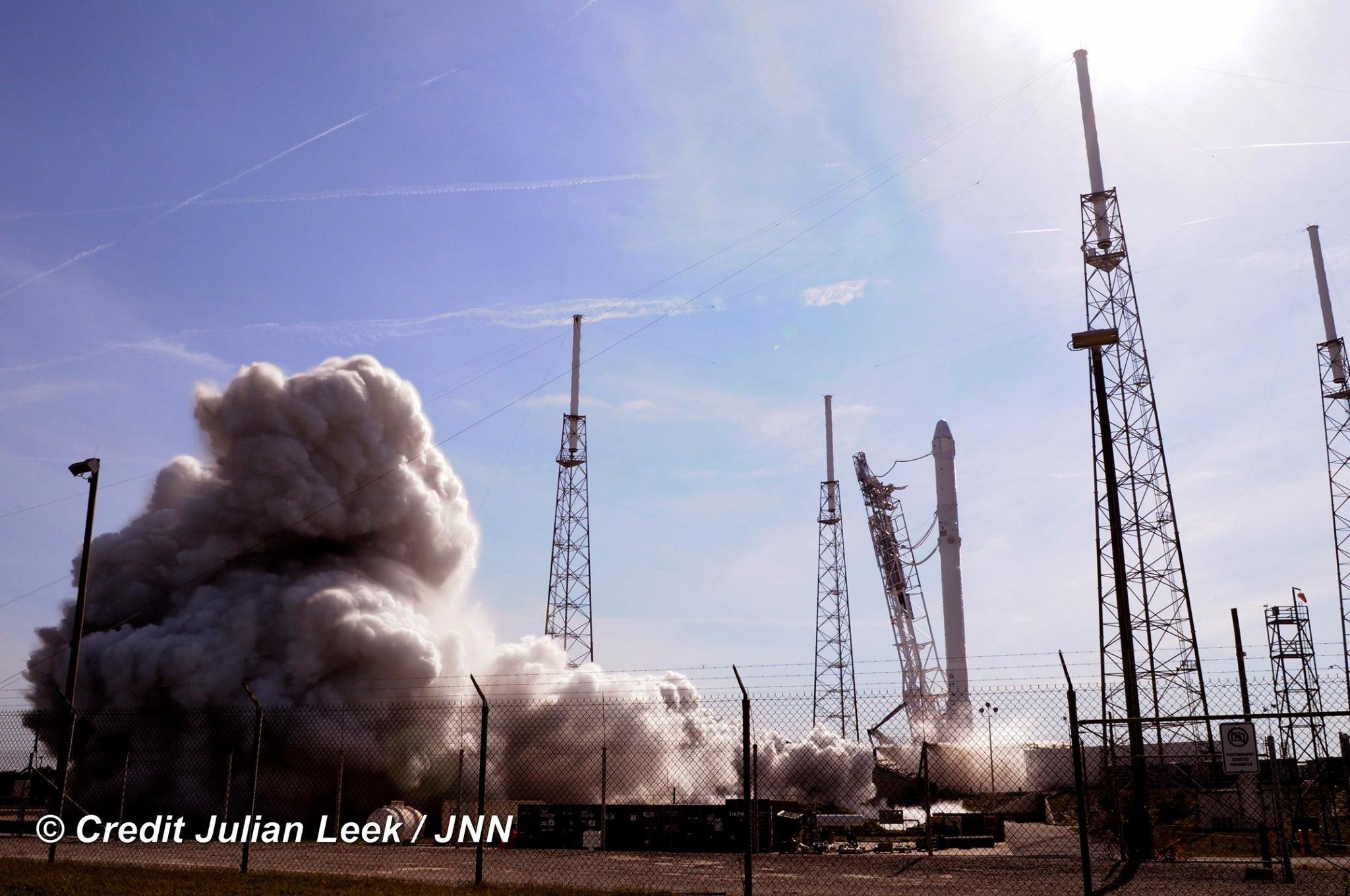
© Julian LeekSpaceX Falcon 9 rocket with a Dragon cargo spacecraft launches on April 8, 2015 from Space Launch Complex 40 at Cape Canaveral Air Force Station on the CRS-8 mission to the International Space Station.
All around, today, April 8, was a great day for the future of space exploration. SpaceX successfully restarted their critical cargo flights for NASA to stock the International Space Station (ISS) with essential supplies and groundbreaking science experiments, while the innovative firm also successfully landed the first stage of their Falcon 9 rocket on a barge at sea.

The triumphant 'Return to Flight' launch of the upgraded SpaceX Falcon 9 with the Dragon CRS-8 cargo freighter was the primary goal of Friday's launch and validated the hardware fixes put in place following the catastrophic failure of the previous Dragon CRS-7 cargo ship two minutes after liftoff on June 28, 2015 due to a faulty strut in the boosters second stage.

Landing the booster safely on a drone ship at sea was the secondary goal of the flight but is critical towards achieving the vision of rocket recovery and reusability at the heart of SpaceX Founder Elon Musk's dream of slashing the cost of access to space and one day establishing a 'City on Mars."

The weather was fantastic in the sunshine state as the two stage SpaceX Falcon 9 rocket boasting over 1.3 million pounds of thrust launched on time Friday at 4:43 p.m. EDT from Space Launch Complex 40 at Cape Canaveral Air Force Station in Florida.


Bulb

Stem cell therapy using human fat cells

stem cell research
© iStockUNSW researchers have have taken bone and fat cells, switched off their memory and converted them into stem cells so they can repair different cell types once they are put back inside the body
Stem cell therapies capable of regenerating any human tissue damaged by injury, disease or ageing could be available within a few years, following breakthrough research led by UNSW researchers.

The repair system, similar to the method used by salamanders to regenerate limbs, could be used to repair everything from spinal discs to bone fractures, and has the potential to transform current treatment approaches to regenerative medicine.

The UNSW-led research has been published today in the Proceedings of the National Academy of Sciences journal.

Study lead author, haematologist and UNSW Associate Professor John Pimanda, said the new technique, which reprograms bone and fat cells into induced multipotent stem cells (iMS), has been successfully demonstrated in mice.
"This technique is a significant advance on many of the current unproven stem cell therapies, which have shown little or no objective evidence they contribute directly to new tissue formation," Associate Professor Pimanda said.

"We are currently assessing whether adult human fat cells reprogrammed into iMS cells can safely repair damaged tissue in mice, with human trials expected to begin in late 2017."

Sun

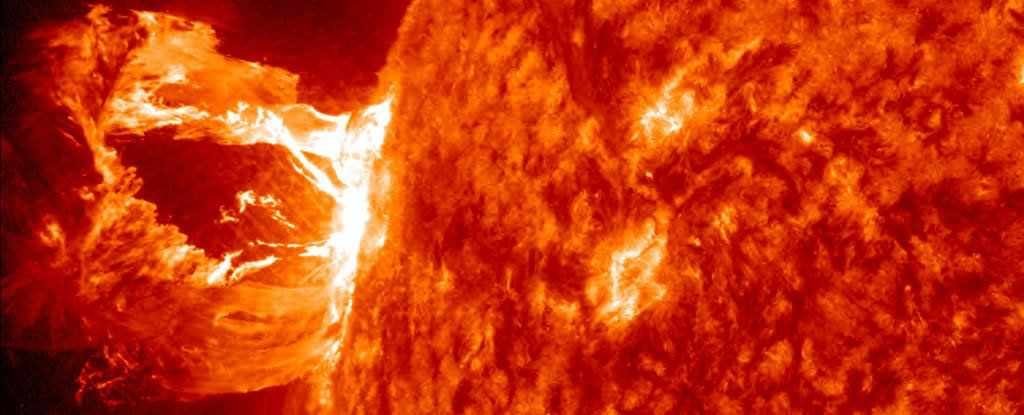
Solar storm researchers prepare for the 'big one' with renewed urgency

solar storm
© NASA/SDO/AIA
The specter of a geomagnetic solar storm with the ferocity to disrupt communications satellites, knock out GPS systems, shut down air travel and quench lights, computers and telephones in millions of homes for days, months or even years has yet to grip the public as a panic-inducing possibility.

But it is a scenario that space scientists, global insurance corporations and government agencies from the Department of Homeland Security (DHS) to NASA to the White House Office of Science and Technology Policy (OSTP) take seriously, calling it a "low probability but high-impact event" that merits a substantial push on several fronts: research, forecasting and mitigation strategy.

Space Weather Experts Gather

At a recent conference in Washington, D.C. that drew space weather specialists from academia, the federal government, the military and private industry, Louis Lanzerotti, distinguished research professor at NJIT's Center for Solar-Terrestrial Research, summed up the implications of a massive, well-timed solar storm for today's technology-based, hyper-connected global society:

"Since the development of the electrical telegraph in the 1840s, space weather processes have affected the design, implementation and operation of many engineered systems, at first on Earth and now in space," noted Lanzerotti, a panelist at the conference. "As the complexity of such systems increases, as new technologies are invented and deployed, and as humans have ventured beyond Earth's surface, both human-built systems and humans themselves become more susceptible to the effects of Earth's space environment."

In addition to disrupting communications and energy grids, what is broadly known as space weather - powerful bursts of electromagnetic radiation, energetic charged particles and magnetized plasma - has the potential to corrode water and sewer pipelines, to erase historical data stored in computer memory, to undermine military and security operations and to harm astronauts traveling in space.

The symposium, "Space Weather Science and Applications: Research for Today, Training for Tomorrow," sponsored by the Universities Space Research Association (USRA) and the Space Policy Institute at George Washington University, focused on the growing urgency for both basic scientific research and the development of practical applications in the field.

"Once systems start to fail, (the outages) could cascade in ways we can't even conceive," said Daniel Baker, director of the Laboratory for Atmospheric and Space Physics at the University of Colorado-Boulder and also a panelist, who recommends increasing support for the development of engineering systems and devices capable of protecting Earth's infrastructure.

Comment: See also:


Boat

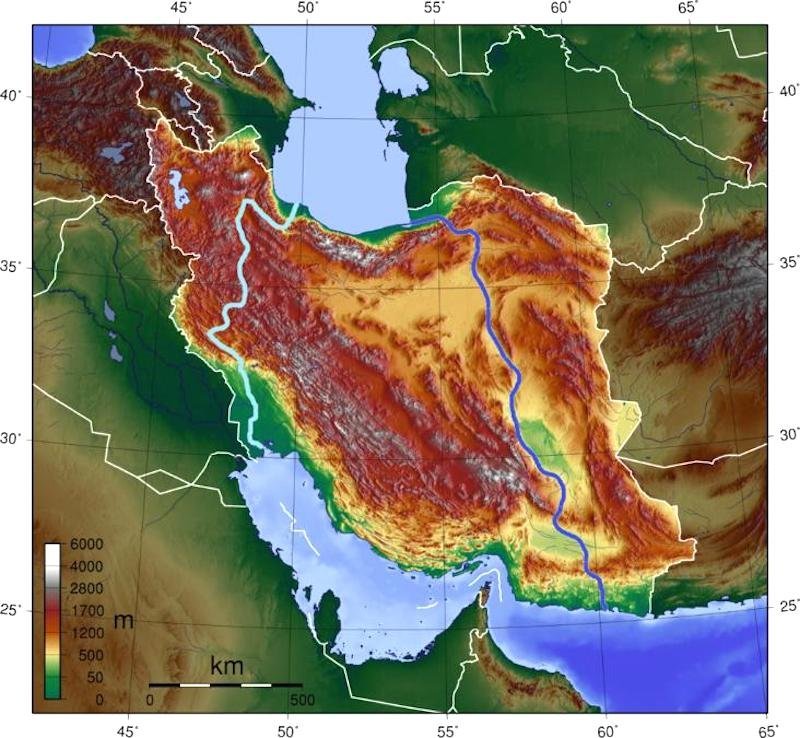
Russia and Iran: How to get from the Caspian Sea to Persian Gulf? Build a ship canal

Iran canal
© www.linkedin.com"From sea to shining sea," two proposed routes.
Moscow and Tehran are holding talks on digging a ship canal from the Caspian Sea to the Persian Gulf, said Iranian Ambassador to Russia Mehdi Sanai, speaking to students in St. Petersburg. Any canal linking the two has to go through Iran. "Yes, this issue is being discussed", said the ambassador on Thursday without specifying details, quoted by TASS.

The Caspian Sea is the largest enclosed inland body of water in the world. Its coastline is 7,000 kilometers long and is bordered by Russia, Kazakhstan, Turkmenistan, Iran and Azerbaijan.

Also on Thursday, Russia, Azerbaijan and Iran agreed to speed up the talks on a North-South transport corridor, said Russian Foreign Minister Sergey Lavrov. Part of it will go along the western coast of the Caspian Sea from Russia to Iran through Azerbaijan.

The North-South corridor, when built, is expected to significantly reduce the time of cargo transport from India to Central Asia and Russia. At present, it takes about 40 days to ship goods from Mumbai in India to Moscow. The new route will be able to cut this time to 14 days.

The corridor will also bypass the overloaded and expensive Suez Canal.

Comment: This project has a many aspects to consider: geopolitics, typography, routes, economics, environment, technology, distance, altitudes, shallows, displaced populations, ecological issues, natural hazards i.e.: earthquakes, timetable and political issues in all countries involved.

First proposed in the 1890s (!), today's estimated cost is about $7 billion. The West and Turkey tried to block this project, with the US imposing sanctions on companies that were involved. Why are we not surprised.

While still a 'pipe-dream', this is surely doable.

The world's longest canal, the Beijing-Hangzhou Grand Canal, was completed around 600 AD. It remains the longest man has ever built!

The distance, as the crow flies, between Iran's major port on the Caspian, Bandar-e Anzali, and its major port in the Persian Gulf, Bandar Abbas, is just over 1,300 kms.

The Beijing-Hangzhou Canal is 1,776 km in length!

Such a project would completely open up central Asia, and nix, in one fell swoop, Western control of world shipping routes and the energy markets.