
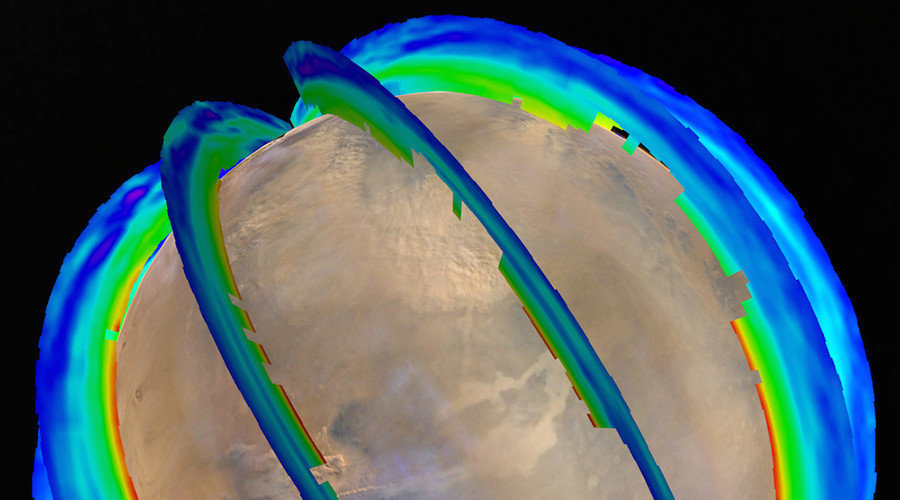
© NASA/JPL-Caltech/MSSSThis graphic presents Martian atmospheric temperature data as curtains over an image of Mars taken during a regional dust storm. The temperature profiles extend from the surface to about 50 miles up. Temperatures are color coded, from minus 243 degrees Fahrenheit (purple) to minus 9 F (red).
At about the same time each Martian year, or approximately every two Earthling years, dust storms cover large areas of Mars. After observing the temperature records of six recent Martian years, it has become easier to predict the formation of those dust storms than when they were merely observed in images.
"When we look at the temperature structure instead of the visible dust, we finally see some regularity in the large dust storms," said David Kass of NASA's Jet Propulsion Laboratory in the US. "Recognizing a pattern in the occurrence of regional dust storms is a step toward understanding the fundamental atmospheric properties controlling them."











Comment: See also: