Science & TechnologyS


Info

Genetic make-up of high-altitude Himalayan populations has remained remarkably stable

Himalayan Population
© University of Oklahoma
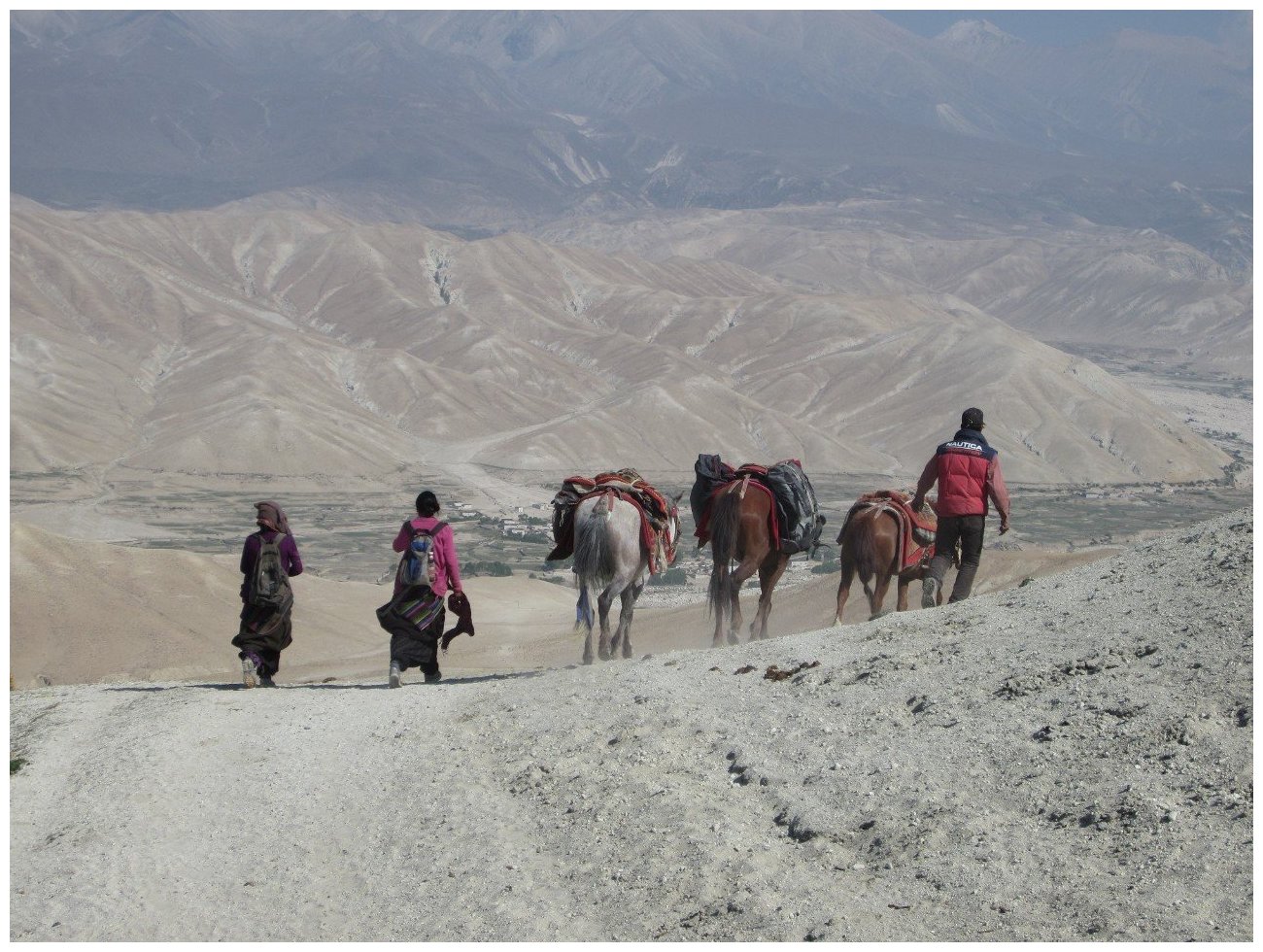
In a collaborative study by the University of Oklahoma, University of Chicago, University of California, Merced, and Uppsala University, researchers conduct the first ancient DNA investigation of the Himalayan arc, generating genomic data for eight individuals ranging in time from the earliest known human settlements to the establishment of the Tibetan Empire. The findings demonstrate that the genetic make-up of high-altitude Himalayan populations has remained remarkably stable despite cultural transitions and exposure to outside populations through trade.

Christina Warinner, senior author and professor in the Department of Anthropology, OU College of Arts and Sciences, and corresponding authors Anna Di Rienzo, Department of Human Genetics, University of Chicago, and Mark Aldenderfer, School of Social Sciences, Humanities and Arts, University of California, Merced, collaborated on the study published June 20, 2016 in the Proceedings of the National Academy of Sciences article, "Long-term genetic stability and a high altitude East Asian origin for the peoples of the high valleys of the Himalayan arc."

"In this study, we demonstrate that the Himalayan mountain region was colonized by East Asians of high altitude origin, followed by millennia of genetic stability despite marked changes in material culture and mortuary behavior," said Warinner.

Since prehistory, the Himalayan mountain range has presented a formidable barrier to population migration, while at the same time its transverse valleys have long served as conduits for trade and exchange. Yet, despite the economic and cultural importance of Himalayan trade routes, little was known about the region's peopling and early population history. The high altitude transverse valleys of the Himalayan arc were among the last habitable places permanently colonized by prehistoric humans due to the challenges of resource scarcity, cold stress and hypoxia.

"Ancient DNA has the power to reveal aspects of population history that are very difficult to infer from modern populations or archaeological material culture alone," said Aldenderfer.


Bulb

Scientists discover a way to turn trash into fuel

trash in water
© marine insight
A recent analysis on plastic use is confirming the peril descending on the world's oceans as well as entire ecosystems.

According to a report published by the Ellen MacArthur Foundation, by the year 2050, there will be more plastic in the oceans than there are fish. Right now, one garbage truck of plastic is dumped into the ocean every minute.
"If no action is taken, this is expected to increase to two per minute by 2030 and four per minute by 2050.

In a business-as-usual scenario, the ocean is expected to contain one ton of plastic for every three tons of fish by 2025, and by 2050, more plastics than fish (by weight)."
Perhaps the worst phrase ever coined was, "the solution to pollution is dilution." It is no truer of toxic chemicals than it is of plastic waste. The oceans can no longer be viewed as a limitless dumping ground.

Info

Light and matter mixed creating new way to manipulate chemical properties of matter

Light molecule coupled
© R Chikkaraddy/J BaumbergIllustration of a molecule coupled with light in a gold nanopore.
Scientists have mixed a molecule with light between gold particles, creating a new way to manipulate the physical and chemical properties of matter.

Light and matter are usually separate and have distinct properties. However, molecules of matter can emit particles of light called photons. Normally, emitted photons leave the molecule and the two do not mix again.

Now, scientists have trapped a single molecule in such a tiny space that when it emits a photon, the photon cannot escape. This produces an oscillation of energy between the molecule and the photon, creating a mixing of the properties of matter and light.

This unusual interaction of a molecule with light will provide new ways to manipulate the physical and chemical properties of matter, and could be used to process quantum information, aid in the understanding of complex processes at work in photosynthesis, or even manipulate the chemical bonds between atoms.

The mixing - called 'strong coupling' - was achieved at the University of Cambridge following theoretical simulations by scientists from Imperial College London and Kings College London. The results of the experiment are published today in the journal Nature.

Eye 1

How to stop Facebook from listening to everything you say

hobotnica facebook
© buuu.ru
Did you know that your Facebook mobile app has complete access to your phone's microphone?

Recently, an expert has come out to claim that Facebook may be listening in on your conversations. Kelli Burns, a mass communication professor at the University of South Florida, believes the app might be using people's microphones to gather data on the content of people's conversations.

Facebook admits that the app is capable of listening to what's happening around it — but claims the feature simply identifies what people are listening to or watching as means of conveniently posting about it.

Comment: See also:

How to see all the companies that are tracking you on Facebook - and block them
How to Secure Privacy on Facebook
Facebook Tracks Your Every Move, Even After Logging Out


Meteor

Scientists say new type of meteorite is remnant of ancient asteroid collision

black, grainy meteorite
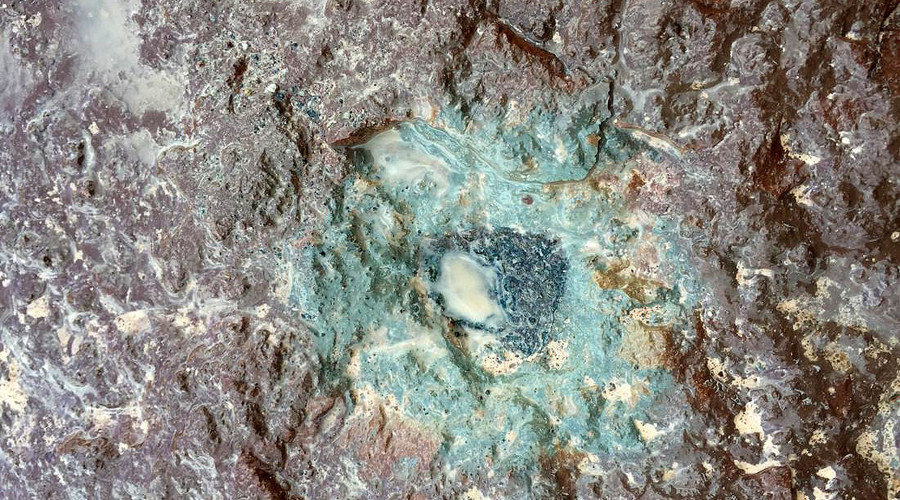
© Qing-zhu Yin / UC DavisThe black, grainy meteorite embedded in rock from a Swedish quarry fell to Earth 470 million years ago.
A meteorite discovered in a Swedish quarry appears to be the only remnant of one part of a massive asteroid collision more than 470 million years ago, according to new research.

Scientists at the University of California, Davis have published their findings on the unique space rock discovered in 2011 in the journal Nature Communications.

The meteorite is the first of its kind found on Earth. "In our entire civilization, we have collected over 50,000 meteorites, and no one has seen anything like this one before," said study co-author Qing-zhu Yin.

"Discovering a new type of meteorite is very, very exciting," he added.

Laptop

KiloCore: World's first 1,000-processor chip

microchip with 1,000 processor cores
© UC Davis
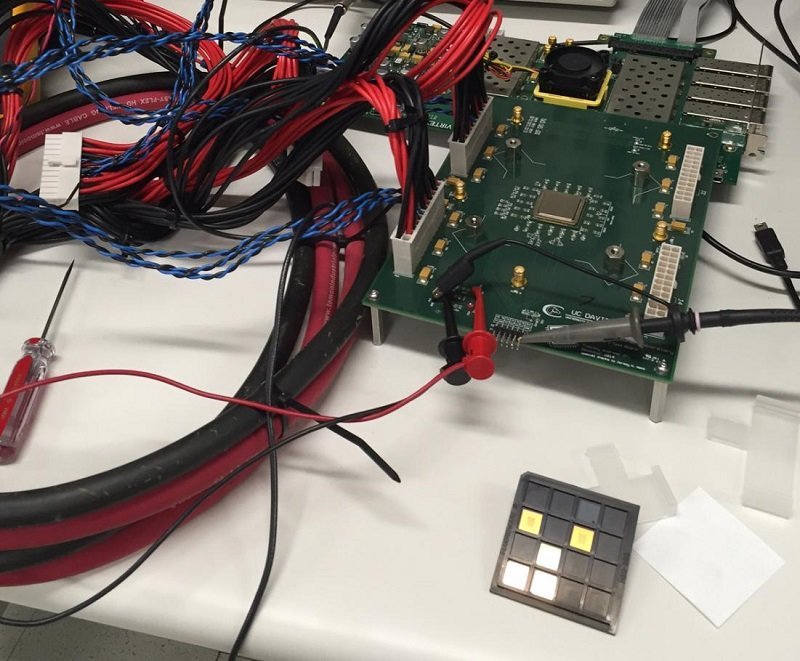
A microchip containing 1,000 independent programmable processors has been designed by a team at the University of California, Davis, Department of Electrical and Computer Engineering. The energy-efficient "KiloCore" chip has a maximum computation rate of 1.78 trillion instructions per second and contains 621 million transistors. The KiloCore was presented at the 2016 Symposium on VLSI Technology and Circuits in Honolulu on June 16.

"To the best of our knowledge, it is the world's first 1,000-processor chip and it is the highest clock-rate processor ever designed in a university," said Bevan Baas, professor of electrical and computer engineering, who led the team that designed the chip architecture. While other multiple-processor chips have been created, none exceed about 300 processors, according to an analysis by Baas' team. Most were created for research purposes and few are sold commercially. The KiloCore chip was fabricated by IBM using their 32 nm CMOS technology.

Chalkboard

A pre-Newtonian formula for pi has been discovered hidden in hydrogen atoms

hydrogen atoms pi mathematics physics
© Benjamin Haas/Shutterstoc
New derivation of pi links quantum physics and pure math

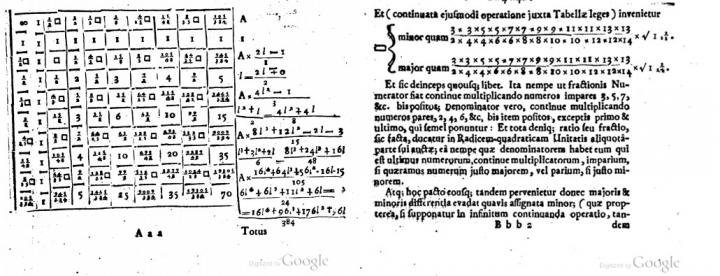
In 1655 the English mathematician John Wallis published a book in which he derived a formula for pi as the product of an infinite series of ratios. Now researchers from the University of Rochester, in a surprise discovery, have found the same formula in quantum mechanical calculations of the energy levels of a hydrogen atom.

"We weren't looking for the Wallis formula for pi. It just fell into our laps," said Carl Hagen, a particle physicist at the University of Rochester. Having noticed an intriguing trend in the solutions to a problem set he had developed for students in a class on quantum mechanics, Hagen recruited mathematician Tamar Friedmann and they realized this trend was in fact a manifestation of the Wallis formula for pi.
formula Pi pre Newton
© Digitized by GoogleTwo pages from the book "Arithmetica Infinitorum," by John Wallis. In the table on the left page, the square that appears repeatedly denotes 4/pi, or the ratio of the area of a square to the area of the circumscribed circle. Wallis used the table to obtain the inequalities shown at the top of the page on the right that led to his formula.
"It was a complete surprise - I jumped up and down when we got the Wallis formula out of equations for the hydrogen atom," said Friedmann. "The special thing is that it brings out a beautiful connection between physics and math. I find it fascinating that a purely mathematical formula from the 17th century characterizes a physical system that was discovered 300 years later."

Network

Minority (math) report: Scientists say algorithm applied to social media activity can predict ISIS attacks

Islamic State
© Reuters
A team of computer scientists says they have created an algorithm that can decode patterns in the social media activity of Islamic State supporters to help predict when and where terrorist attacks are likely to occur.

In an article published Friday in the journal Science, researchers described their method of using an algorithm to sift through Russian social network VKontakte and look for pro-ISIS posts in multiple languages.

Social media has been a key tool for ISIS to disseminate its message, radicalize potential sympathizers and coordinate their activities.

Comment: This tool can easily be modified and used to track anyone the government deems as 'subversive'.


Beaker

Scans of teenage brain show strong evidence of link between serious antisocial behavior and brain development

brain behavior teenagers
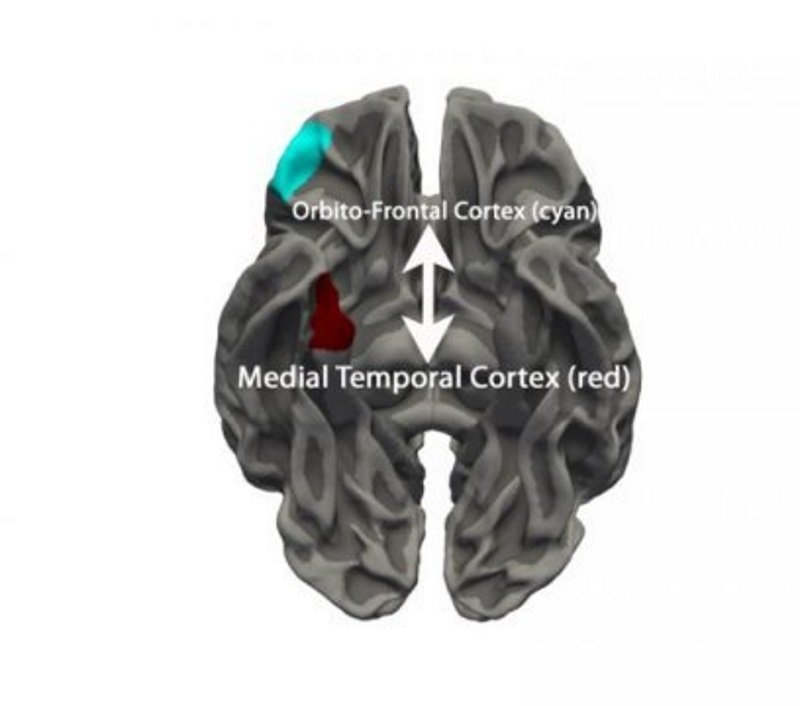
© Nicola ToschiThese two regions of the brain (orbitofrontal cortex and medial temporal cortex) were more similar in terms of thickness in youths with Conduct Disorder than in typically-developing youths. This suggests that the normal pattern of brain development is disrupted in youths with Conduct Disorder.
The brains of teenagers with serious antisocial behavior problems differ significantly in structure to those of their peers, providing the clearest evidence to date that their behavior stems from changes in brain development in early life, according to new research.

The brains of teenagers with serious antisocial behaviour problems differ significantly in structure to those of their peers, providing the clearest evidence to date that their behaviour stems from changes in brain development in early life, according to new research led by the University of Cambridge and the University of Southampton, in collaboration with the University of Rome "Tor Vergata" in Italy.

In a study published today in the Journal of Child Psychology and Psychiatry, researchers used magnetic resonance imaging (MRI) methods to look at the brain structure of male adolescents and young adults who had been diagnosed with conduct disorder -- persistent behavioural problems including aggressive and destructive behaviour, lying and stealing, and for older children, weapon use or staying out all night.

In particular, the researchers looked at the coordinated development of different brain regions by studying whether they were similar or different in terms of thickness. Regions that develop at similar rates would be expected to show similar patterns of cortical thickness, for example.

"There's evidence already of differences in the brains of individuals with serious behavioural problems, but this is often simplistic and only focused on regions such as the amygdala, which we know is important for emotional behaviour," explains Dr Luca Passamonti from the Department of Clinical Neurosciences at the University of Cambridge. "But conduct disorder is a complex behavioural disorder, so likewise we would expect the changes to be more complex in nature and to potentially involve other brain regions."

Map

'Scars' from ancient geologic events may be linked to earthquakes says study

Earthquake image
© Deccan Chronicle Ancient geologic events may have left deep 'scars' that can come to life and play a role in earthquakes. (Representational image)
Ancient geologic events may have left deep 'scars' that can come to life and play a role in earthquakes, mountain formation and other ongoing processes on our planet, a new study which involved super-computer modelling of Earth's crust and upper-mantle has found. This changes the widespread view that only interactions at the boundaries between continent-sized tectonic plates could be responsible for such events, researchers said.

Scientists from University of Toronto (U of T) in Canada and the University of Aberdeen in the UK have created models indicating that former plate boundaries may stay hidden deep beneath the Earth's surface. These multi-million-year-old structures, situated at sites away from existing plate boundaries, may trigger changes in the structure and properties at the surface in the interior regions of continents, researchers said.

"This is a potentially major revision to the fundamental idea of plate tectonics," said Philip Heron from U of T. Researchers have proposed a 'perennial plate tectonic map' of the Earth to help illustrate how ancient processes may have present-day implications.

"It is based on the familiar global tectonic map that is taught starting in elementary school. What our models redefine and show on the map are dormant, hidden, ancient plate boundaries that could also be enduring or "perennial" sites of past and active plate tectonic activity," said Russell Pysklywec from U of T.

Comment: See also: Researchers believe earthquakes in SE US caused by chunks of Earth's mantle breaking off and sinking into the Earth