Science & TechnologyS


Bulb

Not only trauma but also the reversal of trauma is inherited

trauma
© Lukas von Ziegler, UZHBehaviors caused by traumatic experiences in early life are reversible.
Behaviors caused by traumatic experiences in early life are reversible. Researchers from the University of Zurich and ETH Zurich could demonstrate that environmental enrichment allows trauma-related symptoms in mice to be reversed. This is the first evidence that positive environmental factors can correct behavioral alterations which would otherwise be transmitted to the offspring. The symptoms and their reversal are associated with epigenetic regulation of the glucocorticoid receptor gene.

Traumatic experiences in childhood increase the risk of developing behavioral and psychiatric disorders later in life. It is also known that the consequences of a trauma can likewise be observed in the children of people affected even if those children have themselves not experienced any trauma. However, childhood trauma in some conditions can also help individuals deal better with difficult situations later in life. This ability, too, is passed onto following generations. These findings have recently been uncovered by Isabelle Mansuy, Professor of Neuroepigenetics at the University of Zurich and ETH Zurich, during investigations carried out in mice.

Comment: A great and effective way to help reduce stress is through the Éiriú Eolas stress relief program:

Face life with Éiriú Eolas, a stress relief program


Question

Mysterious dark vortex appears over Neptune

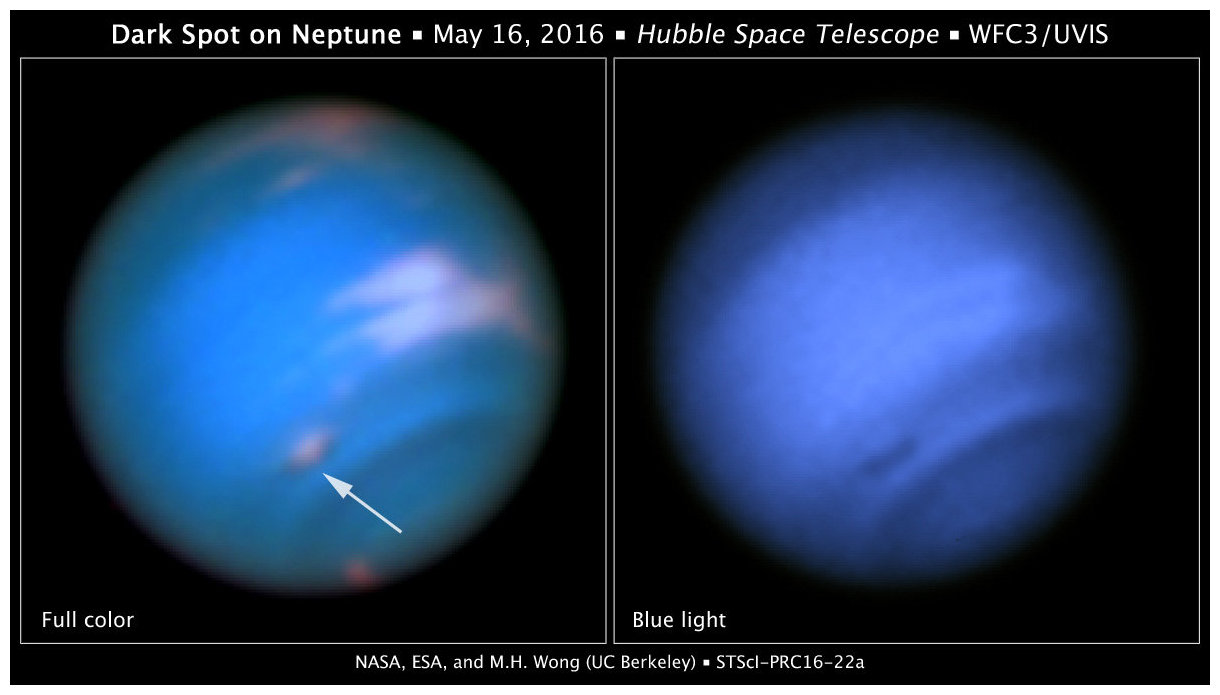
Dark Spot on Neptune
© Hubblesite
New images obtained on May 16, 2016, by NASA's Hubble Space Telescope confirm the presence of a dark vortex in the atmosphere of Neptune. Though similar features were seen during the Voyager 2 flyby of Neptune in 1989 and by the Hubble Space Telescope in 1994, this vortex is the first one observed on Neptune in the 21st century.

The discovery was announced on May 17, 2016, in a Central Bureau for Astronomical Telegrams (CBAT) electronic telegram by University of California at Berkeley research astronomer Mike Wong, who led the team that analyzed the Hubble data.

Neptune's dark vortices are high-pressure systems and are usually accompanied by bright "companion clouds," which are also now visible on the distant planet. The bright clouds form when the flow of ambient air is perturbed and diverted upward over the dark vortex, causing gases to likely freeze into methane ice crystals. "Dark vortices coast through the atmosphere like huge, lens-shaped gaseous mountains," Wong said. "And the companion clouds are similar to so-called orographic clouds that appear as pancake-shaped features lingering over mountains on Earth."

Beginning in July 2015, bright clouds were again seen on Neptune by several observers, from amateurs to astronomers at the W. M. Keck Observatory in Hawaii. Astronomers suspected that these clouds might be bright companion clouds following an unseen dark vortex. Neptune's dark vortices are typically only seen at blue wavelengths, and only Hubble has the high resolution required for seeing them on distant Neptune.

Galaxy

Mystery object found - twice as bright as any previously observed, outshines Milky Way by 50 times

gas ball brighter sun star
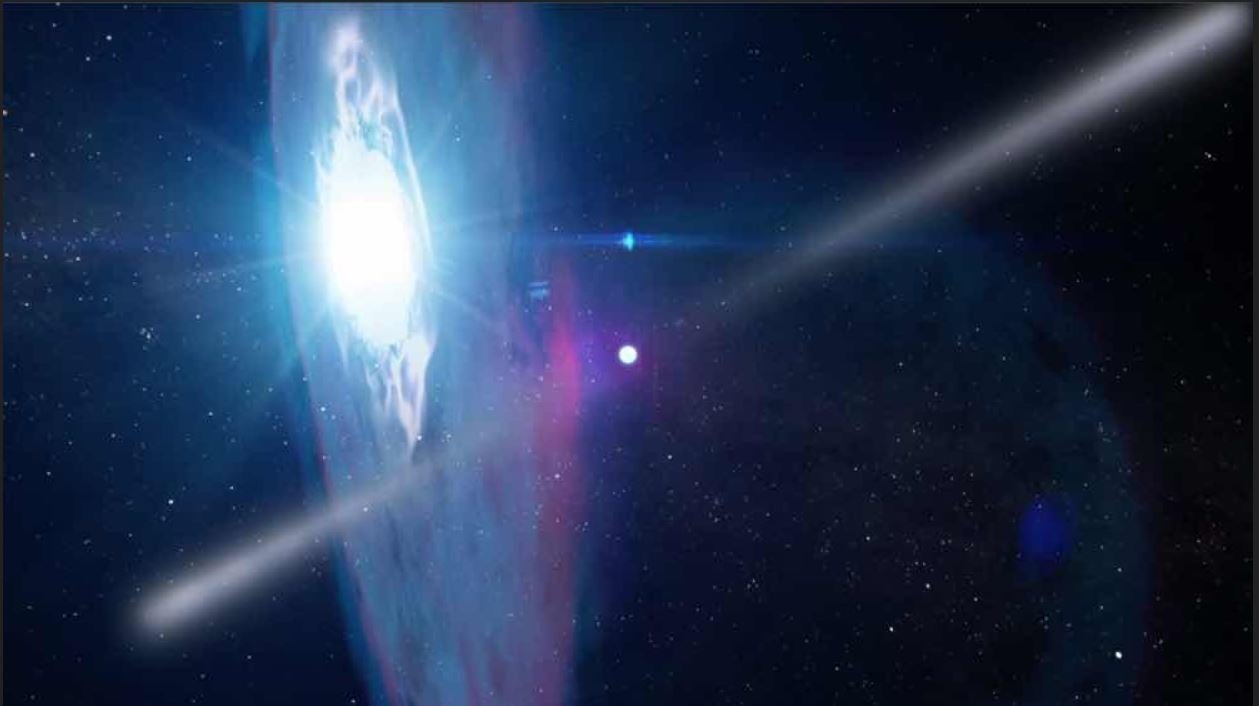
© NASAArtist impression of a magnetar
Astronomers were not entirely sure what it is. If, as they suspect, the gas ball is the result of a supernova, then it's the most powerful supernova ever seen. In June of 2015, astronomers viewed a ball of hot gas billions of light years away that is radiating the energy of hundreds of billions of suns.

Even in a discipline that regularly uses gigantic numbers to express size or distance, the case of this small but powerful mystery object in the center of the gas ball is extreme. At its heart is an object a little larger than 10 miles across. ASAS-SN-15lh, as the object is known, was twice as luminous as any previously seen, far brighter than any normal supernova, and outshone our entire Milky Way galaxy by 50 times.

Vader

Real life Death Star? DARPA plans outer space military base

Darpa hallmark program
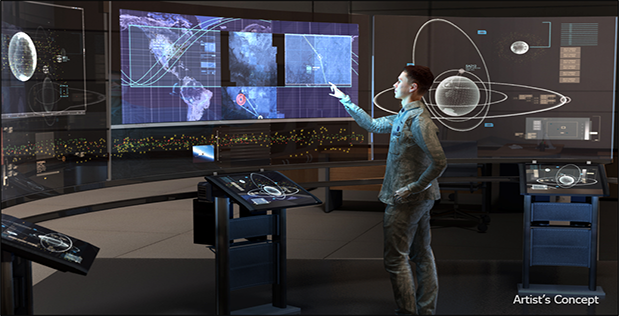
© DARPADARPA’s new Hallmark program seeks to provide improved capabilities to rapidly plan, assess, and execute the full spectrum of U.S. military operations in space.
The latest venture for the Defense Advanced Research Project Agency (DARPA), the agency that provides the Department of Defense with their big guns, is an ambitious one: building a modern Star Trek -style 'Starship Enterprise' in outer space. DARPA's new Hallmark program is the first step toward building a U.S. military base of operations in a galaxy far, far away.

The first goal isn't building the ship itself, but rather developing the technology to survive in the extremely inhospitable environment that is deep space. Earth's operational space domain is violent and dangerous, with an immeasurable amount of objects and space garbage spinning around at thousands of miles per hour. "The scales and speeds in this extreme environment are difficult enough to grasp conceptually, let alone operationally, as is required for commanders overseeing the nation's increasingly critical space assets," DARPA explains.

Bizarro Earth

Study predicts probability of magnitude 9+ earthquake in Aleutian Islands which could send mega-tsunami toward Hawaii

aleutian islands
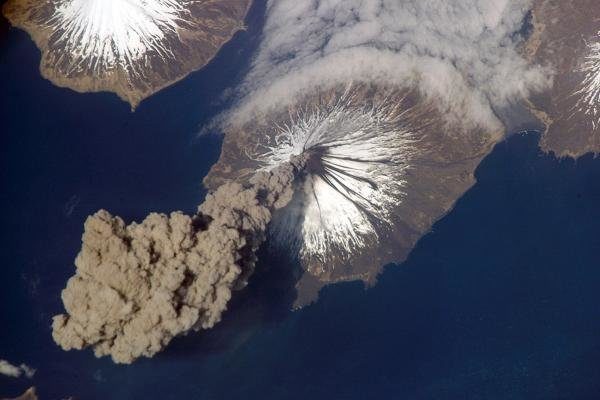
© UPI Photo/Jeff Williams/NASA The Aleutian Islands sit atop a hotspot of volcanic and tectonic activity, and scientists predict a nine percent chance of a mega-earthquake in the next 50 years.
There's a nine percent chance a magnitude 9 or larger earthquake will strike the Aleutian Islands in the next 50 years. That is the prediction offered by scientists from the University of Hawai'i at Mānoa -- made with the help of a newly designed computer model.

Researchers say an earthquake of that size could send a mega-tsunami in the direction of the Hawaiian Islands.

The Aleutian Islands, which stretch toward Russia from the coast of Alaska, sit along a subduction zone at the convergence of the Pacific and North American tectonic plates. Scientists say the chance of a dramatic slip along the fault lines that make up the subduction zone is significant.

They detailed the threat of a mega-earthquake in a new paper, published this week in the Journal of Geophysical Research - Solid Earth.

"Necessity is the mother of invention," lead study author Rhett Butler, a geophysicist at the UHM School of Ocean and Earth Science and Technology, explained in a news release. "Having no recorded history of mega tsunamis in Hawai'i, and given the tsunami threat to Hawai'i, we devised a model for Magnitude 9 earthquake rates following upon the insightful work of David Burbidge and others."

Comment: Further reading: Multiple recent powerful earthquakes reflect a planet in deep transition


Satellite

Russia to reveal location of unreported satellites in free space database

US satellite
© NASA's Goddard Space Flight Center
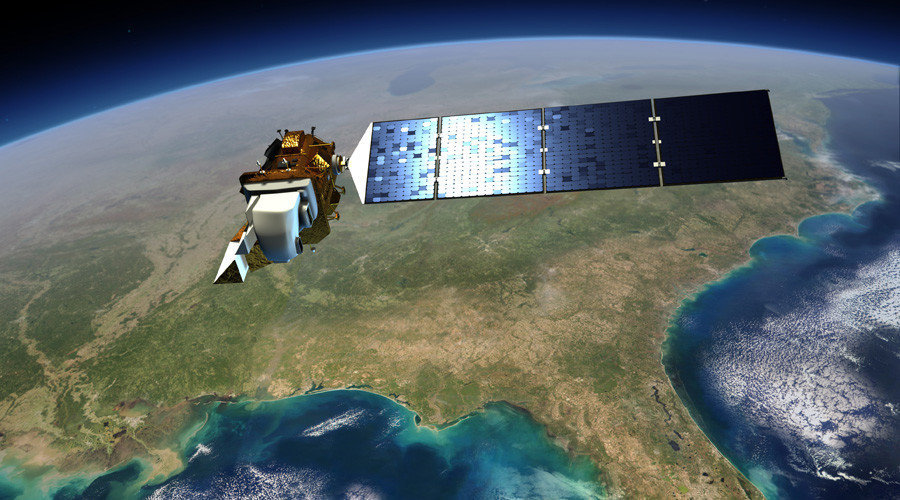
Russia's own data on near-Earth objects - including military satellites not covered by the open catalog of the North-American warning system NORAD - could soon be made publicly available as a comprehensive database, Russian media report.

Russia is planning to set up a free database on thousands of near-Earth objects, including those not publicly listed in open catalogs of the North American Aerospace Defense Command (NORAD), Izvestia newspaper reported on Tuesday.

NORAD doesn't only track Santa at Christmas - its database also provides details on thousands of satellites launched, destroyed or still functioning. While the catalog does not disclose data on America's own military or dual-use satellites (or those of allies - Japan, France, Germany and Israel among them), as Izvestia says, it does feature Russia's defense satellites.

Nebula

Astronomers find the first 'wind nebula' around a magnetar

magnastar x-ray
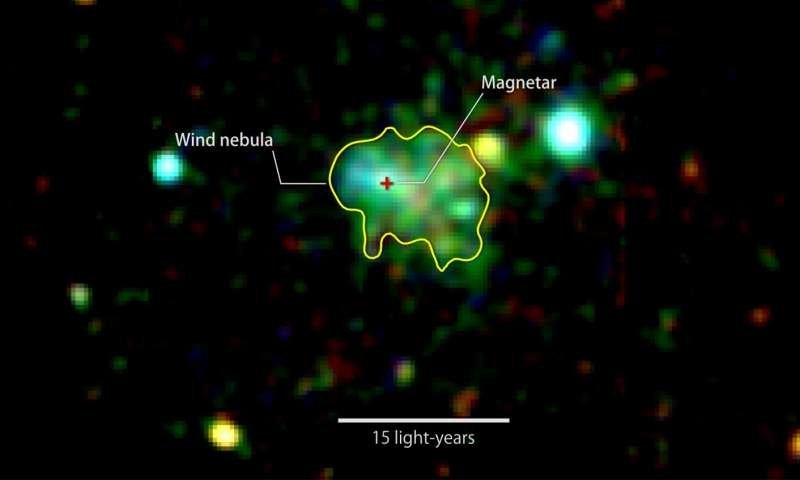
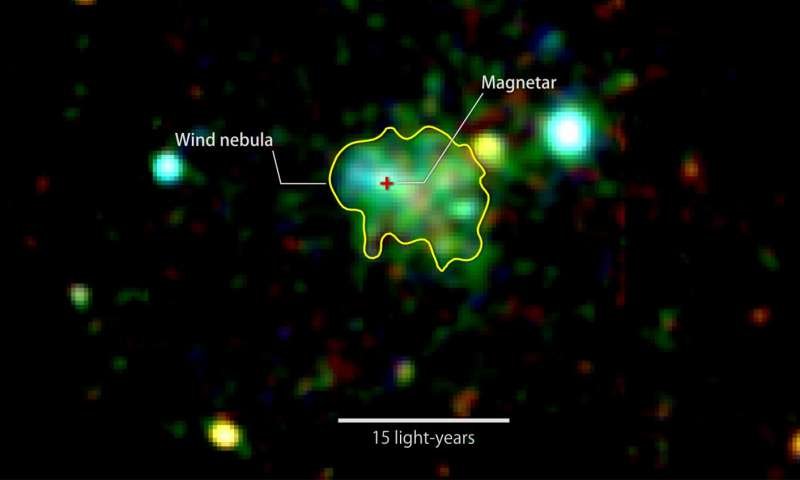
© ESA/XMM-Newton/Younes et al. 2016This X-ray image shows extended emission around a source known as Swift J1834.9-0846, a rare ultra-magnetic neutron star called a magnetar. The glow arises from a cloud of fast-moving particles produced by the neutron star and corralled around it. Color indicates X-ray energies, with 2,000-3,000 electron volts (eV) in red, 3,000-4,500 eV in green, and 5,000 to 10,000 eV in blue. The image combines observations by the European Space Agency's XMM-Newton spacecraft taken on March 16 and Oct. 16, 2014.
Astronomers have discovered a vast cloud of high-energy particles called a wind nebula around a rare ultra-magnetic neutron star, or magnetar, for the first time. The find offers a unique window into the properties, environment and outburst history of magnetars, which are the strongest magnets in the universe.

A neutron star is the crushed core of a massive star that ran out of fuel, collapsed under its own weight, and exploded as a supernova. Each one compresses the equivalent mass of half a million Earths into a ball just 12 miles (20 kilometers) across, or about the length of New York's Manhattan Island. Neutron stars are most commonly found as pulsars, which produce radio, visible light, X-rays and gamma rays at various locations in their surrounding magnetic fields. When a pulsar spins these regions in our direction, astronomers detect pulses of emission, hence the name.

Typical pulsar magnetic fields can be 100 billion to 10 trillion times stronger than Earth's. Magnetar fields reach strengths a thousand times stronger still, and scientists don't know the details of how they are created. Of about 2,600 neutron stars known, to date only 29 are classified as magnetars.

The newfound nebula surrounds a magnetar known as Swift J1834.9-0846—J1834.9 for short—which was discovered by NASA's Swift satellite on Aug. 7, 2011, during a brief X-ray outburst. Astronomers suspect the object is associated with the W41 supernova remnant, located about 13,000 light-years away in the constellation Scutum toward the central part of our galaxy.


Ark

World's fastest supercomputer built in China made without US hardware for first time ever

supercomputer
© Jack Dongarra, Report on the Sunway TaihuLight System, June 2016
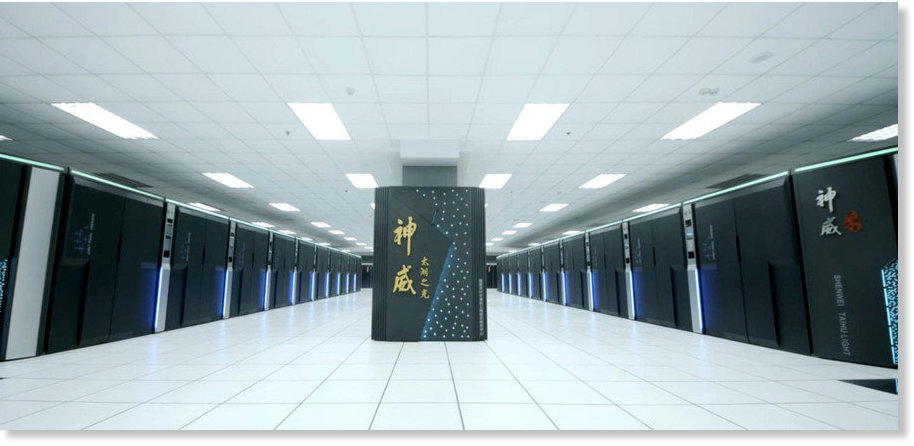
A Chinese supercomputer has been named the world's fastest computer for the seventh year in a row - but unlike previous winners, this year's champion uses only Chinese-designed processors, representing a decline of US dominance in the field.

The new titleholder, the Sunway TaihuLight at the National Supercomputing Center in Wuxi, was developed by China's National Research Center of Parallel Computer Engineering & Technology.

The supercomputer uses Chinese-developed ShenWei processors, "ending any remaining speculation that China would have to rely on Western technology to compete effectively in the upper echelons of supercomputing," said a statement by the TOP500 project ranking the world's fastest supercomputers.

It is capable of 93 petaflops, or quadrillion calculations per second, according to TOP500. It was designed for use in engineering and research, including in the fields of climate, weather, life sciences, advanced manufacturing, and data analytics.

Robot

Robot security guards now equipped with self-defense instincts

security robot
Once thought to be too approachable for their own good — as in, able to efficaciously perform the tasks they've been designed to do — robots are now being programmed with self-defense capabilities.

Now, robots which, say, patrol for criminal or suspicious activity come with a blend of humanoid characteristics and self-defense programs which prevent them from being perceived as too cute — or too menacing.

"Because of all the doomsday scenarios people imagine with robots, their makers have to insert some cuteness," explained Golden Krishna, a designer with Alphabet's Google, as reported by theWall Street Journal.

Attention

New areas of motion detected near California's San Andreas Fault System

Statistical model
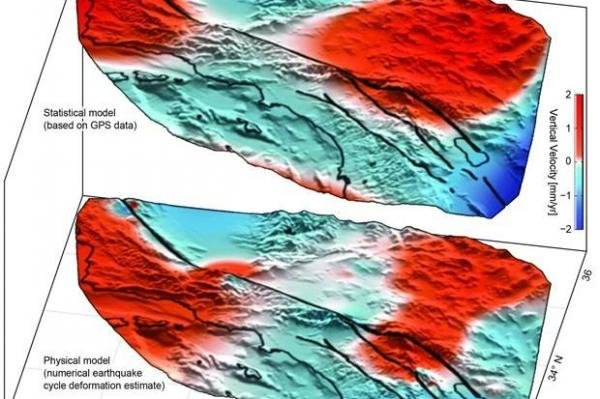
© University of Hawaii, ManoaThe top diagram shows the lobes of movement, uplift in red and subsidence in blue, found using GPS data, while the bottom diagram shows the lobes predicted by an earthquake simulation model.
Analysis of GPS data has revealed new areas of motion around the San Andreas Fault System.

Using data collected by the EarthScope Plate Boundary Observatory's GPS array, researchers identified 125-mile-wide "lobes" of uplift and subsidence. Over the last several years, the lobes, which straddle the fault line, have hosted a few millimeters of annual movement.

Computer models simulating the San Andreas Fault System have predicted such crustal movement, but the areas of motion hadn't been physically identified until now. Researchers used advanced statistical modeling to identify the movement among the inevitable statistical noise that comes with monitoring minute movements in the Earth's crust.

"While the San Andreas GPS data has been publicly available for more than a decade, the vertical component of the measurements had largely been ignored in tectonic investigations because of difficulties in interpreting the noisy data," lead author Samuel Howell, a researcher at the University of Hawaii at Manoa, explained in a news release. "Using this technique, we were able to break down the noisy signals to isolate a simple vertical motion pattern that curiously straddled the San Andreas fault."

Comment: California: San Andreas fault 'locked, loaded and ready to roll' with big earthquake, expert says