Science & TechnologyS


Question

Scientist claims to have discovered a magnetic sixth sense in humans

humna magnetic sensing
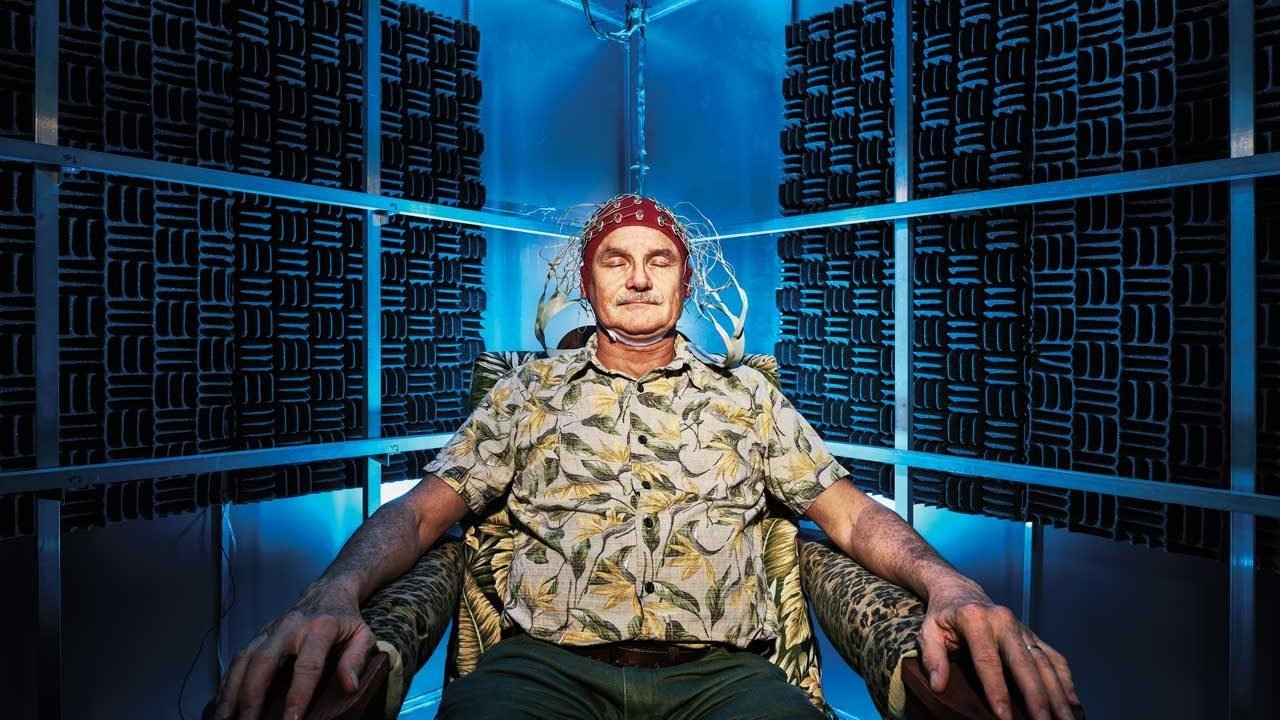
Joe Kirschvink, sporting an EEG sensor cap, was the first subject in his magnetic-sensing tests.
Birds do it. Bees do it. But the human subject, standing here in a hoodie—can he do it? Joe Kirschvink is determined to find out. For decades, he has shown how critters across the animal kingdom navigate using magnetoreception, or a sense of Earth's magnetic field. Now, the geophysicist at the California Institute of Technology (Caltech) in Pasadena is testing humans to see if they too have this subconscious sixth sense. Kirschvink is pretty sure they do. But he has to prove it.

He takes out his iPhone and waves it over Keisuke Matsuda, a neuroengineering graduate student from the University of Tokyo. On this day in October, he is Kirschvink's guinea pig. A magnetometer app on the phone would detect magnetic dust on Matsuda—or any hidden magnets that might foil the experiment. "I want to make sure we don't have a cheater," Kirschvink jokes.

They are two floors underground at Caltech, in a clean room with magnetically shielded walls. In a corner, a liquid helium pump throbs and hisses, cooling a superconducting instrument that Kirschvink has used to measure tiny magnetic fields in everything from bird beaks to martian meteorites. On a lab bench lie knives—made of ceramic and soaked in acid to eliminate magnetic contamination—with which he has sliced up human brains in search of magnetic particles. Matsuda looks a little nervous, but he will not be going under the knife. With a syringe, a technician injects electrolyte gel onto Matsuda's scalp through a skullcap studded with electrodes. He is about to be exposed to custom magnetic fields generated by an array of electrical coils, while an electroencephalogram (EEG) machine records his brain waves.

Eye 1

How do our eyes get their color?

eyes
© Reuters
Every time I hear about getting lost in someone's eyes, I roll my own. They're just a body part, after all.

And yet the way we get our eye color is actually pretty interesting.

When people refer to the color of your eyes, they're actually talking about the color of your irises: the blue, green, gray, or brown (or some combination thereof) circles that surround your pupils.

Irises work like camera shutters. They expand or contract to allow pupils to grow and shrink for optimal vision. Some of this depends on how much light is available—the darker it is, the larger our pupils will be—and some has to do with how we focus on objects. Our irises also widen when under the influence of certain drugs, like marijuana, or for psychological reasons, such as stress or sexual arousal.

Info

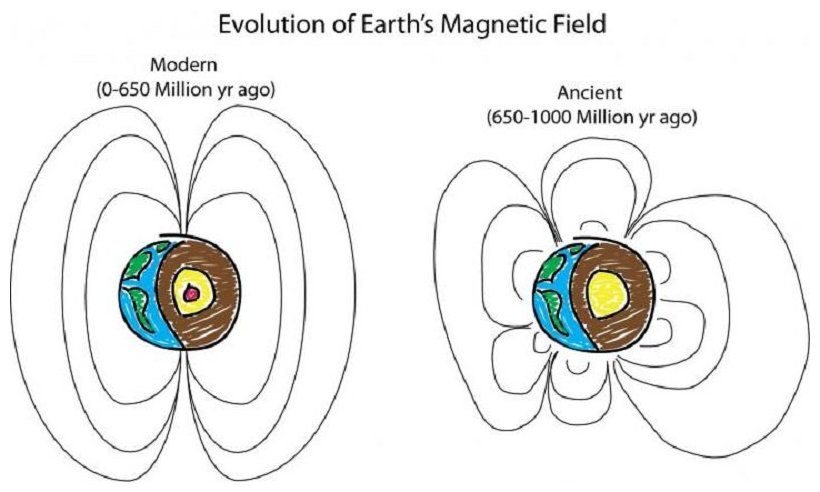
Ancient Earth had more than 2 magnetic poles

Earth's magnetic field
© Peter DriscollThis is an illustration of ancient Earth's magnetic field compared to the modern magnetic field.
Washington, DC-- New work from Carnegie's Peter Driscoll suggests Earth's ancient magnetic field was significantly different than the present day field, originating from several poles rather than the familiar two. It is published in Geophysical Research Letters.

Earth generates a strong magnetic field extending from the core out into space that shields the atmosphere and deflects harmful high-energy particles from the Sun and the cosmos. Without it, our planet would be bombarded by cosmic radiation, and life on Earth's surface might not exist. The motion of liquid iron in Earth's outer core drives a phenomenon called the geodynamo, which creates Earth's magnetic field. This motion is driven by the loss of heat from the core and the solidification of the inner core.

But the planet's inner core was not always solid. What effect did the initial solidification of the inner core have on the magnetic field? Figuring out when it happened and how the field responded has created a particularly vexing and elusive problem for those trying to understand our planet's geologic evolution, a problem that Driscoll set out to resolve.

Sun

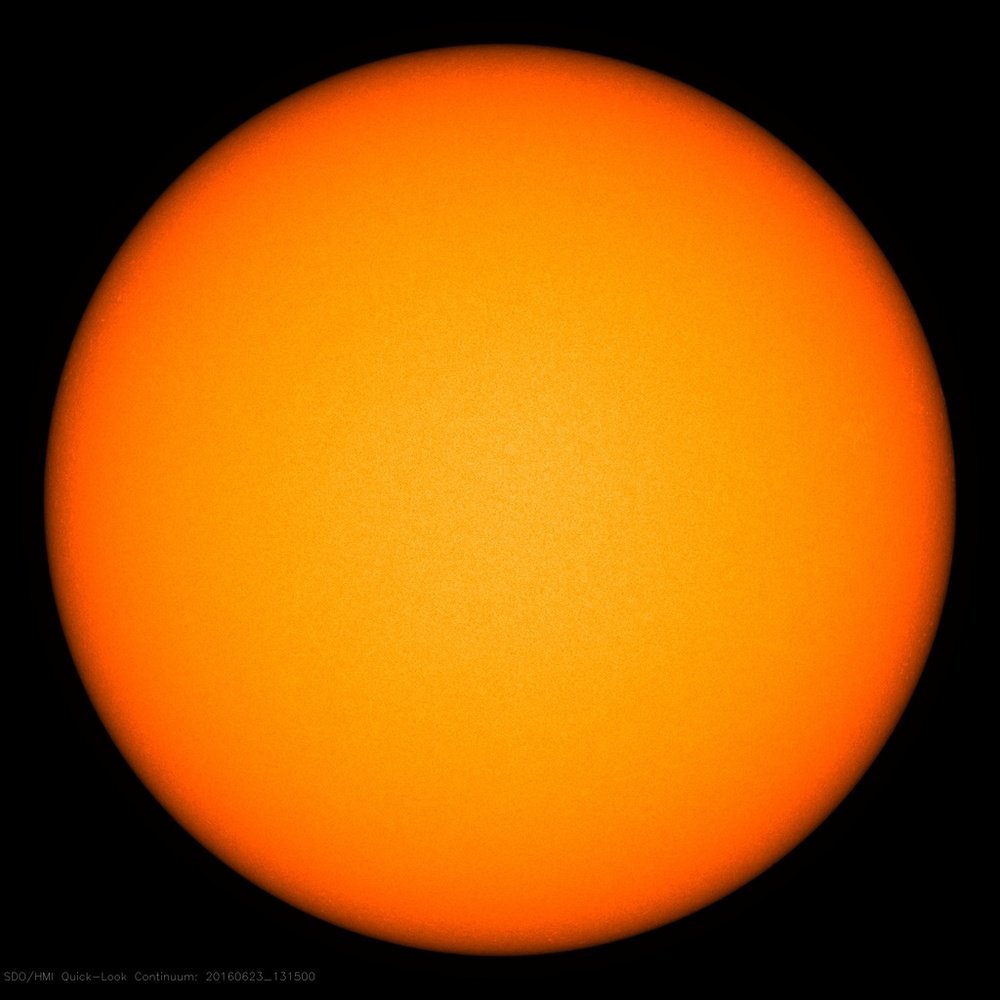
The sun goes blank for the second time this month in the weakest solar cycle in more than a century

the sun
© NASAThe latest solar image is completely spotless for the second time this month.
Overview

For the second time this month, the sun has gone completely blank. On June 4th, the sun went completely spotless for the first time since 2011 and that quiet spell lasted for about 4 days. Sunspot regions then reappeared for the next few weeks on a sporadic basis, but are once again completely missing from the surface of the sun. The blank sun is a sign that the next solar minimum is approaching and there will be an increasing number of spotless days over the next few years. At first, the blankness will stretch for just a few days at a time, then it'll continue for weeks at a time, and finally it should last for months at a time when the sunspot cycle reaches its nadir.

The next solar minimum phase is expected to take place around 2019 or 2020. The current solar cycle is the 24th since 1755 when extensive recording of solar sunspot activity began and is the weakest in more than a century with the fewest sunspots since cycle 14 peaked in February 1906.

Comment: See also:


Info

Astronomers discover several new trans-Neptunian objects beyond the orbit of Neptune

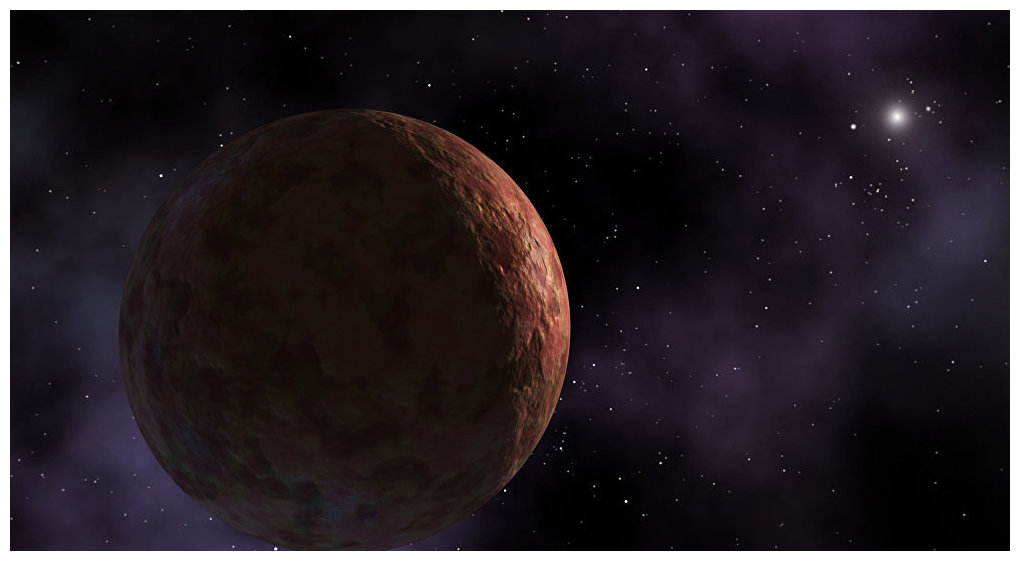
Sedna
© WikipediaArtist's conception of planet-like object Sedna.
Several new trans-Neptunian objects beyond the orbit of Neptune have reportedly been discovered by US astronomers.

American astronomers have managed to discover an array of new trans-Neptunian objects. The planetoids are located beyond the orbit of Neptune, media reports said.

A total of eight such objects were tracked, including 2014 FZ71, 2015 FJ345, 2004 XR190, 2013 FQ28, 2015 KH162, 2015 GP50, 2014 FC69 and 2012 FH84.

"We have been conducting a survey for distant solar system objects beyond the Kuiper Belt edge with new wide-field cameras on the Subaru 8 meter and CTIO 4 meter telescopes," scientists said.

The 2015 KH162 proved to be the largest object: it has a diameter of 800 kilometers and the length of the semi-major axis of its orbit is 61.9 astronomical units.

Jupiter

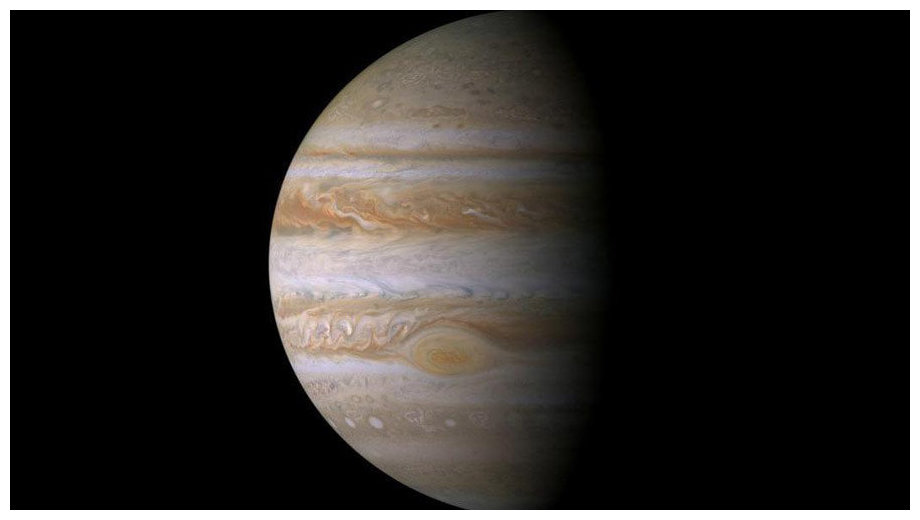
'Dark hydrogen' likely found on Jupiter recreated by scientist

Jupiter
© NASA
By successfully forcing hydrogen into a state between metal and gas, scientists have developed 'dark hydrogen', a third form of the gas which they believe occurs naturally on Jupiter.

This 'dark hydrogen' lies somewhere between molecular hydrogen, which is what he have here on Earth, and metallic hydrogen, which can be found at the core of giant gas planets like Jupiter, Saturn, Uranus and Neptune.

The scientists' discovery suggests that this intermediary 'dark hydrogen' form could exist on Jupiter and it means that researchers can study how gas giants expel heat and generate their magnetic fields more effectively.

The team from the Carnegie Institute of Science in Washington, DC, recreated dark hydrogen in their lab my mimicking the conditions found on planets like Jupiter - where its hydrogen gas surface and liquid metal core are separated by a layer of dark hydrogen.

Eye 1

Orwellian startup company will send summary reports of your social media posts to landlords and employers

social media
Here's a shout out to all of you who said "If I've got nothing to hide I've got nothing to fear" after the Snowden revelations. And this little gem deals only with publicly available information about you. Imagine what it's like when it gets into the good stuff you think is private.

An Orwellian startup called Tenant Assured will to take a deep dive into your social media, including chats, check-ins, how many times you've posted words like pregnant, wasted, busted, no money, broke, moving back in with the parents, weed, or loan, and deliver to potential landlords and employers a "personality score."

While many people already Google folks they might rent to or hire, this new service aggregates a mountain of information and then evaluates it. At the end, someone gets some numbers that describe you (see sample reports, below,) with little idea how those numbers came to be determined.

Comment: Facebook is greatest spy vehicle ever created


Cow

Modern civilization is driving mass microbial extinctions

farming destroys microbe diversity
© David Lyons/GettyFarming has restricted the diversity of microbes in our guts
It's not just elephants and tigers we're driving extinct - we've been drastically wiping out far tinier organisms too. This extinction of microbes brought about by the human era - known as the Anthropocene - could be behind some of our physical and mental health problems, as well as the current antimicrobial resistance crisis.

That's the bleak message from an in-depth analysis of the effect our history as a species has had on the Earth's microbes, especially those that live inside us. "Diversity of gut bacteria is declining with civilisation," Michael Gillings of Macquarie University in Sydney, Australia, told the annual meeting of the American Society for Microbiology in Boston on Sunday.

Cultural practices including agriculture, diet, sanitation, and the widespread use of antibiotics are responsible for the low diversity of microorganisms in the guts of people living in rich nations, said Gillings. He suggests this loss of diversity began 350,000 years ago, when we learned to use fire.

Through cooking, we were able to unlock more calories from our food, allowing us to evolve larger brains but smaller digestive tracts. "If you have a smaller gut, that means you have less room for microbiota," said Gillings.

Comment:


Telescope

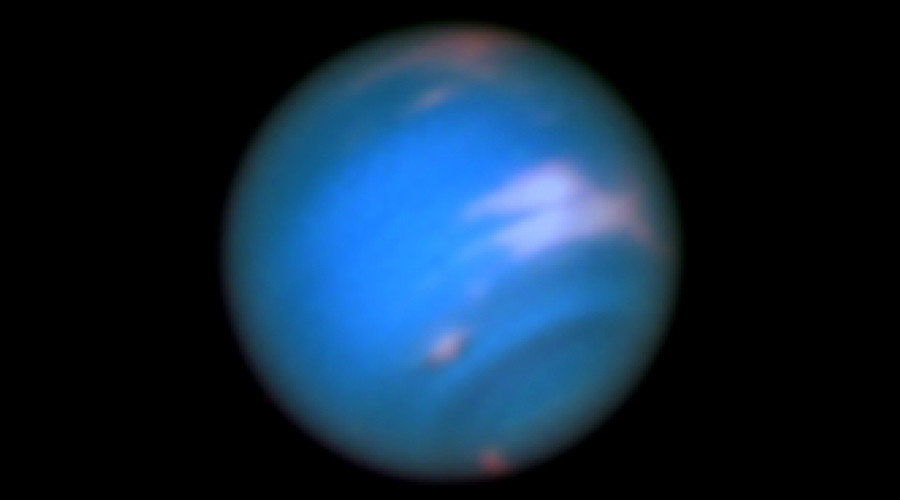
NASA's Hubble telescope finds new 'dark vortex' looming over Neptune

Neptune dark vortex
© NASA
NASA's Hubble telescope has recorded its first "dark vortex" sighting on Neptune this century during an observation on May 16.

The image of the planet's dark spot is the third such phenomenon ever captured by NASA.

The mysterious feature was previously spotted by Hubble in 1994 and, before that, by Voyager 2 in 1989.

Beaker

'Zombie gene' activation tries to revive body after death

zombie genes genetics death
© Flickr/ Angus
A team of US researchers has discovered a number of "zombie genes" that come alive in the cells several days after a person dies, electronic library bioRxiv.org. wrote.

These genes can't bring a person back to life, but this discovery has serious implications for forensics and organ donor recipients.

"For us, this experiment was a chance to satisfy our scientific curiosity and find out what happens when we die. The main conclusion of our study - it showed that we can learn a lot about how life works, studying death," said Peter Noble from the University of Washington in Seattle.

Studying the cells of mice and fish-zebras, killed by lethal doses of poison, Noble and his colleagues determined that there exist several such genes in the body of humans and animals that start functioning only after their owner is dead. It appeared that the majority of these zombie genes were not random in terms of function. Some of those that had sprung back to life actually tried to "revive" the body by enhancing the immune system, preventing inflammation and countering stress.

Also, genes that construct the embryo were also found to activate after death, probably because the cellular conditions of the newly dead organisms are comparable to those of embryos. Some of the reactivated genes promoted cancer, which explains why some donor recipients develop this deadly disease.

Importantly, these genes and their performance, which the scientists describe as tanatoterapiya, can be used to determine the exact time of someone's death and determine whether his or her organs are suitable for transplantation.

Monitoring the activity of genes in dying cells will give scientists a clue to how "life works."