Science & TechnologyS


Bulb

Inspiring entrepreneur designs inexpensive refrigerator that cools without electricity

mitti cool, non-electric refrigerator
Many of the world's most inspiring entrepreneurs and inventors never fit the typical mould and have made their marks on the world after abandoning standard education. From India, Mansukhbhai R. Prajapati is one such person, and even though he never finished high school, he has built a very successful and forward-thinking company that provides needed jobs in his community manufacturing products that are changing the world for the better.

Mansukhbhai R. Prajapati grew up more interested in sports and fun than in learning, but after working in the clay industry for some time as a potter he started his own company and first revolutionized the way clay roof tiles were made.
"During his childhood, he saw earthen pans/hot plates being manufactured manually on the potters wheel. Using this, one person can only make about 100 units per day. He had seen roof tiles being manufactured in large quantity on hand press, which made him think why cannot earthen pans be made the same way?

In 1988, he left his job and took a loan from a money lender to start his own earthen plate manufacturing factory. He purchased a small piece of land for the factory, dyes and presses, soil mixing machine, electric potters wheel and other scrap objects. Then he modified the roof tile making hand press and developed a hand press machine having capacity to produce 700 earthen pans per day." [Source]
While very successful with this idea, his ingenuity led him to develop a line of products that is even more revolutionary than his industrial tile maker. Mitti Cool, as his company is called, produces an entire line of kitchen products made from clay.
"He has developed an entire range of earthen products for daily use in the kitchen. These products include water filters, refrigerators, hot plates, a cooker and other such items of daily use." [Source]
The refrigerator he designed uses the science of water evaporation to keep food cold in a small earthen fridge that uses no electricity and is already being sold in several countries.

Fireball

Dino-killing asteroid impact triggered lethal algal bloom

asteroid impact
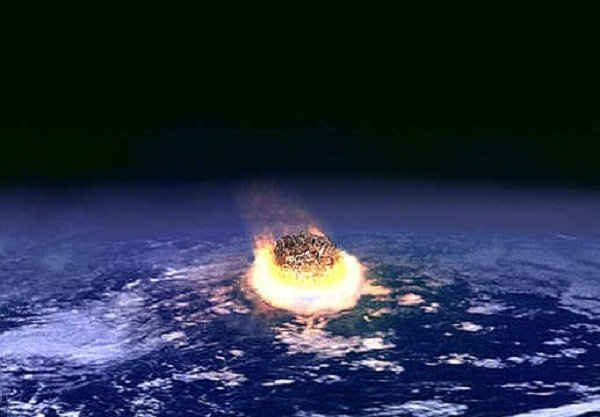
© NASAArtist's illustration of an asteroid hitting Earth 65 million years ago.
The asteroid that killed the nonavian dinosaurs may have also killed countless marine animals after it triggered a worldwide algal bloom, a new study finds.

The infamous 6-mile-long (10 kilometers) asteroid hit Earth about 66 million years ago, creating the Chicxulub crater, an expanse spanning 110 miles (180 km) across and 12 miles (20 km) deep, according to a blog post by the American Geophysical Union (AGU).

Upon impact, the asteroid threw a vast amount of tiny fragments into the atmosphere, where they became extremely hot from the friction of rubbing against one another. As they fell back to Earth, these fragments created a global layer of silica glass about 0.12 inches (3 millimeters) thick. That layer is now known as the Cretaceous-Paleogene boundary, according to previous studies.

Comment: For further reading, be sure to check out our "Comets and Catastrophes" series.


Info

Fog-harvesting desert moss collects fresh water directly from the atmosphere

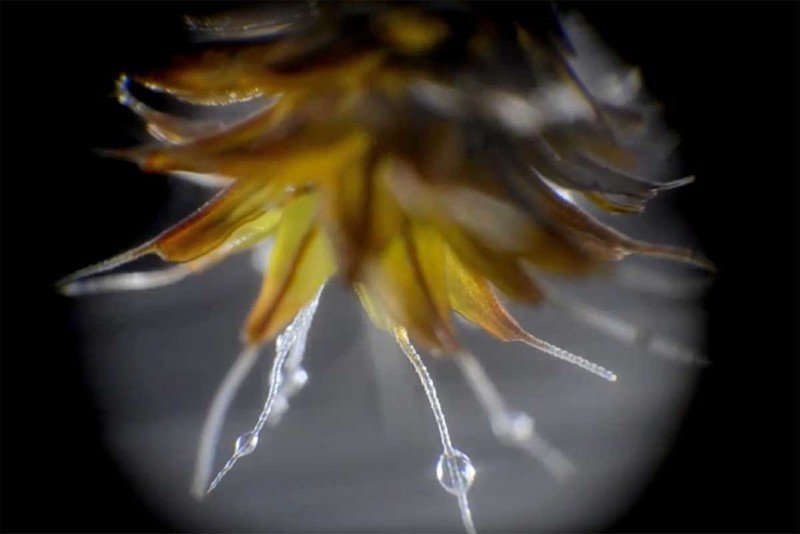
desert moss, Syntrichia caninervis,
Who needs roots?
Take a leaf out of this book. A common desert moss sucks water directly out of the air instead of from the ground. The discovery could be used to inspire ways of collecting clean drinking water in developing countries.

Most desert plants, including cacti, rely on extensive root systems to mop up scarce groundwater. But the desert moss Syntrichia caninervis collects fresh water straight from the atmosphere.

Tiny fibres attached to the tips of the moss leaves, known as awns, allow S. caninervis to harvest fog and mist droplets, says Tadd Truscott of Utah State University, who filmed the plant's drinking behaviour.

Comet 2

New comet discovered: C/2016 K1 (LINEAR)

CBET nr. 4282, issued on 2016, June 05, announces the discovery of an apparently asteroidal object (magnitude ~18.5) found on CCD images taken on May 31 with the 3.5-m f/1 Space Surveillance Telescope on Atom Peak in the White Sands Missile Range, NM, USA, in the course of the LINEAR survey. This object has been found to cometary appearance by CCD astrometrists elsewhere after it was posted on the Minor Planet Center's NEOCP webpage. The new comet has been designated C/2016 K1 (LINEAR).

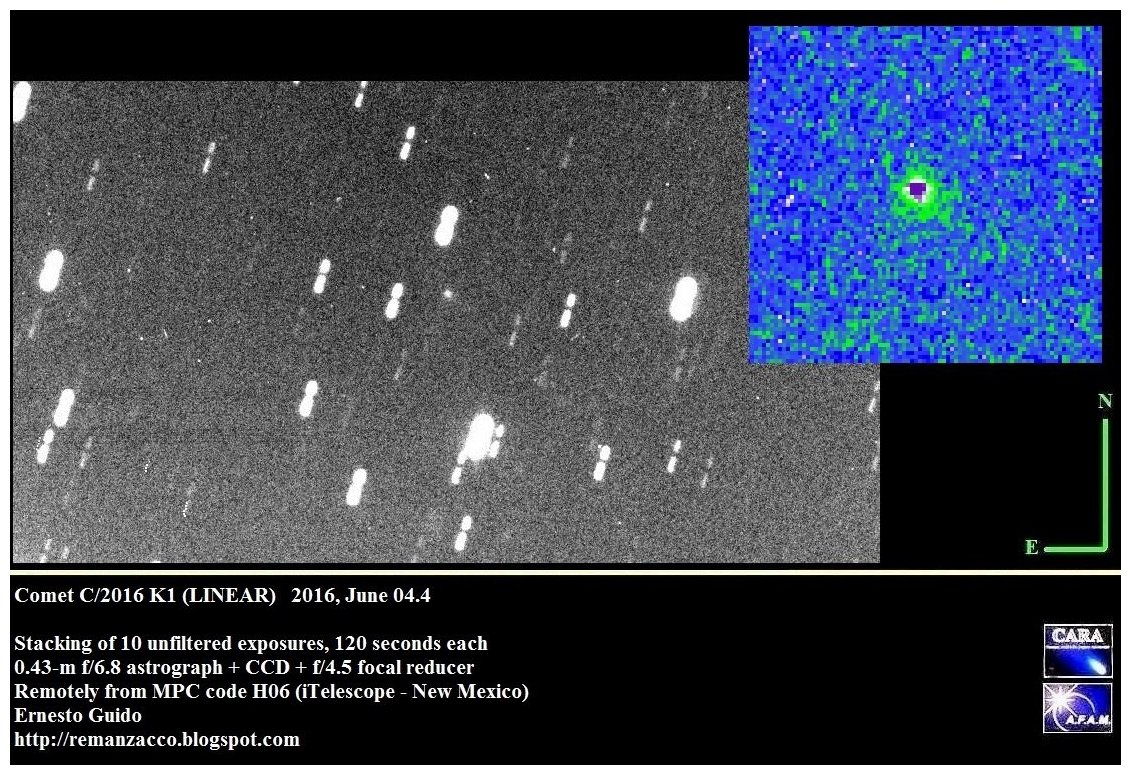
We performed follow-up measurements of this object, while it was still on the neocp. Stacking of 10 unfiltered exposures, 120 seconds each, obtained remotely on 2016, June 04.4 from H06 (iTelescope network - New Mexico) through a 0.43-m f/6.8 astrograph + CCD + f/4.5 focal reducer, shows that this object is a comet with a compact coma nearly 8 arcsec in diameter elongated toward PA 225.

Our confirmation image (click on it for a bigger version)
C/2016 K1 (LINEAR)
© Remanzacco Blogspot
M.P.E.C. 2016-L34 assigns the following preliminary parabolic orbital elements to comet C/2016 K1: T 2016 July 14.36; e= 1.0; Peri. = 18.66; q = 2.29; Incl.= 90.94

Blue Planet

Coral can record historical events due to its ability to absorb toxic metals in the environment

corals record historical events
© Edward Duncan (1803–1882) | Wikimedia CommonsCorals record historical events such as the Opium Wars and World War II. The key is their absorption of toxic metals, such as mercury, that are leached into their surroundings.
A Canadian study has discovered that coral is able to effectively record events in human history due to its ability to absorb the toxic metals released into the environment as a result of naval battles fought in their vicinity.

On 7 January 1841, the Second Battle of Chuenpee took place between the navies of the British Empire and China as part of the wider First Opium War. The war was fought between the two powers primarily over trade disagreements. During the battle, the British warship 'Nemesis' sunk a Chinese ship with a rocket. This sinking, alongside general artillery fire, would have resulted in the release of toxic mercury into the surrounding environment.

Now a team of scientists, led by Ruoyu Sun, a geochemist at Trent University in Peterborough, Canada, have found that corals in the South China Sea absorbed these metals, thus keeping a record of this, as well as future conflicts locked in their skeletons. Published in the journal Environmental Science and Technology, the findings provide a fascinating insight into how humans have been polluting the oceans throughout history.

The skeletons of hard corals are made of aragonite, a calcium carbonate mineral. As the coral grows, it absorbs additional calcium out of the water in order to build its skeleton. The result is that corals' annual growth bands can be used to track the history of the organism, much like the rings of a tree. However, coral has also been shown to absorb certain metal pollutants - such as lead and mercury - alongside calcium, and consequently allows scientists to track when these metals were present in the water.

Robot

Google developing "kill switch" to prevent robots from turning on their masters

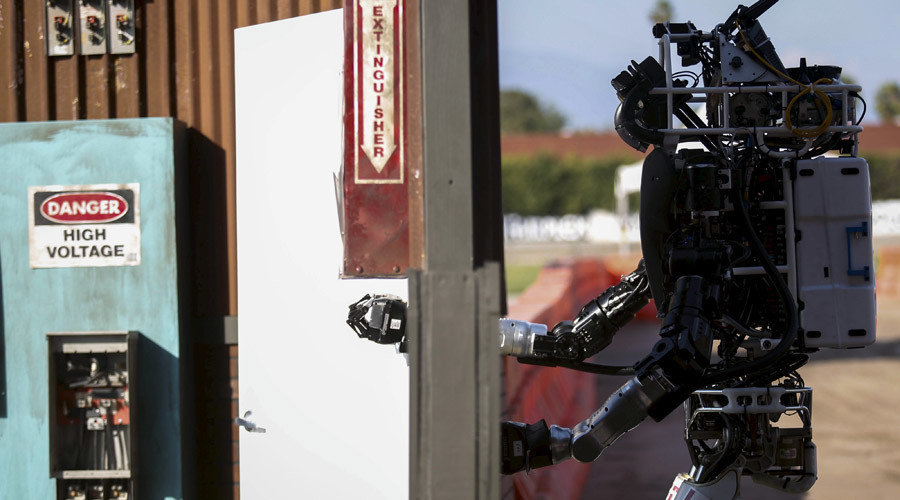
robot
© Patrick T. Fallon / Reuters
Those concerned about a robot uprising in the future may be able to rest a little easier, as Google is working on a "kill switch" to prevent robots from turning on their masters.

While Google continues to create more intuitive artificial intelligence (AI) systems, and repeatedly shows us just why robots might turn on humanity, the tech giant has published a new paper detailing the development of "Safely Interruptible Agents" to prevent robots from doing things that they shouldn't.

Comment:


Black Cat 2

Schrodinger's cat arrives? Quantum weirdness gets life size

Quantum membrane
© Felix Fricke
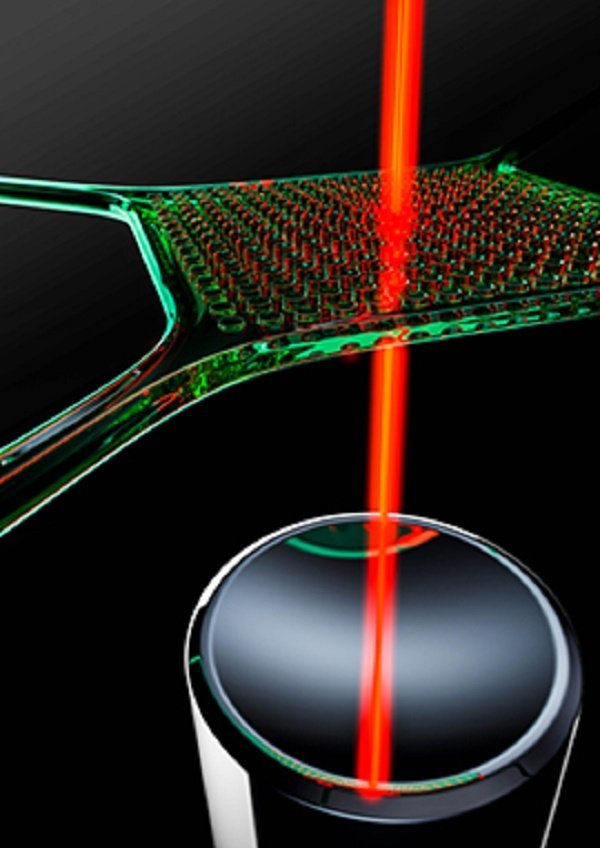
An artist's conception of a quantum membrane that could soon be used to test quantum effects in life-sized objects
The quantum absurdity that leads to the notion of Schrodinger's cat — in which a cat can exist in two states simultaneously — could finally be tested in an object visible to the naked eye, a new study demonstrates.

Scientists have created a pendulum-like membrane that is so perfectly isolated from friction and heat "that it would just keep going for 10 years with a single push," said study co-author Simon Gröblacher, a physicist at Delft University of Technology in the Netherlands. "If you create a quantum state in this object, it will not go away."

This tiny, flea-size swing could allow scientists to finally test whether the quantum effects behind the Schrodinger's cat thought experiment do indeed exist at large scales.

Comment: Related articles:


Blue Planet

What are algae?

Algae
© bogdan ionescu, ShutterstockAlgae may hold potential as both the food and the fuel of the future.
Algae are a diverse group of aquatic organisms that have the ability to conduct photosynthesis. Certain algae are familiar to most people; for instance, seaweeds (such as kelp or phytoplankton), pond scum or the algal blooms in lakes. However, there exists a vast and varied world of algae that are not only helpful to us, but are critical to our existence.

Definition

The term "algae" covers many different organisms capable of producing oxygen through photosynthesis (the process of harvesting light energy from the sun to generate carbohydrates). These organisms are not necessarily closely related. However, certain features unite them, while distinguishing them from the other major group of photosynthetic organisms: the land plants.

Primarily, algae are not highly differentiated in the way that plants are, according to the authors of "Algae: Anatomy, Biochemistry, and Biotechnology, 2nd Ed." (CRC Press, 2014). That is to say, they lack true roots, stems and leaves, and a vascular system to circulate water and nutrients throughout their bodies. Second, many algae are unicellular, according to a 2014 article published in the journal Current Biology. They also occur in a variety of forms and sizes. They can exist as single, microscopic cells; they can be macroscopic and multicellular; live in colonies; or take on a leafy appearance as in the case of seaweeds such as giant kelp. Picoplankton are between 0.2 to 2 micrometers in diameter, while the fronds of giant kelp are as large as 60 meters in length. Lastly, algae are found in a range of aquatic habitats, both freshwater and saltwater.

Comment: Related articles:


Cloud Grey

Ammonia swirls found beneath Jupiter's clouds

Jupiter clouds
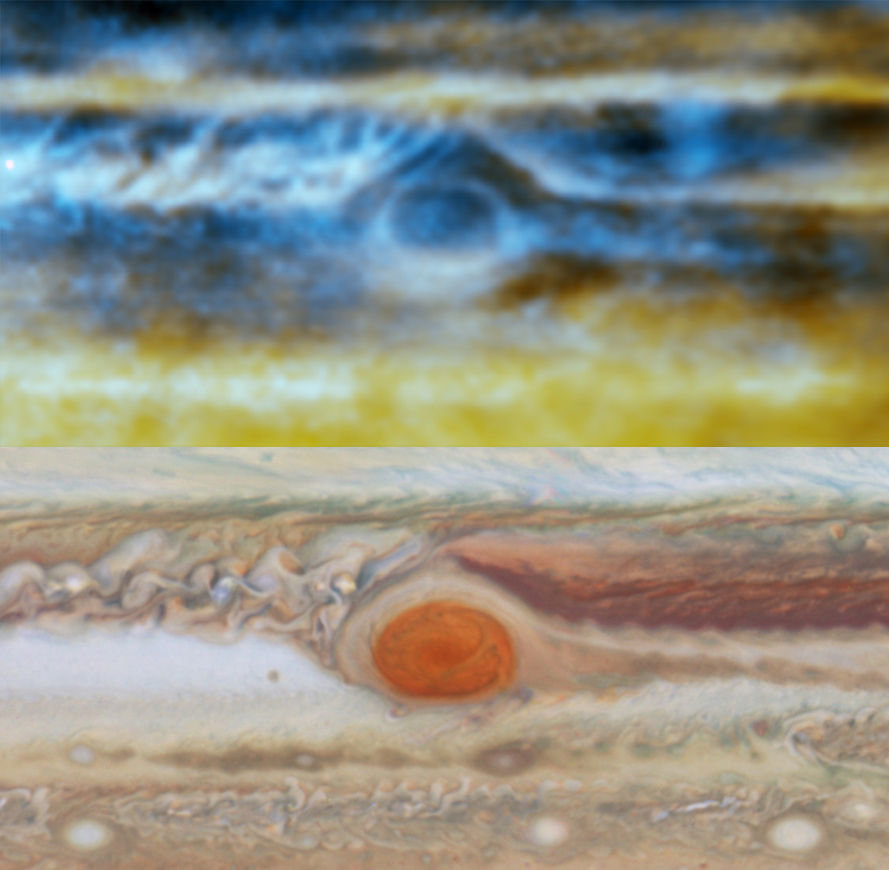
© Michael H. Wong, Imke de Pater (UC Berkeley), Robert J. Sault (Univ. Melbourne). Optical: NASA, ESA, A.A. Simon (GSFC), M.H. Wong (UC Berkeley), and G.S. Orton (JPL-Caltech)A new radio map of Jupiter, built with data from the Very Large Array in New Mexico, shows the movement of ammonia gas in the planet's atmosphere. Here, new radio measurements (above) are compared with a visible-light map from Hubble Space Telescope images, in approximate true color.
Just one month before the Juno spacecraft arrives at the gas giant Jupiter, the most detailed radio-wave maps ever of the planet's atmosphere dig beneath surface-level clouds to reveal the whirling ammonia flows that help form its distinctive features.

Researchers used the upgraded Very Large Array (VLA) radio telescope in New Mexico to probe 60 miles (100 kilometers) below the top of the gas giant's pervasive clouds — revealing a correlation between the colorful whirls and spots on the visible surface and the movement of gas below, which is driven by Jupiter's internal heat source.

"We in essence created a three-dimensional picture of ammonia gas in Jupiter's atmosphere, which reveals upward and downward motions within the turbulent atmosphere," Imke de Pater, an astronomer at the University of California, Berkeley, and lead author on the new work, said in a statement.

Comment: Further reading:


Info

Scientist in America want to manufacture synthetic human genomes

Human Genome
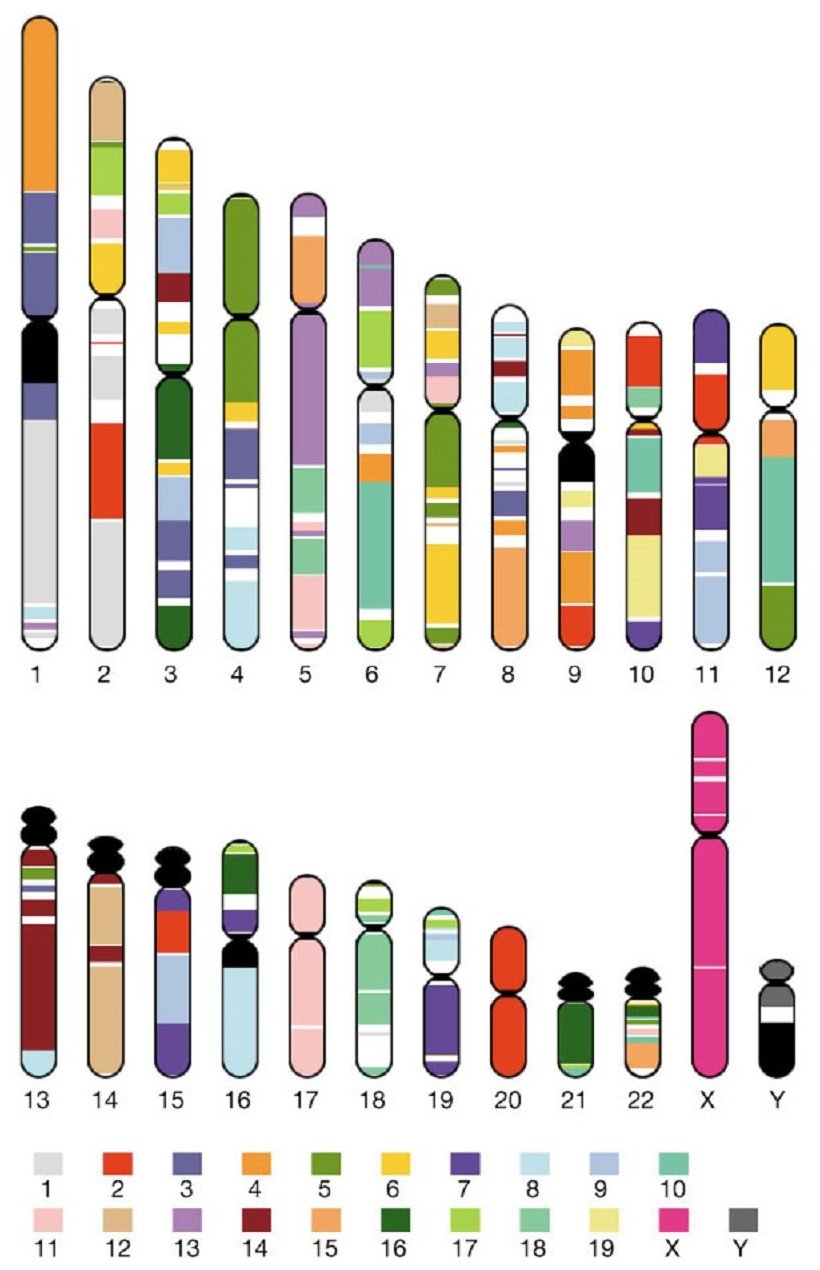
© NatureHuman chromosomes, with segments containing at least two genes whose order is conserved in the mouse genome as colour blocks. Each colour corresponds to a particular mouse chromosome. Centromeres, subcentromeric heterochromatin of chromosomes 1, 9 and 16, and the repetitive short arms of 13, 14, 15, 21 and 22 are in black.
It's only been 13 years since scientists at National Human Genome Research Institute finished sequencing the human genome, but now another group of American scientists are calling for a 10-year project aimed at creating their own human genomes from scratch.

The proposal for the project, known as the 'Human Genome Project—Write', was published in Science last Thursday and announced the group's intention to launch the project this year with the $100-million it will secure in funding.

As argued in the paper written by 26 prominent geneticists, HGP-Write is the logical continuation of the Human Genome Project, which successfully sequenced 99.9 percent of all the DNA humans have in common, otherwise known as the human genome.

"Genome synthesis is a logical extension of the genetic engineering tools that have been used safely within the biotech industry for ~40 years and have provided important societal benefits," the authors wrote in the paper.

"HGP-write will require public involvement and consideration of ethical, legal, and social implications (ELSI) from the start. Responsible innovation requires more than ELSI, though, and involves identifying common goals important to scientists and the wider public through timely and detailed consultation among diverse stakeholders."

The ostensible aim of the project would be to reduce the cost of engineering large DNA sequences in labs by over 1000 times in 10 years.

This could lead to important biotech innovations like growing human organs that could be used for transplants, and cell lines that are engineered to be resistant to viruses and cancers.

Although the authors acknowledge their proposal is "ambitious" and given the current cost of genome sequencing likely to be very expensive, they expect technology to advance in tandem with the project, drastically reducing its cost over time.

"Total project costs are difficult to estimate but would likely be less than the $3 billion cost of HGP-read," they wrote.