Science & TechnologyS


Robot

Humanity is on the evolutionary path to becoming cyborgs say Australian scientists

Cyborgs
© Shutterstock
Our excitement with and rapid uptake of technology — and the growing opportunities for artificial brain enhancement — are putting humans more firmly on the path to becoming cyborgs, according to evolution experts from the University of Adelaide.

Professor Maciej Henneberg and Dr Aurthur Saniotis have worked to chart the full scope of human evolution, with a look at the past, present and future development of our species.

And while they believe that future humans will more readily combine their own organic material with technology, the authors caution that such enhancements must not ignore humans' highly complex biology.

Professor Henneberg and Dr Saniotis are members of the Biological Anthropology and Comparative Anatomy Research Unit in the University of Adelaide's School of Medicine. They are also associates of the Institute of Evolutionary Medicine at the University of Zurich, Switzerland, and recently launched a book on the topic titled The Dynamic Human.

Professor Henneberg says their underlying approach with the book is that the human species continues to evolve: "There is still a tendency by some to view the current form of human beings as static, and that we will stay as such into the future unless some catastrophe causes our extinction," he says.

"However, in The Dynamic Human we present the alternative: that our world is a continuously changing complex system and humans are a part of this ever-changing system. Within this framework, human evolution is an ongoing process that shapes us now and will shape us in the future, body and mind. We must understand it in order to survive and be able to direct it to our advantage," he says.

2 + 2 = 4

Scientists find brain area responsible for learning from immediate experience

Mediodorsal thalamus allows us to incorporate new information in decision-making

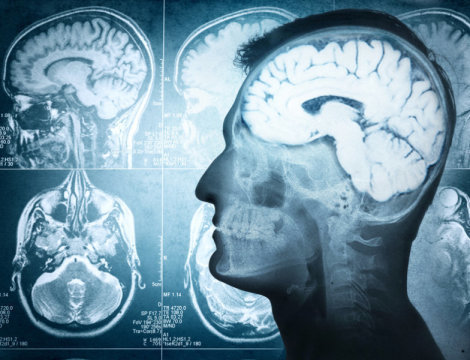
brain imaging
© Tryfonov / Fotolia
Scientists have confirmed one of the brain areas responsible for rapid updating of information during learning -- the sort of information we use to negotiate many changing situations in everyday life.

In a study funded by the Medical Research Council and published in journal eLife, a team from Oxford University and Imperial College looked at an area called the mediodorsal thalamus (MD), known to be involved in decision making and learning.

Comet

Comets & Asteroids - Summary for May 2016

During the month of May 2016, 2 new comets were discovered and cometary activity was detected for 1 previously discovered object (earlier designated as an asteroid).

NASA's Hubble Space Telescope imaged comet 252P/LINEAR just after it swept by Earth on March 21, 2016 while the Subaru Telescope serendipitously captured high-resolution images of comet 67P/Churyumov-Gerasimenko. Moreover a non-gravitational acceleration has been detected influencing the motion of minor planet (85990) (see below for more about these news). "Current comet magnitudes" & "Daily updated asteroid flybys" pages are available at the top of this blog (or just click on the underline text here).

The dates below refer to the date of issuance of CBET (Central Bureau Electronic Telegram) which reported the official news & designations.

Comet Discoveries

May 09 Discovery of P/2016 J1 (PANSTARRS)*
May 09 Discovery of C/2016 J2 (DENNEAU)
P/2016 J1 (PanSTARRS)
© Michael JagerP/2016 J1 (PanSTARRS)
* According to the discovery CBET, follow-up images obtained at the 3.6-m Canada-France-Hawaii Telescope atop Mauna Kea on May 6.43 showed a second comet in the field. "The two components are moving at nearly identical rates in nearly identical directions (both about 0".6/minute in p.a. about 314 deg).

The brighter component (designated component A) displays a clear and quite thin tail about 10" long in p.a. 250 deg in the May 6.43 images. The fainter object (designated component B) also displays a clear but broader tail of similar length, oriented toward p.a. about 210 deg". The available astrometry for both components and ephemerides appear on MPEC 2016-J90

Question

Crisis in science research: Over 70% of researchers fail to reproduce another scientist's experiments

scientific study reproducibility crisis
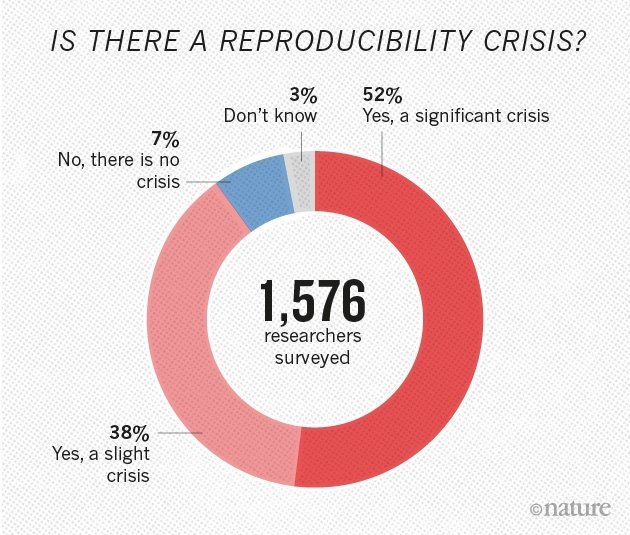
More than 70% of researchers have tried and failed to reproduce another scientist's experiments, and more than half have failed to reproduce their own experiments. Those are some of the telling figures that emerged from Nature's survey of 1,576 researchers who took a brief online questionnaire on reproducibility in research.

The data reveal sometimes-contradictory attitudes towards reproducibility. Although 52% of those surveyed agree that there is a significant 'crisis' of reproducibility, less than 31% think that failure to reproduce published results means that the result is probably wrong, and most say that they still trust the published literature.

Data on how much of the scientific literature is reproducible are rare and generally bleak. The best-known analyses, from psychology1and cancer biology2, found rates of around 40%and 10%, respectively. Our survey respondents were more optimistic: 73% said that they think that at least half of the papers in their field can be trusted, with physicists and chemists generally showing the most confidence.

Comment: What is conspicuously absent from the discussion is scientific misconduct:

Richard Horton, editor-in-chief of The Lancet, has written bleakly: "The case against science is straightforward: much of the scientific literature, perhaps half, may simply be untrue. Afflicted by studies with small sample sizes, tiny effects, invalid exploratory analyses, and flagrant conflicts of interest, together with an obsession for pursuing fashionable trends of dubious importance, science has taken a turn towards darkness."

Dr. Marcia Angell, a physician and longtime Editor in Chief of the New England Medical Journal (NEMJ), which is considered one of the most prestigious peer-reviewed medical journals in the world, makes her view of the subject quite plain: "It is simply no longer possible to believe much of the clinical research that is published, or to rely on the judgment of trusted physicians or authoritative medical guidelines."


Question

Prince Phillip's DNA may identify last murdered Russian royals

Prince Phillip Tsar Nicholas dna testing
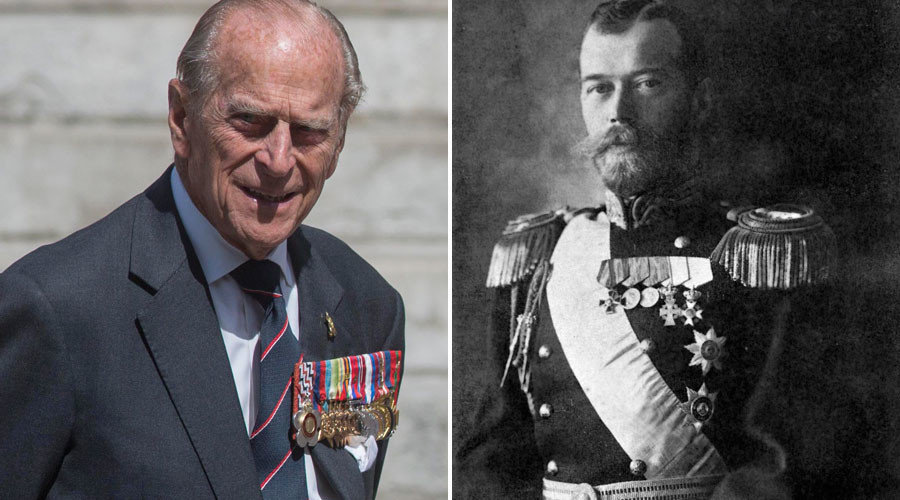
© Neil Hall, Sputnik / ReutersPrince Phillip, Nicholas II in a ceremonial uniform.
DNA samples taken from Prince Philip will be used to help identify the remains of bodies suspected to be those of the last two Romanov children, killed by the Bolsheviks during the Russian Revolution.

Speaking at the Hay literary festival on Monday, historian and writer Simon Sebag Montefiore said the Duke of Edinburgh, husband of Queen Elizabeth II, has agreed to speak with him on the issue of his DNA being used.

The remains of two children, thought to be the Romanov children Alexey and Maria, were found by a builder in a shallow grave in 2007 about 40 miles (64km) from Ekaterinburg in central Russia, where the family were massacred in July 1918.

The Duke's DNA was previously used to identify other Romanov remains in 1998. His ancestors are closely related to the Romanovs, as were many European royals.

Mars

Red Planet heats up: Ice age ending on Mars

Mars north pole
© ESA/DLR/FU-Berlin/Ralf JaumannThe north polar ice cap of Mars is seen in this mosaic view, which scientists made by combining data from the European Mars Express spacecraft and NASA's Mars Reconnaissance Orbiter. The spiral features help scientists understand how ice ages on Mars work.
Mars is emerging from an ice age, a finding that could shed light on the past and future climates of both Mars and Earth, researchers said.

The orbit of Mars regularly undergoes changes that greatly affect how much sunlight reaches the planet's surface, which in turn can strongly alter the Red Planet's climate. Similar orbital variations called Milankovitch cycles are known to happen on Earth.

Previous Martian climate models suggested that such orbital changes could lead to ice ages on Mars, when ice would cover most of the planet. Now, researchers said they have found evidence of these ice ages on Mars.

Beaker

EU announces all scientific papers will be accessible for free by 2020

EU’s Open Science initiative
© Stefan Wermuth / Reuters
In an unprecedented move, European science authorities have announced that all online research papers shall be made free by 2020. The measure will be a major step on the way to the EU's Open Science initiative.

Europe's Competitiveness Council, which decided on the measure during a two-day meeting in Brussels, has been campaigning hard for OA (open access) privileges. One such milestone was giving free access to science papers.

This is an especially salient issue, given the rising controversy over the cost of accessing individual studies, which costs students in the hundreds of dollars when they work on a big project. Many have campaigned for the liberation of science for some time - most notably Aleksandra Elbakyan, and her Sci-Hub website. She fought a multi-billion dollar court battle in the US for essentially doing what the EU wants to do now.

Now, under the guidance of the Dutch, who hold the current presidency at the Council, the ambitious target has been laid out.

Flashlight

Return of incandescent light bulbs as MIT makes them more efficient than LEDs

Incandescent light bulb
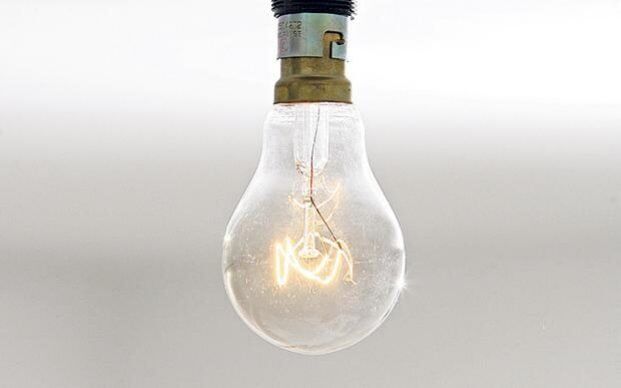
Ever since the EU restricted sales of traditional incandescent light bulbs, homeowners have complained about the shortcomings of their energy-efficient replacements.

The clinical white beam of LEDs and frustrating time-delay of 'green' lighting has left many hankering after the instant, bright warm glow of traditional filament bulbs.

But now scientists in the US believe they have come up with a solution which could see a reprieve for incandescent bulbs.

Cloud Grey

Life in a cage: Farmed salmon often suffer from high levels of stress and depression

growth stunted farmed salmon
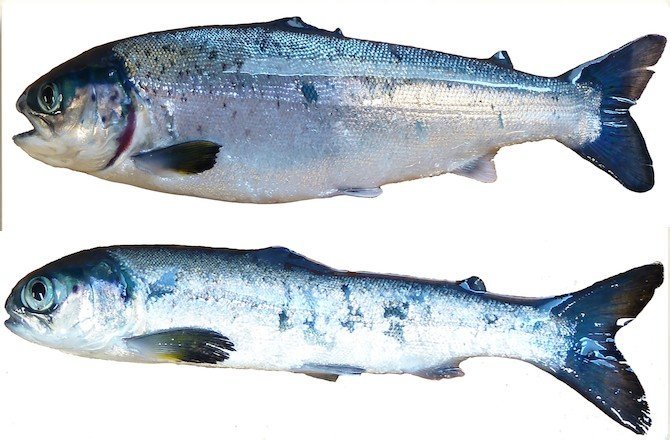
© Ole Folkedal A healthy farm-raised Atlantic salmon is pictured above a growth-stunted "drop out" salmon.
Farmed Atlantic salmon often suffer from such high levels of stress and depression that many become lethargic and essentially give up on life, finds new research.

Many farm-raised salmon exhibit behaviors and brain chemistry nearly identical to those of very stressed and depressed people, according to a new study with implications for animal welfare and treatment of mental illness in humans.

The research, published in the journal Royal Society Open Science, could help to explain why so many fish farms have "drop out" or "loser fish" that have stunted growth and listlessly float at the surface of tanks, seemingly wanting to die.

"I would not go so far as to say they are committing suicide, but physiologically speaking, they are on the edge of what they can tolerate, and since they remain in this environment, they end up dying because of their condition," lead author Marco Vindas, of the University of Gothenburg, told Discovery News.

Vindas and his team made the determinations after studying both healthy and growth-stunted fish at a commercial Atlantic salmon farm in the Langenuen Straight of Western Norway. All fish were reared according to production standards, euthanized and then analyzed with a focus on the fish's brain chemistry and levels of the stress hormone cortisol.

The "drop out/loser" fish were found to have much higher amounts of cortisol in addition to increased activation of what is known as the serotonergic system. This main neural system regulates the neurotransmitter serotonin in the bodies of fish as well as in other animals, including humans. It's involved in respiration, sleep, hunger, stress response, mood and more. Problems with this system have been associated with several mental illnesses, including major depression.

Comment:


Satellite

Rosetta spacecraft finds glycine and phosphorous in comet dust

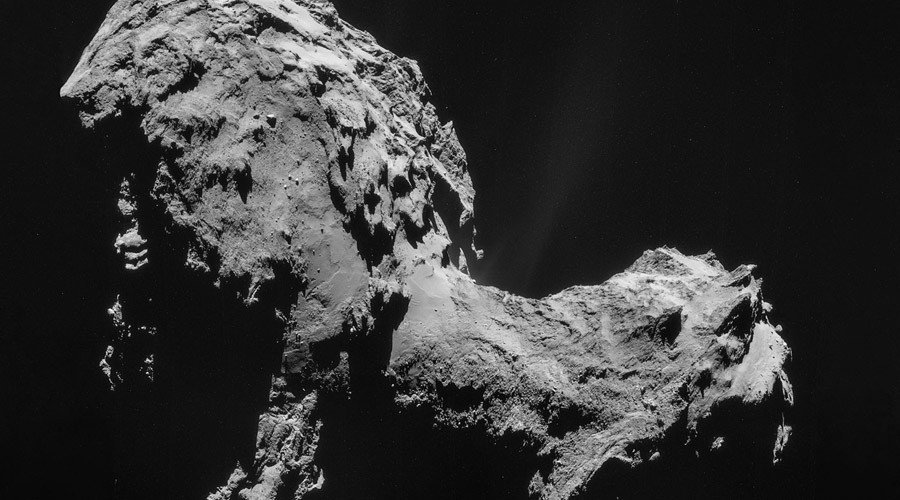
Comet 67P
© Wikipedia
Elements crucial for life's formation have been spotted around a comet which has been probed by the Rosetta spacecraft for almost two years. The discovery suggests that primitive life material could have been transported to our planet by comets.

Among the elements discovered were glycine and phosphorous, which are important components of DNA, RNA and cell-membranes. The European Space Agency's Rosetta spacecraft spotted them in samples from a gas and dust cloud of the 67P/Churyumov-Gerasimenko comet, scientists said on Friday. It was the first time phosphorous was discovered around a comet.

"This result demonstrates that comets could have played a crucial role in the emergence of life on Earth," scientists wrote in the paper published in the Journal of Science Advances.