Science & TechnologyS


Clipboard

Workaholism linked to ADHD and depression

woman sleeping at work
© Stokkete/Shutterstock.com
People who work too much may be more likely to have ADHD or depression, according to a new study from Norway.

Researchers found that, among the workaholics in the study, nearly 33 percent had symptoms of ADHD, compared with about 13 percent of non-workaholics. For the study, workaholics were defined as those who met seven criteria, including whether they work so much that it has negatively influenced their health, or they feel stressed when they are prohibited from working.

"Workaholics scored higher on all the psychiatric symptoms than non-workaholics," Cecilie Schou Andreassen, a clinical psychologist at the University of Bergen in Norway, said in a statement.

Blue Planet

Eurocentric conception of World Politics: We have been misled by a flawed world map for 500 years

mercator world map
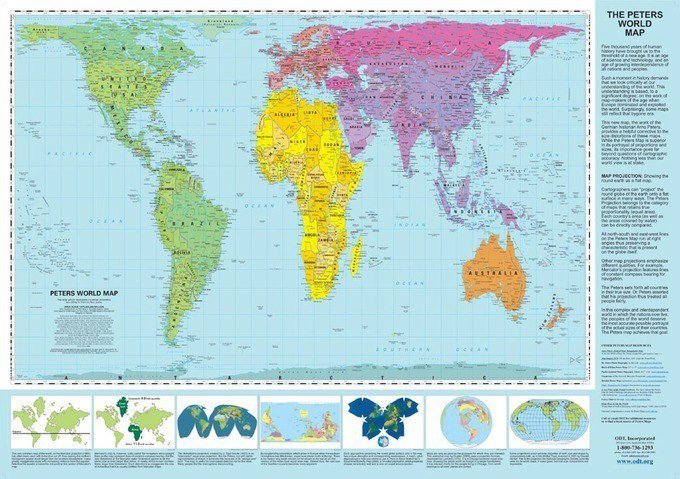
We now know the Earth is round. Therefore, the challenge of any world map is to represent a round Earth on a flat surface. There are thousands of map projections, and each has certain strengths and corresponding weaknesses but the one you're now picturing in your head most likely isn't the area accurate representation. A more accurate representation of land mass is the Peters Projection Map seen here:

peters-gall world map

Document

New study shows electric eels can leap out of water to attack 'predators'

Eel electrocuting crocodile head
© SciNews/YouTube
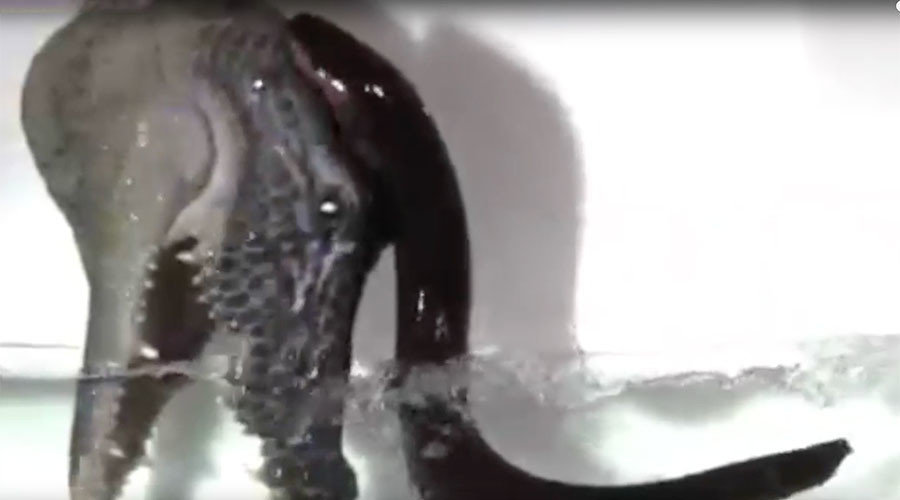
It turns out, electric eels are more shocking than we thought - and we have the awesome footage to prove it. A new study has revealed that the eels can leap out from water to "directly electrify threats" and defend themselves against predators.

Kenneth Catania from Vanderbilt University in Nashville, Tennessee saw the eels break the mold in his lab while attempting to move them in a metal-rimmed net. "I was definitely surprised," he is quoted by New Scientist. "This isn't something electric eels typically do."

Catania witnessed the eels leaping from the water in their tank and emit high voltage shocks while keeping their chin in constant contact with the metal nets to inflict maximum damage.

"The behavior consists of an approach and leap out of the water during which the eel presses its chin against a threatening conductor while discharging high-voltage volleys," his study says. "The effect is to short-circuit the electric organ through the threat, with increasing power diverted to the threat as the eel attains greater height during the leap."


Comment: Electric eels can remotely control the bodily movements of their prey


Info

Ancient plate tectonic boundaries may reactivate

Ancient Fault Lines
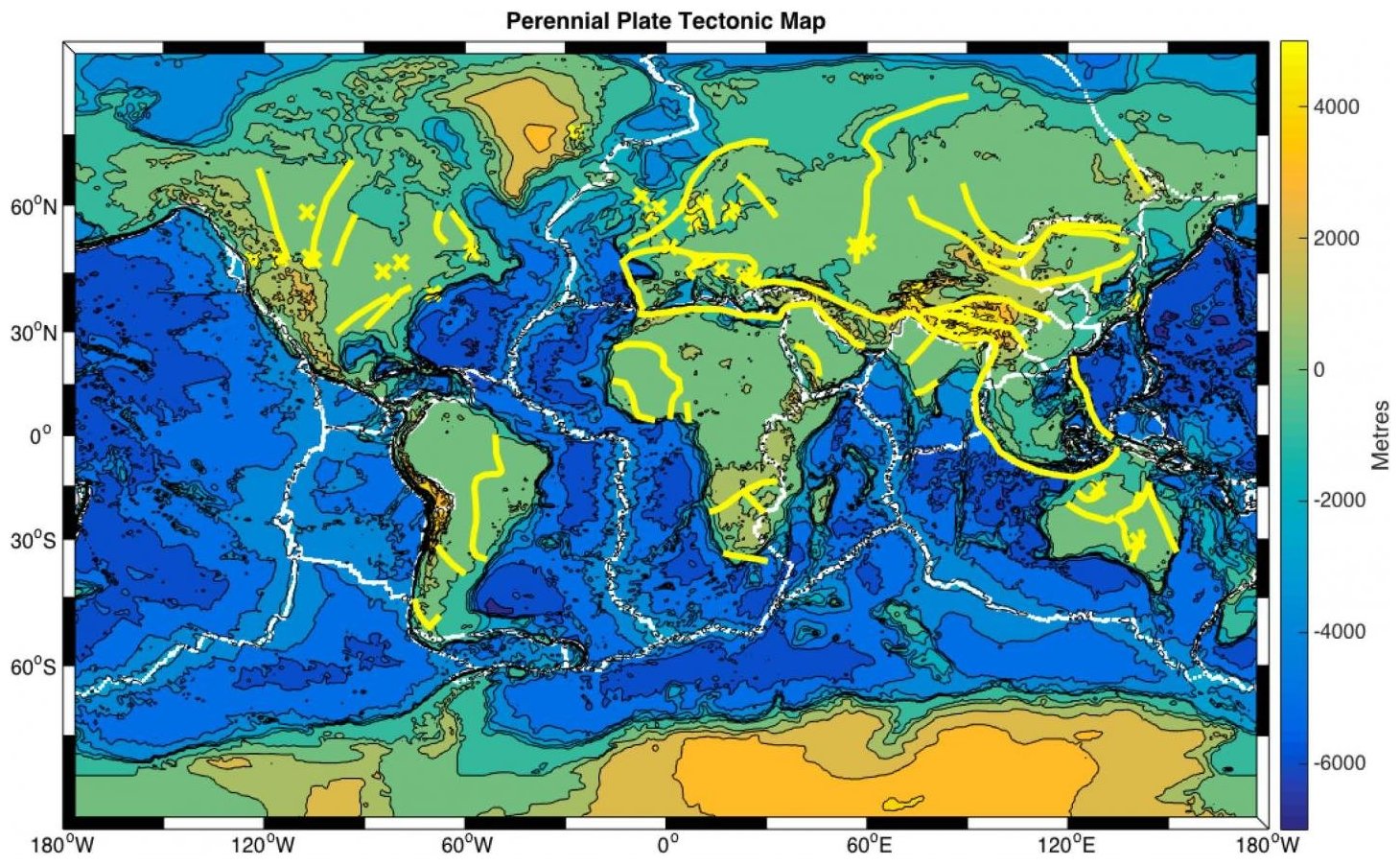
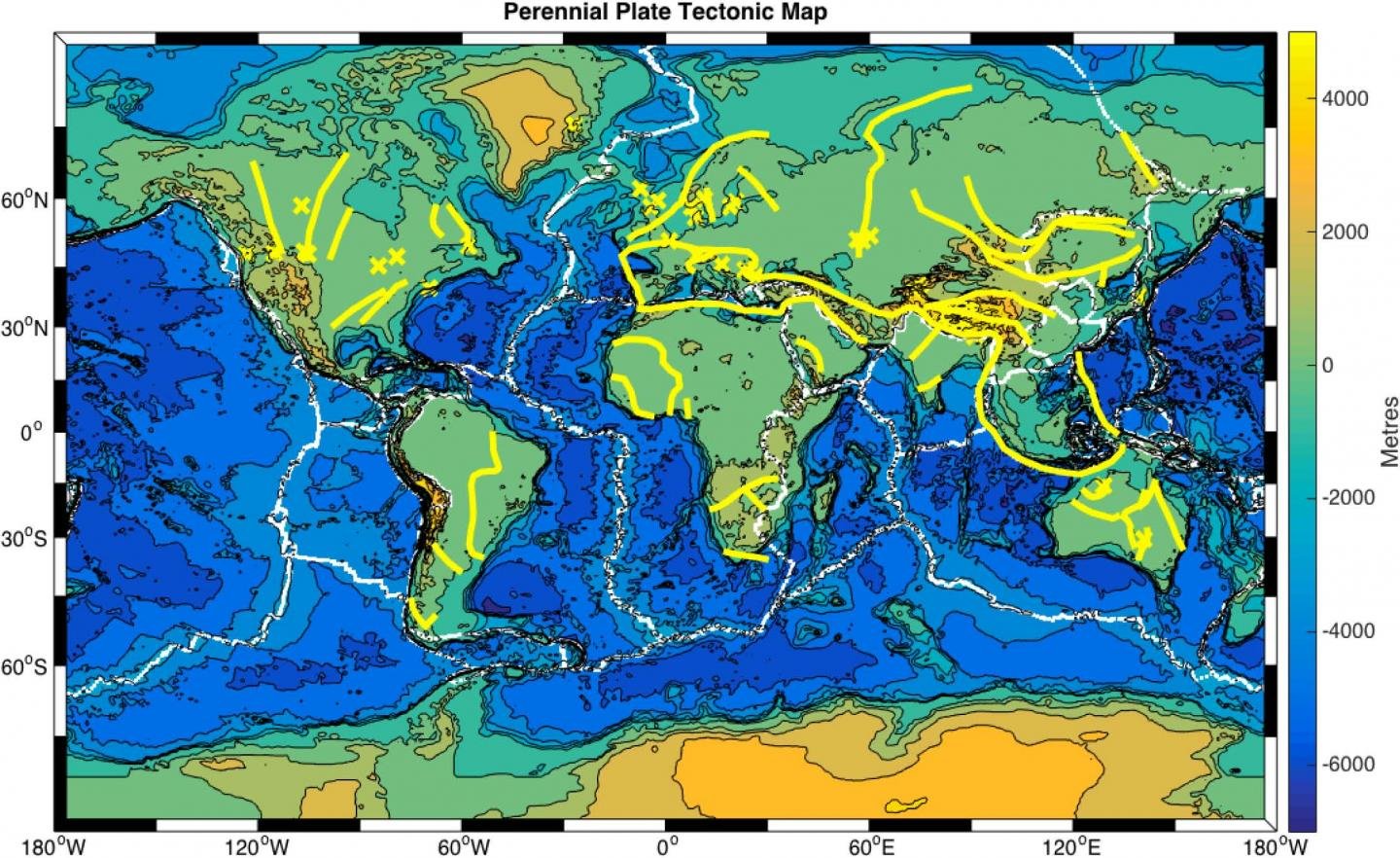
© Russell Pysklywec, Philip Heron, Randell StephensonA proposed perennial plate tectonic map. Present-day plate boundaries (white lines), with hidden ancient plate boundaries that may reactivate to control plate tectonics (yellow lines). Regions where mantle lithosphere heterogeneities have been located are given by yellow crosses.
Super-computer modelling of Earth's crust and upper-mantle suggests that ancient geologic events may have left deep 'scars' that can come to life to play a role in earthquakes, mountain formation, and other ongoing processes on our planet. This changes the widespread view that only interactions at the boundaries between continent-sized tectonic plates could be responsible for such events.

A team of researchers from the University of Toronto and the University of Aberdeen have created models indicating that former plate boundaries may stay hidden deep beneath the Earth's surface. These multi-million-year-old structures, situated at sites away from existing plate boundaries, may trigger changes in the structure and properties at the surface in the interior regions of continents.

"This is a potentially major revision to the fundamental idea of plate tectonics," says lead author Philip Heron, a postdoctoral fellow in Russell Pysklywec's research group in U of T's Department of Earth Sciences. Their paper, "Lasting mantle scars lead to perennial plate tectonics," appears in the June 10, 2016 edition of Nature Communications.

Heron and Pysklywec, together with University of Aberdeen geologist Randell Stephenson have even proposed a 'perennial plate tectonic map' of the Earth to help illustrate how ancient processes may have present-day implications.

"It's based on the familiar global tectonic map that is taught starting in elementary school," says Pysklywec, who is also chair of U of T's Department of Earth Sciences. "What our models redefine and show on the map are dormant, hidden, ancient plate boundaries that could also be enduring or "perennial" sites of past and active plate tectonic activity."


Einstein

Can anybody be a genius?

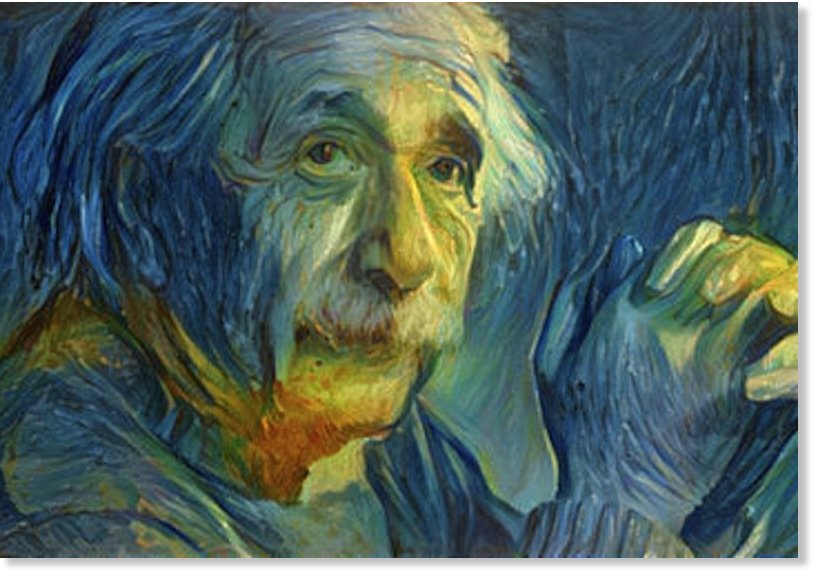
Fine art Einstein
What makes a genius?

Perhaps for athletes, a genius is an Olympic medalist. In entertainment, a genius could be defined as an EGOT winner, someone who has won an Emmy, Grammy, Oscar and Tony award. For Mensa, the exclusive international society comprising members of "high intelligence," someone who scores at or above the 98th percentile on an IQ or other standardized intelligence test could be considered genius.

The most common definition of genius falls in line with Mensa's approach: someone with exceptional intelligence.

Making a genius

In his new science series "Genius" on PBS, Stephen Hawking is testing out the idea that anyone can "think like a genius." By posing big questions — for instance, "Can we travel through time?" — to people with average intelligence, the famed theoretical physicist aims to find the answers through the sheer power of the human mind.

"It's a fun show that tries to find out if ordinary people are smart enough to think like the greatest minds who ever lived," Hawking said in a statement. "Being an optimist, I think they will." [Mad Geniuses: 10 Odd Tales About Famous Scientists]

Optimism aside, answering a genius-level question does not a genius make — at least, not according to psychologist Frank Lawlis, supervisory testing director for American Mensa.

Comment: Perhaps heeding some of Albert Einstein's wisdom may help us to nurture whatever sparks of genius we have!

"Insanity: doing the same thing over and over again and expecting different results."

"Try not to become a man of success, but rather try to become a man of value."

"The true sign of intelligence is not knowledge but imagination."

"We cannot solve our problems with the same thinking we used when we created them."

"It has become appallingly obvious that our technology has exceeded our humanity."

"It is the supreme art of the teacher to awaken joy in creative expression and knowledge."

"Peace cannot be kept by force; it can only be achieved by understanding."

"The difference between stupidity and genius is that genius has its limits."

"Weakness of attitude becomes weakness of character."

"The important thing is not to stop questioning. Curiosity has its own reason for existing."

"Anyone who has never made a mistake has never tried anything new."

"Education is what remains after one has forgotten what one has learned in school."

"To raise new questions, new possibilities, to regard old problems from a new angle, requires creative imagination and marks real advance in science."

"The world is a dangerous place to live; not because of the people who are evil, but because of the people who don't do anything about it."

"Once we accept our limits, we go beyond them."


Beaker

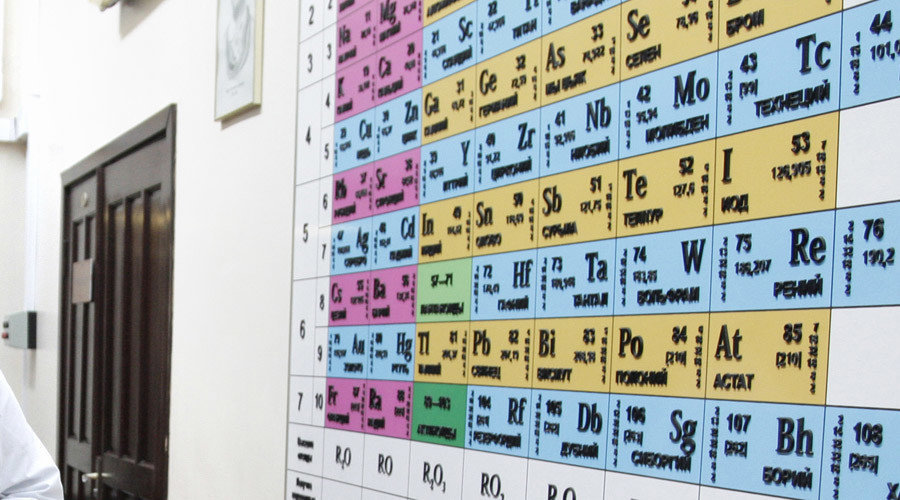
Names proposed for new additions to the periodic table: Nihonium, Moscovium, Tennessine & Oganesson

chemistry periodic table
© Dmitry Astakhov / Sputnik
Four new names will soon grace the Periodic Table of chemical elements, first developed in the 19th century by Russian chemistry professor Dmitri Mendeleev. Two of the four new elements will have names associated with Russia.

The four new elements that will be included in the seventh row of the table, under the proposal of International Union of Pure and Applied Chemistry (IUPAC), will be named Nihonium (Nh), Moscovium (Mc), Tennessine (Ts), and Oganesson (Og).

Elements 113, 115, 117, and 118 were formally recognized by IUPAC in December, but now the Union has presented a list of names that were proposed by the people who helped discover them. Unless the public voices strong opposition to the new names by November 8, IUPAC will enshrine the elements into the table permanently.

Nihonium (Nh) is the proposed name for element 113 due to its discovery at RIKEN in Japan. It will be the first element to be named after a location in East Asia. Nihon is one of the two ways to say "Japan" in Japanese.

Beaker

Making people from scratch? No need for parents when you have the right chemicals

Synthetic humans
© newsclip.com
In mid-May, more than 100 scientists, entrepreneurs and other experts were summoned to Harvard and asked not to talk to the media or even tweet about the meeting. After all, what they were about to discuss — the creation of a synthetic human genome — would be highly contentious.

Instead of reading the human genome, this effort would be about writing it, which would, in theory, allow those in charge of this technology to create synthetic human beings.

The proponents of taking this step argue that it would drastically reduce the cost of organ transfers, since such organs could simply be custom grown. However, it seems obvious that the technology would come with the great temptation of "playing God."

Comment: Scientist in America want to manufacture synthetic human genomes


Attention

Unintended consequences: Researchers warn against releasing GM mosquitoes in U.S.

zika
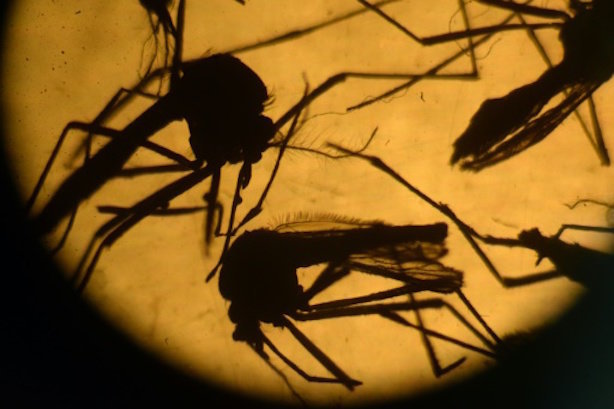
The Zika virus is mainly spread via the bite of the Aedes aegypti mosquito
Releasing genetically-modified mosquitoes into the wild to fight malaria, Zika or other insect-borne diseases is premature and could have unintended consequences, researchers said in a new report.

"Our committee urges caution—a lot more research is needed to understand the scientific, ethical, regulatory and social consequences of releasing such organisms," said Arizona State University professor James Collins, who was co-chair of a National Academies of Sciences, Engineering and Medicine committee.

The committee was studying gene drives—systems of "biased inheritance" that make it more likely for a genetic trait to pass from parent to offspring.

With new gene-editing techniques, modifications can quickly spread through a population via a gene drive, greatly increasing chances that the altered gene will become widespread.

"Preliminary research suggested that gene drives developed in the laboratory could spread a targeted gene through nearly 100 percent of a population of yeast, fruit flies or mosquitoes," the academies said in a news release announcing the committee's report Wednesday.

Comment: Could there be a link between the release of genetically modified mosquitoes and the Zika virus?


Hourglass

Brain size changes with time of day

brain size

Weird fact about how our brains change size over a single day.


The human brain is biggest in the morning and gets smaller as the day progresses.

By tomorrow morning, though, it will be back to its 'full' size.

The conclusions come from a study of thousands of brain scans carried out to investigate Alzheimer's disease and multiple sclerosis.

Fish

Smart fish - Fish can recognize and remember human faces

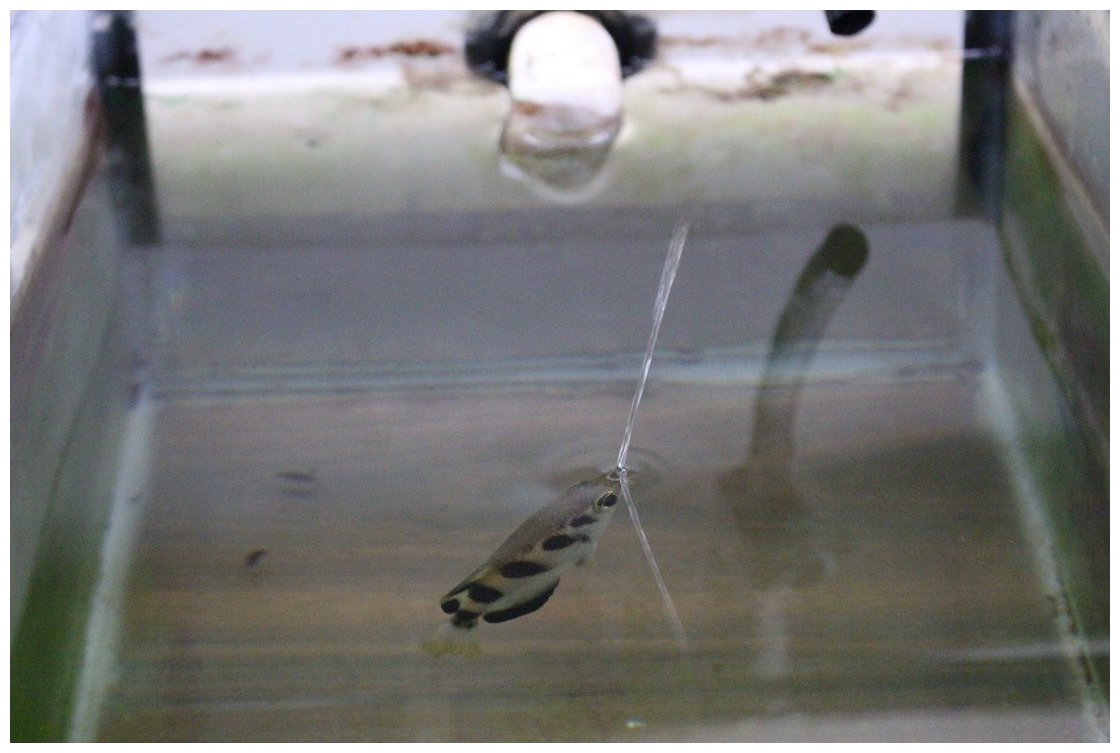
Archerfish
© Cait Newport When trying to nab a flying insect (or point to a human face), archerfish spit jets of water.
A wee-brained tropical fish can distinguish between human faces in a lineup, researchers have found. This is the first time such an ability has been shown in fish.

Recognizing human faces is a difficult task. Because nearly all human faces have the same basic attributes, recognizing a face requires distinguishing subtle differences in facial features, said Cait Newport, a zoologist and Marie Curie research fellow at the University of Oxford.

In fact, past research has shown that a select few animals — including horses, cows, dogs and even some birds, such as pigeons — can successfully complete such a task. All of those animals, however, have a neocortex, or neocortex-like structures. The neocortex is a part of the brain that contains a visual-processing region as well as the fusiform gyrus, which is thought to be heavily involved in facial processing, the researchers noted.

"Most animals tested possess a neocortex and have been domesticated, and may, as a result, have experienced evolutionary pressure to recognize their human [caregivers]," Newport and her colleagues wrote in today's (June 7) issue of the journal Scientific Reports.