
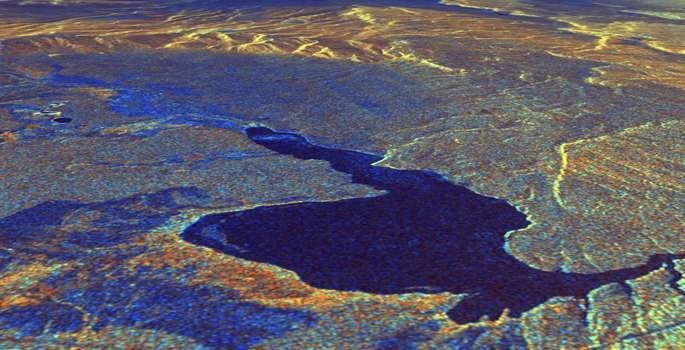
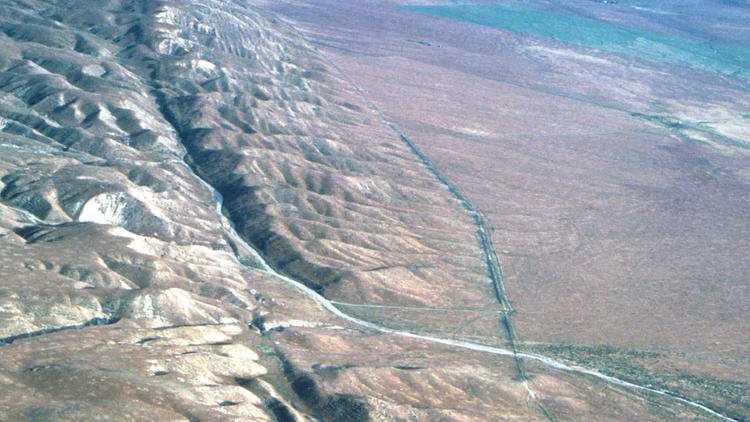
© NASA/JPL The Long Valley Caldera in eastern California was created by a super-eruption 760,000 years ago.
That is the conclusion of a new microscopic analysis of quartz crystals in pumice taken from the Bishop Tuff in eastern California, which is the site of the super-eruption that formed the Long Valley Caldera 760,000 years ago.
The study is described in the paper "The year leading to a supereruption" by Guilherme Gualda, associate professor of earth and environment sciences at Vanderbilt University, and Stephen Sutton at the University of Chicago published July 20 in the journal PLOS One.
"The evolution of a giant, super-eruption-feeding magma body is characterized by events taking place at a variety of time scales," said Gualda. Tens of thousands of years are needed to prime the crust to generate sufficient eruptible magma. Once established, these melt-rich, giant magma bodies are unstable features that last for only centuries to few millennia. "Now we have shown that the onset of the process of decompression, which releases the gas bubbles that power the eruption, starts less than a year before eruption."















Comment: Magma May Give Signs of Super-Volcano Eruptions