
Oddly enough, this utterly abstract sort of alien might yet turn out to be the author's most perspicacious invention.
A leading Australian physicist has co-authored a new paper proposing a radical new theory of life.If a new paper co-written by prominent Australian physicist Professor Paul Davies is on the money, every other fictitious ET, from Star Trek's Vulcans to Star Wars' Yoda, are the products of depressingly limited imaginations.
Pretty much all cinematic aliens - think Dr Who's Sontarans, the bubble-headed things from Mars Attacks!, the giant worms from Dune - have something recognisably "life-like" about them: they have a chemical structure broadly similar to those found in earth species, and (it is implied) some kind of DNA-ish apparatus that facilitates reproduction.
They are reasonable enough assumptions to make, but what if they are plain wrong?
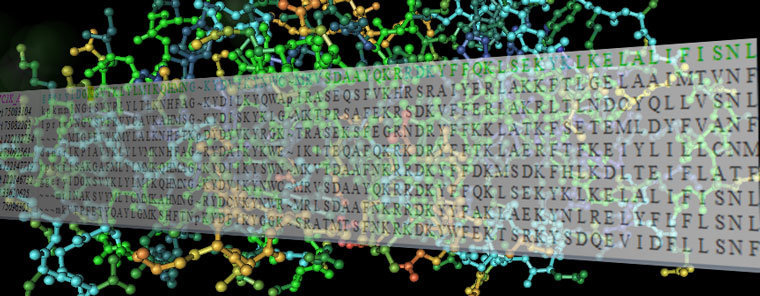
Davies and co-author Dr Sara Imari Walker, both from the Beyond Center for Fundamental Concepts in Science at the Arizona State University, suggest that fleshiness and double-helixes might be things confined only to life on Earth. Life in the rest of the universe, they venture, could be based on something much more unlikely: information.













Comment: Further reading: