Science & TechnologyS


Fireball

Asteroid zooms past Earth hours after discovery

Asteroid 2016 QA2 was twice as big as the space rock that entered over Russia in 2013, breaking windows in 6 Russian cities. It passed safely Saturday night

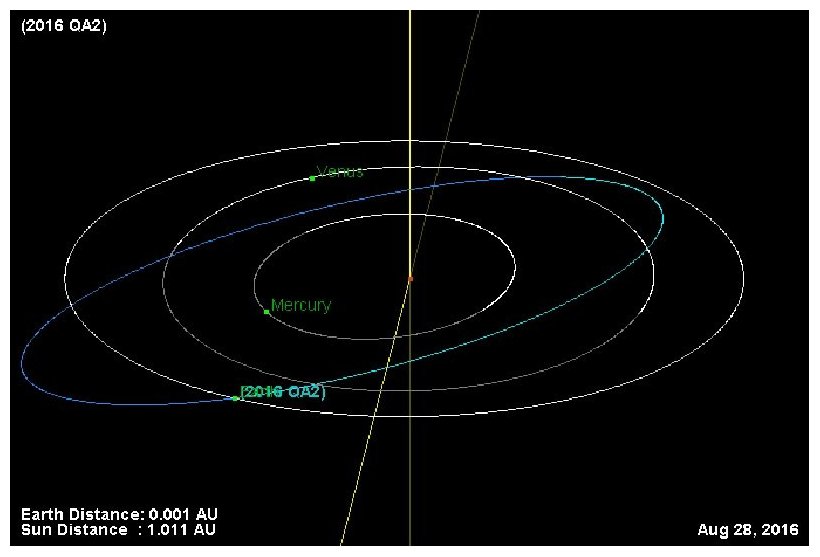
The calculated orbit of 2016 QA2.
© JPL Small Body Database/Sciencythoughts BlogspotThe calculated orbit of 2016 QA2.
An asteroid safely passed by our planet on Saturday night - August 27-28, 2016 - just hours after being detected. Astronomers have labeled the space rock as asteroid 2016 QA2. The rocks is estimated to be at least twice as big as the Chelyabinsk meteor that penetrated the atmosphere over Russia in February, 2013.

According to the Minor Planet Center, closest approach to Earth occurred August 28 at 01:24 UTC (9:24 p.m. EST on August 27; translate to your time zone). The asteroid has an estimated size of 111.5 feet (34 meters), although its exact dimension can range between 52-171 feet (16 to 52 meters).

The speeding space rock came considerably closer than the moon, as it passed at just 0.22 the Earth-moon distance. That's about 52,580 miles (84,619 km) away. For comparison, the moon is located at some 239,000 miles (384,633 km) from Earth.

Asteroid 2016 QA2 was first seen by the SONEAR Observatory at Oliveira, Brazil.

2 + 2 = 4

Australian researchers find an alarming number of scientific papers contain Excel errors

Microsoft store
A surprisingly high number of scientific papers in the field of genetics contain errors introduced by Microsoft Excel, according to an analysis recently published in the journal Genome Biology.

A team of Australian researchers analyzed nearly 3,600 genetics papers published in a number of leading scientific journals — like Nature, Science and PLoS One. As is common practice in the field, these papers all came with supplementary files containing lists of genes used in the research.

The Australian researchers found that roughly 1 in 5 of these papers included errors in their gene lists that were due to Excel automatically converting gene names to things like calendar dates or random numbers.

Beaker

Self-destruction of science: Most findings are wrong or useless

bad science, corruption science
"Science, the pride of modernity, our one source of objective knowledge, is in deep trouble." So begins "Saving Science," an incisive and deeply disturbing essay by Daniel Sarewitz at The New Atlantis. As evidence, Sarewitz, a professor at Arizona State University's School for Future Innovation and Society, points to reams of mistaken or simply useless research findings that have been generated over the past decades.

Sarewitz cites several examples of bad science that I reported in my February article "Broken Science." These include a major biotech company's finding in 2012 that only six out of 53 landmark published preclinical cancer studies could be replicated. Researchers at a leading pharmaceutical company reported that they could not replicate 43 of the 67 published preclinical studies that the company had been relying on to develop cancer and cardiovascular treatments and diagnostics. In 2015, only about a third of 100 psychological studies published in three leading psychology journals could be adequately replicated.

A 2015 editorial in The Lancet observed that "much of the scientific literature, perhaps half, may simply be untrue." A 2015 British Academy of Medical Sciences report suggested that the false discovery rate in some areas of biomedicine could be as high as 69 percent. In an email exchange with me, the Stanford biostatistician John Ioannidis estimated that the non-replication rates in biomedical observational and preclinical studies could be as high as 90 percent.

Comment:


Bizarro Earth

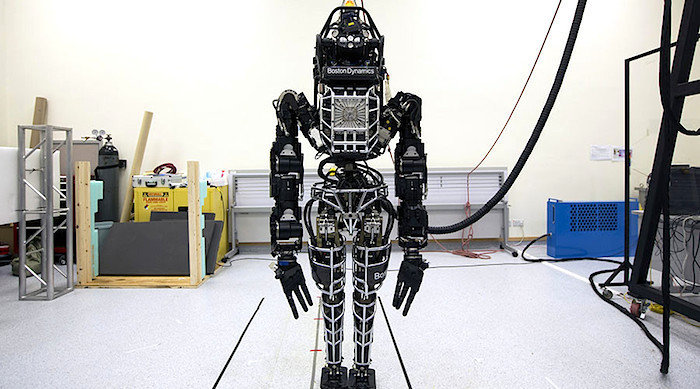
'Terminators' may be built by our enemies, top US military chief

The Terminator
© Tyrone Siu / ReutersThe Terminator, or something like it.
The future of war will involve autonomous robots instead of humans, according to Air Force General and Vice Chair of the Joint of Chiefs of Staff Paul Selva, who warned enemies could build "Terminator"-like machines to fight in battlefields.

Speaking at the think-tank Center for Strategic and International Studies (CSIS) in Washington, Selva said the technology could be developed in 10 years - and that the world's biggest military should punish anyone who pursues such weapons.

"This is about an entirely robotic system, completely autonomous, [that is] not dependent on the human decision," Selva said. "We're told by the technologists that we're a decade or so away from that capability."

"I don't think it's impossible that somebody will try to build a completely autonomous system, and I'm not talking about something like a cruise missile ... or a mine that requires a human to target it and release it and it goes and finds its target," Selva said. "I'm talking about a wholly-robotic system that decides whether or not, at the point of decision, it's going to do lethal ops."
0000


Comment: Its big, big business.In other words, the USA (the empire) has already started this process and it will be operational sooner than the warning. Decision-making, gun-totting AI...the worst just got worse.


Beaker

Police want to create mugshots using only DNA

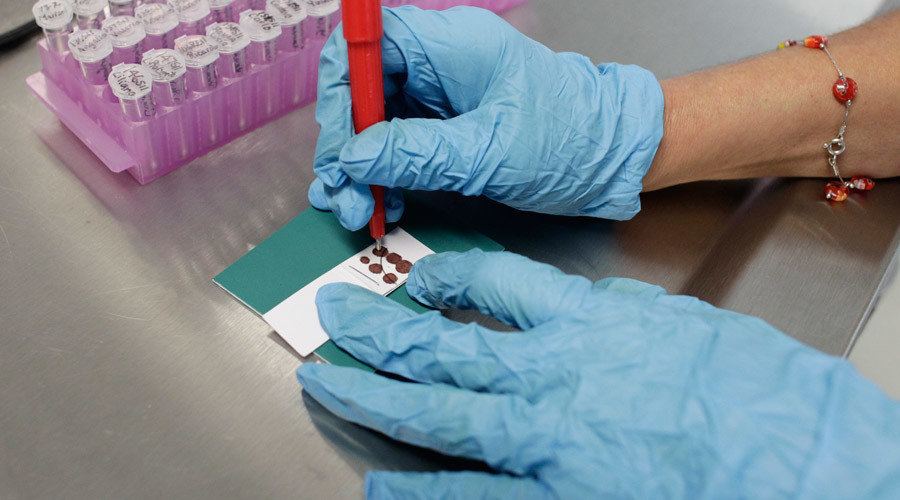
DNA test
© Henry Romero / Reuters
It's no secret that there is a genetic aspect to our looks ‒ how many times have you heard you look like a relative? It turns out that specific genetic mutations are responsible for many facial features, from nose size to face width, a new study finds.

Researchers led by John Shaffer, assistant professor of human genetics at the University of Pittsburgh, analyzed the genomes of more than 3,000 people with European ancestry. The subjects then had 3D scans done of their faces, which the scientists used to focus on 20 different facial traits, including measurements and sizes across different areas of the face.

The team then employed genotyping to compare the traits from their sample group to nearly a million variations across the genome to find any associations.

Comment: See also:


Gear

Mercedes comes to Russia

car factory
© Thomas Kienzle / AFP
Russian truck manufacturer KAMAZ is to partner Daimler AG in the construction of a plant to assemble Mercedes-Benz passenger vehicles in Russia.

"We need a partner that has an agreement on industrial assembly, and KAMAZ has it," said Mercedes-Benz Russia CEO Jan Madeja in an interview with Vedomosti daily.

Daimler and the Russian truck maker already have a joint venture Daimler KAMAZ Rus that has a state subsidy on the import of auto components in return for increased capacity and localized production in Russia.

At present, the joint venture produces Mercedes-Benz and Fuso trucks, and is also constructing a factory to make bodies for trucks. Daimler has a 15 percent stake in KAMAZ.

Comet

Rosetta captures dramatic comet outburst

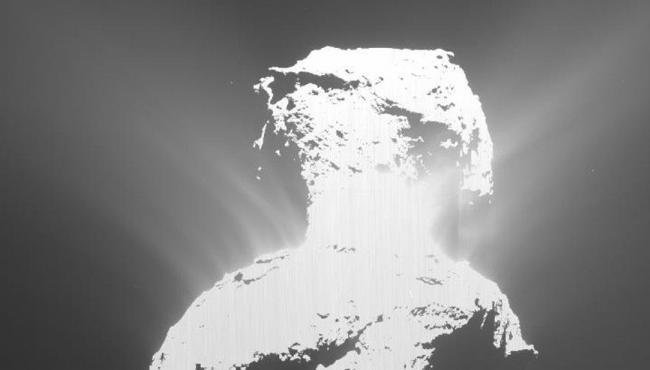
comet outburst
© ESA
In unprecedented observations made earlier this year, Rosetta unexpectedly captured a dramatic comet outburst that may have been triggered by a landslide.

Nine of Rosetta's instruments, including its cameras, dust collectors, and gas and plasma analysers, were monitoring the comet from about 35 km in a coordinated planned sequence when the outburst happened on 19 February.

"Over the last year, Rosetta has shown that although activity can be prolonged, when it comes to outbursts, the timing is highly unpredictable, so catching an event like this was pure luck," says Matt Taylor, ESA's Rosetta project scientist.

"By happy coincidence, we were pointing the majority of instruments at the comet at this time, and having these simultaneous measurements provides us with the most complete set of data on an outburst ever collected."

The data were sent to Earth only a few days after the outburst, but subsequent analysis has allowed a clear chain of events to be reconstructed, as described in a paper led by Eberhard Grün of the Max-Planck-Institute for Nuclear Physics, Heidelberg, accepted for publication in Monthly Notices of the Royal Astronomical Society.

Comment: When scientists begin to embrace the winning Electric Universe theory, it will assist their understanding of outbursts, dramatic and rapid surface changes and sinkhole formations on comets; and they need not be 'puzzled' by the 'bright spots' on Ceres, the alignment of quasars won't seem so 'spooky', and the giant ice mountains and 'bizarre' terrain on Pluto may not be so 'perplexing'.

The Electric Universe model is clearly explained, with a lot more relevant information, in the book Earth Changes and the Human Cosmic Connection by Pierre Lescaudron and Laura Knight-Jadczyk.


Rocket

Russia successfully tests clean pulse-detonation rocket engine: First in the world

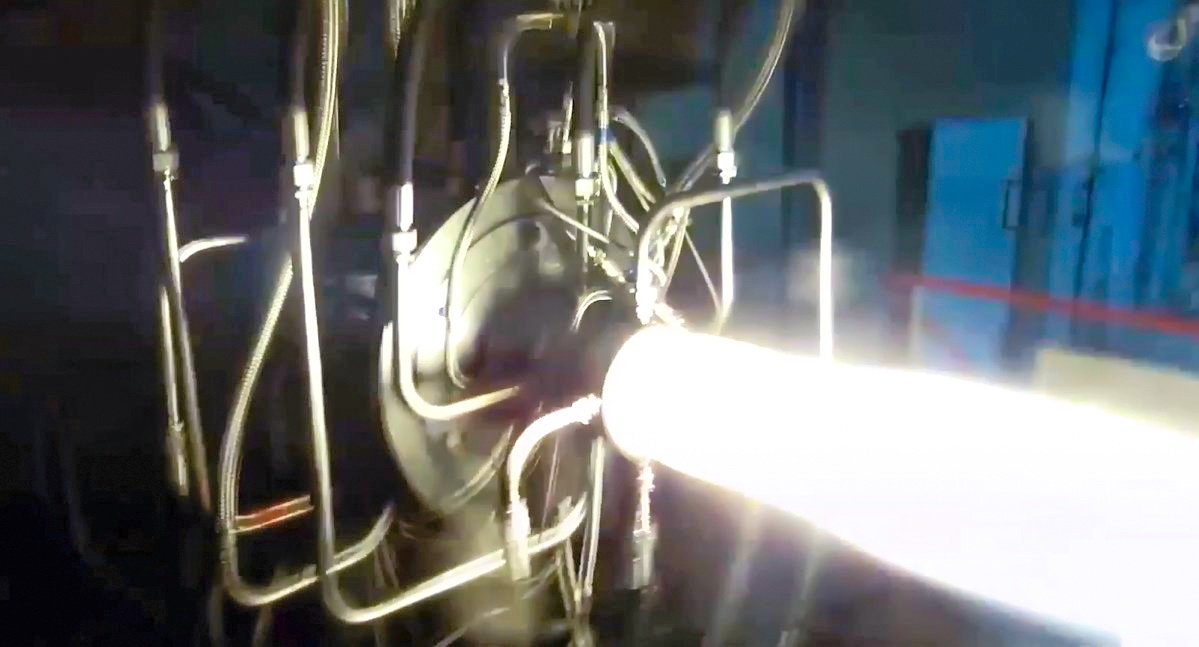
Russian pulse-detonation rocket engine
© fpi.gov.ru
In a breakthrough move, Russian scientists have become the first ever to successfully test a pulse-detonation rocket engine (PDRE) on clean fuel, claiming this will be the future of space travel. The tests were run in July and August, but the announcement was only made on Friday on the homepage of the Russian Advanced Research Foundation (FPI), which is in charge of the project. The scientists say they have built and tested "the world's first full-size pulse-detonation rocket engine demonstrator" that uses clean fuel, namely an oxygen-kerosene pairing.


The current liquid fuel engines used by rockets to get to space have reached their maximum capabilities, according to the FPI. Instead, a pulse-detonation engine that uses high thermodynamic efficiency will allow spacecraft to reach previously unattainable performance. It would also result in additional workload for rockets and the reduction of cost for orbital deliveries. "We took up the challenge - to prove the possibility to create a detonation in oxygen-kerosene rocket engines. And now we can firmly say that this is possible, and we know how to do it," Igor Denisov, the FPI's deputy director, said in comments on the successful tests.

Comment: In June 2008, the Defense Advanced Research Projects Agency (DARPA) unveiled Blackswift, which was intended to use this technology to reach speeds of up to Mach 6. However the project was reported cancelled soon afterward, in October 2008.
See also:


Info

Black dress submerged in the Dead Sea transformed into shining white dress

Salt Wedding Dress
© Matanya TausigA new piece of artwork by Sigalit Landau shows what happens when objects are submerged in the salty waters of the Dead Sea. The sparkly salt sculpture shown here was originally a black dress that was submerged in the Dead Sea for two months. Images of the project are on exhibit at the Marlobrough Contemporary until Sept. 3, 2016.
A gorgeous new exhibit reveals just how salty the Dead Sea is.

Artist Sigalit Landau submerged a 1920s-style long black dress in Israel's Dead Sea for two months in 2014. When the dress was lifted from the salty waters, it was a sparkling, crystalline sculpture formed from salt. The images capturing this chemical transformation are now on exhibit at the Marlborough Contemporary museum in London, England, until Sept. 3. [See Images of the Salt Crystal Wedding Dress]

Landau has been inspired by the Dead Sea's unique environment for past artwork, including salt crystal-encrusted lamps, a salty hangman's noose and a crystalline island made of shoes, according to her website.

The current exhibit uses a dress that is a replica of the long, black one worn by a character in the classic Hasidic Jewish ghost-story called "The Dybbuk." In that story, the bride, Leah, is possessed by the evil spirit of her dead suitor, who died before they could marry. The dress was worn during the 1920s production of the play.

"Over the years, I learnt more and more about this low and strange place. Still the magic is there waiting for us: new experiments, ideas and understandings. It is like meeting with a different time system, a different logic, another planet. It looks like snow, like sugar, like death's embrace; solid tears, like a white surrender to fire and water combined," Landau said in a statement.

Bizarro Earth

'No one is safe': Expert warns of overdue high magnitude earthquakes along earth's major fault lines

Natori Japan earthquake
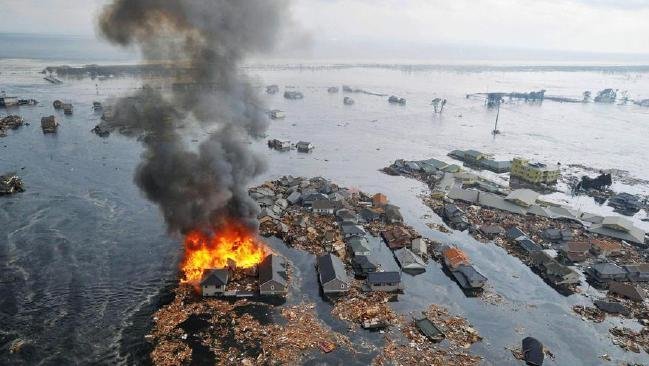
© Kyodo News /APHouses were swallowed by tsunami waves and burned in Natori, Miyagi Prefecture (state) after Japan was struck by a strong earthquake off its northeastern coast on March 11, 2011.
A SERIES of overdue high magnitude earthquakes is expected to strike at any moment along some of Earth's major fault lines, an expert says.

UTS Geotechnical and Earthquake Engineering senior lecturer Dr Behzad Fatahi said "no one in the world is safe" from the looming natural disasters of potentially apocalyptic proportions.

"There are a lot of magnitude 6-plus earthquakes overdue in the Middle East, India, China, Japan and the US," Dr Fatahi told news.com.au.

"There are some fault lines that have not released their energy for a while.

"There are at least 5-10 that are overdue, but we don't know when they're going to happen.

"The question is not will they be activated. The question is when."

Dr Fatahi said there was a "return period" for earthquakes and those that didn't strike within the expected time frame only came back stronger. He said an example of this was the 7.8 magnitude earthquake in Nepal that left more than 8000 people dead in April last year.

"You expect a particular fault line will be activated every 100 years or 500 years," he said.

"If the period is longer we expect higher magnitude earthquakes ... looking at the history of some of those major fault lines, some are very overdue.

Comment: Increasing earthquake and volcanic activity: Prepping for natural disasters