Science & TechnologyS


Info

Welcome to the Matrix - Artificial wombs successfully pass 1st test, human trials could begin within 3yrs

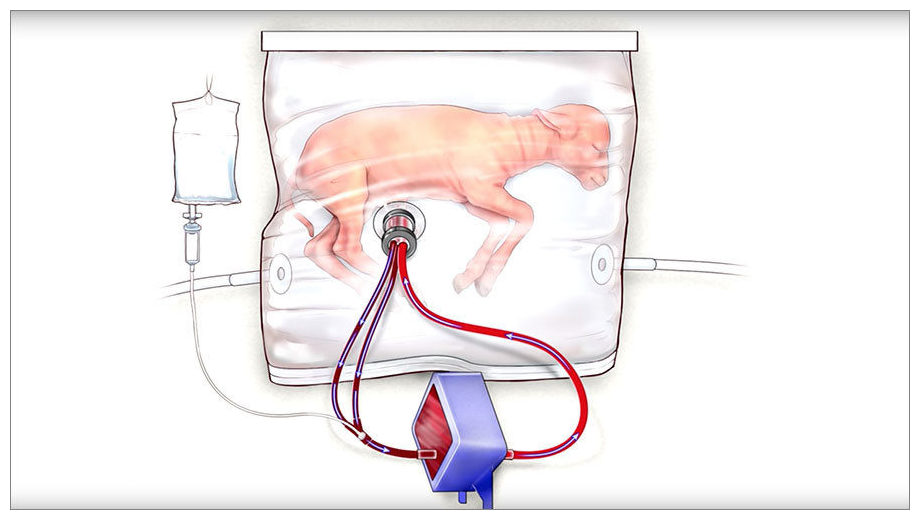
Artificial Womb
© The Children's Hospital of Philadelphia/YouTube
Scientists have successfully developed and tested an artificial womb capable of supporting prematurely born lambs for periods of up to four weeks in a landmark development that could dramatically reduce the risks posed by premature births in humans.

Lambs born at the equivalent point of 23 weeks into the human gestation period have been kept alive in a transparent vessel, or 'biobag,' that serves as both a womb and incubator for periods of up to four weeks after their initial, premature birth.

The research was conducted by a team of doctors and scientists led by Alan Flake, a fetal surgeon at the Children's Hospital of Philadelphia. The team's findings were published in the journal Nature on Tuesday.

"If we can support growth and organ maturation for only a few weeks, we can dramatically improve outcomes for extremely premature babies," said Flake when speaking to the media.

Comment: How long before we see this?
Artificial Wombs in the Matrix
© The Matrix


Bulb

Nature's answer to plastic pollution: Scientists discover a caterpillar that eats plastic

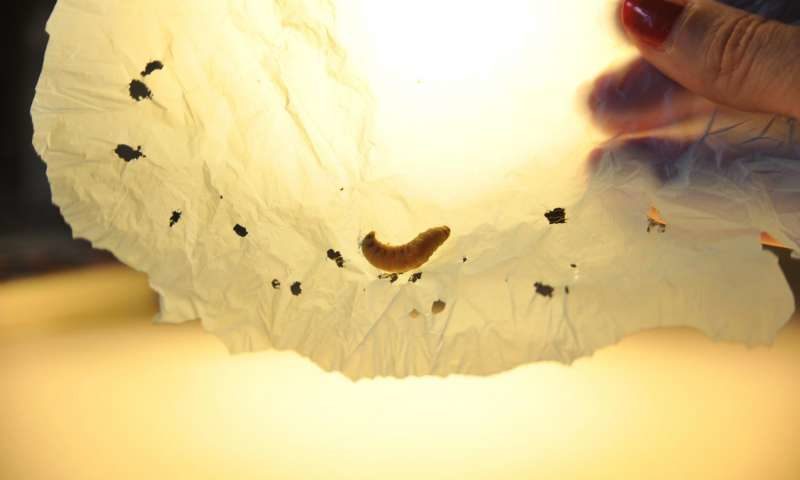
caterpillars eat plastic
© César Hernández/CSIC Plastic biodegraded by 10 worms in 30 minutes.
Scientists have found that a caterpillar commercially bred for fishing bait has the ability to biodegrade polyethylene: one of the toughest and most used plastics, frequently found clogging up landfill sites in the form of plastic shopping bags.

The wax worm, the larvae of the common insect Galleria mellonella, or greater wax moth, is a scourge of beehives across Europe. In the wild, the worms live as parasites in bee colonies. Wax moths lay their eggs inside hives where the worms hatch and grow on beeswax - hence the name.

A chance discovery occurred when one of the scientific team, Federica Bertocchini, an amateur beekeeper, was removing the parasitic pests from the honeycombs in her hives. The worms were temporarily kept in a typical plastic shopping bag that became riddled with holes.

Bertocchini, from the Institute of Biomedicine and Biotechnology of Cantabria (CSIC), Spain, collaborated with colleagues Paolo Bombelli and Christopher Howe at the University of Cambridge's Department of Biochemistry to conduct a timed experiment.

Question

Where did your dog come from? New tree of breeds may hold the answer

dogs outside
© Arco Images GmbH/Alamy Stock Photo The stories genes tell about dog breeds often match the breeder’s historical lore.
From the 80-kilogram Great Dane to the 1-kilogram tiny teacup poodle, there seems to be a dog for everyone. Now, the largest genetic analysis to date has figured out how those breeds came to be, which ones are really closely related, and what makes some dogs more susceptible to certain diseases.

"They show that by using genetics, you can really show what was going on as [breeders] were making these breeds," says Elinor Karlsson, a computational biologist at the University of Massachusetts Medical Center in Worcester who was not involved with the work.

Comment:


Better Earth

New map shows the world hidden beneath your feet

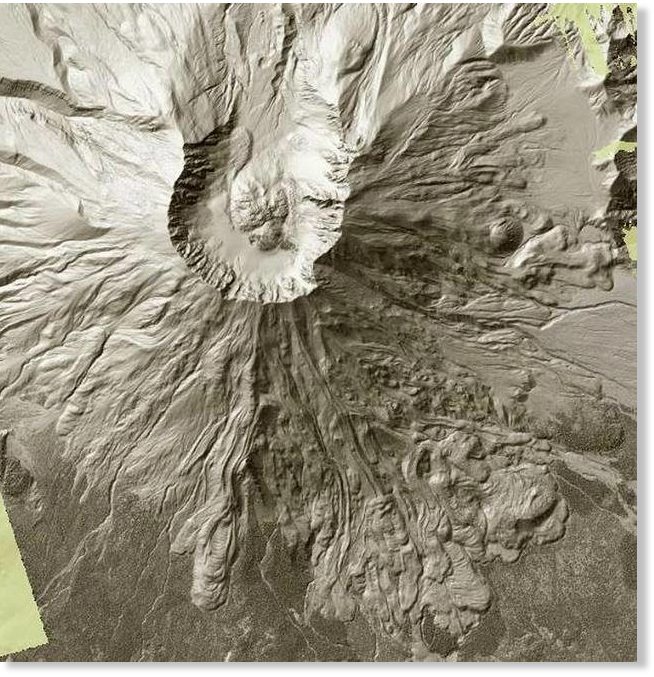
Mount Saint Helens
© Sailor, Craig - Tacoma Department of Natural ResourcesMount Saint Helens can be seen in this screen grab from the Washington State Department of Natural Resources’ Lidar map. The 1980 eruption blew out the northern side, top, of the volcano, while the southern side shows volcanic flows from ancient eruptions.
Puget Sound is grooved like an old record. That's one of the Earth's secrets that can be found on a new interactive map produced by the state.

Using Lidar technology, the Washington State Department of Natural Resources has mapped a good third of the state revealing the smallest of details hidden beneath trees, buildings and other obstructions.

The grooves, carved by ancient glaciers, can be seen from Whidbey Island to south of Olympia. Tacoma is etched with a series of subtle pattern of north-south lines. The grooves become most prominent around Lake Tapps.

Toggling between "Bare Earth" and "Top Surface" is the best way to view the map.

Books

Groundbreaking examples of learning from nature to advance technology

Biological mimicry
There's no doubt humans are resourceful — just look at the world we've created. However, as much as there may be to celebrate regarding just how far we've come, it's also incredibly important to hone in on the massive sustainability problems that have resulted from our innovations. Biomimicry seeks to change that, however.

An alternative approach to innovation, biomimicry's goal is to create sustainable solutions to human challenges by echoing nature's patterns and strategies. The approach involves creating products, processes, and polices that are well-adapted to life on earth for generations to come.

Hard to envision what this would look like? Check out these four incredible tech innovations that have been inspired by biomimicry:

Comment: It makes so much sense to work with and learn from nature rather than seeking to exploit our natural resources because of the greed of psychopaths in power. We can see in these examples, human creativity and innovation at work and how technology, instead of being used to oppress people and advance warfare, can be used for the betterment of humanity.

For more on some of the designs, in particular the Dewpoint water collector, see this video.


And this is what Wanda Lewis, the designer of the leaf-inspired bridge, had to say about her ambitious project:
A new generation of indestructible bridges could be possible, thanks to research from the University of Warwick.

Emeritus Professor Wanda Lewis in the School of Engineering has taken a design process called 'form-finding', inspired by the natural world, to another level.

Form-finding enables the design of rigid structures that follow a strong natural form - structures that are sustained by a force of pure compression or tension, with no bending stresses, which are the main points of weakness in other structures.

This could, for the first time, lead to the design of bridges and buildings that can take any combination of permanent loading without generating complex stresses.

Such structures will have enhanced safety, and long durability, without the need for repair or restructuring.

For 25 years Professor Lewis has been studying forms and shapes in nature: the outlines of a tree or a leaf, the curve of a shell, the way a film of soap can suspend itself between chosen boundaries. In all of these natural objects, Professor Lewis observed that they develop simple stress patterns, which help them to withstand forces applied to them (such as wind hitting a tree) with ease.

Professor Lewis has been developing mathematical models that implement nature's design principles and produce simple stress patterns in structures. The principles behind her mathematical models are illustrated using physical form-finding experiments involving pieces of fabric or chains, for example.

A piece of fabric is suspended, and allowed to relax into its natural, gravitational, minimum energy shape; then that shape is frozen into a rigid object and inverted. She finds the coordinates of this shape through computation by simulating the gravitational forces applied to the structure. This produces a shape (a natural form) that can withstand the load with ease.

Professor Lewis argues that "nature's design principles cannot be matched by conventional engineering design."

While classical architectural designs are appealing to the eye, they aren't necessarily structurally sound: "aesthetics is an important aspect of any design, and we have been programmed to view some shapes, such as circular arches or spherical domes as aesthetic. We often build them regardless of the fact that they generate complex stresses, and are, therefore, structurally inefficient," says Professor Lewis.


Brain

Brain protein may unlock key to multiple sclerosis treatment - study

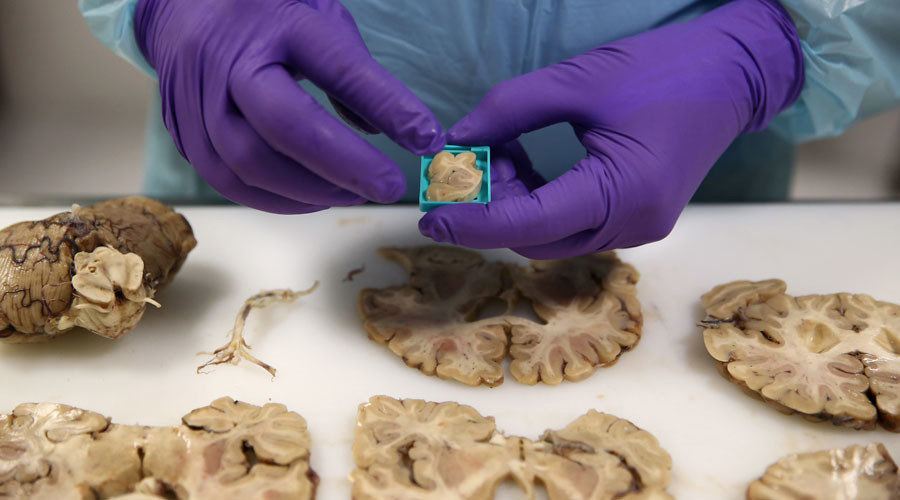
ms cells
© Neil Hall / Reuters
Scientists have made significant progress in finding the cause of multiple sclerosis (MS), discovering the presence of a protein in brain tissue that may help lead to a treatment for the disease that affects 2.5 million people worldwide.

Researchers at the University of Exeter in the UK and the University of Alberta in Canada found large quantities of the protein Rab32 in brain tissue samples taken from people who had MS but was almost entirely absent in those without the condition.

Info

How Little Ice Age displaced the tropical rain belt

Tropical rain belt
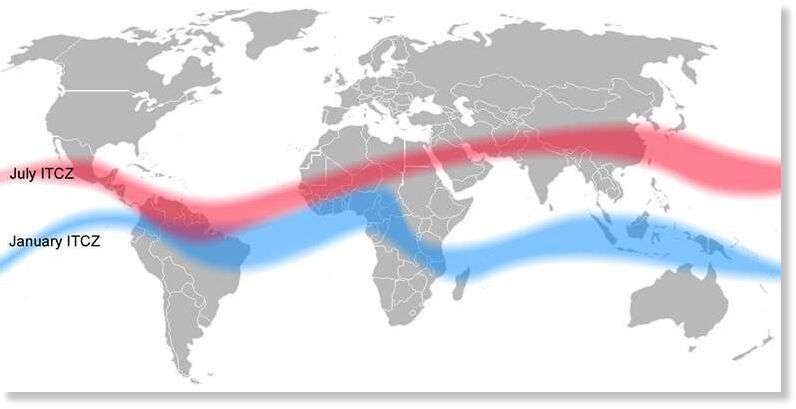
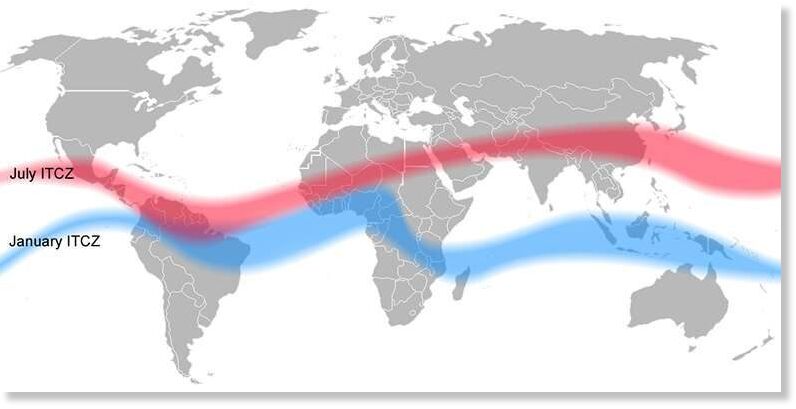
© Wikipedia / Mats Halldin The annual see-saw of the tropical rain belt.
The tropical rain belt, also known as the Intertropical Convergence Zone (ITCZ), is in a state of constant migration. It continuously changes position in response to the seasons and follows the sun's zenith, with a slight delay. This in turn determines the wet and dry periods in the tropics and subtropics over the course of the year. The tropical rain belt therefore effectively controls the climate in most of the tropical and subtropical regions, such as the monsoon season in Southeast Asia and Central America.

An international team of researchers led by Franziska Lechleitner from the Geological Institute at ETH Zurich has proven for the first time that the migration of the tropical rain belt is quite sensitive to even small changes in global temperatures. The team's findings have been published in the journal Scientific Reports, where they present the most comprehensive reconstruction of rainfall patterns within the Intertropical Convergence Zone for the past 2000 years.

Lower temperatures worldwide

In the past, scientists have only studied the migration of the tropical rain belt over very long timespans, such as glacial and interglacial cycles over tens of thousands of years, with correspondingly sizeable temperature differences of several degrees. "So far, however, scientists have not investigated the past two millennia on a global scale, when temperature changes have been far less pronounced," explains the climate geologist.

The ETH researcher and her colleagues have now managed to demonstrate how the tropical weather system shifted a good way south between 1450 and 1850, a period known as the Little Ice Age. "This migration is linked to the lower global temperatures during this time," explains Lechleitner.

The latest climate reconstructions show that the average temperatures during this period were around 0.4 degrees Celsius lower than before and after the Little Ice Age. The migration of the tropical rain belt also caused substantial changes in the tropical and subtropical climate during this time, affecting the areas of drought and heavy rainfall.

Brain

Research finds psychedelic drugs create a different consciousness in the brain

brain activity
© Beckley/Imperial Research Foundation
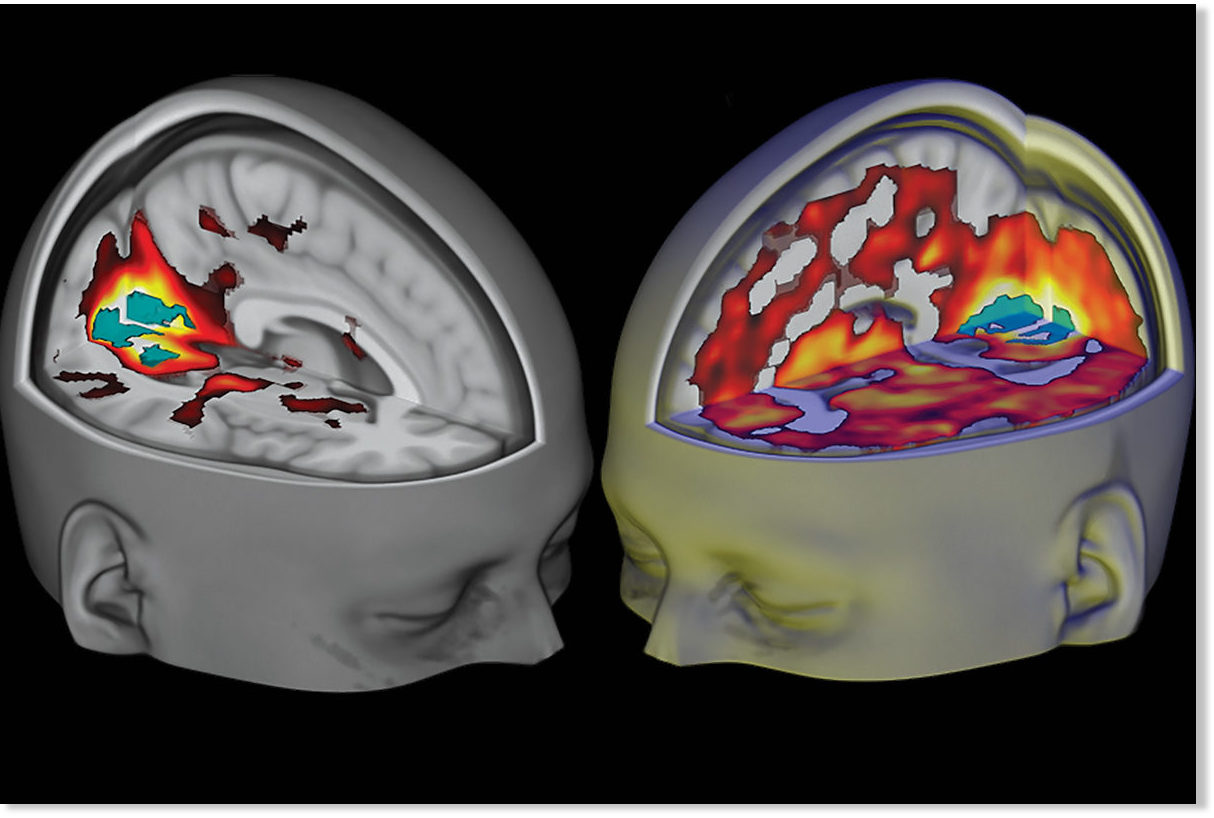
Measuring neuron activity has revealed that psychedelic drugs really do alter the state of the brain, creating a different kind of consciousness.

"We see an increase in the diversity of signals from the brain," says Anil Seth, at the University of Sussex, UK. "The brain is more complex in its activity."

Seth and his team discovered this by re-analysing data previously collected by researchers at Imperial College London. Robin Carhart-Harris and his colleagues had monitored brain activity in 19 volunteers who had taken ketamine, 15 who had had LSD, and 14 who were under the influence of psilocybin, a hallucinogenic compound in magic mushrooms. Carhart-Harris's team used sets of sensors attached to the skull to measure the magnetic fields produced by these volunteers' neurons, and compared these to when each person took a placebo.

"We took the activity data, cleaned it up then chopped it into 2-second chunks," says Seth, whose team worked with Carhart-Harris on the re-analysis. "For each chunk, we could calculate a measure of diversity."

Info

What we know so far about the Larry Page-backed 'flying car' coming later this year

The Kitty Hawk Flyer
© Kitty HawkThe Kitty Hawk Flyer.
The mysterious flying-car startup funded by Google cofounder Larry Page, Kitty Hawk, finally took the wraps off its first vehicle on Monday.

The Kitty Hawk Flyer looks a mix between a flying jet-ski and, as John Markoff of The New York Times put it, "something Luke Skywalker would have built out of spare parts." It's designed to be flown over water and will be available for sale by the end of this year.

Kitty Hawk says that its flyer can be operated without a pilot's license as long as you fly it in "uncongested areas." The startup hasn't said how much the flyer will cost, but it's offering an early $2,000 discount for people who are willing to pay $100 now to get on the waitlist.

Bulb

Medieval medical books could hold the recipe for new antibiotics

medieval medical book text
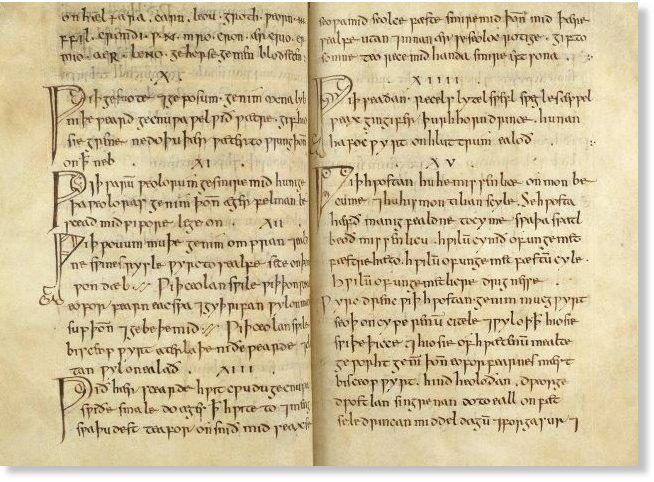
For a long time, medieval medicine has been dismissed as irrelevant. This time period is popularly referred to as the "Dark Ages," which erroneously suggests that it was unenlightened by science or reason. However, some medievalists and scientists are now looking back to history for clues to inform the search for new antibiotics.

The evolution of antibiotic-resistant microbes means that it is always necessary to find new drugs to battle microbes that are no longer treatable with current antibiotics. But progress in finding new antibiotics is slow. The drug discovery pipeline is currently stalled. An estimated 700,000 people around the world die annually from drug-resistant infections. If the situation does not change, it is estimated that such infections will kill 10 million people per year by 2050. I am part of the Ancientbiotics team, a group of medievalists, microbiologists, medicinal chemists, parasitologists, pharmacists and data scientists from multiple universities and countries. We believe that answers to the antibiotic crisis could be found in medical history. With the aid of modern technologies, we hope to unravel how premodern physicians treated infection and whether their cures really worked.

To that end, we are compiling a database of medieval medical recipes. By revealing patterns in medieval medical practice, our database could inform future laboratory research into the materials used to treat infection in the past. To our knowledge, this is the first attempt to create a medieval medicines database in this manner and for this purpose.