Science & TechnologyS


Saturn

Earth from a billion miles away: Cassini captures amazing image

Space shot of Earth
© NASA
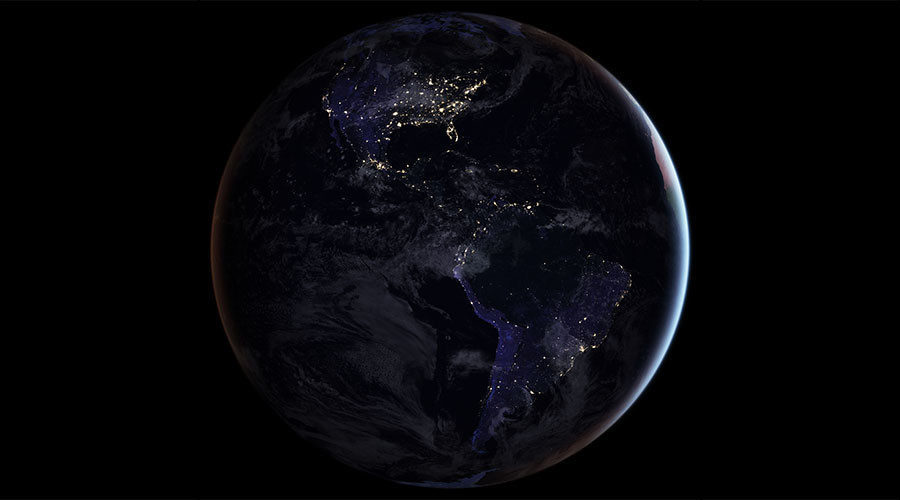
NASA's Cassini spacecraft captured an incredible final image of Earth from a billion miles away during its orbit of Saturn's rings.

The space probe was facing Earth's Southern Atlantic Ocean, some 870 million miles (1.4 billion km) away, when the image of it was captured on April 12, says NASA.

Chalkboard

'Flying car' nails vertical take-off in stunning test run

eLECTRIC vtol PLANE
© Lilium / YouTube
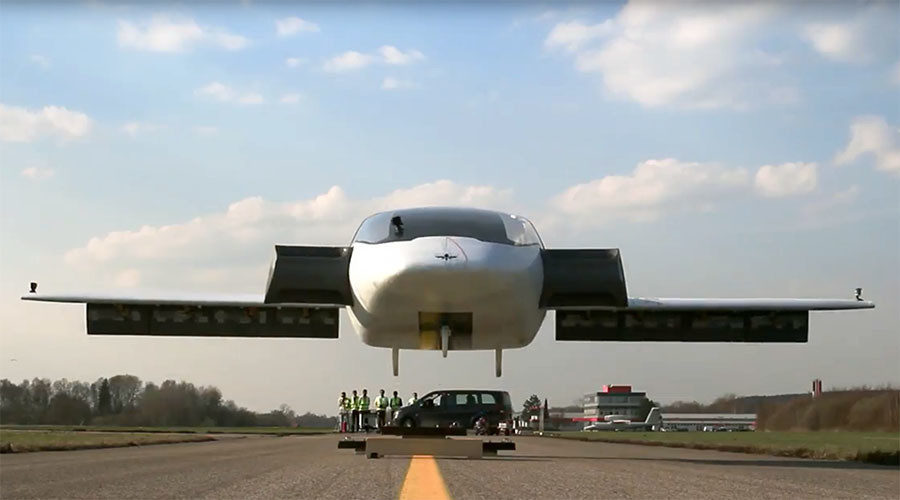
The concept of 'flying cars' was once restricted to the realm of science fiction. Now a German aeronautics firm has taken a big step towards making it a reality.

Lilium Aviation has successfully tested its all-electric vertical take-off-and-landing (VTOL) jet, stealing a march on rivals in the race to deliver the world's first 'flying car.'

Propelled by its 36 jet engines, the two-seater VTOL can reach a cruising speed of 300kph (186mph) and maintain that speed for an hour on a single charge.

Info

Zapping Islamic State: US Army tests drone-killing laser weapon

laser equiped US Stryker armored vehicle
© C. Todd Lopez / US Army
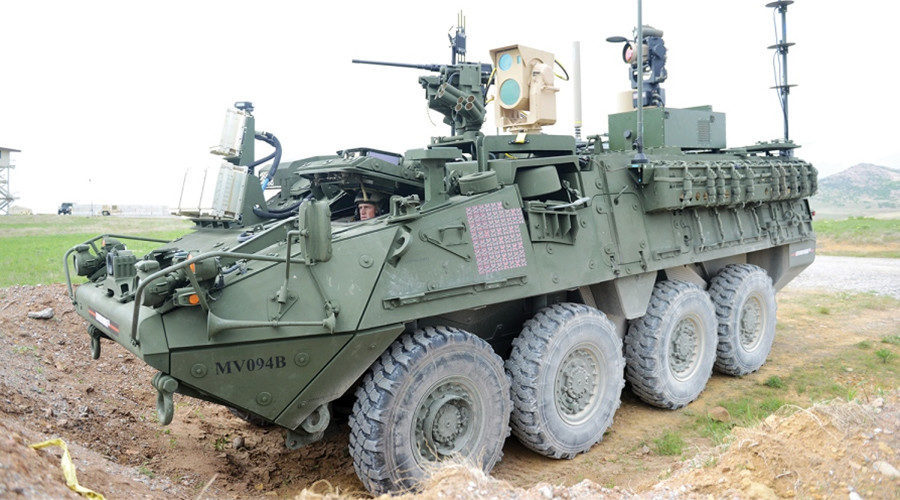
Amid concerns about Islamic State's use of weaponized hobbyist drones, the US military is testing a laser weapon designed to take out the aerial menace, and small enough to be mounted on a Stryker armored vehicle.

The Mobile High Energy Laser (MEHEL) fires a 5-kilowatt beam that can either scramble the drone's circuits and sever its communications with ground control - a "soft kill" - or destroy it outright in a "hard kill," according to the military publication Stars and Stripes.

Vehicles equipped with the MEHEL took part in the 10-day Maneuver Fires Integration Experiment exercises at Fort Sill, Oklahoma last week. A total of 50 drones were shot down, some just a few seconds after being engaged, Army spokeswoman Monica Gutherie said.

Moon

Dramatic landslides on Ceres shed new light on dwarf planet

Ceres
© NASA
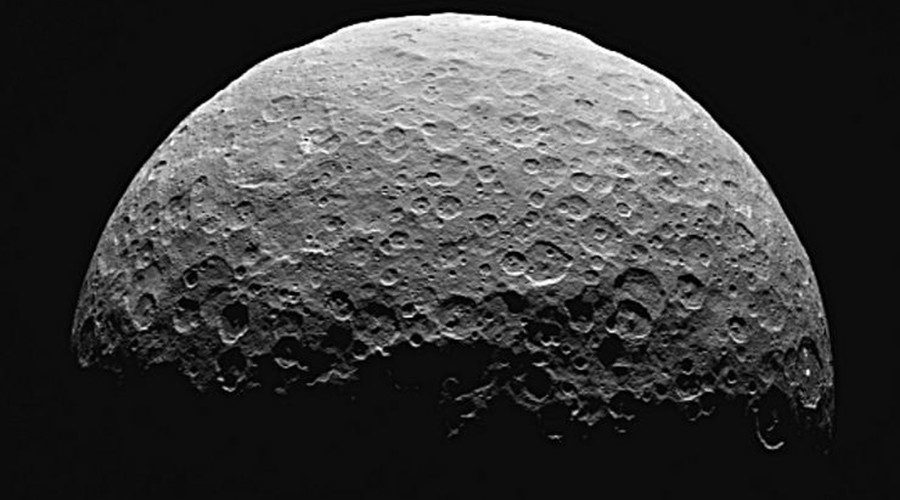
Massive landslides spotted on the surface of Ceres provide further evidence that the dwarf planet retains a significant amount of ground ice, according to a new study.

Ceres, once thought to be an asteroid, is the largest object in the asteroid belt running between Mars and Jupiter and is the only dwarf planet in the inner Milky Way.

NASA's Dawn space probe has been in orbit around Ceres since March 2015.

"Images from Dawn show that landslides, many of which are similar to those seen on Earth, are very common on Ceres, and further the case that Ceres has a lot of water ice involved in its structure," said Britney Schmidt, an associate of the Dawn science team and assistant professor at Georgia Tech, who led the study.

Cassiopaea

Rare type Ia supernova discovery ushers in new era for cosmology

Rare Supernova
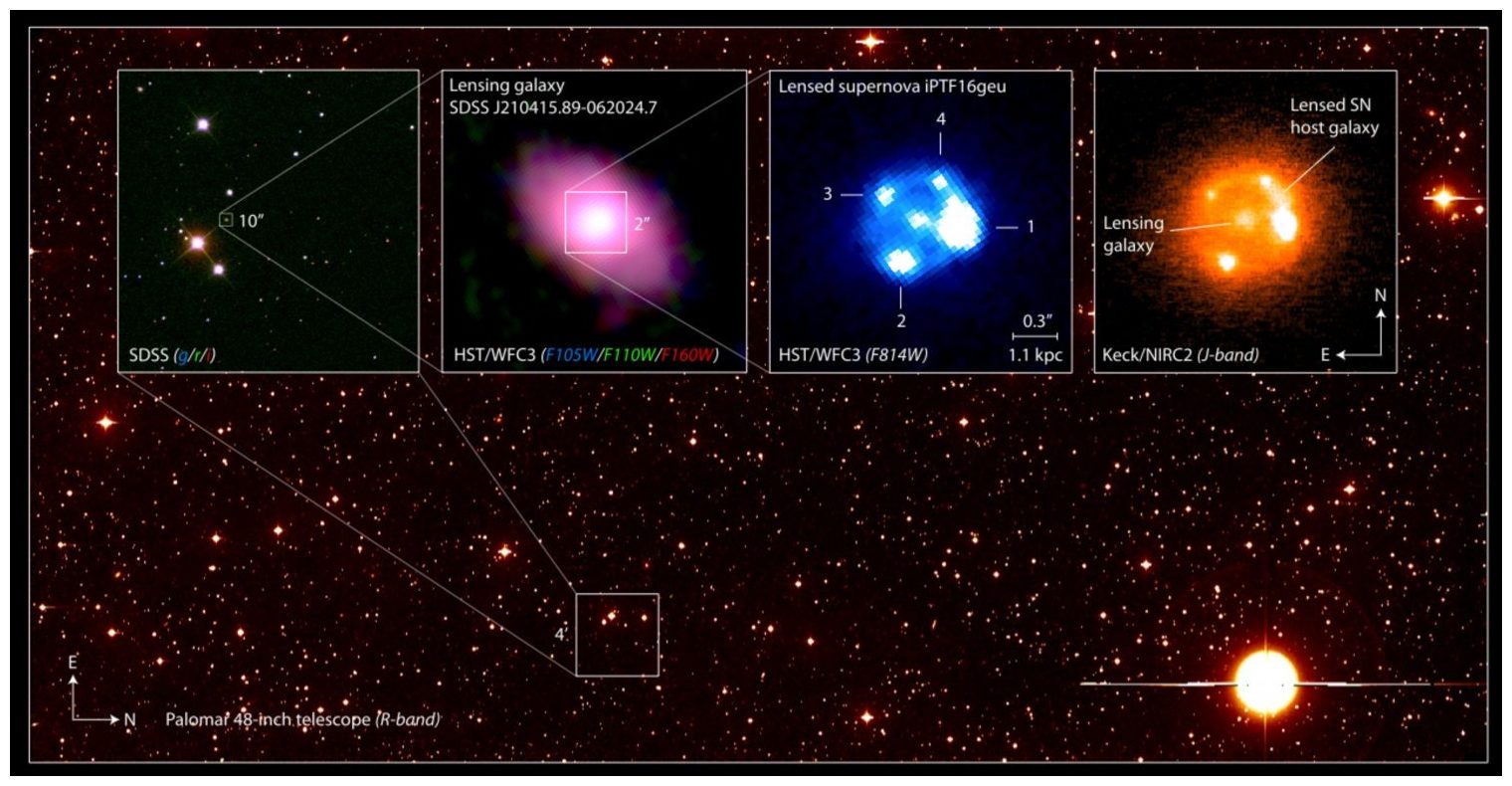
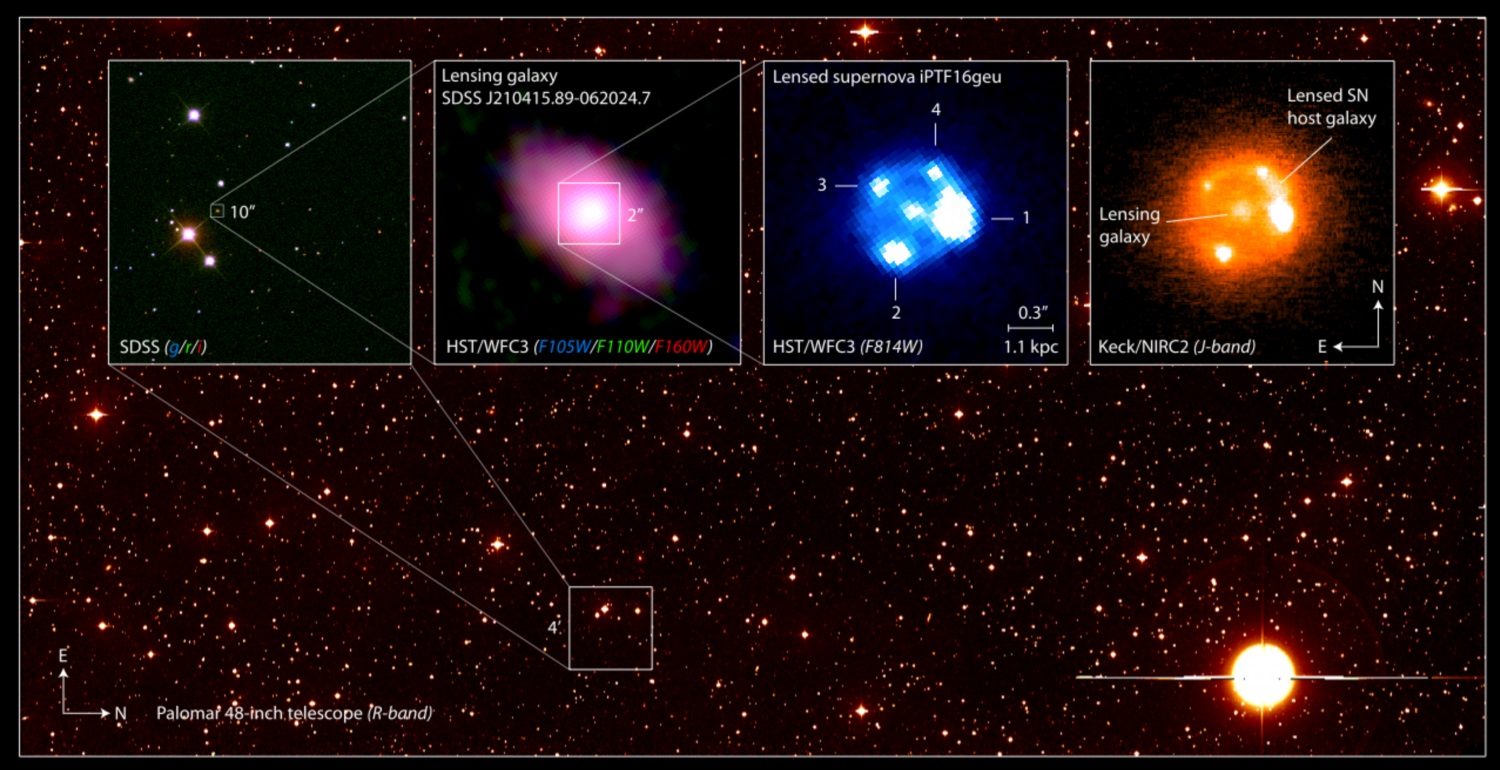
© Joel Johansson, Stockholm UniversityThis composite image shows the gravitationally lensed type Ia supernova iPTF16geu, as seen with different telescopes. The background image shows a wide-field view of the night sky as seen with the Palomar Observatory located on Palomar Mountain, California. Far Left Image: Captured by the Sloan Digital Sky Survey, this optical light observation shows the lens galaxy and its surrounding environment in the sky. Center Left Image: Captured by the Hubble Space Telescope, this is a 20x zoom infrared image of the lens galaxy. Center Right Image: Captured by the Hubble Space Telescope, this 5x optical light zoom reveals the four gravitationally lensed images of iPTF16geu. Far Right Image: Captured by the Keck Telescope, this infrared observation features the four gravitationally lensed images of iPTF16geu and the gravitational "arc" of its host galaxy.
With the help of an automated supernova-hunting pipeline and a galaxy sitting 2 billion light years away from Earth that's acting as a "magnifying glass,'' astronomers have captured multiple images of a Type Ia supernova—the brilliant explosion of a star appearing in four different locations on the sky. So far this is the only Type Ia discovered that has exhibited this effect.

This phenomenon called 'gravitational lensing' is an effect of Einstein's Theory of Relativity—mass bends light. This means that the gravitational field of a massive object like a galaxy can bend light rays that pass nearby and refocus them somewhere else, causing background objects to appear brighter and sometimes in multiple locations. Astrophysicists believe that if they can find more of these magnified Type Ia's, they may be able to measure the rate of the Universe's expansion to unprecedented accuracy and shed some light on the distribution of matter in the cosmos.

Fortunately, by taking a closer look at the properties of this rare event, two Lawrence Berkeley National Laboratory (Berkeley Lab) researchers have come up with a method a pipeline for identifying more of these so-called "strongly lensed Type Ia supernovae" in existing and future wide-field surveys. A paper describing their approach was recently published in the Astrophysical Journal Letters. Meanwhile, a paper detailing the discovery and observations of the 4 billion year old Type Ia supernova, iPTF16geu, was published in Science on April 21.

"It is extremely difficult to find a gravitationally lensed supernova, let alone a lensed Type Ia. Statistically, we suspect that there may be approximately one of these in every 50,000 supernovae that we identify," says Peter Nugent, an astrophysicist in Berkeley Lab's Computational Research Division (CRD) and an author on both papers. "But since the discovery of iPTF16geu, we now have some thoughts on how to improve our pipeline to identify more of these events."

Jupiter

Juno snaps stunning image of Jupiter's swirling clouds

Jupiter
© NASA
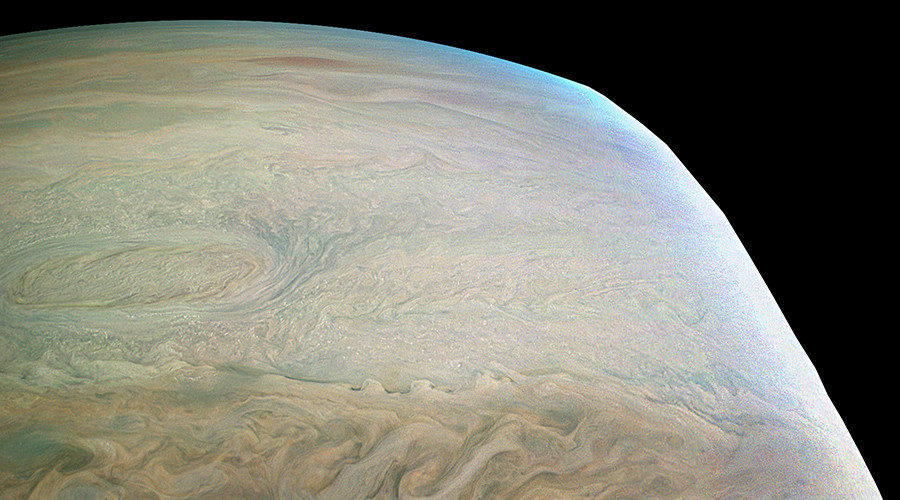
NASA has shared an incredible close-up portrait of Jupiter taken from the Juno probe during its fifth flyby of the giant planet.

The snap was captured by the JunoCam on March 27, as the spacecraft completed its latest orbit, at a distance of about 12,400 miles (20,000km) from the massive planet.

Hardhat

Study finds mega-fracking using massive volumes of water triggered earthquake swarms in British Columbia

fracking site Fort St. John BC
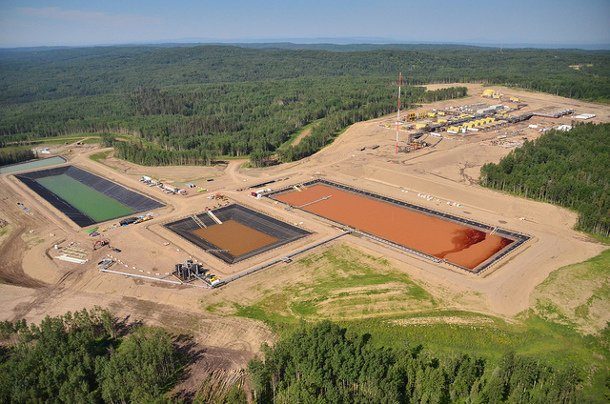
© Jeremy Sean Williams, Wilderness Committee. A fracking site as seen from the air near Fort St. John, BC.
Expert recommends establishing 'exclusion zones' to protect infrastructure from quake damage.

The largest earthquake ever triggered by hydraulic fracturing in British Columbia followed industry's use of large volumes of water and occurred during a fracking-triggered swarm of 676 earthquakes between 2014 and 2015, a new study has found.

The earthquake, triggered by the fracking activities of Malaysian-owned Progress Energy, registered 4.6 magnitude. It was about four kilometres underground and about 100 kilometres northwest of Fort St. John in the northern Montney formation. The earthquake could be felt nearly 180 kilometres away from the epicentre.

The study, published by the Bulletin of the Seismological Society of America this month, ruled out wastewater injection or pumping methane for underground storage as the cause of the earthquake.

"We found that occurrence of local events is better correlated with hydraulic fracturing operations," it concluded. (Record-breaking seismic activity in other areas, like Oklahoma, has been triggered by mammoth wastewater injections and to a lesser degree, hydraulic fracturing. One damaging 5.8 magnitude quake in 2016 even changed water levels in an Oklahoma creek.)

Comment: It's not just the earthquakes; wastewater from fracking is polluting water supplies and literally making people sick:


Target

Chinese carmakers, Volkswagen and BMW roll out 'Tesla Killers'

bmw-i5 Avarvarii
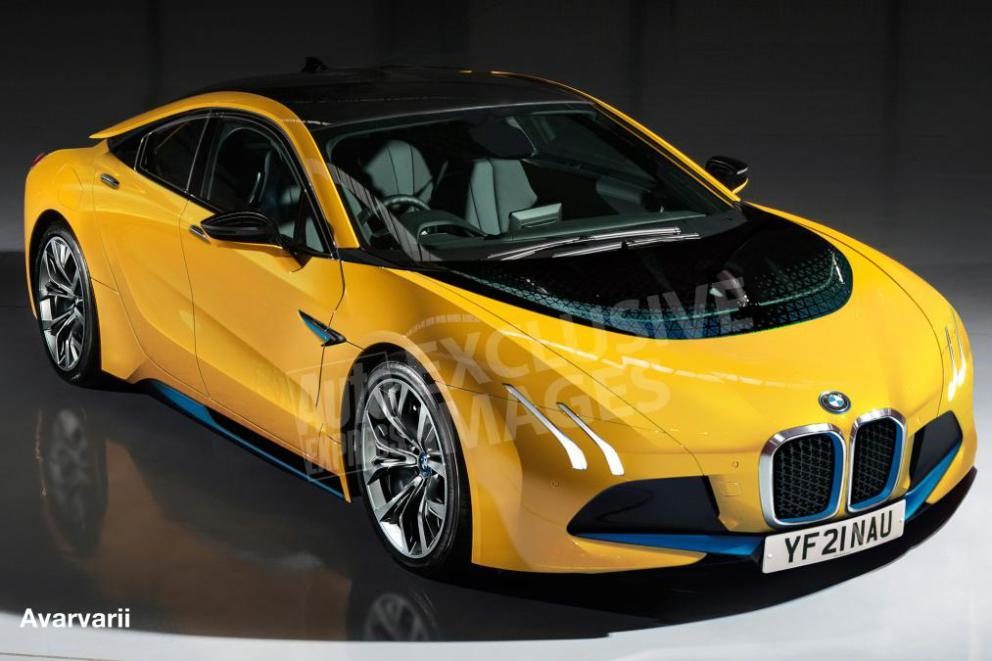
The much anticipated Tesla Model 3 has yet to be released and already a groundswell of electric car competition is forming to challenge Elon Musk's upcoming offering. Start in China, where the Model 3 is not due to arrive until next year, but already Chinese-funded, smart, connected plug-in car start-ups are scrambling to launch "Tesla killer" cars to go head-to-head against Tesla "mass market" sedan.

In taking on the monopoly, yet cash-burning premium electric car juggernaut that is Tesla, the key for leading Chinese electric vehicle start-ups such as Future Mobility, WM Motor and Singulato Motors, is that they will produce their cars locally, making them better able to match the Model 3's price, Reuters notes. Tesla is expected to price its Model 3 from $35,000 in the United States. Buyers in China would expect to add 25% to that in import tariffs.

The Chinese strategy is simple: beat the Model 3 in China by making their cars more premium but cheaper than Tesla's mass-market all-electric battery car.

Heart - Black

There's a dark secret lurking at the heart of AI technology: No one knows how it works

balanced cube
© Keith Rankin
Last year, a strange self-driving car was released onto the quiet roads of Monmouth County, New Jersey. The experimental vehicle, developed by researchers at the chip maker Nvidia, didn't look different from other autonomous cars, but it was unlike anything demonstrated by Google, Tesla, or General Motors, and it showed the rising power of artificial intelligence. The car didn't follow a single instruction provided by an engineer or programmer. Instead, it relied entirely on an algorithm that had taught itself to drive by watching a human do it.

Getting a car to drive this way was an impressive feat. But it's also a bit unsettling, since it isn't completely clear how the car makes its decisions. Information from the vehicle's sensors goes straight into a huge network of artificial neurons that process the data and then deliver the commands required to operate the steering wheel, the brakes, and other systems. The result seems to match the responses you'd expect from a human driver. But what if one day it did something unexpected—crashed into a tree, or sat at a green light? As things stand now, it might be difficult to find out why. The system is so complicated that even the engineers who designed it may struggle to isolate the reason for any single action. And you can't ask it: there is no obvious way to design such a system so that it could always explain why it did what it did.

Comment: See also:
Stephen Hawking warns of possible dire threat to mankind from artificial intelligence
Elon Musk says 'With artificial intelligence we are summoning the demon'


Mars

NASA's Reconnaissance Orbiter captures incredible new photo of Mars surface

Mars crater
© NASA
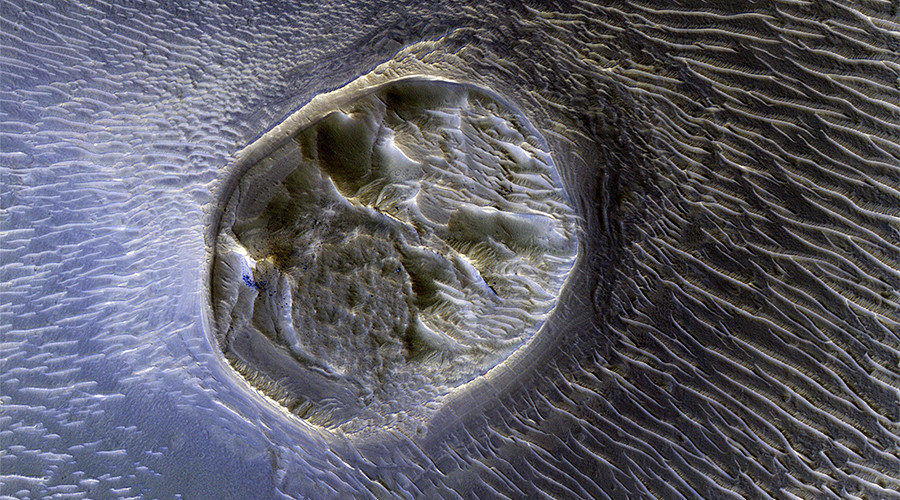
NASA has released incredibly detailed images of a "heavily eroded" Mars, including a fascinating mesa landform surrounded by wild-looking sand dunes and a sea of puzzling secondary craters.

The agency's Mars Reconnaissance Orbiter (MRO) captured the intriguing mesa, which measures 0.4 kilometers, in the "extensively fractured" Noctis Labyrinthus region on the western end of huge Valles Marineris valley.

"Heavily eroded, with clusters of boulders and sand dunes on its surface, this layered mesa is probably comprised of sedimentary deposits that are being exhumed as it erodes. The layers themselves are visible as faint bands along the lower left edge of the mesa," NASA said.