Science & TechnologyS


Water

Solar-powered device can harvest fresh water from air even in dry environments

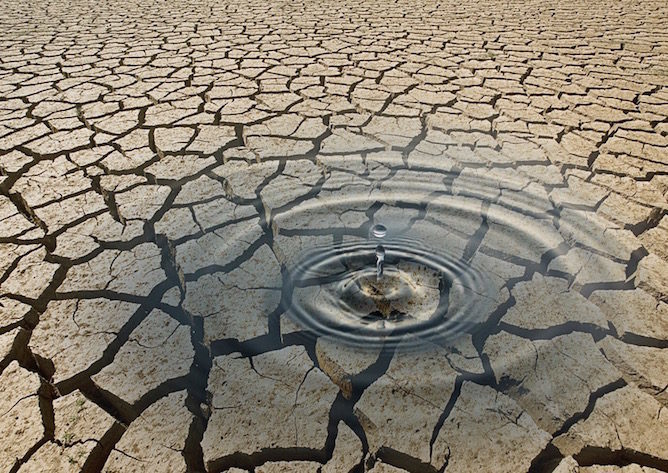
desert, water in desert
© John Lund / Getty
When it comes to future challenges, one of the biggest will be water scarcity - on a warming planet we're going to have plenty of seawater, but not enough fresh, clean water in the right places for everybody to drink.

And while a lot of research has focussed on desalination, a team of scientists have now come up with another possible solution - a device that pulls fresh water out of thin air, even in places with humidity as low as 20 percent. All it needs is sunlight.

It might sound too good to be true, but so far the research is solid. Called the 'solar-powered harvester', the device was created by teams from MIT and the University of California, Berkeley, using a special type of material known as a metal-organic framework (MOF).

To be clear, it's only in the prototype phase right now and has been tested in pretty limited situations, but the results so far have just been published in Science.

"This is a major breakthrough in the long-standing challenge of harvesting water from the air at low humidity," said one of the researchers, Omar Yaghi from UC Berkeley.

Telescope

For first time ever, astronomers image black hole using observatories on three continents to form telescope array

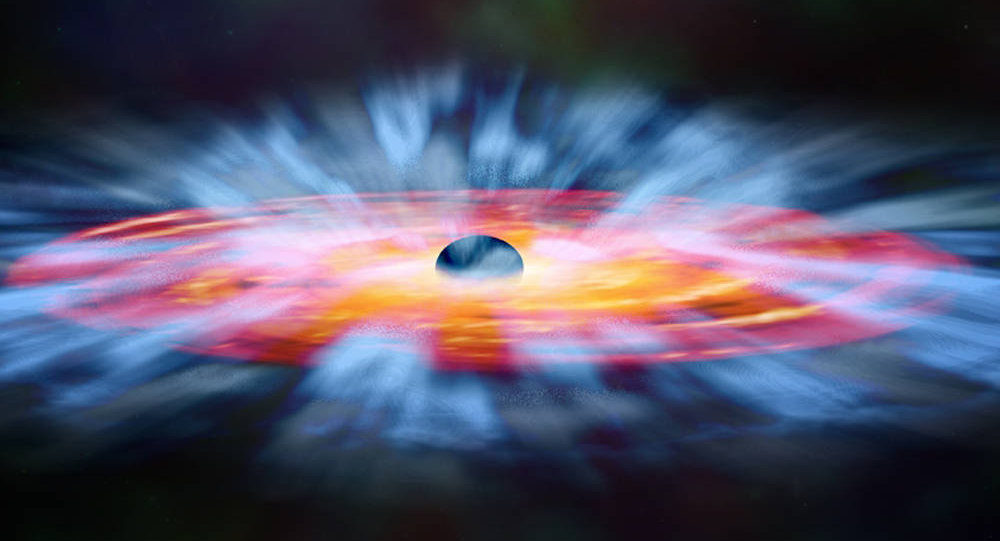
black hole photo combined telescopes
For the first time in our history, we have the technological capacity to observe black holes in detail.
For the first time ever, astronomers have successfully imaged a black hole by training eight telescopes on three continents on it, creating a virtual telescope as large as the Earth itself in the process.

Every image you've ever seen of a black hole was nothing more than a illustration. Black holes eat light (along with everything else) that comes too close to them, meaning they give off virtually no light of their own. The closest black holes that we know of are pretty small by black hole standards: V616 Monocerotis is 3,000 light years from Earth and is about 9 to 13 times the size of our sun.

The bigger the black hole, the easier it'd be to image. Supermassive black holes are often surrounded by accretion disks, a ring of matter orbiting a large celestial object. (Saturn's rings are probably the most famous example of an accretion disk.) These disks can include superheated plasma jets, and those give off a good amount of light - but they also obscure our view of the black hole itself.

Black Magic

Running with scissors: The potential dark side of reality technology

virtual reality
What if virtual reality wasn't just a new way to play games or watch movies? What if the technology wasn't just creating new methods of communication, of medical treatment, of military training?

What if virtual reality was used in the pursuit of mayhem?

Much has been said about the positives of technology that can reshape reality or even create a new one, but last month two respected academic researchers held a talk at South by Southwest in Austin to explore not just those positives, but also the potential negatives of reality technology.

"This is a scene from a movie from the 1940s called Gaslight," Todd Richmond told the packed room, pointing to a screen showing a man and a woman standing by an old gaslight in a home. "How many people know what gaslighting is? So the term gaslighting comes from when lights used to be gas fueled. And it's a way of driving someone into mental distress by manipulating their environment without telling them and then denying that it's being manipulated. So the classic, the gaslight lamp lighting is that you slowly turn down the lights on your spouse because you're trying to drive your spouse nuts. Your spouse says, 'Is it getting darker?' And you say, 'No, I don't know what you're talking about.' And if you do that enough over time, you would begin to freak people out.

"So is VR the perfect platform for this? The answer is, yeah, if you're going to use it for that."

Black Magic

What could go wrong: Smithfield Foods establishing bioscience unit to sell pig organs for human transplants

Pigs Smithfield Foods,
© Reuters
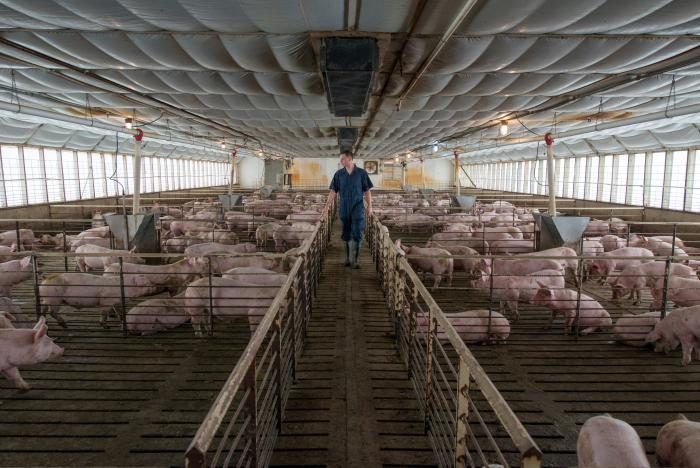
Pigs are seen at a Smithfield Foods, the world's largest pork producer farm in the United States in this image released on April 11, 2017.
Smithfield Foods, the world's largest pork producer, has established a separate bioscience unit to expand its role in supplying pig parts for medical uses, with the ultimate goal of selling pig organs for transplantation into humans.

Routine pig-human organ transplants are years away, but recent scientific advances are breaking down barriers that frustrated prior attempts to use pigs as a ready supply of replacement parts for sick or injured people, making it an attractive new market.

"Our bread and butter has always been the bacon, sausage, fresh pork - very much a food-focused operation," Courtney Stanton, vice president of Smithfield's new bioscience unit, told Reuters in an exclusive interview.

"We want to signal to the medical device and science communities that this is an area we're focused on - that we're not strictly packers," she said.

Smithfield, the $14 billion subsidiary of China's WH Group (0288.HK), in its first move has joined a public-private tissue engineering consortium funded by an $80 million grant from the U.S. Department of Defense. Smithfield is the only pork producer, joining health-care companies including Abbott Laboratories (ABT.N), Medtronic (MDT.N) and United Therapeutics Corp (UTHR.O).

Saturn

Saturn's moon Enceladus may support alien life

Enceladus
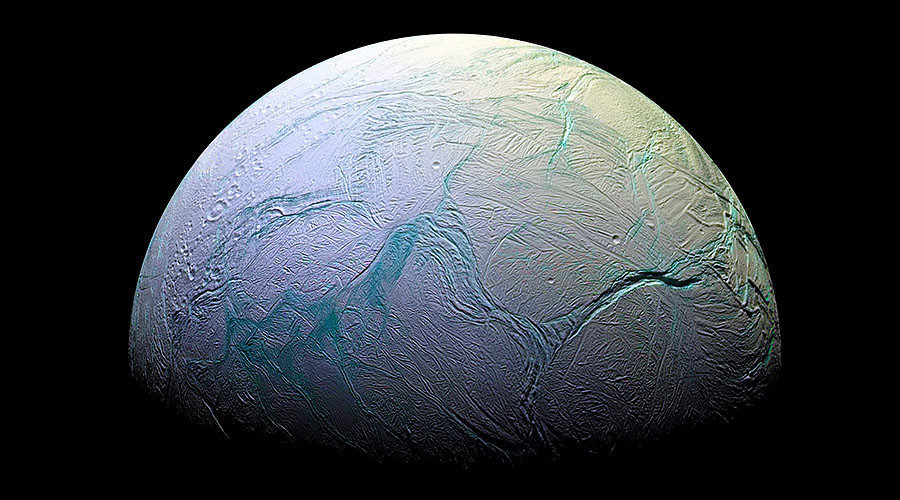
© Universal History Archive / Getty ImagesEnceladus, the sixth-largest moon of Saturn.
New research from NASA indicates that Saturn's moon Enceladus may support microbial life. Details of new findings about ocean worlds in our solar system, arising from discoveries by the agency's Cassini spacecraft and the Hubble Space Telescope were announced live by the agency.

NASA scientists have detected hydrogen from hydrothermal vents in ice plumes from Saturn's ocean-bearing moon Enceladus in conditions which they say could have led to the rise of life on Earth.

Galaxy

Stars: Electrically connected and externally powered (video)

electric universe
In Part One of this presentation, Dr. Michael Clarage began his analysis of a recent landmark discovery which shows a "surprising" relationship between sunspots and solar flares. As Dr. Clarage explained, the discovery that solar flares seem to have a powerful influence on sunspots is highly problematic for standard solar theory. Today, Dr. Clarage explores what may be the fundamental difference between the standard and the Electric Universe concepts of the Sun: in the Electric Universe, stars are not the isolated bodies that standard theory envisions.

Radar

Noise-damping coating to make Russian submarines indistinguishable from whales

Akula-class submarine, Vladivostok, Russia
© Yuri Maltsev / Reuters
Russian submarines are to be layered with specialized 'masked' coatings, rendering it indistinguishable from whales and orcas.

Arms maker Tecmash, which is part of Rostec Corporation, said it's going to be busy producing the state-of-the-art submarine rubber coating for the next five years in accordance with the state order.

"We've launched new high-tech lines for manufacturing special rubber plates in September 2016. Today we already have an order for its production for the next five years. The main feature of this coating lies in its high noise-damping ability," Sergey Rusakov, Tecmash CEO, said as cited by the company's press service.

Telescope

NASA's Hubble sees intense auroras on Uranus

Auroras on Uranus
© NASA, ESA, and L. Lamy (Observatory of Paris, CNRS, CNES)These composite images show Uranian auroras, which scientists caught glimpses of through the Hubble in 2011. In the left image, you can clearly see how the aurora stands high above the planet’s denser atmosphere. These photos combine Hubble pictures made in UV and visible light by Hubble with photos of Uranus’ disk from the Voyager 2 and a third image of the rings from the Gemini Observatory in Hawaii and Chile. The auroras are located close to the planet’s north magnetic pole, making these northern lights.
Earth doesn't have a corner on auroras. Venus, Mars, Jupiter, Saturn, Uranus and Neptune have their own distinctive versions. Jupiter's are massive and powerful; Martian auroras patchy and weak.

Auroras are caused by streams of charged particles like electrons that originate with solar winds and in the case of Jupiter, volcanic gases spewed by the moon Io. Whether solar particles or volcanic sulfur, the material gets caught in powerful magnetic fields surrounding a planet and channeled into the upper atmosphere. There, the particles interact with atmospheric gases such as oxygen or nitrogen and spectacular bursts of light result. With Jupiter, Saturn and Uranus excited hydrogen is responsible for the show.

Auroras on Earth, Jupiter and Saturn have been well-studied but not so on the ice-giant planet Uranus. In 2011, the Hubble Space Telescope took the first-ever image of the auroras on Uranus. Then in 2012 and 2014 a team from the Paris Observatory took a second look at the auroras in ultraviolet light using the Space Telescope Imaging Spectrograph (STIS) installed on Hubble.

Better Earth

Shining Sea: 75% of Ocean's animals glow

bioluminescent creatures
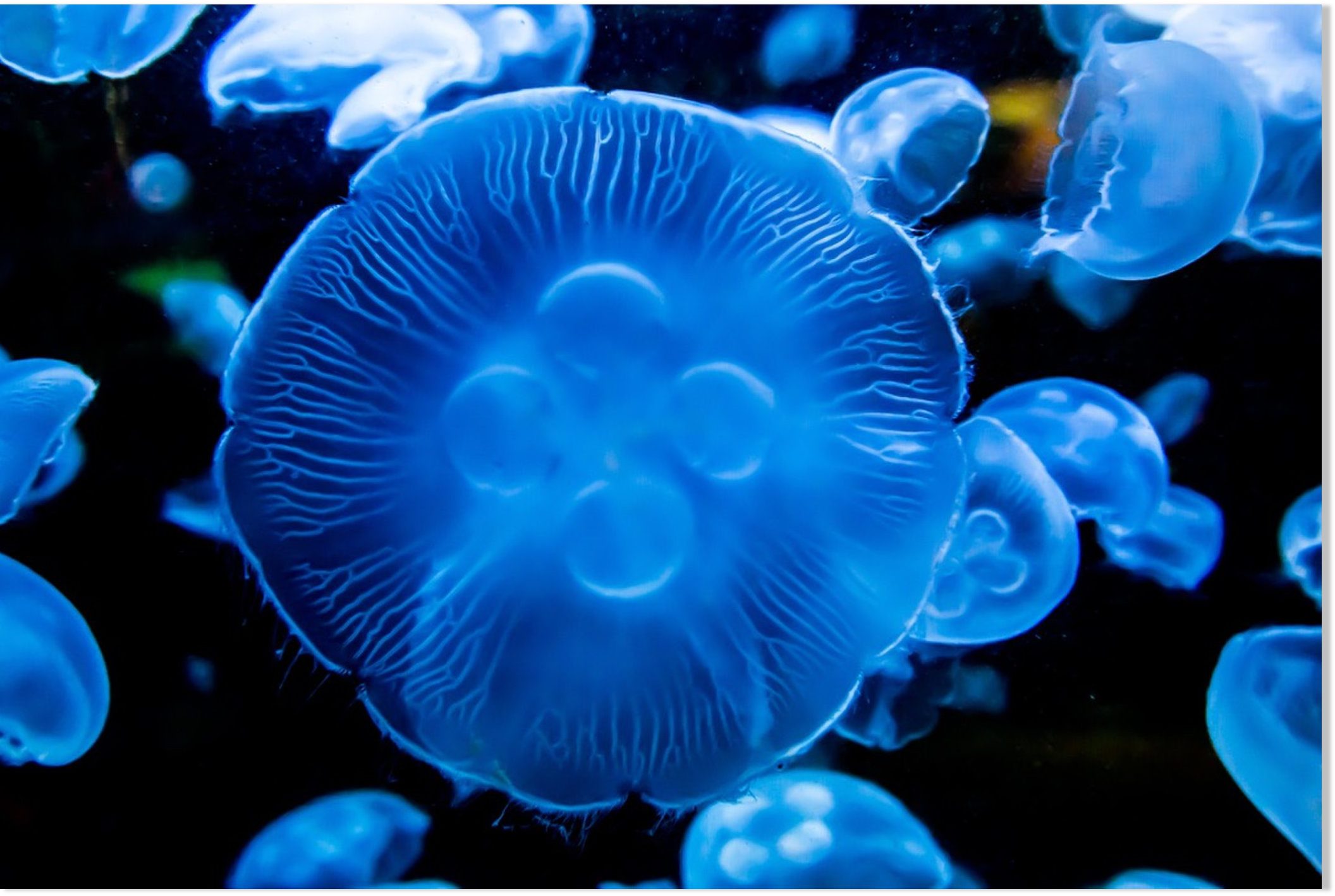
© Richard A McMillin/ShutterstockThe sea is full of bio-luminescent creatures, like this moon jellyfish.
The ocean is a dark, dark place. Below about 656 feet (200 meters), light doesn't penetrate. Considering that the average depth of the ocean is around 14,000 feet (4,267 m), that leaves a lot of room for inky blackness.

Marine life has figured out a way to cope. New research finds that a full three-quarters of sea animals make their own light.

The study, published April 4 in the journal Scientific Reports, is the first to really quantify animal bioluminescence in the ocean. It turns out that the ability to glow isn't rare at all.

"I'm not sure people realize how common bioluminescence is," study researcher Séverine Martini, a postdoctoral researcher at the Monterey Bay Aquarium Research Institute (MBARI), said in a statement. "It's not just a few deep-sea fishes, like the angler fish. It's jellies, worms, squids ... all sorts of things." [Gallery: Images of Glowing Aquatic Life]

Blue Planet

Signs of life possibly discovered at deepest point on Earth

Mariana Trench
© Earth & Universe HD / YouTube
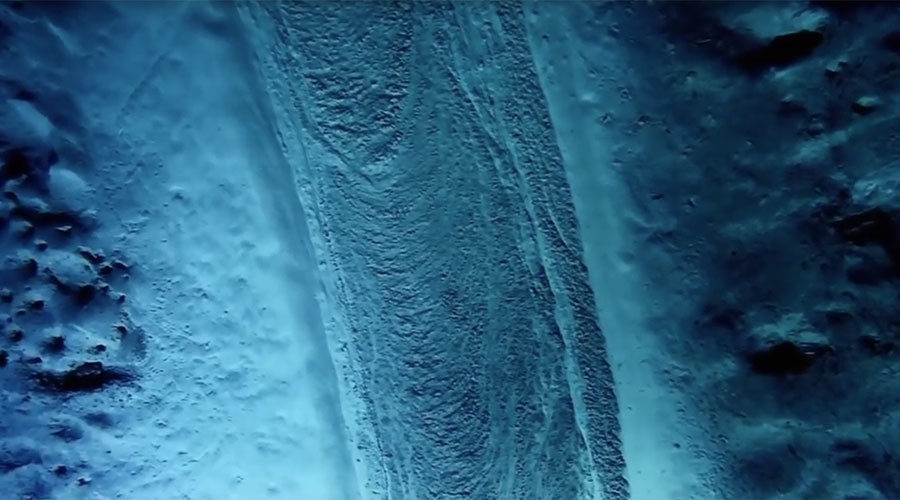
Scientists have unearthed rock fragments containing organic matter six miles below the Mariana trench, presenting the possibility that this could be the deepest microbial life ever found on Earth.

The fragments were brought to the sea floor by massive mud volcanoes near the Mariana trench - the deepest place on the planet. If scientists confirm evidence of microbial life in the material it will triple the previous estimated depth limit for life within the Earth's mantle.

A team of scientists lead by Oliver Plümper, a researcher at Utrecht University in the Netherlands, published their findings in the Proceedings of the National Academy of Sciences. During an analysis of the mineral-rich mud, the team did not find intact microbes but did observe traces of organic material.

Hydrocarbons, lipids, and amino acids were found in 46 rock samples drilled from the mud volcano chemicals associated with bacterial waste products, reported Science Alert.

"This is another hint at a great, deep biosphere on our planet," Plumper told National Geographic. "It could be huge or very small, but there is definitely something going on that we don't understand yet."