Science & TechnologyS


Beaker

Physicists create unique negative mass fluid

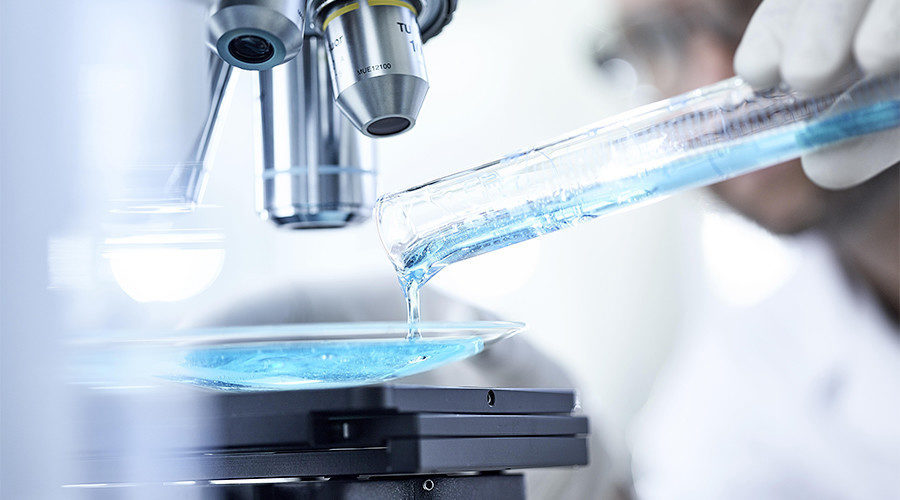
test tube
© Christian Vorhofer / Global Look Press
US scientists have managed to surprise science geeks across the globe, creating a unique fluid with negative mass - but that actually stands for an object moving forward when pushed back.

The creation began inside a lab at Washington State University (WSU), when physicists cooled rubidium atoms to just slightly above absolute zero. This created what is known as a Bose-Einstein condensate.

When particles are in this state, they move extremely slowly and behave like waves. They synchronize and move in unison as 'superfluid,' which flows without losing energy, according to a WSU press release.

Music

Where do pianists look while they're playing?

playing piano
Where do pianists look while they're playing?

Function, a video series from Fractal NYC, outfitted two piano players with special glasses that track the movement of their eyes. Professor Daniel Beliavsky is a professional pianist and Charlotte Bennett is his student. Since Beliavsky is more experienced, he's more comfortable with the keyboard and looked at the sheet music more than his hands, whereas Bennett spent more time looking down at the keys. Impressively, Beliavsky is able to look ahead to where his hands will be in a few seconds.

Microscope 1

Russian researchers help Mexican shrimp farmers cure deadly virus

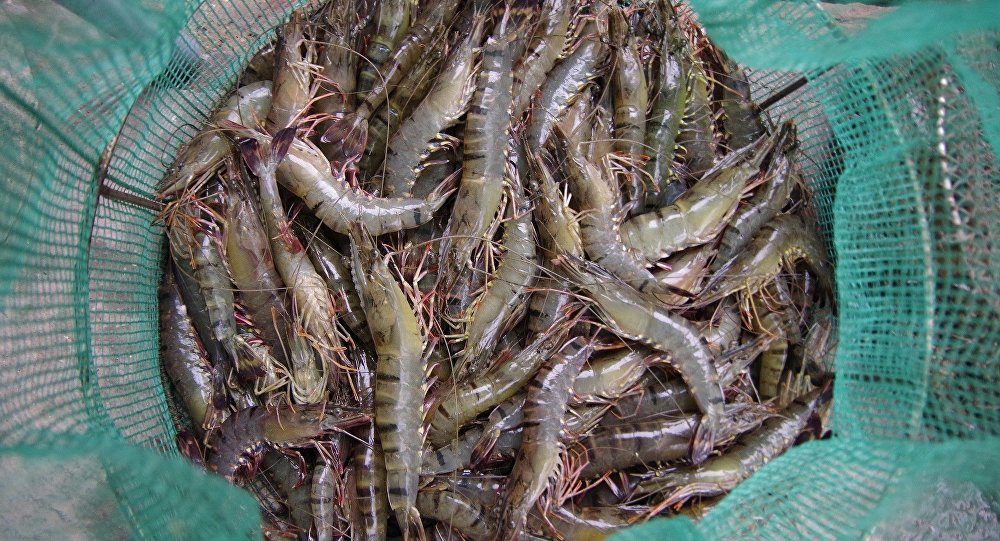
shrimp catch mexico
© Pixabay
A team of scientists at the Tomsk Polytechnic University (TPU) came up with a remedy for a highly lethal and contagious shrimp disease that could save millions for farmers. Injections of silver nanoparticles were successfully tested in Mexico, where the shrimp epidemic has been a huge problem for several years.

The drug developed by Russian chemists was used to treat white spot syndromevirus (WSSV) in shrimps, the university press service reported. Throughout the world, outbreaks of this disease have wiped out entire populations at many shrimp farms within days, and the epidemic has been raging in Mexico for several years. There have been several attempts to cure the disease, but until now nothing has worked.

One farm in Mexico was offered to try the new Russian cure. At first, several young infected shrimps were injected with the drug. Just 96 hours later, shrimp survival was over 90%.

Comment: Silver is an ancient treatment for many diseases:


Eye 1

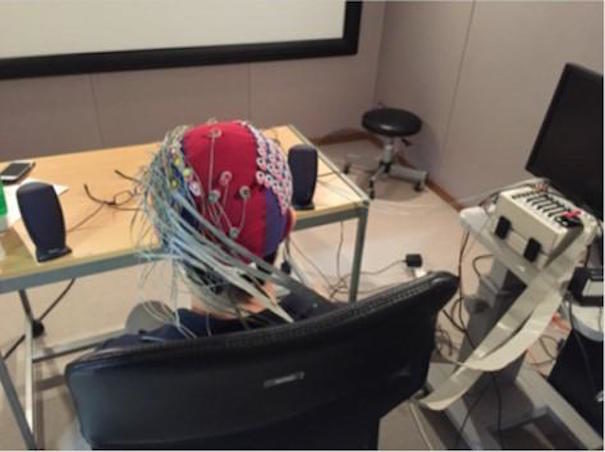
Scientists have developed a device that can read minds by detecting people's brainwaves

EEG device reads minds via brainwaves
The new technology may enable handicapped people, who have lost the ability to speak, to communicate again. An 'easily operated' machine linked to a smartphone could be ready within five years
A device that can read people's minds by detecting their brainwaves has been developed in a breakthrough that could eventually enable people with "locked-in syndrome" to communicate.

The system was only partially effective with a 90 per cent success rate when trying to recognise numbers from zero to nine and a 61 per cent rate for single syllables in Japanese, the researchers said.

But, nonetheless, a statement about the research issued by the Toyohashi University of Technology in Japan said it showed that an effective device to read people's thoughts and relay them to others was possible in the "near future".

They even suggested an "easily operated" device with a smartphone app could be ready in just five years.

Microscope 1

Scientists find living specimen of legendary giant shipworm in the Philippines

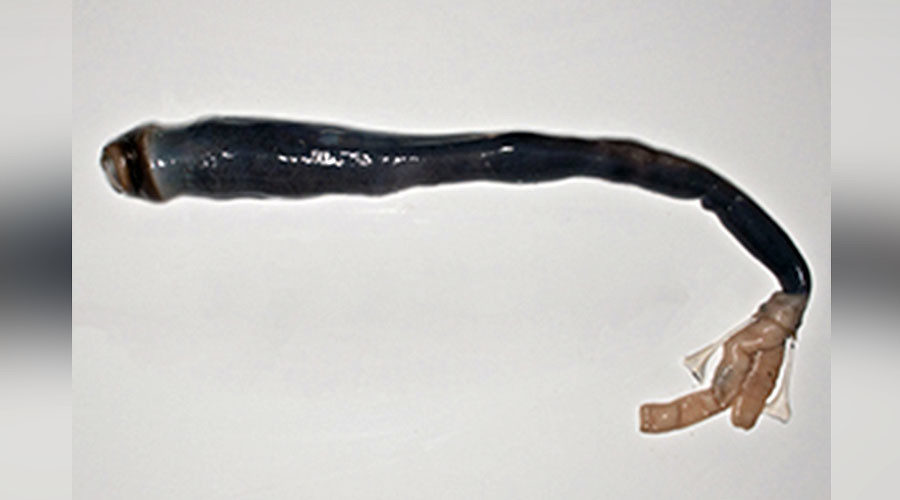
Giant shipworm
© unews.utah.edu
The truth behind the centuries-old legend of the giant shipworm has finally been confirmed by scientists, who got up close and personal with the elusive, sulfur-feasting creature for the first time.

A team of international researchers examined the first living giant shipworm in the Philippines, throwing some light on the mysterious Kuphus polythalamia species - the longest bivalve mollusc in the world, reaching up to 5 feet (1.52 meters) in length.

The bizarre-looking animal, encased in a tusk-like shell, may be the stuff of nightmares for many, but its discovery offers scientists a unique opportunity to unravel the secrets of the rare specimen.


The shells are fairly common, but we have never had access to the animal living inside," lead investigator and director of the Ocean Genome Legacy Center at Northeastern University, Daniel Distel said.

Eye 1

Corneal transplant: Lab-grown cells could refurbish diseased or damaged eyes

cells rebuild eyes
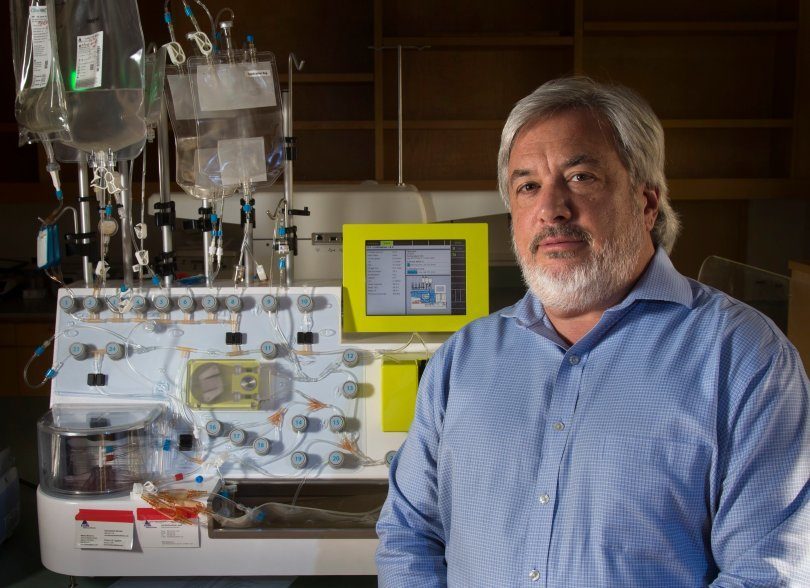
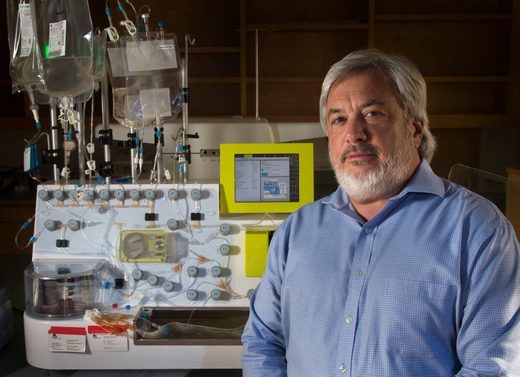
© Patrick Tehan/Bay Area News Group.Dr. David DiGiusto, director of Stanford's new Laboratory for Cell and Gene Medicine in Palo Alto. The university's cell manufacturing facility generates thousands of corneal cells, as well as and other specialized cells.
A Stanford research team has created a potentially powerful new way to fix damaged corneas — a major source of vision problems and blindness.

Millions of new eye cells are being grown in a Palo Alto lab, enlisting one of medicine's most important and promising new tools: refurbishing diseased and damaged tissue with healthy new cells.

"One of the exciting possibilities of this cellular approach is that one donor cornea," which contributes a few parent cells, "can generate enough cells to treat tens or hundreds of patients," said lead researcher Dr. Jeffrey Goldberg, professor and chairman of the Department of Ophthalmology at the Stanford University School of Medicine.

About 100,000 corneal transplants are done annually in the United States — but they require surgery with donated corneas from cadavers. The procedure fails nearly a third of the time, and there aren't enough high-quality donor corneas to go around.

Other scientists have been trying to grow full corneas from scratch, attaching a fragile film of cells to a membrane. That's a challenging bioengineering problem.

Rocket

Possible joint Russia-US mission to Venus takes shape

planet
© NASA
A proposed joint mission to Venus could feature a Russian rocket and orbital module alongside a US "atmospheric plane" and durable surface probes, a top Russian scientist says.

The proposed joint mission, dubbed Venus-D, is taking shape, in which Russia's Roscosmos space agency would provide an orbital and landing module, alongside a rocket to deliver them to Venus, while NASA would provide atmospheric probes that could survive the planet's extreme conditions, the head of the Planetary Atmospheric Spectrometry Laboratory in the Space Research Institute of the Russian Academy of Sciences, Ludmila Zasova, told TASS.

Venus, which has an extremely hot and hazardous environment, is a "natural laboratory to study the greenhouse effect," Zasova said. Research on Venus could help understand the effect better and perhaps prevent it from going to extremes on Earth.

Music

Paramusical ensemble: Neuroscience can now curate music based on your brainwaves - not your music taste

paramusical ensemble
© Reuters/Michaela RehlePlay that funky music.
Companies and composers have begun using software to make music customized to your brainwaves. Soon you will be able to plug in your headphones, lean back in your chair, and relax to a playlist so synchronized with your brain's chemistry that it increases your productivity, sleep quality, and even fights anxiety.

The frequency at which your brain resonates defines your state of mind. Need to chill out? Try alpha activity. Or what about a pre-workout pep-up? Pop on some beta waves.

As consumer desire for personalized information and outcomes increases, the ability to listen to music that is literally in tune with your brain will provide a whole new business opportunity in the world of music streaming.

"You've got Spotify looking at your choices of song and providing suggestions on things you selected before now," says musician Eduardo Miranda. "If you have something that is more connected to your own biology, it's another way of providing services that may be more personalized."

Meteor

Asteroid as big as the Rock of Gibraltar to streak past earth on April 19

asteroid april 19 2017
The earth has asteroids whizzing past it several times a week but these are smaller in size that the one expected on April 19
An asteroid as big as the Rock of Gibraltar will streak past Earth on April 19 at a safe but uncomfortably close distance, according to astronomers.

"Although there is no possibility for the asteroid to collide with our planet, this will be a very close approach for an asteroid this size," NASA said in a statement.

Dubbed 2014-JO25 and roughly 650 metres (2,000 feet) across, the asteroid will come within 1.8 million kilometres (1.1 million miles) of Earth, less than five times the distance to the Moon.

It will pass closest to our planet after having looped around the Sun. 2014-J25's will then continue on past Jupiter before heading back toward the centre of our Solar System.

Smaller asteroids whizz by Earth several times a week. But the last time one at least this size came as close was in 2004, when Toutatis—five kilometres (3.1 miles) across—passed within four lunar distances.


Satellite

UAE launches space program to boost colonization of Mars by 2021

UAE space probe drawing
© Mohammed Bin Rashid Space Centre MBRSC / YouTube
The UAE has launched an ambitious space program aimed at sending a probe to Mars by 2021 and settling the Red Planet by 2117. The kingdom's rulers see the hi-tech venture as a sign of hope and inspiration for the entire Arab world.

Until recently, only a handful of leading world powers funded and promoted space exploration programs, including the US, Russia, China, Japan and the EU. Other nations, especially those in the Middle East, have long been excluded from global scientific mainstream, but now the United Arab Emirates (UAE) has joined the race.

On Wednesday, Sheikh Mohammed bin Rashid al-Maktoum, prime minister of the UAE and emir of Dubai, and Mohammed bin Zayed al-Nahyan, crown prince of Abu Dhabi, inaugurated the national space program at the Mohammad Bin Rashid Space Center (MBRSC), local media reported.