Science & TechnologyS


Info

Hints of a fourth type of invisible neutrino creates more confusion

Kamioka Observatory
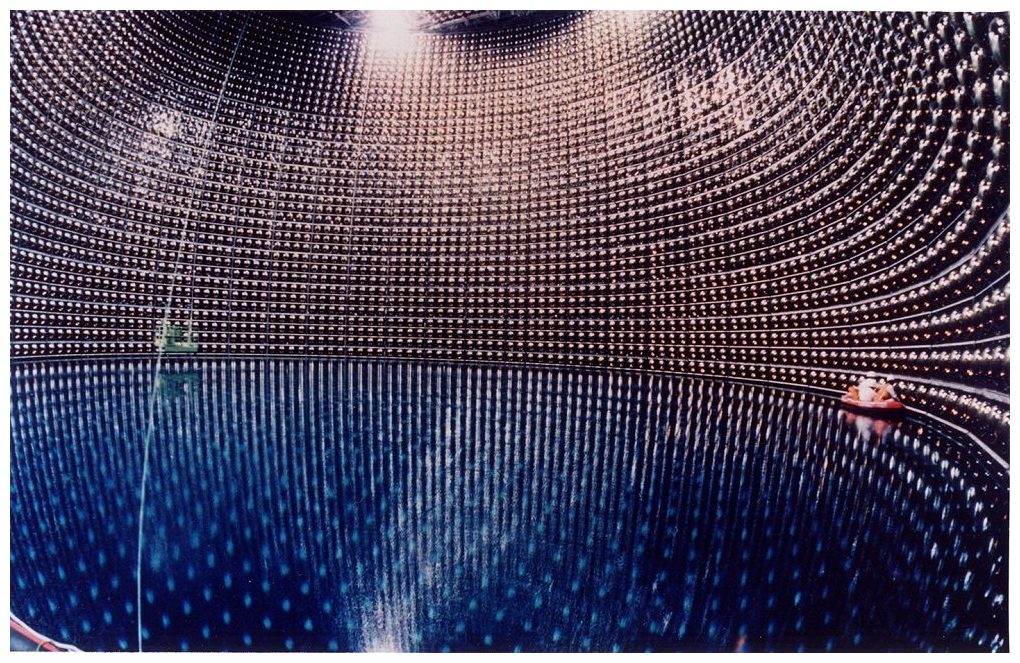
© Kamioka Observatory, ICRR (Institute for Cosmic Ray Research), The University of TokyoInside the Super-Kamioka Neutrino Detection Experiment at Kamioka Observatory, Tokyo, Japan.
It was a balmy summer in 1998 when I first became aware of the confounding weirdness of neutrinos. I have vivid memories of that day, as an embarrassingly young student researcher, walking along a river in Japan, listening to a graduate student tell me about her own research project: an attempt to solve a frustrating neutrino-related mystery. We were both visiting a giant detector experiment called Super-Kamiokande, in the heady days right after it released data that forever altered the Standard Model of Particle Physics. What Super-K found was that neutrinos - ghostly, elusive particles that are produced in the hearts of stars and can pass through the whole Earth with only a miniscule chance of interacting with anything - have mass.

A particle having mass might not sound like a big deal, but the original version of the otherwise fantastically successful Standard Model described neutrinos as massless - just like photons, the particles that carry light and other electromagnetic waves. Unlike photons, however, neutrinos come in three 'flavours': electron, muon, and tau.

Super-K's discovery was that neutrinos could change from one flavour to another as they travelled, in a process called oscillation. This can only happen if the three flavours have different masses from one another, which means they can't be massless.

Magnet

Japanese physicists record largest magnetic field ever generated indoors

Japanese scientists record largest magnetic field
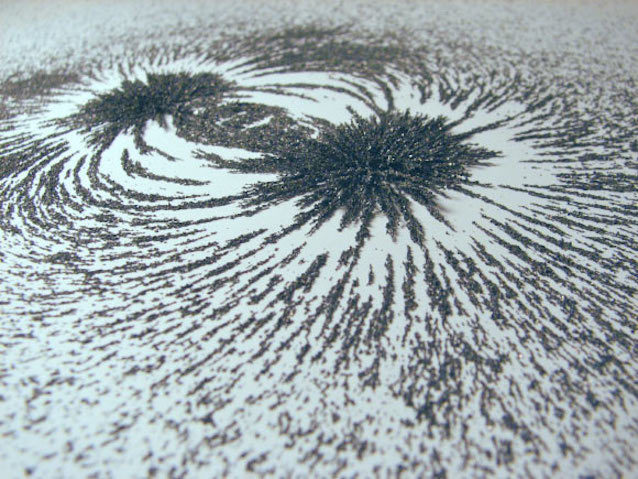
© Windell Oskay / CC BY 2.0.Nakamura et al record highest magnetic field ever achieved indoors.

Physicists from the Institute for Solid State Physics at the University of Tokyo, Japan, have recorded the largest magnetic field ever generated indoors - a whopping 1,200 T (tesla).


"Magnetic fields are one of the fundamental properties of a physical environment," said lead author Dr. Daisuke Nakamura and colleagues.

"They can be controlled with high precision and interact directly with electronic orbitals and spins; this makes them indispensable for research in areas of solid state physics such as magnetic materials, superconductors, semiconductors, strongly correlated electron materials, and other nanomaterials."

The researchers generated ultrahigh magnetic fields using the electromagnetic flux-compression (EMFC) technique.

Cloud Lightning

Scientists observe origins of elusive sprites that appear above thunderstorms

sprites 2011
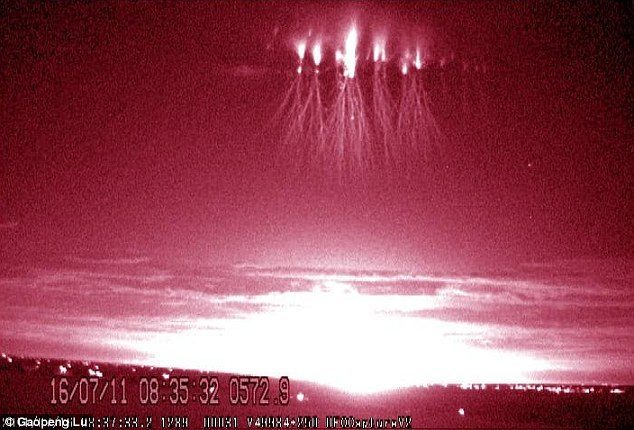
A new study has lifted the lid on the behaviour of unusual electrical discharges known as red sprites. This striking form of lightning appears in the upper atmosphere, sitting above the thunderstorms themselves
A new study has lifted the lid on the behaviour of unusual electrical discharges known as red sprites.

This striking form of lightning appears in the upper atmosphere, sitting above the thunderstorms themselves.

Now, scientists have observed the 'parent' lightning strokes for dozens of red sprites over a storm in China, revealing new insight on how these remarkable phenomena are produced.

Sprites appear as vertical streaks above thunderstorms at an altitude of about 24 to 55 miles (40 to 90 kilometers).

They fall within what are known as transient luminous events (TLES).

Comment: So scientists have a better idea of where sprites originate, but as of right now, few seem to have been able to identify why they, and a variety of other atmospheric phenomena, have surged in recent years: Also check out SOTT radio's:


Cassiopaea

'The Magnificent Seven': Hubble detects never-before-seen features around neutron star

Neutron star
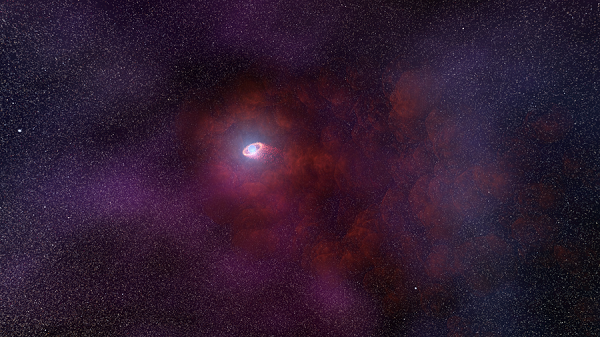
© NASA, ESA, and N. Tr’Ehnl (Pennsylvania State University)Illustration of a pulsar wind nebula.
NASA's Hubble space telescope has detected an unusual infrared light emission from a nearby neutron star, indicating never-before-seen features around the celestial object.

This is the first neutron star in which an extended signal has been seen only in infrared light. The remarkable discovery was made by a team of international researchers who have offered two possible explanations for the extended infrared signal - a dusty disk or an energetic wind known as a pulsar wind.

Scientists observed an extended area of infrared emissions around this particular neutron star, which belongs to a group of seven nearby X-ray pulsars - nicknamed 'the Magnificent Seven.'

Lead author of the study Bettina Posselt said one possible explanation is that there is a disk of material - most likely dust - surrounding the pulsar.

Magnify

Scientist finds a multitude of unique microbes that propagate from plastic waste in the sea

Maria-Luiza Pedrotti
© Villefranche Oceanographic Laboratory Samuel BollendorffAboard the research schooner Tara, Maria-Luiza Pedrotti, an oceanographer for France’s National Center for Scientific Research (CNRS), prepares her equipment. She is the chief scientist for this leg of the voyage, which will examine the microbial life growing in the Great Pacific Garbage Patch.
Maria-Luiza Pedrotti is illuminating the unseen worlds of plastic-eating bacteria that teem in massive ocean garbage patches.

In the middle of the Pacific Ocean, several hundred miles from Hawaii, is a swirling cauldron of waste plastic that's been growing steadily since the mid-1980s. Dubbed the Great Pacific Garbage Patch, it's an ugly testament to the scale of disposable culture - but it's also an active breeding ground for new varieties of single-celled life.

Along with colleagues on board the research schooner Tara, the oceanographer Maria-Luiza Pedrotti of France's National Center for Scientific Research (CNRS) is stalking the mysterious inhabitants of what she calls the "plastisphere." Her goal is to understand what kinds of microbes populate this newly evolved ecosystem and what biological tasks they perform. Beyond that, she wants to learn how they affect the broader ocean food web and - by extension - human health.

Comment: See also:


Water

Drowning in plastic: Scientists find two additional locations containing enormous patches of debris

plastic garbage
In this June 4, 2018, photo, a man collects plastic and other recyclable material from the shores of the Arabian Sea, littered with plastic bags and other garbage, in Mumbai, India.
An attempt to locate millions of tons of "missing" plastic in the world's oceans has thrown up two locations that may contain enormous, previously unreported patches of debris.

Plastic has risen to the top of the environmental agenda after scientists sounded the alarm about the potential impact it as having on marine life.

Best estimates suggest 10 million tons of plastic are dumped in the sea every year.

Images of turtles and whales choking or becoming tangled in this debris cemented the issue in the public conversation, as did discussion of the "Great Pacific garbage patch" where ocean currents cause the world's plastic to accumulate.

In reality the Pacific patch is one of at least five major accumulation zones, with others located in coastal regions around the Mediterranean and in Southeast Asia.

Comment: See also:


Fish

Mystery see-through scaleless 'fish' found lurking miles down in Pacific deep

gel fish atacama trench
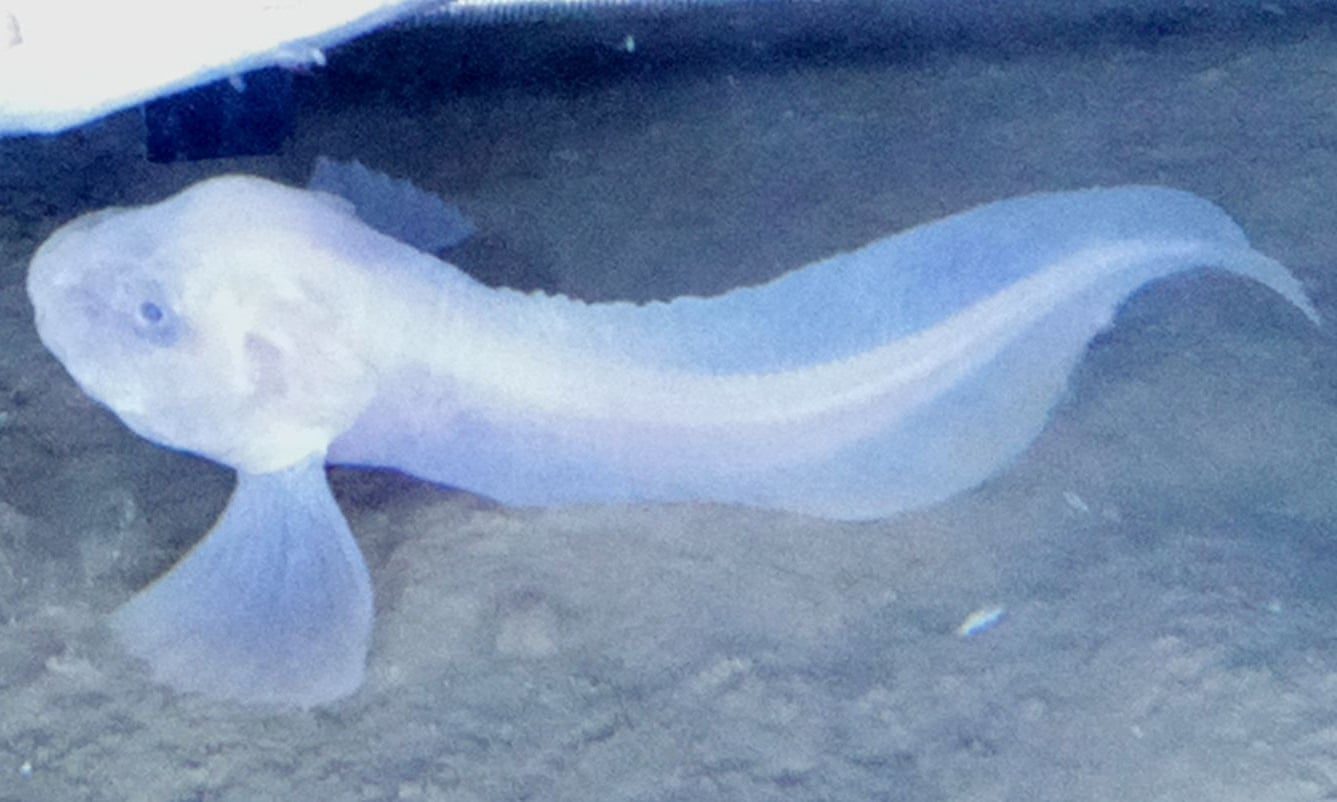
© Agence France-Presse/Getty ImagesThe Atacama snailfish was discovered in abundance at a depth of 7,500 metres in the Atacama trench in the Pacific ocean.Temporarily named the pink, blue and purple Atacama snailfish, the previously unknown creatures are 20-25cm (8-10 inches) long, translucent and have no scales.
The oceans are full of yet unresolved mysteries and strange creatures thriving in the deep that scientists believe are not rare - they are just out of reach.

An international team of researchers used state-of-the-art underwater cameras to find three new species of snail fish living in one of the deepest parts of the ocean, perfectly adapted to conditions that would instantly kill most life on Earth, The Guardian wrote.

The see-through, scale-free creatures were spotted in large numbers at the bottom of the Atacama trench in the eastern Pacific Ocean at a depth of 7,500 meters (4.5 miles).

)"These things are right on the limit of what all fish can take so you might expect at that depth you'd maybe be lucky to see one or two eking out an existence," Alan Jamieson, senior lecturer in marine ecology at Newcastle University told Agence France-Presse on Friday.

Chalkboard

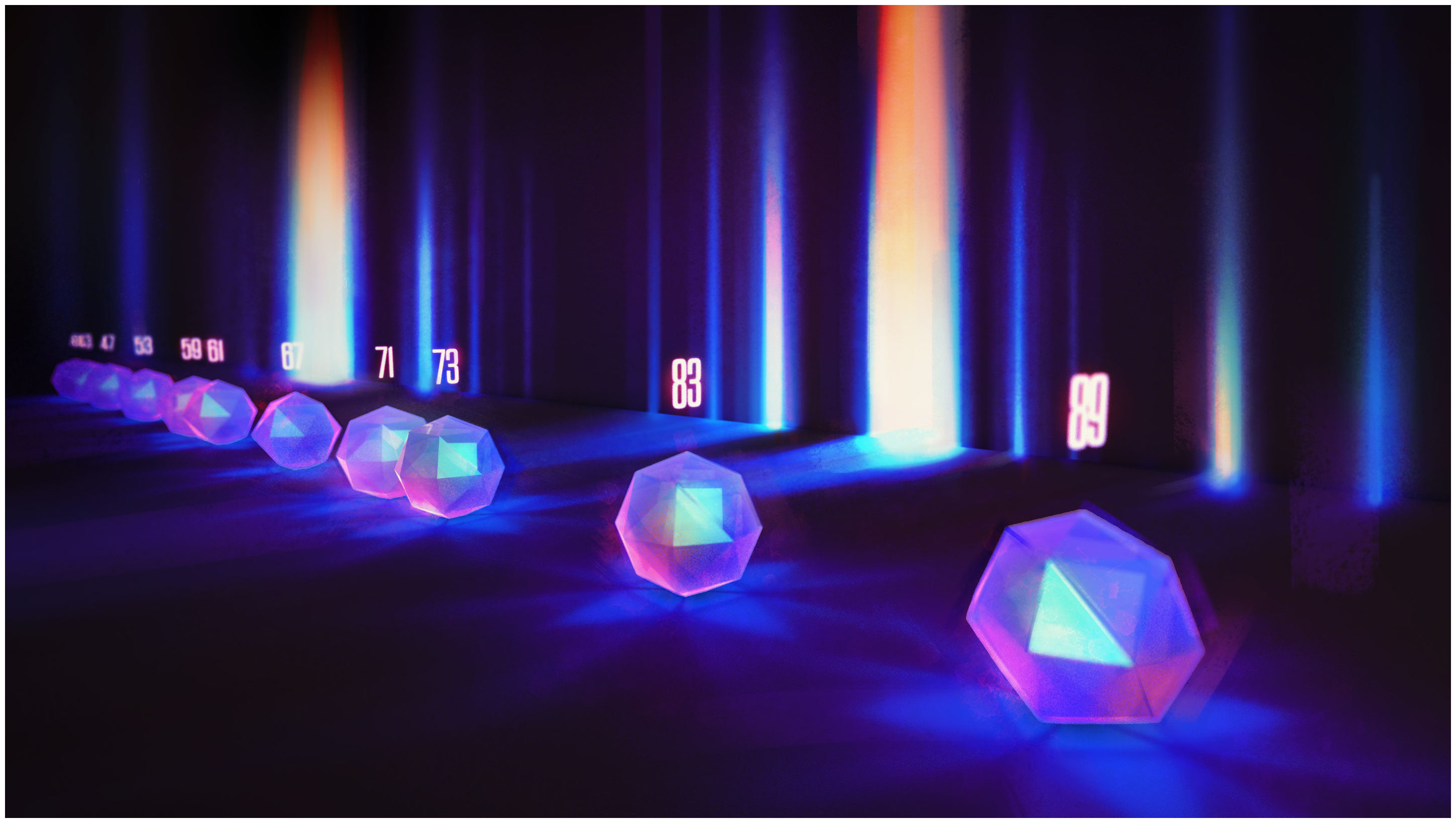
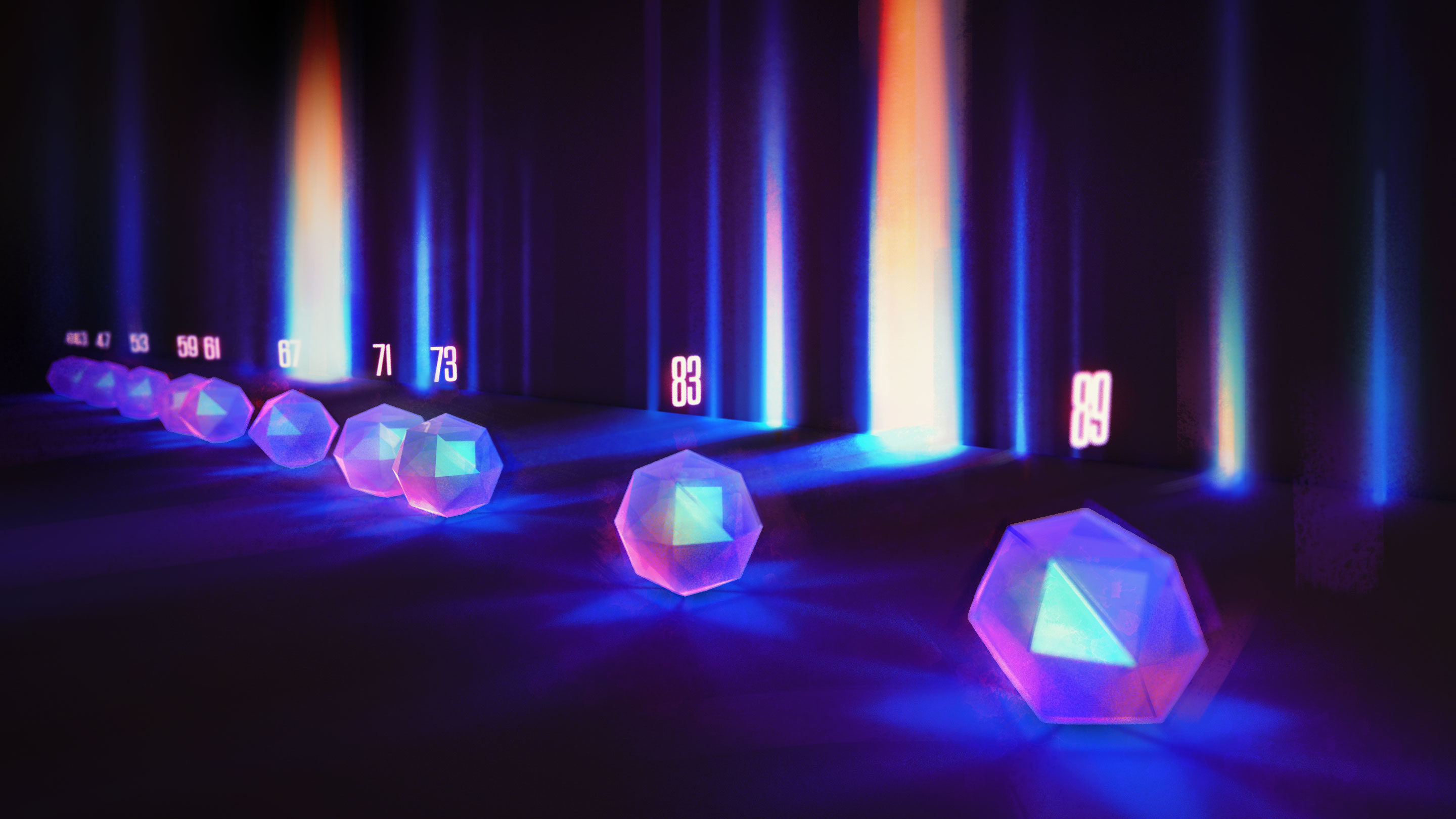
Prime numbers share a surprising pattern with crystals

Prime Numbers and Crystals
© Olena Shmahalo/Quanta Magazine
Often known as "the building blocks of mathematics," prime numbers have fascinated mathematicians for centuries due to their highly unpredictable and seemingly random nature. However, a team of researchers at Princeton University have recently discovered a strange pattern in the primes' chaos. Their novel modelling techniques revealed a surprising similarity between primes and certain naturally occurring crystalline materials, a similarity that may carry significant implications for physics and materials science.

What are primes?

Prime numbers are integers (whole numbers) that can only be divided by themselves or the number 1, and they appear along the number line in a highly erratic way.

They begin as 2, 3, 5, 7, 11 and continue to appear intermittently all the way to infinity. However, the further along the number line you go, the more random the distribution of primes appears to be. The lack of any obvious pattern was best summarized by British mathematician R.C. Vaughan: "It is evident that the primes are randomly distributed but, unfortunately, we do not know what 'random' means."

This disorder is not without its uses. Some of the most important types of modern cryptography are based upon the extreme unpredictability of very large prime numbers. For example, the widely used RSA encryption algorithm relies on the fact that it's easy to take two very large prime numbers and multiply them, but extremely difficult to take a very large number and figure out which primes were multiplied together to make that large number (the specifics of how this works in the context of RSA encryption are explained in-depth here.)

Nonetheless, primes are still responsible for a number of unsolved problems in mathematics-such as the infamous Reimann Hypothesis-and remain at the cutting edge of the field since they were first documented by the ancient Greeks.

Microscope 2

Study finds: Hundreds of bacteria found in the gut can generate electricity

electric Bacteria
© Medical News Today
New research uncovers a surprising fact about numerous types of gut bacteria: they can generate electricity.

Electrogenic bacteria are those that are able to produce a certain amount of electricity.

For this reason, ongoing research is looking into ways to use these microorganisms to develop alternative, more sustainable battery-like devices.

So far, electrogenic bacteria have been found in fairly specific natural environments, such as the sediments of various bodies of water.

These environments are typically anaerobic, meaning that they do not contain free oxygen. Now, for the very first time, researchers from the University of California, Berkeley have found that hundred of different bacteria in the human gut are also electrogenic.

Info

New neurons discovered in inner ear by Swedish researchers

Research Group
© Stefan ZimmermanSaida Hadjab, Haohao Wu, François Lallemend and Charles Petitpré, research group Lallemend, the Department of Neuroscience.
Researchers at Karolinska Institutet have identified four types of neurons in the peripheral auditory system, three of which are new to science. The analysis of these cells can lead to new therapies for various kinds of hearing disorders, such as tinnitus and age-related hearing loss. The study is published in Nature Communications.

When sound reaches the inner ear, it is converted into electrical signals that are relayed to the brain via the ear's nerve cells in cochlea. Previously, most of these cells were considered to be of two types: type 1 and type 2 neurons, type 1 transmitting most of the auditory information. A new study by scientists at Karolinska Institutet shows that the type 1 cells actually comprise three very different cell types, which tallies with earlier research showing variations in the electrical properties and sonic response of type 1 cells.