Science & TechnologyS


Info

Nobel prize physicist attempting to merge physics and the paranormal

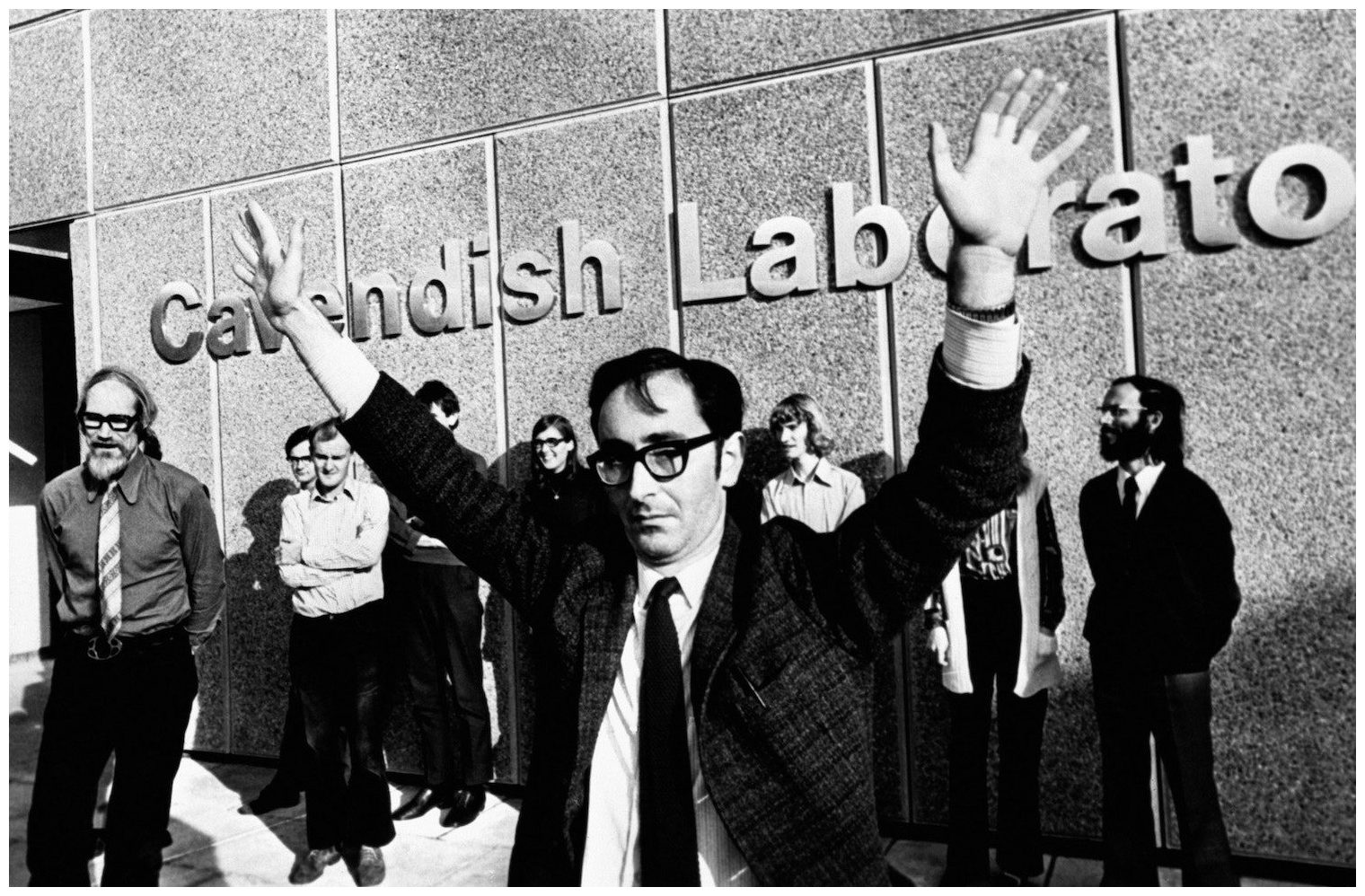
Brian Josephson
© PA Images via Getty ImagesA newspaper photograph taken in 1973, showing a jubilant Brian Josephson after learning he had won the Nobel Prize for Physics.
In 1962, Brian D. Josephson, a 22-year-old graduate student at England's Cambridge University, born on January 4, 1940, in Cardiff, Wales, predicted that electrical current would flow, or tunnel, between two superconducting materials - things that at low temperatures lack electrical resistance, even when they are separated by a non-superconductor, or insulator.

In quantum physics, matter can be described as both waves and particles. Emerging from this is the phenomenon of tunnelling, which sees particles pass through barriers that according to classic physics should be impassable.

Josephson's tunnelling theory was later confirmed, and in 1973 he was one of three scientists who shared the Nobel Prize in physics. (The others were Leo Esaki and Ivar Giaever)

This tunnelling phenomenon is today known as the "Josephson effect", an important piece of evidence in the ongoing development of superconductivity.

He went on to make several other discoveries, including those leading to the development of the "Josephson junction switch", which allows extreme high-speed switching on the molecular level. The junctions are the key components in superconducting quantum interference devices (SQUIDs), widely used to make extremely sensitive measurements of magnetic fields.

Bulb

New paper confirms trilobite explosion during Cambrian - appeared out of nowhere with no visible ancestors

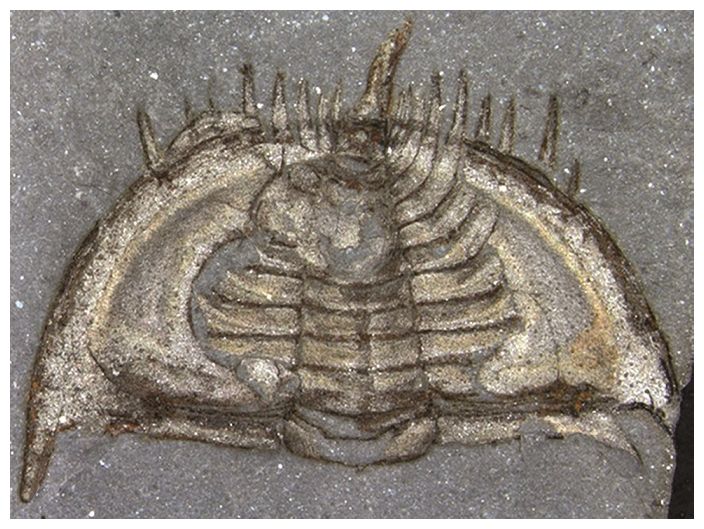
Trilobite
© Javier Ortega-Hernández, University of CambridgeTrilobites disappeared from Earth following the Permian mass extinction.
A new paper in PNAS confirms that the Cambrian explosion cannot be denied. Paterson, Edgecombe, and Lee report:
The abrupt first appearance of a multitude of animal fossils in early Cambrian rocks (Terreneuvian to Series 2; ca. 541-509 Ma) epitomizes one of the most significant evolutionary events in Earth's history. This sudden burst of diversity and abundance across most eumetazoan (especially bilaterian) phyla over a relatively short geologic time span, and lack of obvious Precambrian precursors, poses a conundrum when attempting to reconcile the fossil record with the true tempo of early animal evolution. [Emphasis added.]
It's important to note that the "true tempo of early animal evolution" exists in evolutionists' imaginations, not in the rocks. They write:
Fast evolutionary rates during the early Cambrian have been used to explain the rapid emergence of animals, providing support for a more literal reading of the fossil record.
Translated into active voice verbs, what they are saying is: "We Darwinians explain the rapid emergence of animals by speeding up the rate of evolution." Their proposal might make Darwin the gradualist uncomfortable, but it allows them to be "fossil literalists." But how far can the pace of Darwinian evolution be adjusted?

2 + 2 = 4

For Dreams of Darwinian Evolution, First Rule of Adaptive Evolution Is an Insuperable Problem

Boy with interactive sculpture of Tiktaalik
© Jean-Pierre Dalbéra via FlickrBoy with interactive sculpture of Tiktaalik, by Piero Gilardi, Rome
This is the second in a series of posts responding to the extended critique of Darwin Devolves by Richard Lenski at his blog, Telliamed Revisited. Professor Lenski is perhaps the most qualified scientist in the world to analyze the arguments of my book. He is the Hannah Distinguished Professor of Microbial Ecology at Michigan State University, a MacArthur ("Genius Award") Fellow, and a member of the National Academy of Sciences. With hundreds of publications, he also has a strong interest in the history and philosophy of science. His own laboratory evolution work is a central focus of the book. I am very grateful to Professor Lenski for taking time to assess Darwin Devolves. His comments will allow interested readers to quickly gauge the relative strength of arguments against the book's thesis.

In my first post I responded (out of order) to Professor Lenski's second post, which discussed the polar bear genome. I showed that, regarding my argument that the polar bear's more efficient lipid metabolism (compared to the brown bear) arose by degradative mutations, his skepticism was unfounded. Briefly, the APOB gene of polar bears is mutated with changes that were predicted by computer methods to be damaging. A 1995 study showed that a mouse model that had one copy of the APOB gene knocked out actually had lower plasma cholesterol levels and increased resistance to hypercholesterolemia from a high fat diet. If the polar bear mutations acted to lower the activity of its own APOB, a result similar to that for the mouse might be expected. Thus there is no good reason to speculate about new functions, as Professor Lenski and others did.

Cut

CRISPR scientists want a moratorium after China's gene-edited baby debacle

gene edit
© Getty Images/iStockphotoAs CRISPR-Cas9 technology has made gene editing more accessible in recent years, scientists have been grappling with how best to proceed.
A new paper in the journal Nature reads like a veiled message to China.

Several of the world's leading CRISPR scientists and bioethicists are calling for a global moratorium on editing human genes that can be passed on from parents to children.

In a new Nature commentary, published Wednesday, Feng Zhang and Emmanuelle Charpentier - two discoverers of the revolutionary CRISPR-Cas9 gene editing system - along with MIT biologist Eric Lander and 15 other researchers from around the world, outlined the urgent need to put a pause on the editing of sperm, eggs, and embryos - known as the human germline - to create genetically modified babies until countries agree on the best way forward.

Info

Earth is a less volatile version of the sun, say Australian researchers

Our Sun
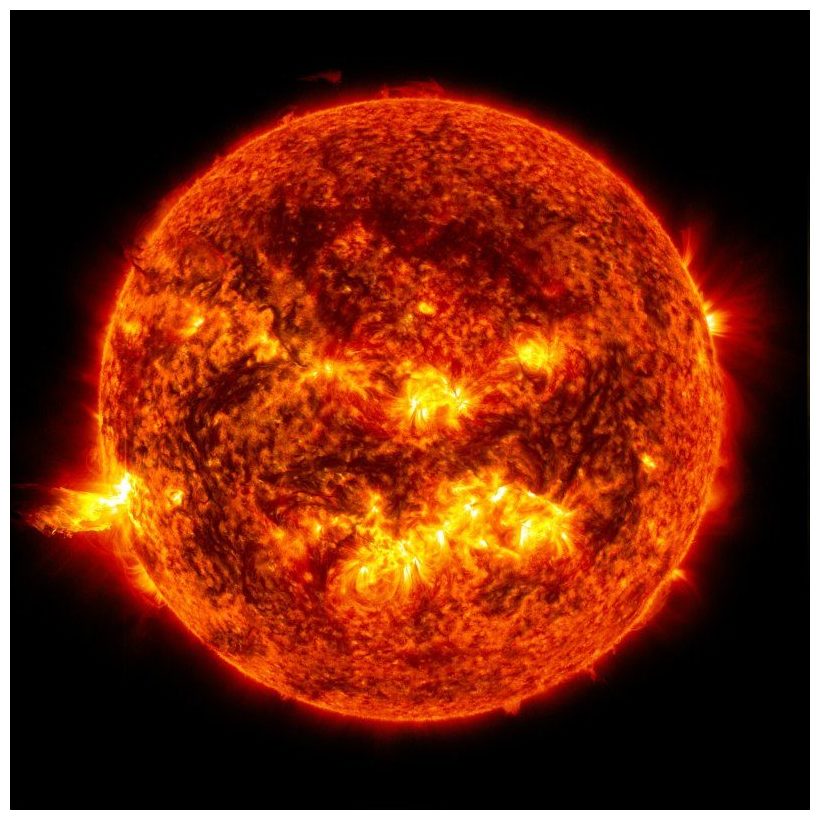
© NASAThe sun, which Canberra scientists have found to be comprised of the same elements as Earth.
Earth is a less volatile version of the sun, according to Canberra scientists who are working to address one of the most important missing pieces of information in determining whether other planets could be habitable.

The Australian National University team found Earth was made of the same elements as the sun, but compared to the star at the centre of the solar system, our planet had less of the volatile elements like hydrogen, helium, oxygen and nitrogen.

Dr Haiyang Wang led the study, which made the most comprehensive estimate yet of the composition of Earth and the sun.

He said the researchers carried out the work as part of their aim to create a new tool that could measure the elemental composition of other stars and the rocky planets that orbit them.

"The composition of a rocky planet is one of the most important missing pieces in our efforts to find out whether a planet is habitable or not," Dr Wang said.

Other rocky planets in the universe, like Earth, are de-volatised pieces of their host stars.

Brain

MIT neuroscientists find brain wave stimulation may improve Alzheimer's symptoms

mice brainwave stimulation alzheimer's
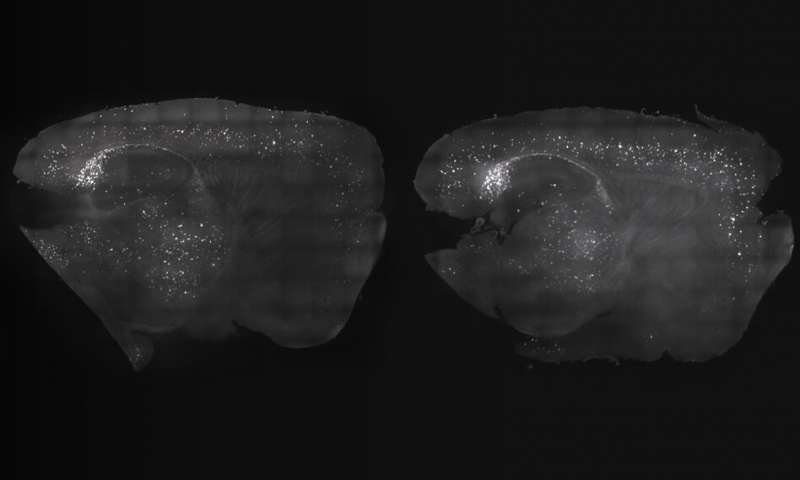
© Gabrielle DrummondBy exposing mice to a unique combination of light and sound, MIT neuroscientists have shown that they can improve cognitive and memory impairments similar to those seen in Alzheimer’s patients. At left, the mouse cortex shows a reduction in amyloid plaques following visual and auditory stimulation, compared to the untreated mouse at right.
By exposing mice to a unique combination of light and sound, MIT neuroscientists have shown that they can improve cognitive and memory impairments similar to those seen in Alzheimer's patients.

This noninvasive treatment, which works by inducing brain waves known as gamma oscillations, also greatly reduced the number of amyloid plaques found in the brains of these mice. Plaques were cleared in large swaths of the brain, including areas critical for cognitive functions such as learning and memory.

"When we combine visual and auditory stimulation for a week, we see the engagement of the prefrontal cortex and a very dramatic reduction of amyloid," says Li-Huei Tsai, director of MIT's Picower Institute for Learning and Memory and the senior author of the study.

Comment: Also see:


Info

YDB team publishes evidence from Chile for global climate cataclysm

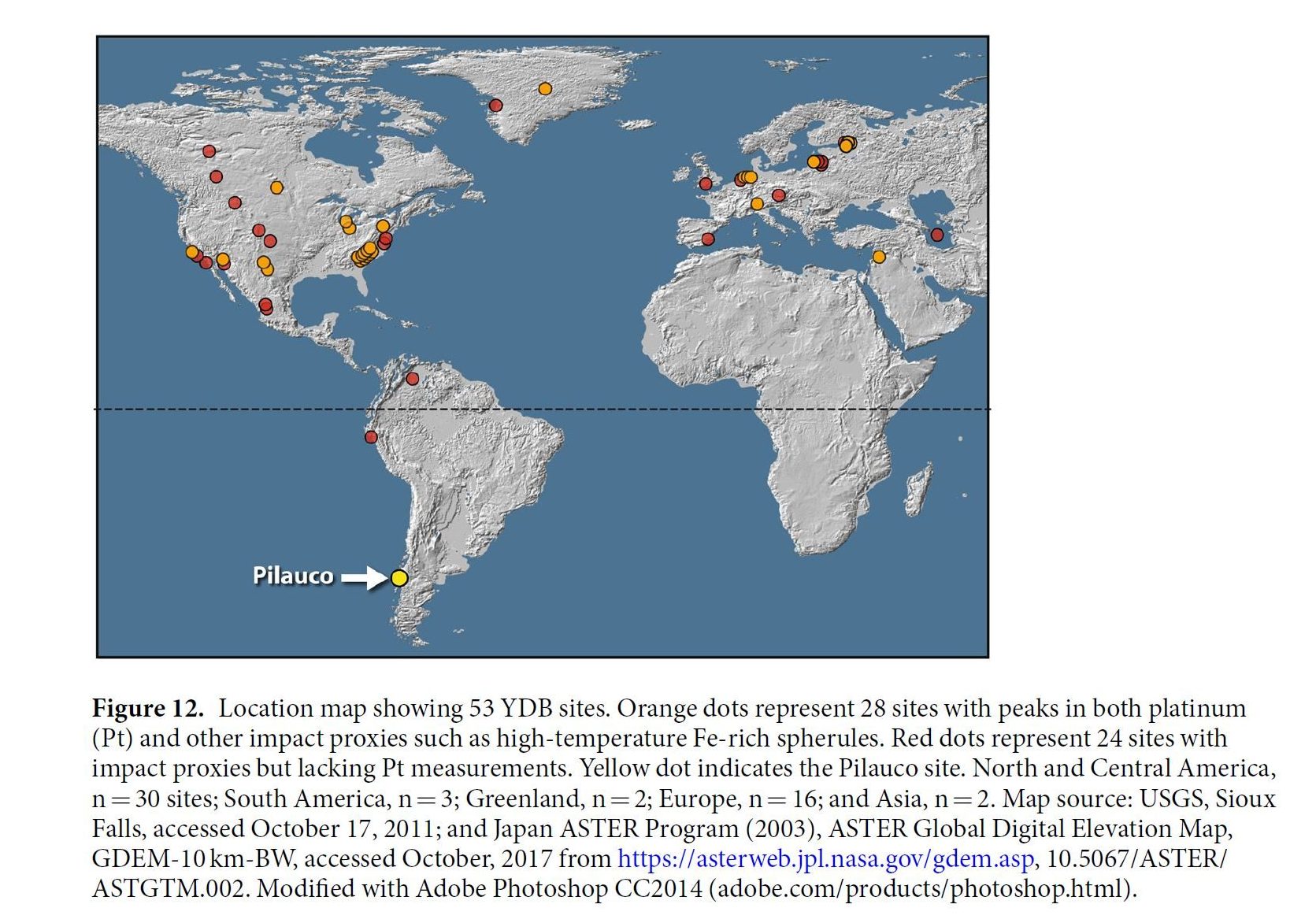
YDB World Map
© Cosmic Tusk
The main objective of this study was to test the YDB impact hypothesis by analyzing a wide range of data from the Pilauco site in southern Chile. The following conclusions show that our data and interpretations are consistent with the YDB impact hypothesis and we found no evidence that refutes the hypothesis.

(1) At Pilauco, ~12,800-year-old peaks in high-temperature Pt-rich and native-Fe spherules are comparable to similar impact-related evidence found at more than 50 YDB sites in North America, Europe, and western Asia. It appears that the YDB layer at Pilauco is coeval with similar layers found at these sites on several continents and is also possibly related to the proposed YDB impact event.

(2) Identification of the YDB layer at Pilauco greatly expands the proposed YDB proxy feld ~6,000 km farther south of the closest well-studied YDB site in Venezuela, and ~12,000 km south of the northernmost YDB site in Canada, a distance equaling ~30% of Earth's circumference.

(3) Cr-rich spherules are found in the YDB layer at Pilauco, but not found at the ~50 other sites on four continents, suggesting that one or more local impacts/airbursts occurred in the Cr-rich basaltic terrain
circa Pilauco.

Info

New celestial phenomenon, STEVE, closely correlated with violent disturbances in Earth's magnetosphere says study

Steve Phenomenon
© Alan DyerResearchers find a violent potential origin for the aurora-like phenomenon dubbed STEVE events, pictured here in southern Alberta.
Earlier this year, researchers announced that long, narrow streaks of purple light occasionally observed in the nighttime sky are not a new type of aurora, as first suspected, but a novel upper atmospheric phenomenon. Dubbed Strong Thermal Emission Velocity Enhancement (STEVE) because of their association with fast-moving ions and hot electrons in Earth's ionosphere, these celestial lights are often visible at lower latitudes than most auroras and appear to be caused by a different, and still undetermined, mechanism.

To better characterize STEVE, Gallardo-Lacourt et al. conducted the first statistical analysis of this optical phenomenon. Using NASA's Time History of Events and Macroscale Interactions during Substorms (THEMIS) ground-based All-Sky Imager array and the Canadian Space Agency's Redline Geospace Observatory (REGO) databases, the team identified and analyzed optical data from 28 STEVE events that occurred between December 2007 and December 2017.

Alarm Clock

Time reversal achieved by physicists using quantum computer

Researchers from the Moscow Institute of Physics and Technology teamed up with colleagues from the U.S. and Switzerland and returned the state of a quantum computer a fraction of a second into the past. They also calculated the probability that an electron in empty interstellar space will spontaneously travel back into its recent past. The study comes out March 13 in Scientific Reports.
Time reversal
© tsarcyanide/MIPT Press OfficeTime reversal.
"This is one in a series of papers on the possibility of violating the second law of thermodynamics. That law is closely related to the notion of the arrow of time that posits the one-way direction of time: from the past to the future," commented the study's lead author Gordey Lesovik, who heads the Laboratory of the Physics of Quantum Information Technology at MIPT.

"We began by describing a so-called local perpetual motion machine of the second kind. Then, in December, we published a paper that discusses the violation of the second law via a device called a Maxwell's demon," Lesovik said. "The most recent paper approaches the same problem from a third angle: We have artificially created a state that evolves in a direction opposite to that of the thermodynamic arrow of time."

Archaeology

What the world's oldest eggs are revealing about dinosaur evolution

dinasaur eggs
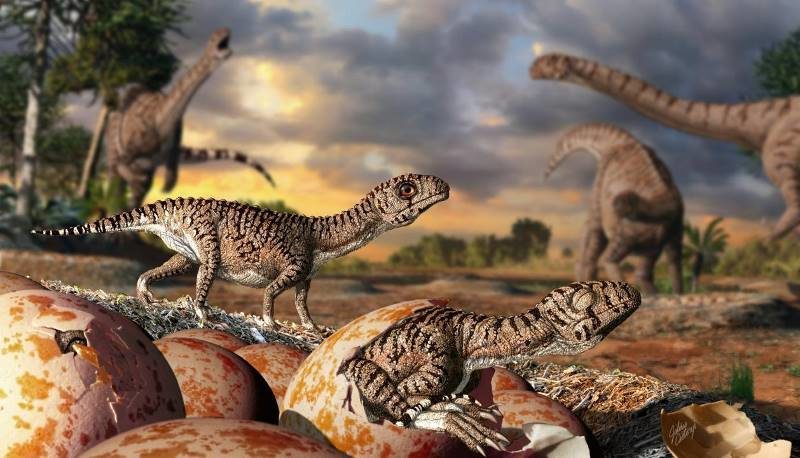
© Julius CsotonyiIllustration of Massospondylus eggs and young dinosaurs.
A study of the world's earliest known dinosaur eggs reveals new information about the evolution of dinosaur reproduction.

An international team of researchers led by Robert Reisz of the Department of Biology at the University of Toronto Mississauga studied the fossilized remains of eggs and eggshells discovered at sites in Argentina, China and South Africa-widely separated regions of the supercontinent Pangea. At 195 million years old, they are the earliest known eggs in the fossil record, and they were all laid by a group of stem sauropods-long-necked herbivores that ranged in size from four to eight metres in length and were the most common and widely spread dinosaurs of their time.

Reisz is puzzled by the fact that "reptile and mammal precursors appear as skeletons in the fossil record starting 316 million years ago, yet we know nothing of their eggs and eggshells until 120 million years later. It's a great mystery that eggs suddenly show up at this point, but not earlier."