Science & TechnologyS


Map

Frozen bird found in Siberia is 46,000 years old

frozen bird siberia prehistoric
© Valeri Plotnikov /Kennedy NewsThis 46,000-year-old 'ice bird' was so well preserved that fossil hunters mistook it for an unfortunate creature that 'died yesterday' - only to realise they had found the first ever Ice Age bird specimen
Fossil hunters find 'ice bird' from 46,000 years ago that looks like it died 'yesterday'

Scientists have recovered DNA from a well-preserved horned lark found in Siberian permafrost. The results can contribute to explaining the evolution of sub species, as well as how the mammoth steppe transformed into tundra, forest and steppe biomes at the end of the last Ice Age.

In 2018, a well-preserved frozen bird was found in the ground in the Belaya Gora area of north-eastern Siberia. Researchers at the Centre for Palaeogenetics, a new research center at Stockholm University and the Swedish Museum of Natural History, haves studied the bird and the results are now published in the scientific journal Communications Biology. The analyses reveals that the bird is a 46,000-year-old female horned lark.

Comment: The change in climate may have come faster than researchers realize:

Of Flash Frozen Mammoths and Cosmic Catastrophes


Sun

Sun ejects biggest solar flare in years - comes ahead of next active cycle

solar flare recorded November 29, 2020
© SpaceWeather.comA solar flare recorded November 29, 2020
On Sunday, SpaceWeather said the sun's solar explosion was measured as an M4.4-category eruption, which produced a shortwave radio blackout over some parts of Earth and a bright coronal mass ejection (CME).

"Remarkably, the flare was even bigger than it seemed. The blast site is located just behind the sun's southeastern limb, so the explosion was partially eclipsed by the body of the sun.

"X-rays and UV radiation from the flare ionized the top of Earth's atmosphere, producing a shortwave radio blackout over the South Atlantic... Ham radio operators and mariners may have noticed strange propagation effects at frequencies below 20 MHz, with some transmissions below 10 MHz completely extinguished," SpaceWeather said on its website.
sunspot solar flare november 2020
© SDO/HMIProvisionally numbered AR2790, a new sunspot is emerging

Bulb

Hope for Mars Missions: New Technology Can Extract Water and Fuel from Salty Water

Illustration:  Getty Images/Steven Hobbs/Stocktrek Images
© Getty Images/Steven Hobbs/Stocktrek ImagesMars colony dome concept
Researchers have developed a new system to separate salty water into both breathable air and fuel simultaneously in a major breakthrough for life here on Earth and even future colonies on Mars. Engineers at the McKelvey School of Engineering at Washington University in St. Louis developed a patented brine electrolysis system that not only works without the need for purified water but actually performs better thanks to the saltiness of the input water.

Beaker

Best of the Web: The PCR False Positive Pseudo-Epidemic

whitty vallance
© Pippa Fowles / No 10 Downing StreetChief Medical Officer, Professor Chris Whitty and Chief Scientific Adviser, Sir Patrick Vallance give a Coronavirus Data Briefing in 10 Downing Street on September 21st.
How a novel virus met a partly-immune population

In Spring 2020 a novel coronavirus swept across the world: novel, but related to other viruses. In the UK, unknown at the time, around 50% of the population were already immune. The evidence for this is unequivocal and arose due to prior infection by common cold-causing coronaviruses (of which four are endemic). This prior immunity has been confirmed around the world by top cellular immunologists. There is even a very recent paper from Public Health England on the topic of prior immunity and a wealth of other evidence from studies on memory T-cells, studies on household transmission and on antibodies.

Because of the extent of the prior immunity, and as a result of heterogeneity of contacts, once only a low percentage of the population, perhaps as low as 10-20% had been infected, "herd immunity" was established. This is why daily deaths, which were rising exponentially, turned abruptly and began to fall, uninterrupted by street protests, the return to work, the reopening of pubs and crowded beaches during the summer. (See this explainer by the data scientist Joel Smalley.)

Immunity to ordinary respiratory viruses occurs mainly through T-cells which 'take a picture of the invader' at a molecular level, 'reproduce' it on certain immune cells and essentially 'never forget a face'. This T-cell immunity is robust and durable. Those exposed to the highly related SARS virus in 2003 still have this immunity 17 years later. In relation to SARS-CoV-2, the pattern of immunity to date is identical and after around 800 million infections across the world, there is no convincing evidence for significant levels of re-infection. Not only are those who've been infected and have now recovered immune (they cannot get ill again with the same virus), but importantly they do not participate in transmission. (See my article on what SAGE got wrong for Lockdown Sceptics.) Furthermore, because the immune response is diverse, a proportion of them will also be immune to novel but similar viruses in the future.

Robot

AI program capable of predicting protein shapes, could 'revolutionize' medical research

e.coli and proteins
© University of Texas at Austin
Inside every cell, thousands of different proteins form the machinery that keeps all living things - from humans and plants to microscopic bacteria - alive and well. Almost all diseases, including cancer, dementia and even infectious diseases such as COVID-19, are related to the way these proteins function. Because each protein's function is directly related to its three-dimensional shape, scientists around the world have strived for half a century to find an accurate and fast method to enable them to discover the shape of any protein.

Today (Monday) researchers at the 14th Community Wide Experiment on the Critical Assessment of Techniques for Protein Structure Prediction (CASP14) will announce that an artificial intelligence (AI) solution to the challenge has been found.

Building on the work of hundreds of researchers across the globe, an AI program called AlphaFold, created by London-based AI lab DeepMind, has proved capable of determining the shape of many proteins. It has done so to a level of accuracy comparable to that achieved with expensive and time-consuming lab experiments.

Comment: See also: Chromosomes revealed to look different than expected in never seen before 3D image


Rocket

Chernobyl fungus could shield astronauts from cosmic radiation

C. sphaerospermum
© Medmyco/Wikimedia CommonsC. sphaerospermum
A recent study tested how well the fungi species Cladosporium sphaerospermum blocked cosmic radiation aboard the International Space Station.

When astronauts return to the moon or travel to Mars, how will they shield themselves against high levels of cosmic radiation? A recent experiment aboard the International Space Station suggests a surprising solution: a radiation-eating fungus, which could be used as a self-replicating shield against gamma radiation in space.

The fungus is called Cladosporium sphaerospermum, an extremophile species that thrives in high-radiation areas like the Chernobyl Nuclear Power Plant. For C. sphaerospermum, radiation isn't a threat — it's food. That's because the fungus is able to convert gamma radiation into chemical energy through a process called radiosynthesis. (Think of it like photosynthesis, but swap out sunlight for radiation.)

The radiotrophic fungus performs radiosynthesis by using melanin — the same pigment that gives color to our skin, hair and eyes — to convert X- and gamma rays into chemical energy. Scientists don't fully understand this process yet. But the study notes that it's "believed that large amounts of melanin in the cell walls of these fungi mediate electron-transfer and thus allow for a net energy gain."

Info

CNO energy-production mechanism detected in our Sun

Borexino detector.
© Courtesy Borexino CollaborationBorexino detector.
AMHERST, Mass. - An international team of about 100 scientists of the Borexino Collaboration, including particle physicist Andrea Pocar at the University of Massachusetts Amherst, report in Nature this week detection of neutrinos from the sun, directly revealing for the first time that the carbon-nitrogen-oxygen (CNO) fusion-cycle is at work in our sun.

The CNO cycle is the dominant energy source powering stars heavier than the sun, but it had so far never been directly detected in any star, Pocar explains.

For much of their life, stars get energy by fusing hydrogen into helium, he adds. In stars like our sun or lighter, this mostly happens through the 'proton-proton' chains. However, many stars are heavier and hotter than our sun, and include elements heavier than helium in their composition, a quality known as metallicity. The prediction since the 1930's is that the CNO-cycle will be dominant in heavy stars.

Neutrinos emitted as part of these processes provide a spectral signature allowing scientists to distinguish those from the 'proton-proton chain' from those from the 'CNO-cycle.' Pocar points out, "Confirmation of CNO burning in our sun, where it operates at only one percent, reinforces our confidence that we understand how stars work."

Cloud Lightning

'Superbolts' detected above atmosphere are over 1,000 times brighter than normal lightning

lightning
© (Johannes Plenio/Unsplash)
Every now and then, Earth reminds us it's capable of releasing some furious energy.

Case in point: scientists have just detected a new extreme in hotspots of lightning activity called 'superbolts': intense lightning strikes that shine up to 1,000 times brighter than typical lightning strikes.

The observations come from researchers at the US Los Alamos National Laboratory, who used satellites to measure the extreme lightning events. The results force a rethink on what constitutes a superbolt, and shed new light on how and where superbolts originate.

"We want[ed] to see what the boundaries [of superbolts] really are," atmospheric scientist Michael Peterson told The Washington Post. "It's about how big and how bright they can get."

Comment: Scientists have yet to factor in the electrical aspect of our universe into their considerations and one would imagine that when they do the drivers behind superbolt lightning might become a little clearer: And check out SOTT radio's:


Microscope 2

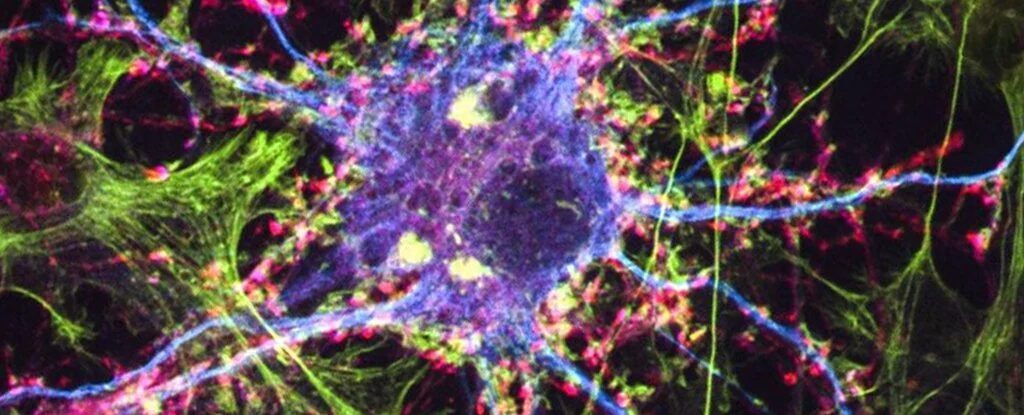
Chromosomes revealed to look different than expected in never seen before 3D image

Metaphase
© Ed Reschke/Getty ImagesMetaphase in an onion root tip.
If you've ever studied any chemistry or biology, there's a very good chance you've come across the common pictorial representation of what a chromosome is supposed to look like.

As millions of high-schoolers and undergraduates will attest, it's a tall, narrow X-shape - visualising what two joined chromatids look like after DNA replication takes place, but before cell division is complete, at which point they've separated to become their own individual chromosomes.

Unfortunately, there's a small problem with this ubiquitous symbol, scientists say, at least in terms of how accurate its depiction is.

Comment: See also: And check out SOTT radio's:


Galaxy

Mitochondrial changes key to health problems in Space

Astronaut
© NASAAstronaut Scott Kelly is working with the Microgravity Sciences Glovebox during a Rodent Research session with Bone Densitometer.
Living in space isn't easy. There are notable impacts on the biology of living things in the harsh environment of space. A team of scientists has now identified a possible underlying driver of these impacts: the powerhouse of the cell, called mitochondria, experiences changes in activity during spaceflight.

Recently published in the journal Cell, these results used data collected over decades of experimental research on the International Space Station, including samples from 59 astronauts. Studies such as these are critical to understanding the effects of low gravity, radiation, confined spaces, and more as NASA sends astronauts deep into space for extended missions to the Moon, Mars, and beyond.

"We've found a universal mechanism that explains the kinds of changes we see to the body in space, and in a place we didn't expect," said Afshin Beheshti the lead author on the paper and a researcher with KBR, which provides contract support to NASA's Ames Research Center in California's Silicon Valley. "Everything gets thrown out of whack and it all starts with the mitochondria."

Comment: See also: 6 months in space increased dexterity but impaired vision, study on 8 Russian cosmonauts shows