Science & TechnologyS


Laptop

New supercomputer to reel in answers to some of earth's problems

Image
© UnknownChinook is a high performance computer that has been tailored to meet the current and future operational needs of Department of Energy EMSL users and can perform more than 160 trillion calculations per second.
Richland, Wash. - The newest supercomputer in town is almost 15 times faster than its predecessor and ready to take on problems in areas such as climate science, hydrogen storage and molecular chemistry. The $21.4 million Chinook supercomputer was built by HP, tested by a variety of researchers, and has now been commissioned for use by Pacific Northwest National Laboratory and the Department of Energy.

Housed at EMSL, DOE's Environmental Molecular Sciences Laboratory on the PNNL campus, Chinook can perform more than 160 trillion calculations per second, ranking it in the top 40 fastest computers in the world (see the Top 50). Its predecessor, EMSL's MPP2, could run 11.2 trillion calculations per second.

Saturn

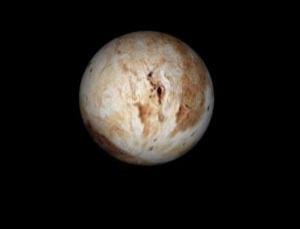
Is Pluto a planet after all?

Image
© JPL / NASAHow many planets in your solar system?
How many planets are in the solar system? The official answer is eight - unless you happen to live in Illinois. Earlier this year, defiant Illinois state governors declared that Pluto had been unfairly demoted by the International Astronomical Union, the authority that sets the rules on all matters planetary.

Three years ago, the IAU decided to draw up the first scientific definition of the term planet. After days of stormy arguments at its general assembly in Prague, the delegates voted for a definition that excluded Pluto, downgrading it to the new category of dwarf planet.

The decision caused outrage among many members of the public who had grown up with nine planets, and among some astronomers who pointed out that only 4 per cent of the IAU's 10,000 members took part in the vote. The governors of Illinois saw the decision as a snub to Pluto's discoverer, Clyde Tombaugh, who was born in the state.

Next week the IAU's general assembly will convene for the first time since Pluto was axed from the list of planets. Surprisingly, IAU chief Karel van der Hucht does not expect anyone to challenge the ruling made in Prague, but Pluto fans can take heart: resistance remains strong.

Telescope

Astronomers Discover Rare 'Green Pea' Galaxies

Green Peas
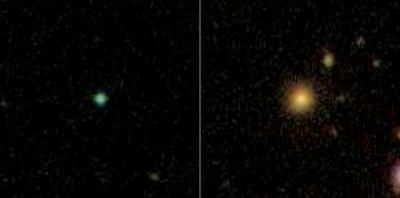
© Carolin Cardamone and Sloan Digital Sky SurveyA "Green Pea" galaxy, at left, isn't like the typical galaxy at right.
A team of astronomers has discovered a group of rare galaxies called the "Green Peas", which could lend unique insights into how galaxies form stars in the early universe.

The galaxies were discovered with the help of citizen scientists working through an online project called Galaxy Zoo.

The Galaxy Zoo users, who volunteer their spare time to help classify galaxies in an online image bank, came across a number of objects that stuck out because of their small size and bright green color.

They dubbed them the "Green Peas".

Pharoah

Everything You Ever Wanted To Know About Unwrapping Of A Mummy

Edward Bleiberg
© Edward BleibergEdward Bleiberg
On June 23, 2009, a team from the Brooklyn Museum supervised by Edward Bleiberg, curator of Egyptian, Classical, and Ancient Middle Eastern Art, and Lisa Burno, Head Objects Conservator, transported four mummies from Brooklyn to North Shore University Hospital for CT scans.

Drs. Jessie Chusid, Amgad Makaryus, and Karen Lisk of North Shore volunteered their time and services to scan four of the oldest patients they had ever encountered. The mummies on board were from various periods dating from the Third Intermediate Period (1064-656 B.C.) to the Roman Period (30 B.C.-A.D. 395).

The trip was smooth and the CT scans went without trouble. The scans produced vast amounts of data to be sorted and analyzed, but even immediate, preliminary readings of the scans revealed some very unusual discoveries.

Meteor

Comets, Not Asteroids, to Blame for Moon's Scarred Face

Moon
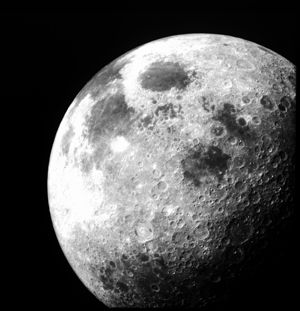
© NASAA new study suggests comets gouged out the vast majority of craters on the moon.
Icy comets - not rocky asteroids - launched a dramatic assault on the Earth and moon around 3.85 billion years ago, a new study of ancient rocks in Greenland suggests. The work suggests much of Earth's water could have been brought to the planet by comets.

"We can see craters on the moon's surface with the naked eye, but nobody actually knew what caused them - was it rocks, was it iron, was it ice?" says Uffe Gråe Jørgensen, an astronomer at the Niels Bohr Institute in Copenhagen, Denmark. "It's exciting to find signs that it was actually ice."

Evidence suggests that the Earth and moon had both formed around 4.5 billion years ago. But almost all the craters on the moon date to a later period, the "Late Heavy Bombardment" 3.8 to 3.9 billion years ago, when around 100 million billion tonnes of rock or ice crashed onto the lunar surface. The Earth would have been pummelled by debris at the same time, although plate tectonics on our restless planet have since erased the scars.

Sherlock

Archaeological Digs Uncover Qatar's Past

Dig
© UnknownAl Zubarah site
Growing interest in the archaeology of Qatar has resulted in a substantial number of new sites being discovered and significantly more archaeological research in the region.

This was apparent when an exceptional session on the archaeology of Qatar was held at the British Museum, London, as part of the Seminar for Arabian Studies 2009, recently.

The session on July 24 included lectures by representatives from universities and academic institutions on recent research and excavations conducted as part of an initiative by the Qatar Museums Authority (QMA).

Magnify

Discovery of Sasanian Layer in the Persian Gulf's Port of Siraf

London -- During the archaeological research at the ancient port of Siraf in the Persian Gulf, archaeologists have identified Sasanian layers and artefacts near the Congressional Mosque, reported the Persian service of CHN.

"After opening a trench 50 meters away and on the northern section of the Siraf's Congressional Mosque, we have discovered historical layers dating to the Sasanian to post-Sasanian periods [224-850 CE]", said Mohammad Esmaili, director of archaeological research at Siraf.

The congregational mosque at Siraf was built in the 9th century on the remains of a Parthian and Sasanian dynastic building.

Sherlock

When Did Humans Return After Last Ice Age?

Cave
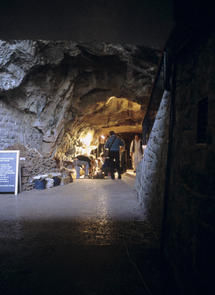
© Natural History MuseumGough's Cave.
The Cheddar Gorge in Somerset was one of the first sites to be inhabited by humans when they returned to Britain near the end of the last Ice Age. According to new radio carbon dating by Oxford University researchers, outlined in the latest issue of Quaternary Science Review, humans were living in Gough's Cave 14,700 years ago.

A number of stone artifacts as well as human and animal bones from excavations, spread over more than 100 years, shed further light on the nature as well as the timing of people to the cave.

Technological advances have allowed researchers at Oxford University and London's Natural History Museum to date the bones more accurately. Previous radiocarbon dates suggested a wide span of occupation of within 1000-1500 years. The new dates show a much narrower range of dates, corresponding precisely to climate warming, providing evidence that the archaeological material in the cave could have accumulated over perhaps as little as two to three human generations, centered on 14,700 years ago.

Magnify

Nanodiamonds deliver insulin for wound healing

Bacterial infection is a major health threat to patients with severe burns and other kinds of serious wounds such as traumatic bone fractures. Recent studies have identified an important new weapon for fighting infection and healing wounds: insulin.

Now, using tiny nanodiamonds, researchers at Northwestern University have demonstrated an innovative method for delivering and releasing the curative hormone at a specific location over a period of time. The nanodiamond-insulin clusters hold promise for wound-healing applications and could be integrated into gels, ointments, bandages or suture materials.

Info

Study Sheds Light on Earthquake Hazard Along San Andreas Fault

Image
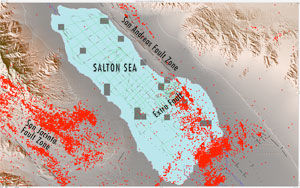
© Scripps Institution of Oceanography A seismic map of the Salton Sea area reveals the grid covered by the CHIRP instrument (green lines), faults (black lines) and bomb target sites (gray boxes). The red dots represent earthquakes that have taken place in the area since 1983.
Scripps Institution of Oceanography / University of California, San Diego - New research by a team of scientists from Scripps Institution of Oceanography at UC San Diego and the U.S. Geological Survey (USGS) offers new insight into the San Andreas Fault as it extends beneath Southern California's Salton Sea. The team discovered a series of prominent faults beneath the sea, which transfer motion away from the San Andreas Fault as it disappears beneath the Salton Sea. The study provides new understanding of the intricate earthquake faults system beneath the sea and what role it may play in the earthquake cycle along the southern San Andreas Fault.

A seismic map of the Salton Sea area reveals the grid covered by the CHIRP instrument (green lines), faults (black lines) and bomb target sites (gray boxes). The red dots represent earthquakes that have taken place in the area since 1983.