Science & TechnologyS


Telescope

Most Earth-Like Exoplanet Ever Found Started Out as a Gas Giant

Image
© ESO/L. CalçadaThis artist's impression shows sunrise over CoRoT-7b, the smallest-known exoplanet.
The most earthlike planet yet found around another star may be the rocky remains of a Saturn-sized gas giant, according to research presented January 6 at the American Astronomical Society meeting in Washington.

"The first planets detected outside our solar system 15 years ago turned out to be enormous gas-giants in very tight orbits around their stars. We call them 'hot Jupiters,' and they weren't what astronomers expected to find," said Brian Jackson at NASA's Goddard Space Flight Center in Greenbelt, Md. "Now, we're beginning to see Earth-sized objects in similar orbits. Could there be a connection?"

Jackson and his colleagues turned to CoRoT-7b, the smallest planet and the most like Earth that astronomers have found to date. Discovered in February 2009 by the Convection, Rotation and Planetary Transits (CoRoT) satellite, a mission led by the French Space Agency, CoRoT-7b takes just 20.4 hours to circle its sunlike star, located 480 light-years away in the constellation Monoceros. Astronomers believe the star is about 1.5 billion years old, or about one-third the sun's age.


Magic Wand

How to make a liquid invisibility cloak

Image
© Dimitar Dilkoff/AFP/GettyHiding behind water
When J. K. Rowling described Harry Potter's invisibility cloak as "fluid and silvery", she probably wasn't thinking specifically about silver-plated nanoparticles suspended in water. But a team of theorists believe that using such a set-up would make the first soft, tunable metamaterial - the "active ingredient" in an invisibility device.

The fluid proposed by Ji-Ping Huang of Fudan University in Shanghai, China, and colleagues, contains magnetite balls 10 nanometres in diameter, coated with a 5-nanometre-thick layer of silver, possibly with polymer chains attached to keep them from clumping.

In the absence of a magnetic field, such nanoparticles would simply float around in the water, but if a field were introduced, the particles would self-assemble into chains whose lengths depend on the strength of the field, and which can also attract one another to form thicker columns.

The chains and columns would lie along the direction of the magnetic field. If they were oriented vertically in a pool of water, light striking the surface would refract negatively - bent in way that no natural material can manage.

Telescope

Milky Way's dark matter 'turned on its side'

The cloud of dark matter that is thought to surround the Milky Way may be shaped like a squashed beach ball. This halo of invisible matter also seems to sit at an unexpected angle - which could be a strike against a theory that challenges Einstein's account of gravity.


Info

Iraqi archaeologists find ancient Sumerian settlement

Image
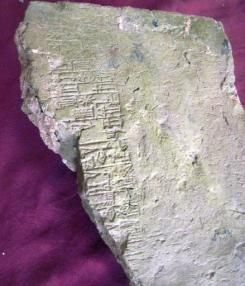
© UnknownA hand out image of an ancient Sumerian table. Iraqi archaeologists say they have discovered a 2,000-year-old Sumerian settlement in southern Iraq, yielding a bounty of historical artefacts.
Iraqi archaeologists said on Friday they have discovered a 2,000-year-old Sumerian settlement in southern Iraq, yielding a bounty of historical artefacts.

The site, in the southern province of Dhi Qar, is in the desert near ancient Ur, the biblical birthplace of Abraham.

"There are walls and cornerstones carrying Sumerian writings, dating back to the era of the third Sumerian dynasty," said Abdul Amir al-Hamdani, head of the provincial government's archaeology department.

Magnify

Massive statue of Pharaoh Taharqa discovered deep in Sudan

Image
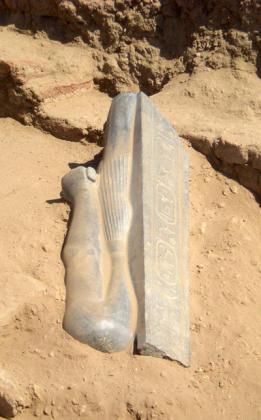
© Berber-Abidiya Archaeological Project. The inscribed pillar of the statue along with part of its torso. It took 18 workers to move it from the site.
No statue of a pharaoh has ever been found further south of Egypt than this one. At the height of his reign, King Taharqa controlled an empire stretching from Sudan to the Levant.

A massive, one ton, statue of Taharqa that was found deep in Sudan. Taharqa was a pharaoh of the 25th dynasty of Egypt and came to power ca. 690 BC, controlling an empire stretching from Sudan to the Levant. The pharaohs of this dynasty were from Nubia - a territory located in modern day Sudan and southern Egypt.

The Nubian pharaohs tried to incorporate Egyptian culture into their own. They built pyramids in Sudan - even though pyramid building in Egypt hadn't been practised in nearly 800 years. Taharqa's rule was a high water mark for the 25th dynasty. By the end of his reign a conflict with the Assyrians had forced him to retreat south, back into Nubia - where he died in 664 BC. Egypt became an Assyrian vassal - eventually gaining independence during the 26th dynasty. Taharqa's successors were never able to retake Egypt.

Chalkboard

Evolutionary Surprise: Eight Percent of Human Genetic Material Comes from a Virus

About eight percent of human genetic material comes from a virus and not from our ancestors, according to researchers in Japan and the U.S.

The study, and an accompanying News & Views article by University of Texas at Arlington biology professor Cédric Feschotte, is published in the journal Nature.

The research showed that the genomes of humans and other mammals contain DNA derived from the insertion of bornaviruses, RNA viruses whose replication and transcription takes place in the nucleus. Feschotte wrote on recent research led by Professor Keizo Tomonaga at Osaka University in Japan. Feschotte said this virally transmitted DNA may be a cause of mutation and psychiatric disorders such as schizophrenia and mood disorders.

Health

'Lorenzo's Oil' Breakthrough: Newfound Mechanism Could Prevent or Treat Deadly Peroxisome Diseases

University of Alberta medical researchers have made a major breakthrough in understanding a group of deadly disorders that includes the disease made famous in the movie Lorenzo's Oil.

Because this group of diseases is inherited, the discovery could help in screening carriers and lead to prevention or an effective treatment.

Richard Rachubinski, in the Faculty of Medicine & Dentistry, is an expert on structures in cells called peroxisomes which are involved in breaking down fatty acids. They are vital for humans. Babies born with a peroxizome disorder do not typically survive longer than a year because of impaired metabolism.

Chalkboard

Observation About How Nervous System Learns and Encodes Motion Could Improve Stroke Recovery

Bioengineers have taken a small step toward improving physical recovery in stroke patients by showing that a key feature of how limb motion is encoded in the nervous system plays a crucial role in how new motor skills are learned.

Published in the November 25, 2009 issue of Neuron, a Harvard-based study about the neural learning elements responsible for motor learning may help scientists design rehabilitation protocols in which motor adaptation occurs more readily, potentially allowing for a more rapid recovery.

Neuroscientists have long understood that the brain's primary motor cortex and the body's low-level peripheral stretch sensors encode information about the position and velocity of limb motion in a positively-correlated manner rather than as independent variables.

"While this correlation between the brain's encoding of the position and the velocity of motion is well-known, its potential importance and practical use has been unclear until now," says coauthor Maurice A. Smith, Assistant Professor of Bioengineering at the Harvard School of Engineering and Applied Sciences (SEAS) and the Center for Brain Science in the Faculty of Arts and Sciences.

Chalkboard

Researcher Links Diabetic Complication to Nerve Damage in Bone Marrow

A research team led by a Michigan State University professor has discovered a link between diabetes and bone marrow nerve damage that may help treat one of the disease's most common and potentially blindness-causing complications.

The key to better treating retinopathy -- damage to blood vessels in the retina that affects up to 80 percent of diabetic patients -- lies not in the retina but in damage to the nerves found in bone marrow that leads to the abnormal release of stem cells, said Julia Busik, an associate professor in MSU's Department of Physiology.

"With retinopathy, blood vessels grow abnormally in the retina, distort vision and eventually can cause blindness," said Busik, whose research appears in a recent issue of the Journal of Experimental Medicine. "There has been a lot of progress in treating the complication, but most treatments use a laser that is painful to the patient and destroys parts of the retina."

Busik and her team found that nerve damage in diabetic bone marrow -- where stem cells known as endothelial progenitor cells reside -- affects the daily release of those EPCs into the bloodstream. Normally EPCs would exit the bone marrow and repair damage done in the vascular system during sleep.

Chalkboard

Brain Imaging May Help Diagnose Autism

Children with autism spectrum disorders (ASDs) process sound and language a fraction of a second slower than children without ASDs, and measuring magnetic signals that mark this delay may become a standardized way to diagnose autism.

Researchers at The Children's Hospital of Philadelphia report their findings in an online article in the journal Autism Research, published January 8.

"More work needs to be done before this can become a standard tool, but this pattern of delayed brain response may be refined into the first imaging biomarker for autism," said study leader Timothy P.L. Roberts, Ph.D., vice chair of Radiology Research at Children's Hospital.

ASDs are a group of childhood neurodevelopmental disorders that cause impairments in verbal communication, social interaction and behavior. ASDs are currently estimated to affect as many as one percent of U.S. children, according to a recent CDC report.