Science & TechnologyS


Chalkboard

The mind 'actively erases memories to create space for new information'

Scientists believe the breakthrough in understanding how short-term memories are lost solve the mystery of how they are created in the first place.

Scientists have previously speculated that they "drop out" to make room for new ones, but the theory has been difficult to prove.

New research suggests that chemicals in the brain actively remove short-term memories.

And they speed up their work when faced with large amounts of information.

"Learning activates the biochemical formation of memory," said Yi Zhong of Tsinghua University, in Beijing, who led the study.

"But you need to remove memories for new information to come in.

"We've found that forgetting is an active process to remove memory."

Info

Synchronized flying robots could paint pictures in the sky

Flyfire
© MIT SENSEable City LabIn the Flyfire project, large numbers of micro helicopters with LEDs act as moving smart pixels, performing elaborate synchronized motions that create an elastic display.
In a new MIT project called Flyfire, tiny robotic helicopters with LEDs can act as flying pixels, moving together to create transient images in three-dimensional space. If it sounds like something out of a Disney animation, it sort of is.

"It's like when Winnie the Pooh hits a beehive: a swarm of bees comes out and chases him while changing its configuration to resemble a beast," said E Roon Kang, a research fellow at MIT's SENSEable City Lab who is leading the project. "In Flyfire, each bee is essentially a pixel that emits colored light and reconfigures itself into different forms."


Info

Braille Karaoke lets Blind Croon in Sync

Karaoke MAchine
© KYODO PHOTOFeel for music: A new karaoke machine for vision-impaired people developed by Nippon Telesoft Co. shows song lyrics in real time through a computer and a pin display that render the data into braille.
A Tokyo-based company has developed a karaoke machine for the blind that can render the lyrics for about 100,000 songs in braille in sync with another karaoke network system.

A personal computer connected to the machine and the Joysound network translates the lyrics into braille and sends the data to the karaoke machine, which displays it in the form of dots that pop up on a pin display.

The display can render up to 80 braille characters at a time, allowing blind people to sing in real time, Nippon Telesoft Co. said.

The braille machine, which can handle lyrics in Japanese, English, Italian and Chinese, is the first of its kind in Japan, the company said.

Sherlock

Copper men: Archaeologists uncover Stone Age copper workshop near Monk's Mound in Illinois

Copper
© BNDDetail of copper
Collinsville -- About 800 years ago, in a large room lit by a wood fire, fierce-looking men bedecked in bright feathers and polished copper ornaments gathered to smoke and talk.

Their intricate jewelry -- fanciful objects hammered from chunks of naturally occurring raw copper -- reflected the firelight. A variety of these ancient Mississippian-era copper decorations have turned up throughout Illinois and the Southeast United States, including triangular, 8-inch long-earrings embossed at the ends with a human face, headdress ornaments depicting stylized birds, even diminutive but carefully crafted copper ovals that may have been applied to a ritualistic leather belt or cape. When they are unearthed, these antiquities are covered with a green or gray patina.

Today, traffic on Collinsville Road passes a short distance from the collection of over more than 80 mounds where, archaeologists say, this American Stone Age scene is thought to have regularly occurred.

Blackbox

Upside-Down Answer for Deep Mystery: What Caused Earth to Hold Its Last Breath?

Image
© iStockphotoVolcano eruption (Reunion island, Indian Ocean).
When Earth was young, it exhaled the atmosphere. During a period of intense volcanic activity, lava carried light elements from the planet's molten interior and released them into the sky. However, some light elements got trapped inside the planet. In the journal Nature, a Rice University-based team of scientists is offering a new answer to a longstanding mystery: What caused Earth to hold its last breath?

For some time, scientists have known that a large cache of light elements like helium and argon still reside inside the planet. This has perplexed scientists because such elements tend to escape into the atmosphere during volcanism. However, because these elements are depleted in the Earth's upper mantle, Earth scientists are fairly certain the retained elements lie in a deeper portion of the mantle. Researchers have struggled to explain why some gases would be retained while others would rise and escape into the air. The dominant view has been that the lowermost mantle has been largely isolated from the upper mantle and therefore retains its primordial composition.

Magnify

The dark side of geolocation: PleaseRobMe.com

Image
More than a social statement than an actual utility for aspiring Colton Harris-Moore* copycats, a new site called Please Rob Me has popped up to expose the potential pratfalls of the geolocation craze: If you're pushing a "check-in" from Gowalla, Brightkite, or Foursquare to a local restaurant out to your public Twitter stream, you're broadcasting that you aren't home. Which could be taken to mean that your home is ripe for burglary.

Please Rob Me consists exclusively of an aggregation of public Twitter messages that have been pushed through fast-growing location-based networking site Foursquare, one of a handful of services that encourages people to share their whereabouts with their friends. You can filter by geographic location, too.

"On one end we're leaving lights on when we're going on a holiday, and on the other we're telling everybody on the internet we're not home," the Please Rob Me site says to explain its rationale. "The goal of this website is to raise some awareness on this issue and have people think about how they use services like Foursquare, Brightkite, Google Buzz, etc."

Chess

Microsoft steps up search assault on Google

Image
© Reuters/Joshua Lott
Microsoft Corp's assault on search engine leader Google Inc took a major step forward on Thursday as U.S. and European regulators cleared the software company's search partnership with Yahoo Inc.

The 10-year deal, struck last July, is the biggest effort yet by Microsoft to establish an online business to rival Google, an area where Microsoft has lost $5 billion over the last four years.

"Microsoft really has room to throw money at this," said Kim Caughey, senior analyst at Fort Pitt Capital Group. "I think it can work. If they can make inroads in specific target areas, they could have something positive to report."

Microsoft has already made some progress with its search engine, Bing, picking up 3.3 points of market share since its launch last June. But Bing is not likely to "push Google off a very big pedestal any time soon," said Caughey.

Magnify

Neuroscientists Reveal New Links That Regulate Brain Electrical Activity

Investigators in the Hotchkiss Brain Institute, Faculty of Medicine, have made a major breakthrough in our understanding of nerve impulse generation within the brain. Brain cells communicate with each other by firing electrical impulses, which in turn rely upon special ion channels that are positioned at strategic locations in their membranes.

This new foundational research is published in the journal Nature Neuroscience.

Principal Investigators, Ray W. Turner, Ph.D. and Gerald Zamponi, Ph.D. study the inhibitory and excitatory actions of ion channels in neurons of the cerebellum. Partnerships between the two laboratories, enabled Turner to 'follow his hunch' to prove that specific members of two different families of channels, previously thought to function independently, in fact function in tandem.

Frog

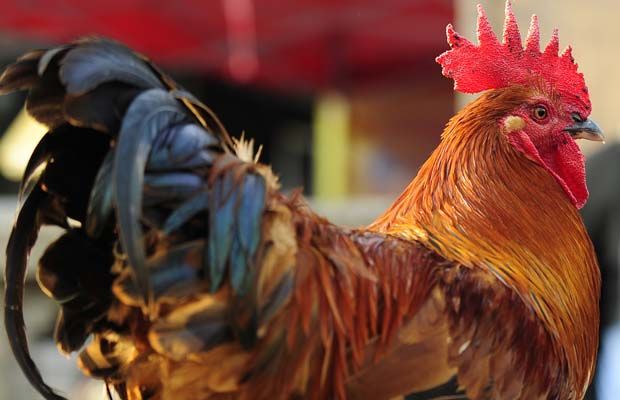
Chickens can see more colours than humans: Scientist

rooster
© Peter Parks, AFP/Getty ImagesResearchers at the Washington University School of Medicine in St. Louis have discovered light receptors in a chicken's eye allow the bird to see more colours than humans.

After staring into the eyes of chickens, a group of American researchers think they maybe on the path toward finding new ways to treat human blindness.

Researchers at the Washington University School of Medicine in St. Louis have discovered light receptors in a chicken's eye allow the bird to see more colours than humans. The findings, published February in the scientific journal PLoS One, found receptor cells in a chicken's retina are laid out in mosaic-like patterns, organized in a way that gives chickens, and other birds, more sensitive vision than most other mammals.

"I think birds really do see colour in a way different from humans," said Joseph Corbo, senior author of the study and assistant professor of pathology, immunology and genetics.

"That's hard for us to imagine. We don't really know what's in the mind of a chicken," he said.

Vision comes from light-sensitive receptor cells in the retina - a light-sensitive structure at the back of the eye.

The human retina can detect red, blue and green wavelengths, said Corbo.

Blackbox

The writing on the cave wall

Image
© Dozier Marc/PhotolibraryTime to look around the paintings
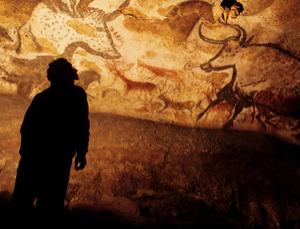
The first intrepid explorers to brave the 7-metre crawl through a perilously narrow tunnel leading to the Chauvet caves in southern France were rewarded with magnificent artwork to rival any modern composition. Stretching a full 3 metres in height, the paintings depict a troupe of majestic horses in deep colours, above a pair of boisterous rhinos in the midst of a fight. To the left, they found the beautiful rendering of a herd of prehistoric cows. "The horse heads just seem to leap out of the wall towards you," says Jean Clottes, former director of scientific research at the caves and one of the few people to see the paintings with his own eyes.

When faced with such spectacular beauty, who could blame the visiting anthropologists for largely ignoring the modest semicircles, lines and zigzags also marked on the walls? Yet dismissing them has proved to be something of a mistake. The latest research has shown that, far from being doodles, the marks are in fact highly symbolic, forming a written "code" that was familiar to all of the prehistoric tribes around France and possibly beyond. Indeed, these unprepossessing shapes may be just as remarkable as the paintings of trotting horses and tussling rhinos, providing a snapshot into humankind's first steps towards symbolism and writing.

Until now, the accepted view has been that our ancestors underwent a "creative explosion" around 30,000 to 40,000 years ago, when they suddenly began to think abstractly and create rock art. This idea is supported by the plethora of stunning cave paintings, like those at Chauvet, which started to proliferate across Europe around this time. Writing, on the other hand, appeared to come much later, with the earliest records of a pictographic writing system dating back to just 5000 years ago.