Science & TechnologyS


Nebula

Scientists use sounds waves to turn fat-derived stem cells into bone cells

soundwave
© CC0 Public Domain
Researchers have used sound waves to turn stem cells into bone cells, in a tissue engineering advance that could one day help patients regrow bone lost to cancer or degenerative disease.

The innovative stem cell treatment from researchers at RMIT University offers a smart way forward for overcoming some of the field's biggest challenges, through the precision power of high-frequency sound waves.

Tissue engineering is an emerging field that aims to rebuild bone and muscle by harnessing the human body's natural ability to heal itself.

A key challenge in regrowing bone is the need for large amounts of bone cells that will thrive and flourish once implanted in the target area.

Comment: See also: And check out SOTT radio's:


Info

Balkanatolia: the forgotten continent that sheds light on the evolution of mammals

Balkanatolia
© Alexis Licht & Grégoire MétaisMap showing Balkanatolia 40 million years ago and at the present day.
A team of French, American and Turkish palaeontologists and geologists led by CNRS researchers1 has discovered the existence of a forgotten continent they have dubbed Balkanatolia, which today covers the present-day Balkans and Anatolia. Formerly inhabited by a highly specific fauna, they believe that it enabled mammals from Asia to colonise Europe 34 million years ago. Their findings are published in the March 2022 volume of Earth Science Reviews.

For millions of years during the Eocene Epoch (55 to 34 million years ago), Western Europe and Eastern Asia formed two distinct land masses with very different mammalian faunas: European forests were home to endemic fauna such as Palaeotheres (an extinct group distantly related to present-day horses, but more like today's tapirs), whereas Asia was populated by a more diverse fauna including the mammal families found today on both continents.

We know that, around 34 million years ago, Western Europe was colonised by Asian species, leading to a major renewal of vertebrate fauna and the extinction of its endemic mammals, a sudden event called the 'Grande Coupure'. Surprisingly, fossils found in the Balkans point to the presence of Asian mammals in southern Europe long before the Grande Coupure, suggesting earlier colonisation.

Info

New insights into the formation of brown dwarfs

A team led by LMU astrophysicist Basmah Riaz has detected a special methane compound outside the solar system for the first time.
Nebula in serpens
© ESONebula in serpens - In this region of the sky, the LMU team discovered deuterated methane in a proto-brown dwarf.
Brown dwarfs are strange celestial bodies, occupying a kind of intermediate position between stars and planets. Astrophysicists sometimes call them "failed stars" because they have insufficient mass to burn hydrogen in their cores and shine like stars. It is continually debated if the formation of brown dwarfs is simply a scaled-down version of the formation of Sun-like stars. Astrophysicists are focusing on the youngest brown dwarfs, also called proto-brown dwarfs. They are only a few thousand years old and are still in the early formation stages. They want to know if the gas and dust in these proto-brown dwarfs resemble the composition of the youngest Sun-like proto-stars.

The focus of interest is methane, a simple and very stable gas molecule that, once formed, can only be destroyed by high-energy physical processes. It has been found in several extrasolar planets. In the past, methane has played a fundamental role to identify and study the properties of the oldest brown dwarfs in our Galaxy, which are several hundred million to billions of years old.

Now, for the first time, a team led by LMU astrophysicist Basmah Riaz, has unambiguously detected deuterated methane (CH3D) in three proto-brown dwarfs. It is the first clear detection of CH3D outside the solar system. This is an unexpected result.

Better Earth

Ancient megafloods tilted direction of Earth's crust - study

Scablands waterfall
© july7th/Getty ImagesPalouse Falls, located in the Channeled Scablands.
Earth's last major ice age locked up gargantuan amounts of water in vast glaciers. Once they melted, it was a spectacle to behold as tremendous floods gouged channels into the face of the planet.

The remnants of one of the largest of these ancient deluges are still visible in eastern Washington, in an area now known as the Channeled Scablands. For a long time, geologists have been struggling to understand the dynamic properties of these floods, until a recent key insight was made.

These ancient glaciers were so large and heavy, they actually tilted Earth's crust beneath them - when weight was released due to melting, the land would have moved too, changing the course of the megaflood.

Comment: For insight into the cataclysmic events that likely contributed to the change in Earth's tilt, as well as topography that we see today, see: Did Earth 'Steal' Martian Water?

See also: And check out SOTT radio's:


Bizarro Earth

Geologists map 9.0 magnitude quake's impact on the Cascadia subduction zone

CAscadia Subduction Zone
© Photo courtesy of Department of Natural ResourcesNew maps from the Department of Natural Resources show the potential flooding impact from a tsunami caused by a 9.0 earthquake along the Cascadia subduction zone.
New maps through a study by geologists with the Washington Geological Survey division of the Washington Department of Natural Resources show that a 9.0 magnitude earthquake could be devastating to the state's coastlines and roadways, including along the entirety of the Olympic Peninsula.

The new study, which became available days after the undersea volcanic eruption by Tonga on Jan. 15, uses a simulated magnitude 9.0 earthquake on the Cascadia subduction zone, according to DNR staff.

Geologists predict the first tsunami waves could reach La Push 10 minutes from the start of the earthquake, and Washington's Pacific coast in about 30 minutes.

Port Angeles would see waves about an hour from the earthquake's start, Dungeness at about 80 minutes, Miller Peninsula about 85 minutes, Blyn 90 minutes and Discovery Bay about 95 minutes.

Along the Pacific coast, flooding could reach or exceed 60 feet, geologists predict, and 100 feet at Yellow Banks Beach in Olympic National Park.

The Sequim area could see inundation of about 10 feet in Dungeness, 7 feet in Port Williams County Park, and portions of Gardiner and the Miller Peninsula, 6 feet at Washington Harbor, and 5 feet in Blyn.

Discovery Bay has the largest potential for flooding at a predicted 33 feet, which would likely block and/or destroy portions of U.S. Highway 101 and State Route 112.

Commissioner of Public Lands Hilary Franz said via press release that the "report shows what we've long known — there won't be time for our coastal communities to react after a major earthquake, so it's vital we provide these detailed models and keep our communities safe when, not if, the next Cascadia mega-quake hits."

DNR staff said the last Cascadia rupture occurred 321 years ago, and experts estimate a 10-17 percent chance of a rupture in the next 50 years.

Geologists' model does not include tide stages or local tsunamis triggered by earthquake-induced landslides.

Comet 2

Two comets plunge to their death

It's not unusual for one comet to fall into the sun. On Feb. 16th, two comets did it. The Solar and Heliospheric Observatory (SOHO) recorded their death dive:
Two Sungrazers
© SpaceWeather
Travelling in tandem, the two comets disintegrated as they approached the sun. The smaller one vaporized first, and the larger penetrated a bit deeper before it disappeared. Watch the full resolution movie for a better view.

Blue Planet

Sunlight can help dissolve oil into seawater - study

oil water deepwater horizon
© Cabell Davis III/Woods Hole Oceanographic InstitutionA slick of sunlight-altered oil floating on the Gulf of Mexico after the 2010 Deepwater Horizon disaster. A team of Woods Hole Oceanographic Institution researchers found that nearly 10 percent of the oil floating on the Gulf after the spill dissolved into the water by sunlight—a process called photo-dissolution.
The 2010 Deepwater Horizon oil spill was the largest marine oil spill in United States history. The disaster was caused by an explosion on the Deepwater Horizon oil rig, taking 11 lives and releasing nearly 210 million gallons of crude oil into the Gulf of Mexico. Twelve years and hundreds of millions of dollars later, scientists are still working to understand where all this oil ended up, a concept known as environmental fate.

The most commonly discussed fates of oil spilled at sea are biodegradation (microorganisms consuming and breaking down the oil), evaporation (liquid oil becoming a gas), and oil stranding on shorelines.

But a team of Woods Hole Oceanographic Institution (WHOI) researchers have discovered that nearly 10% of the oil floating on the Gulf after the Deepwater Horizon disaster was dissolved into seawater by sunlight, a process called "photo-dissolution." The findings were published today in the paper "Sunlight-driven dissolution is a major fate of oil at sea" in Science Advances.

Comment: See also:


Galaxy

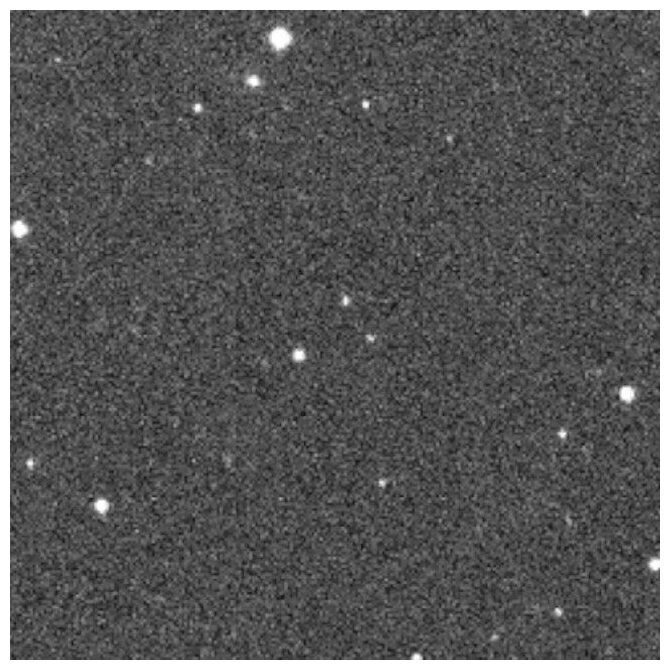
Astronomers find largest radio galaxy ever

By a stroke of luck, a team led by Dutch PhD student Martijn Oei has discovered a radio galaxy of at least 16 million lightyears long. The pair of plasma plumes is the largest structure made by a galaxy known thus far. The finding disproves some long-kept hypotheses about the growth of radio galaxies.
New Galaxy
© Martijn Oei et al.
A supermassive black hole lurks in the centre of many galaxies, which slows down the birth of new stars and therefore strongly influences the lifecycle of the galaxy as a whole. Sometimes, this leads to tumultuous scenes: the black hole can create two jet streams, that catapult the building material for baby stars out of the galaxy at almost the speed of light. In this violent process, the stardust heats up so much that it dissolves into plasma and glows in radio light. The international team of researchers from Leiden (The Netherlands), Hertfortshire, Oxford (both UK), and Paris (France) have now collected that light - with the pan-European LOFAR telescope, whose epicentre lies in a marshy Dutch 'radio dark' nature reserve, where your smartphone deliberately loses signal.

Record length

The picture of the two plasma plumes is special, because never before scientists saw a structure this big made by a single galaxy. The discovery shows that the sphere of influence of some galaxies reaches far from their direct environment. How far, exactly? That is hard to determine. Astronomical pictures are taken from a single viewpoint (Earth), and therefore do not contain depth.As a result, scientists can only measure a part of the radio galaxy length: a low estimate of the total length. But even that lower bound, of more than 16 million lightyears, is gargantuan, and comparable to one hundred Milky Ways in a row.

Seismograph

'Invisible' earthquake caused mysterious 2021 tsunami, scientists find

2021 tsunami
From its origin point in the South Atlantic, the 2021 tsunami sent ripples all over the world.
Some tsunami-generating earthquakes are invisible to our monitoring systems.

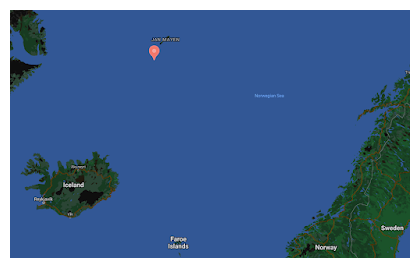
The mysterious source of a globe-spanning tsunami that spread as far as 6,000 miles (10,000 kilometers) from its epicenter was an "invisible" earthquake, a new study has found.

In August 2021, an enormous tsunami rippled out into the North Atlantic, Pacific and Indian oceans. It was the first time a tsunami had been recorded in three different oceans since the catastrophic 2004 Indian Ocean earthquake; at the time, scientists thought it was caused by a 7.5-magnitude earthquake detected near the South Sandwich Islands (a British Overseas Territory in the southern Atlantic Ocean).

But not everything was as it seemed. Scientists were baffled to find that the supposed epicenter of the earthquake was 30 miles (47 km) below the ocean floor, which is far too deep to cause a tsunami, and that the tectonic plate rupture that spawned it was nearly 250 miles (400 km) long — that kind of rupture should have caused a much larger earthquake.

Info

Newly discovered 'encrypted peptides' found in human plasma exhibit antibiotic properties

antimicrobial peptides
© University of PennsylvaniaThe antimicrobial peptides the researchers studied are “encrypted” in that they are contained within Apolipoprotein B, a blood plasma protein that is not directly involved in the immune response, but are not normally expressed on their own.
The rise of drug-resistant bacteria infections is one of the world's most severe global health issues, estimated to cause 10 million deaths annually by the year 2050. Some of the most virulent and antibiotic-resistant bacterial pathogens are the leading cause of life-threatening, hospital-acquired infections, particularly dangerous for immunocompromised and critically ill patients. Traditional and continual synthesis of antibiotics will simply not be able to keep up with bacteria evolution.

To avoid the continual process of synthesizing new antibiotics to target bacteria as they evolve, Penn Engineers have looked at a new, natural resource for antibiotic molecules.

A recent study on the search for encrypted peptides with antimicrobial properties in the human proteome has located naturally occurring antibiotics within our own bodies. By using an algorithm to pinpoint specific sequences in our protein code, a team of Penn researchers along with collaborators, led by César de la Fuente, Presidential Assistant Professor in Psychiatry, Bioengineering, Microbiology, and Chemical and Biomolecular Engineering, and Marcelo Torres, a post doc in de la Fuente's lab, were able to locate novel peptides, or amino acid chains, that when cleaved, indicated their potential to fend off harmful bacteria.

Now, in a new study published in ACS Nano, the team along with Angela Cesaro, the lead author and post doc in de la Fuente's lab, have identified three distinct antimicrobial peptides derived from a protein in human plasma and demonstrate their abilities in mouse models. Angela Cesaro performed a great part of the activities during her PhD under the supervision of corresponding author, Professor Angela Arciello, from the University of Naples Federico II. The collaborative study also includes Utrecht University in the Netherlands.