Science & TechnologyS


Better Earth

Antarctic icebergs recorded by 1700-era sailors are STILL there today

antarctica iceberg
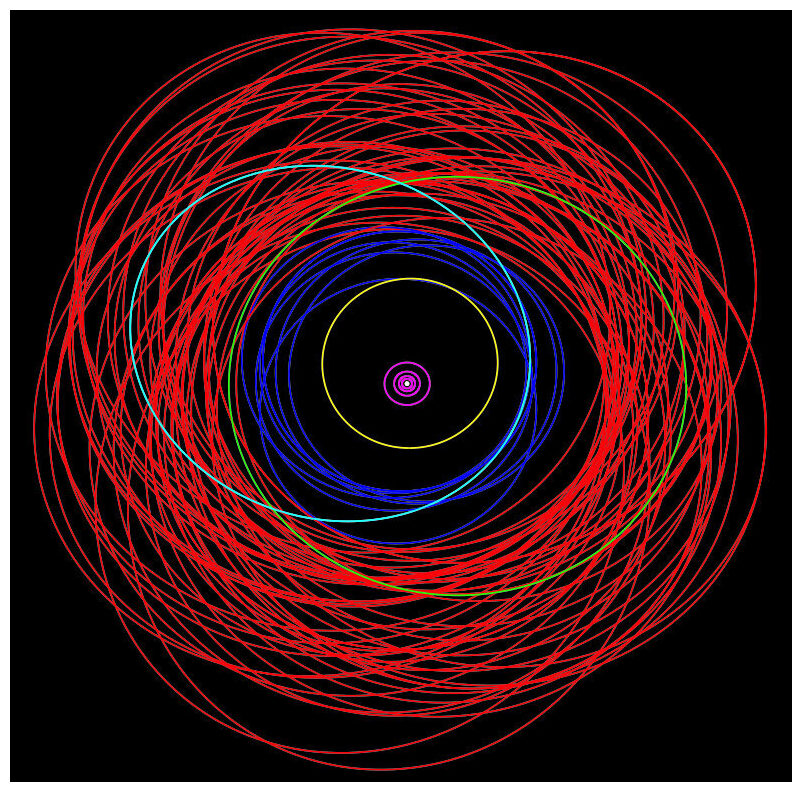
© Journal of GlaciologyComparison of the modern and historical datasets: BYU/NIC in red, AWI in orange, Halley, Bouvet and Riou observations in black and Cook's cruise tracks and data points in blue.
A new study comparing observations of large Antarctic icebergs from the 1700s with modern satellite datasets shows the massive icebergs are found in the same areas where they were pinpointed three centuries ago. The study shows that despite their rudimentary tools, the old explorers truly knew their craft, and it confirms that the icebergs have behaved consistently for more than 300 years.

Using primarily the journal records of Captain James Cook's 1772-1775 Antarctic circumnavigation on the HMS Resolution (where he noted the positions of hundreds of icebergs), a trio of researchers from Brigham Young University, NASA's Jet Propulsion Laboratory and the University of Washington's School of Oceanography made comparisons with the two largest modern datasets available today: the BYU/National Ice Center and Alfred Wegener Institute datasets.

Comment: Whilst there have indeed been changes documented in the environment and climate of Antarctica throughout the years, what this research supports is that our planet is not suffering CO2 driven, man-made global warming:


Newspaper

Sweden discovers largest rare earth deposit in Europe

sweden mine
© Jonas Ekstromer/ TT News Agency via AFPA view of the iron mine of the state-owned Swedish mining company LKAB in Kiruna. EU is looking for other sources than China for these crucial minerals, but it will take at least a decade before Sweden’s are available to industry.
Sweden's state-owned mining company says it has identified more than 1 million tonnes of rare earth minerals in the northern area of Kiruna.

LKAB said on Thursday that the deposit, found next to its iron ore mine, was the largest of rare earth oxides in Europe.

Rare earth minerals are vital to making many high-tech goods. They are used in electric vehicles, wind turbines, portable electronics, microphones and speakers.

Fireball 4

A 'green' comet is on approach for a flyby of Earth

Comet C/2022 E3
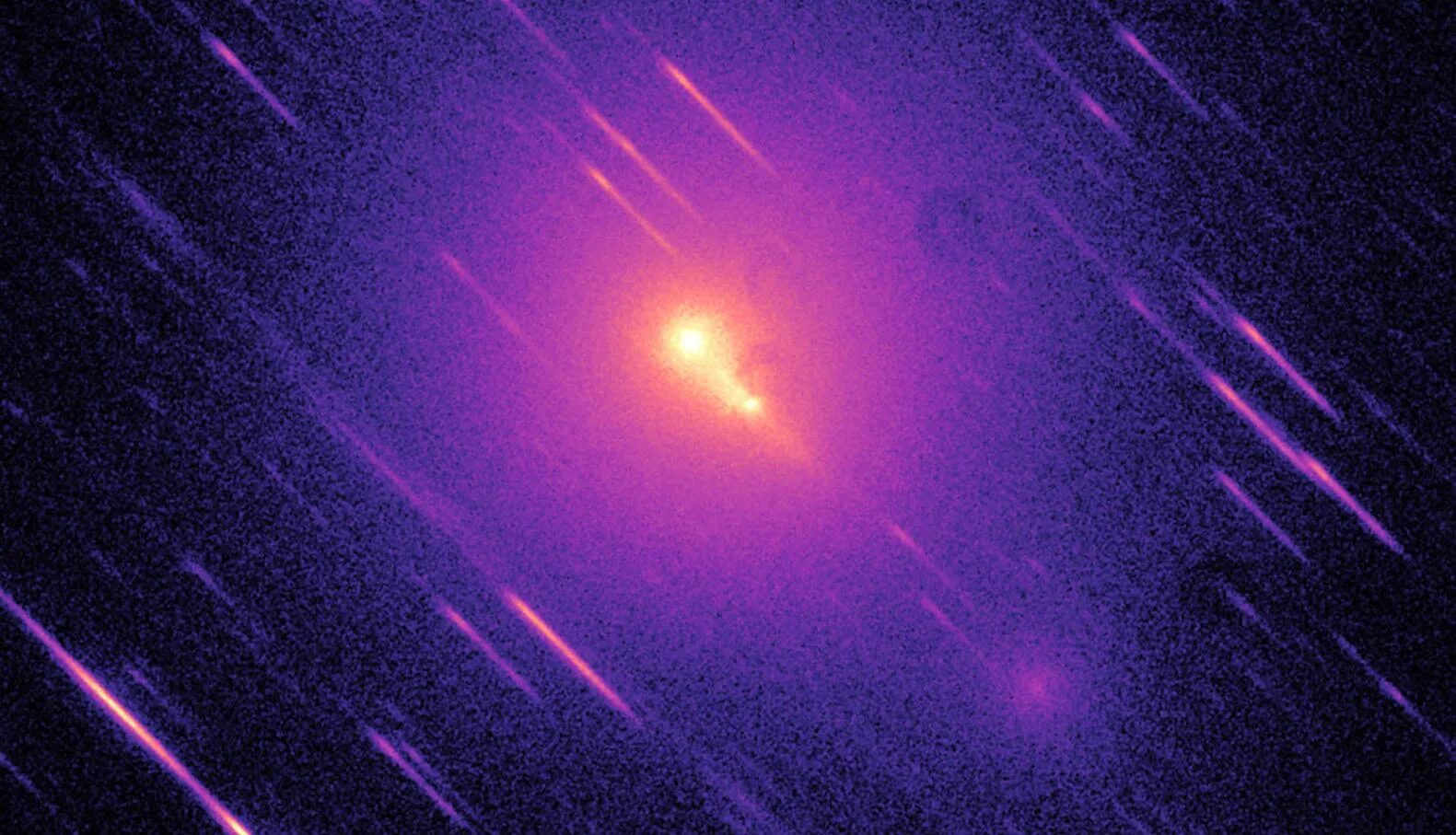
© Dan BartlettComet C/2022 E3 (ZTF)'s brighter greenish coma, short broad dust tail and long faint ion tail on Dec. 25.
A comet from the outer solar system is set to swing through our cosmic neighborhood this month for the first time in 50,000 years, offering skywatchers a glimpse of this celestial object as it nears Earth and the sun in a once-in-a-lifetime occurrence.

The comet, officially known as C/2022 E3 (ZTF), will make its closest approach to the sun on Thursday and could be bright enough to be seen through telescopes and binoculars.

Comets can be tricky to spot in the night sky, but this cosmic interloper has been steadily brightening as it moves through the inner solar system, which should help people catch a glimpse, according to NASA.

Life Preserver

Russia to launch mission to rescue stranded ISS crew after meteoroid strike

astronauts
© Dmitri Lovetsky/APUS astronaut Frank Rubio (right) with Russian cosmonauts Sergey Prokopyev (centre) and Dmitri Petelin wave to relatives and friends before the launch of the Soyuz-2.1 rocket in Kazakhstan last September.
Moscow will launch a rescue vessel to the International Space Station next month to bring home three crew members who are in effect stuck in orbit after their original capsule was hit by a meteoroid.

The docked Soyuz MS-22 sprang a major leak last month, spraying radiator coolant into space and prompting a pair of cosmonauts to abort a planned spacewalk.

While Russia's space agency, Roscosmos, said the strike caused no immediate threat to the crew of the space station, it raised concerns about whether everyone on the orbital outpost could return to Earth in an emergency situation.

Comment: It may be a sign of how 'busy' our region of space is becoming that only 6 months earlier NASA's James Webb Telescope was also struck by a micrometeorite, just months into its mission: 'Unprecedented': Shockwave & 'huge roar' reported in Gran Canaria following meteor fireball event

See also: Classified: Roscosmos knows "exactly what happened" to Soyuz spacecraft


Satellite

Britain's first rocket launch from home soil will put 9 satellites into orbit - UPDATE: Mission fails!

plane rocket
© The TelegraphLauncherOne
Britain is set to join an exclusive club of 10 countries capable of launching rockets into orbit when it sends up the first satellite payload from Spaceport Cornwall on Monday.

Virgin Orbit is scheduled to make its first UK flight shortly before 10pm, in a historic lift-off that could open the door to human spaceflight from British soil.


Comment: They might be getting ahead themselves..


Unlike vertical launches, the LauncherOne rocket containing nine satellites is attached to a wing of a former Virgin Atlantic 747 passenger plane - dubbed Cosmic Girl.

Comment:


UPDATE: 10th January 2022 @ 13:03 CET Virgin Orbit tweeted in real time about their initial suspicions of failing to reach orbit, prior to the mission returning, and then a few hours later issued a press release confirming:

Virgin orbit


Gem

The 'super-deep' royal diamonds that are revealing Earth's secrets

giant diamond crown jewels
© Patrick Landmann/Getty Images"The Rock" diamond, a 228.31-carat stone discovered by De Beers in South Africa in 1986
The largest diamonds in the British Crown Jewels may be pieces of the ancient ocean floor, which have drifted down into the interior of our planet - then come back up again.

The package arrived in a plain cardboard box. It was simply addressed to S Neumann & Co - a mining sales agency in the centre of London - and weighed just over a pound (around 500g). But this was no ordinary cargo.

It was April 1905, and three months earlier, the surface manager at the Premier Mine in South Africa had been completing a routine inspection 18ft (5.4m) underground, when he glimpsed a reflected light in the rough wall above him. He assumed it was a large piece of glass hammered in by colleagues as a practical joke. Just in case, out came his pocket knife, and after some digging... the knife promptly snapped. Eventually the rock was removed successfully, and revealed to be a bona fide diamond - a monster 3,106.75-carat stone, almost the size of a fist. It was not only enormous, but unusually transparent.

Arrow Down

The new pause lengthens: 100 months with no warming at all

The cold weather on both sides of the Atlantic last month seems to have had its effect on temperature, which fell sharply compared with November, lengthening the New Pause to 8 years 4 months, as measured by the satellites designed, built and operated by Dr Roy Spencer and Dr John Christy at the University of Alabama in Huntsville:
global mean temperature change cooling
© Dr Roy Spencer, Dr John Christy/University of Alabama
The graph shows the least-squares linear-regression trend on the monthly global mean lower-troposphere anomalies. The least-squares method was recommended by Professor Jones of the University of East Anglia as a reasonable method of showing the trend on stochastic temperature data.

Recall that the Pause graph does not constitute a prediction: it simply reports the longest period, working back from the present, during which the temperature trend is not positive.

Moon

Animals tune their behavior by lunar cycles; but how?

full moon
© Ganapathy Kumar via Unsplash.
Tonight's moon will be full, so here is a timely question. Many unrelated animals tune their behavior by the lunar cycle. How do they do it, given that sunlight overpowers moonlight?

Researchers in Austria think they have found a clue: a cryptochrome protein that appears to respond to the lunar cycle. Cryptochrome proteins are also implicated in the geomagnetic sense in birds. Whatever they found, it surely must represent only a piece of a biological puzzle. Let them explain in this from the University of Wien:
Many marine organisms, including brown algae, fish, corals, turtles and bristle worms, synchronize their behavior and reproduction with the lunar cycle. For some species, such as the bristle worm Platynereiis dumerilii, lab experiments have shown that moonlight exerts its timing function by entraining an inner monthly calendar, also called circalunar clock. Under these laboratory conditions, mimicking the duration of the full moon is sufficient to entrain these circalunar clocks. However, in natural habitats light conditions can vary considerably. Even the regular interplay of sun- and moon creates highly complex patterns. Organisms using the lunar light for their timing thus need to discriminate between specific moon phases and between sun and moonlight. This ability is not well understood. [Emphasis added.]

Biohazard

USDA approves use of world's first vaccine for honeybees, intensive farming blamed for rise of foulbrood disease

honeybees
© Anadolu Agency/GettyVaccine aims to curb foulbrood, a serious disease caused by the bacterium Paenibacillus larvae that can weaken and kill hives.
The world's first vaccine for honeybees has been approved for use by the US government, raising hopes of a new weapon against diseases that routinely ravage colonies that are relied upon for food pollination.

The US Department of Agriculture (USDA) has granted a conditional license for a vaccine created by Dalan Animal Health, a US biotech company, to help protect honeybees from American foulbrood disease.

"Our vaccine is a breakthrough in protecting honeybees," said Annette Kleiser, chief executive of Dalan Animal Health. "We are ready to change how we care for insects, impacting food production on a global scale."


Comment: Indeed. Which means that, if this goes wrong, as with the experimental covid jabs, there may be hell to pay.


Bizarro Earth

Rate of scientific breakthroughs slowing over time - study

gravitational waves
© N. Fischer, H. Pfeiffer, A. Buonanno / MAX PLANCK INSTISTUTE FOR GRAVITATIONAL PHYSICS/AFP/FileThe measurement of gravitational waves was deemed a "disruptive" recent breakthrough by the researchers
The rate of ground-breaking scientific discoveries and technological innovation is slowing down despite an ever-growing amount of knowledge, according to an analysis released Wednesday of millions of research papers and patents.

While previous research has shown downturns in individual disciplines, the study is the first that "emphatically, convincingly documents this decline of disruptiveness across all major fields of science and technology," lead author Michael Park told AFP.

Park, a doctoral student at the University of Minnesota's Carlson School of Management, called disruptive discoveries those that "break away from existing ideas" and "push the whole scientific field into new territory."


Comment: This is a most revealing admission; because it's quite clear that scientific research, from climate to basic biology (i.e gender), that does not promote the establishment's, often warped, version of reality, is unlikely to receive funding.


The researchers gave a "disruptiveness score" to 45 million scientific papers dating from 1945 to 2010, and to 3.9 million US-based patents from 1976 to 2010.

Comment: The contrived coronavirus crisis and subsequent lockdowns were perhaps the penultimate example of how science is now so readily corrupted by nefarious interests, and enforced by pathological and incompetent people in positions of influence.

That said, there is hope, because, whilst Russia and China tow the line on a number of mainstream theories, it's clear from their actions, that they are not stunted by the same ideologies destroying Western institutions; and this can be seen in how China recently became the country with the most cited scientific papers in the world.

For further insight into the crisis mainstream science is facing, check out the following podcast from SOTT radio: MindMatters: Follow the Science? A Peek Behind the Curtain of Institutional Science