Science & TechnologyS


Info

Amateur astronomers find glowing gas arc near Andromeda

Andromeda Galaxy
© Yann Sainty and Marcel DreschselA composite image including filters for hydrogen-alpha (red) and doubly ionized oxygen (green) reveals a large arc near Andromeda Galaxy on the sky.
French and German amateur astronomers have discovered a mysterious nebulous arc close to the Andromeda galaxy (M31), and no one has a clue about its true nature. The arc, detected in the light of doubly ionized oxygen, has never been seen before, and doesn't seem to radiate at any other wavelength. "The [Andromeda] galaxy has kept one secret for a very long time," the team comments in a YouTube video about the discovery.

Using sophisticated amateur equipment, Xavier Strottner and Marcel Drechsler have already found dozens of previously unknown planetary nebulae in our galaxy. Last fall, analyzing images obtained by Yann Sainty, they stumbled upon a much larger structure, just 1.2 degrees southeast of Andromeda's nucleus. The arc extends over 1.5 degrees and ends close to the naked-eye star Nu (ν) Andromedae (the blue star at the top of the photo).

Sainty used a 4.2-inch Takahashi refractor and a large-format ZWO CMOS camera outfitted with a narrow-band filter that only transmits the greenish, 500.7-nanometer light emitted by oxygen atoms that have lost their outermost two electrons (the [OIII] line). His wide-angle images added up to a total exposure time of more than 100 hours. Subsequent images, made with five different setups in France and the United States, have confirmed the existence of the [OIII] arc, which is now known as Strottner-Drechsler-Sainty Object 1 (SDSO-1).

Because of the arc's huge angular size and its extremely low surface brightness, professional surveys hadn't previously detected it. A brief paper describing the discovery, written by the three amateur astronomers together with professional researchers, has appeared in Research Notes of the AAS.

Cloud Lightning

Scientists steer lightning bolts with lasers for the first time

lightning
© Douglas M. Paine
Scientists have steered lightning bolts with lasers for the first time in the field, according to a demonstration performed during heavy storms at the top of a Swiss mountain.

The feat, which involved firing powerful laser pulses at thunderclouds over several months last year, paves the way for laser-based lightning protection systems at airports, launchpads and tall buildings.

"Metal rods are used almost everywhere to protect from lightning, but the area they can protect is limited to a few metres or tens of metres," said Aurélien Houard, a physicist at École Polytechnique in Palaiseau. "The hope is to extend that protection to a few hundred metres if we have enough energy in the laser."

Lightning bolts are huge electrical discharges that typically spark over two to three miles. The charge carried in a bolt is so intense that it reaches 30,000C, about five times hotter than the surface of the sun. More than a billion bolts strike Earth each year, causing thousands of deaths, 10 times as many injuries, and damage that runs into tens of billions of dollars.

Satellite

Sweden opens first satellite launch port on EU mainland

sweden satellite
© Marc Preel/AFPIn northern Sweden, EU and Swedish officials have inaugurated the first spaceport for satellite launches on the European Union mainland.
European Commission President Ursula von der Leyen, King of Sweden Carl XVI Gustaf and Swedish Prime Minister Ulf Kristersson inaugurated the European Union's first mainland orbital launch complex on Friday.

Spaceport Esrange, the new facility at Esrange Space Center near the northern Swedish city of Kiruna should complement the EU's current launching capabilities in French Guiana in South America.

"Europe has its foothold in space and will keep it," von der Leyen said. She added that small satellites were crucial to tracking natural disasters in real-time and, in the light of Russia's war in Ukraine, to help guarantee global security.


Comment: For von der Leyen and her pathocratic ilk, guaranteeing 'global' security means using Ukraine's Nazi aligned military as a proxy force in their bid to destroy Russia; this same mentality, no doubt, informs their objectives for space.


Comment: See also:


Brain

A mysterious brain network may underlie many psychiatric disorders

brain network
© John M Lund Photography Inc via Getty ImagesScientists uncovered a previously unknown brain circuit that seems linked to multiple psychiatric disorders.
Researchers discovered that six psychiatric disorders seemed linked to the same underlying brain wiring.

Scientists have uncovered a mysterious network of brain connections that is linked to several psychiatric disorders, including schizophrenia, depression and obsessive-compulsive disorder (OCD).

This shared brain circuitry could help reveal why many patients who are diagnosed with one psychiatric illness also meet the criteria for a second.

"Half of the people we treat meet criteria for more than one disorder," Dr. Joseph Taylor (opens in new tab), clinical director of transcranial magnetic stimulation at the Brigham and Women's Hospital's Center for Brain Circuit Therapeutics in Boston and first author of a study describing the discovery, told Live Science. The study, published Thursday (Jan. 12) in the journal Nature Human Behaviour, supports the idea that disorders that often occur together may stem from the same neurobiological roots.

Cassiopaea

Evidence for magnetic reconnection between Ganymede and Jupiter revealed in new study

ganymede jupiter
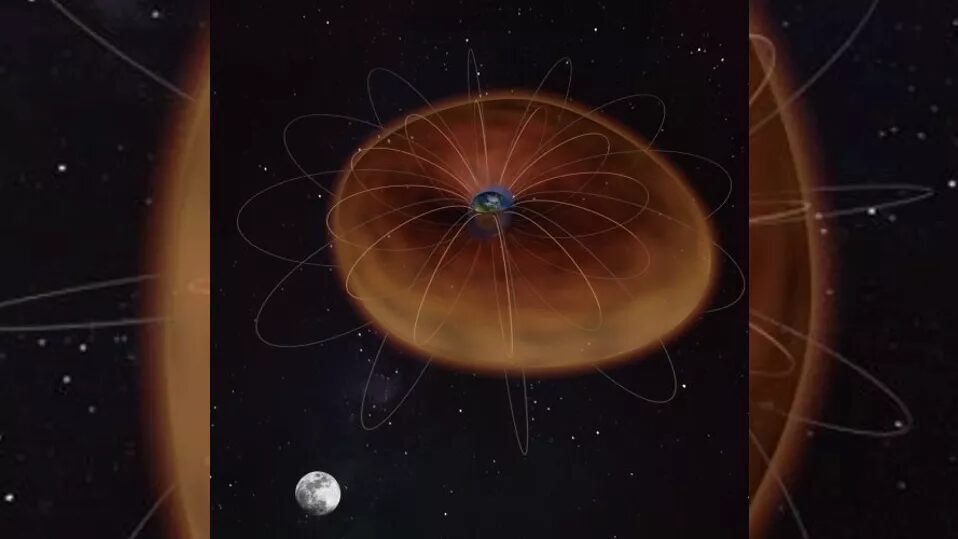
© Geophysical Research Letters (2022). DOI: 10.1029/2022GL099775Interpretation of magnetic topology and electron flow direction for two different reconnection scenarios at Ganymede's upstream magnetopause. The Y-Z projection of the magnetic field line configuration is adapted from Jia et al. (2008). Yellow dashed line indicates Juno's trajectory.
In June 2021, NASA's Juno spacecraft flew close to Ganymede, Jupiter's largest moon, observing evidence of magnetic reconnection. A team led by Southwest Research Institute used Juno data to examine the electron and ion particles and magnetic fields as the magnetic field lines of Jupiter and Ganymede merged, snapped and reoriented, heating and accelerating the charged particles in the region.

"Ganymede is the only moon in our solar system with its own magnetic field," said Juno Principal Investigator Dr. Scott Bolton of SwRI. "The snapping and reconnecting of Ganymede's magnetic field lines with Jupiter's creates the magnetospheric fireworks."

Magnetic reconnection is an explosive physical process that converts stored magnetic energy into kinetic energy and heat. Ganymede's mini-magnetosphere interacts with Jupiter's massive magnetosphere, in the magnetopause, the boundary between the two regions.

Comment: There's even more evidence that similar connections exist throughout our solar system, and that the influence they have can be profound: And check out SOTT radio's:


Arrow Down

COVID-19 vaccine hesitancy linked to increased risk of traffic accidents

New research suggests that individuals who disregard recommendations for vaccination against coronaviruses may also disregard rules of road safety.

Traffic Accident
© Sci-Tech DailyTraffic accidents are a leading cause of death and injury worldwide. According to the World Health Organization (WHO), around 1.35 million people die each year in road traffic accidents, and an additional 20 to 50 million people are injured.
A new study published in The American Journal of Medicine has identified a link between vaccine hesitancy for COVID-19 and increased risks of traffic accidents. Researchers found that individuals who neglect health recommendations for vaccination may also neglect basic road safety measures. The study suggests that raising awareness about the connection between vaccination and road safety may encourage more people to get vaccinated against COVID-19.

This is the first study that explores the possible relationship between vaccine hesitancy and traffic crashes, which are a major cause of injury and death, and can be made worse by other underlying health conditions.

"COVID-19 vaccination is an objective, available, important, authenticated, and timely indicator of human behavior - albeit in a domain separate from motor vehicle traffic," explained lead investigator Donald A. Redelmeier, MD, Evaluative Clinical Sciences, Sunnybrook Research Institute; Department of Medicine, University of Toronto; Institute for Clinical Evaluative Sciences; and Division of General Internal Medicine, Sunnybrook Health Sciences Centre, Toronto, ON, Canada.

Comment:
Barf Bag
© Sodahead


Info

850-year-old supernova left 'zombie star' behind

Nebula PA 30
© Robert FesenThe unusual fireworks-like structure of nebula Pa 30 may result from the merger of two dying stars.
A supernova explosion that skywatchers in the Far East observed almost 850 years ago has produced the most unusual remnant astronomers have ever found. "I've worked on supernovae for [decades], and I've never seen anything like this," says Robert Fesen (Dartmouth College), who photographed the weird object in late October 2022 with the 2.4-meter Hiltner telescope at Kitt Peak.

Fesen presented his results at the 241st meeting of the American Astronomical Society (AAS) in Seattle; a paper has been submitted to Astrophysical Journal Letters (preprint available here). In other work presented at the AAS meeting and submitted to Monthly Notices of the Royal Astronomical Society (preprint here), his coauthor Bradley Schaefer (Louisiana State University) argues that the supernova resulted when two white dwarf stars collided, leaving an extremely energetic "zombie" star behind.

Amateur astronomer (and Fesen's second coauthor) Dana Patchick discovered the nebula in August 2013 in archived images from NASA's Widefield Infrared Survey Explorer (WISE). The infrared images didn't show much detail, though. Originally, Patchick believed he had found a planetary nebula — his 30th find, hence the name Pa 30 — but later spectroscopic observations revealed that it's more likely to be a supernova remnant. However, the nebula doesn't produce many radio or X-ray waves, and there's no neutron star or black hole in its center. Instead, the central star (sometimes known as Parker's Star, after University of Hong Kong astronomer Quentin Parker who first studied its spectrum) turns out to be a peculiar white dwarf.

Still, astronomers are now confident about its relation with SN1181, a zero-magnitude supernova that appeared in northern Cassiopeia on August 6th of 1181 AD. Chinese and Japanese observers recorded this "guest star" slowly fading over a period of six months.

Robot

AI writes articles for website for months and 'no one noticed'

Artificial intelligence
A POPULAR news outlet has been publishing articles written by AI since November, keeping it on the down low.

Tech media site CNET has been publishing the articles since November, and lots of readers don't seem to have noticed.

"What is a credit card charge-off?" was the first AI-written article, published on November 11 by CNET Money.

The portal has reportedly churned out and published 73 AI-generated articles since then, reports Futurism.

Comment: Mainstream journalism that consists of churning out articles that parrot establishment press releases - sometimes even word for word - is already pretty close to computer generated content.


Pi

Is the end of science near?

the end wall
© Crawford Jolly Unsplash
Science writer Tibi Puiu reports on new findings that reflect what many today, have begun to suspect:
"Over the past few decades, the number of science and technology research papers published has soared, rising at a rate of nearly 10% each year. In the biomedical field alone, there are more than a million papers pouring into the PubMed database each year, or around two studies per minute...

The new study revealed that the "disruptiveness" of contemporary science has decreased, rendering ever diminishing returns. In this particular context, authors define disruptiveness as the degree to which a study departs from previous literature and renders it obsolete. In other words, a highly disruptive study is one that completely changes the way we think about a particular topic and renders previous research on the subject obsolete."

TIBI PUIU, "IS SCIENCE GOING THROUGH AN EXISTENTIAL CRISIS? THERE ARE MORE RESEARCH PAPERS THAN EVER, BUT INNOVATION IS SORELY MISSED" AT ZME SCIENCE - JANUARY 6, 2023
Similarly, Kelsey Piper at Vox tells readers of her Future Perfect newsletter, despite a more than tenfold inflation-adjusted increase in U.S.-government spending on science — and that of many other sources — since 1955, "It feels like we're doing more research and getting less out of it."

Comment: Government funding is where science goes to die.


Better Earth

Antarctic icebergs recorded by 1700-era sailors are STILL there today

antarctica iceberg
© Journal of GlaciologyComparison of the modern and historical datasets: BYU/NIC in red, AWI in orange, Halley, Bouvet and Riou observations in black and Cook's cruise tracks and data points in blue.
A new study comparing observations of large Antarctic icebergs from the 1700s with modern satellite datasets shows the massive icebergs are found in the same areas where they were pinpointed three centuries ago. The study shows that despite their rudimentary tools, the old explorers truly knew their craft, and it confirms that the icebergs have behaved consistently for more than 300 years.

Using primarily the journal records of Captain James Cook's 1772-1775 Antarctic circumnavigation on the HMS Resolution (where he noted the positions of hundreds of icebergs), a trio of researchers from Brigham Young University, NASA's Jet Propulsion Laboratory and the University of Washington's School of Oceanography made comparisons with the two largest modern datasets available today: the BYU/National Ice Center and Alfred Wegener Institute datasets.

Comment: Whilst there have indeed been changes documented in the environment and climate of Antarctica throughout the years, what this research supports is that our planet is not suffering CO2 driven, man-made global warming: