Science & TechnologyS


Comet 2

New comet discovered: C/2013 G3 (PANSTARRS)

Cbet nr. 3472, issued on 2013, April 04, announces the discovery of a new comet (discovery magnitude ~20.7) by PANSTARRS survey on CCD images obtained with the 1.8-m Pan-STARRS1 telescope on Haleakala on April 10.4. The new comet has been designated C/2013 G3 (PANSTARRS).

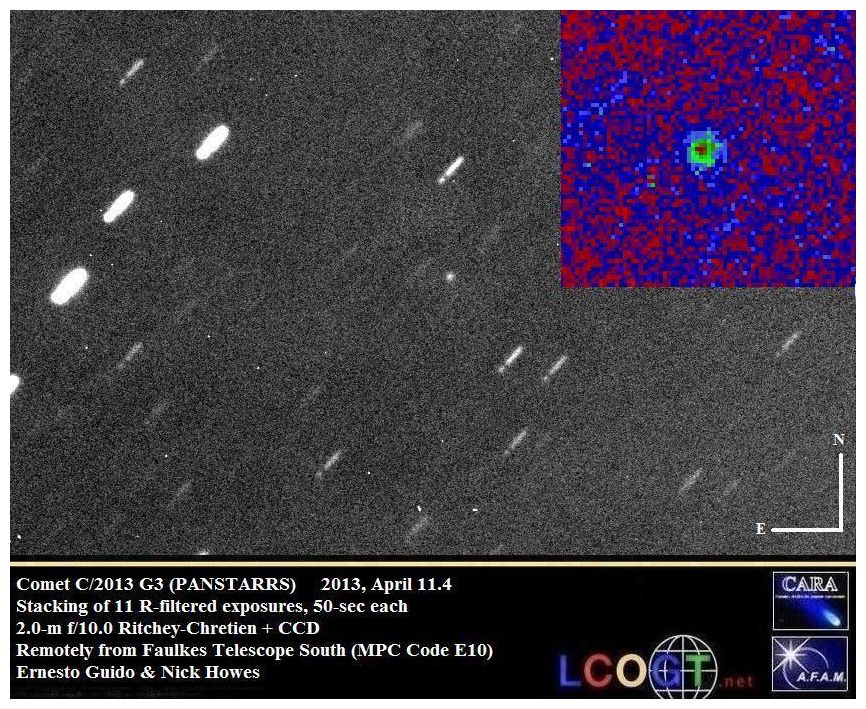
We performed follow-up measurements of this object, while it was still on the neocp. Stacking of 11 R-filtered exposures, 50-sec each, obtained remotely on 2013, April 11.4 from E10 Faulkes Telescope South through a 2.0-m f/10.0 Ritchey-Chretien + CCD, shows that this object is slightly diffused.The FWHM of this object was measured about 20% wider than that of nearby field stars of similar brightness. Below you can see our image.
C/2013 G3
© Remanzacco Observatory

Eye 1

CISPA privacy amendments booted from data-sharing bill

Image
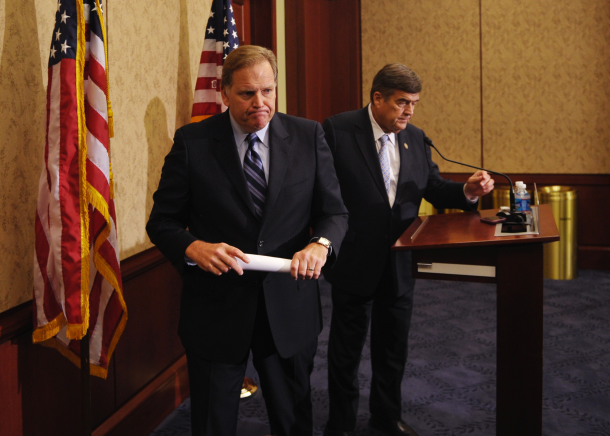
© Getty ImagesHouse Intelligence chairman Mike Rogers, CISPA's author (left), says allowing U.S. companies to share types of data with the National Security Agency will allow them to fend off "cyber looters."
Committee overwhelmingly votes down privacy amendments that would have curbed National Security Agency's access to private sector data. Now the bill heads to the House floor for a vote.

A controversial data-sharing bill won the approval of a key congressional committee today without privacy amendments, raising concerns that the National Security Agency and other spy agencies will gain broad access to Americans' personal information.

The House Intelligence committee, by a vote of 18 to 2, adopted the so-called CISPA bill after an unusual session closed to the public where panel members debated and voted on the proposed law in secret.

Rep. Jan Schakowsky (D-Ill.), who proposed three unsuccessful privacy amendments, said afterward she was disappointed her colleagues did not limit the NSA and other intelligence agencies from collecting sensitive data on Americans. (See CNET's CISPA FAQ.)

Her privacy amendments would have "required that companies report cyber threat information directly to civilian agencies, and maintained the long-standing tradition that the military doesn't operate on U.S. soil against American citizens," Schakowsky said.

Beaker

Behind the Headlines: 'Settled Science' - How Greed Corrupted the Hard Sciences

Image
Science means 'knowledge'. A scientist is someone who acquires more knowledge using the scientific method. The scientific method is a body of techniques for investigating the world around us, acquiring new knowledge, or correcting and integrating previous knowledge, based on empirical and measurable evidence that is subject to specific principles of reasoning.

This is all well and good, but what does any of it have to do with 'science' as it's practised today? Today, ignorance is widespread and even scientists appear to show little interest in the truth, instead coveting fame and riches over principled dedication to solving the mysteries of reality.

What happened to the Enlightenment's promise to reform society through reason? In spite of the proliferation of science through education and media, scientists today are blinded because they are led by the blind in a system that vectors the fruits of scientific inquiry towards destructive ends.

What about those scientists who see this and attempt to break the mould? Mavericks are no longer burned at the stake for daring to challenge the status quo. Nevertheless, scientists today whose work challenges comfortable (and false) assumptions are defamed, ridiculed and marginalised.

In this week's show, we discussed with theoretical mathematical-physicist Arkadiusz Jadczyk how the 'hard sciences' are controlled through selective funding, a 'peer review process' that is anything but objective, and the devastating consequences - for society and planet - of science in the hands of a Scientific Establishment whose narrow-minded brand of scientific materialism has hardened into religious orthodoxy.

Running Time: 02:08:00

Download: MP3


Jupiter

Venus' Mysterious South Polar Cyclone


Comet 2

New Comet: C/2013 G2 (McNaught)

Discovery Date: April 8, 2013

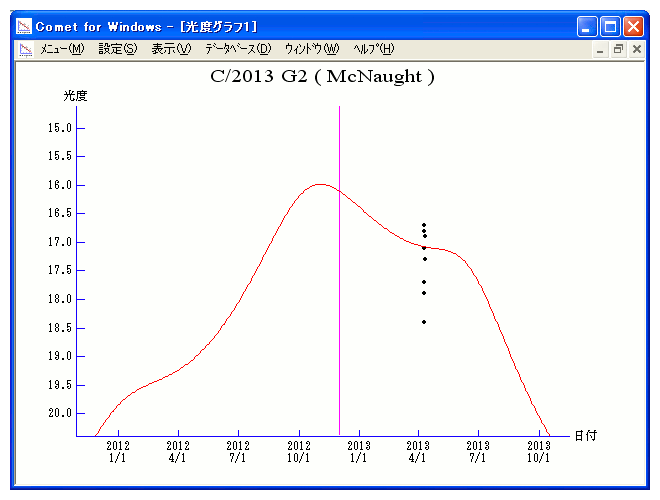
Magnitude: 17.0 mag

Discoverer: Robert H. McNaught (Siding Spring)

C/2013 G2
© AerithNetMagnitudes graph.
The orbital elements are published on M.P.E.C. 2013-G39.

Question

Mysteriously shrinking proton continues to puzzle physicists

Proton
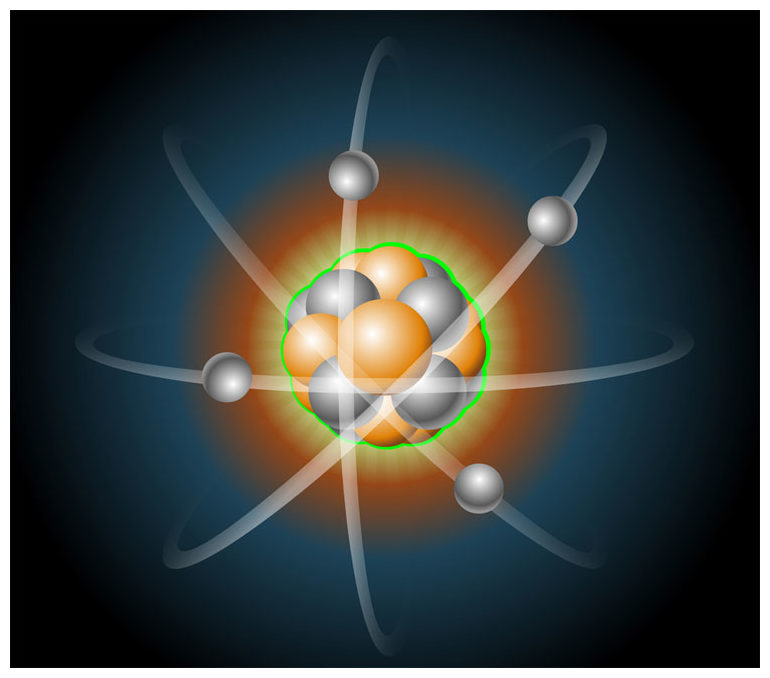
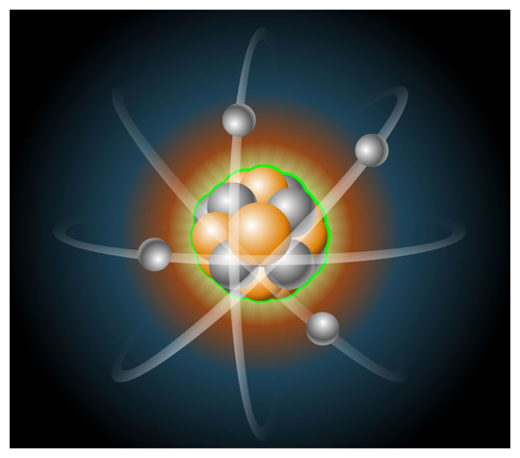
© aurin | ShutterstockResearchers have found the proton is smaller than thought. The proton is one of the ingredients (along with neutrons and electrons) of the atoms that make up our bodies and the world around us.
Denver - The size of a proton, long thought to be well-understood, may remain a mystery for a while longer, according to physicists.

Speaking today (April 13) at the April meeting of the American Physical Society, researchers said they need more data to understand why new measurements of proton size don't match old ones.

"The discrepancy is rather severe," said Randolf Pohl, a scientist at the Max Planck Institute of Quantum Optics. The question, Pohl and his colleagues said, is whether the explanation is a boring one - someone messed up the measurements - or something that will generate new physics theories.

The incredible shrinking proton

The proton is a positively charged particle in the nucleus of atoms, the building blocks of everything. Years of measurements pegged the proton at 0.8768 femtometers in radius (a femtometer is a millionth of a billionth of a meter).

But a new method used in 2009 found a different measurement: 0.84087 femtometers, a 4 percent difference in radius.

The previous measurements had used electrons, negatively charged particles that circle the nucleus in a cloud, to determine proton radius. To make the measurement with electrons, researchers can do one of two things. First, they can fire electrons at protons to measure how the electrons are deflected. This electron-scattering method provides insight into the size of the positively charged proton.

An alternative is to try to make the electron move. Electrons zing around the nucleus of an atom, where protons reside, at different levels called orbitals. They can jump from orbital to orbital by increasing or decreasing their energy, which electrons do by losing or gaining an elementary particle of light called a photon. The amount of energy it takes to budge an electron from orbital to orbital tells physicists how much pull the proton has, and thus the proton's size.

Pohl and his colleagues didn't use electrons at all in their measurements of the proton. Instead, they turned to another negatively charged particle called the muon. The muon is 200 times heavier than an electron, so it orbits the proton 200 times closer. This heft makes it easier for scientists to predict which orbital a muon resides in and thus a much more sensitive measure of proton size.

"The muon is closer to the proton and it has a better view," Pohl said.

Stock Down

The bubble bursts on virtual currency Bitcoin

bitcoin
© unknown
Many saw it coming, but that didn't stop the Bitcoin bubble from bursting: after rising to dizzying heights, the digital currency suffered its first true crash this week.

The price of the virtual "geek" currency had soared through the stratosphere in recent weeks, trading for a high of $266 on Wednesday - only to come hurtling back to Earth in just three days.

By Friday, a single Bitcoin was worth just $54, according to the Mt. Gox platform, which manages 80 percent of the Bitcoin transactions and had to briefly shut down trading Thursday.

"There was a LOT of short-term speculation happening" from people who wanted to earn a buck from the soaring prices and cash out before the fall, Bitcoin Foundation chief scientist Gavin Andresen told AFP.

"Wild price swings are not good for Bitcoin."

Comment: It is interesting that at this time both Gold and Silver (the other alternative currencies) are also being forced down in price. Maybe as a way of attempting to prevent everyone finding out that the entire economy is a Ponzi scheme.


Stormtrooper

U.S. Navy blasts drones with ship-mounted laser cannon

Star Wars defense planned for Persian Gulf debut in 2014

The US Navy says it has successfully test-fired a ship-mounted laser weapon, and that it plans to deploy the device to an actual maritime staging area beginning in 2014.

On Monday, the Navy released video and still images showing the somewhat-unimaginatively named Laser Weapon System (LaWS) firing on an unmanned drone, causing the aircraft to burst into flames and plummet from the sky.

Speaking at the Navy League Sea Air Space Exposition at National Harbor, Maryland on Monday, Rear Admiral Matthew Klunder, chief of Naval research, said the device would be deployed to the Persian Gulf, where Iran has been "harassing" US ships with drones and small, fast boats.

"The area we're going to test this in is a very intensive maritime region of the world," Klunder told USNI News. "Lots of commerce, lots of ships."

Klunder said the Navy has field-tested the solid-state laser 12 times so far, and in each case it managed to destroy its target. He added that the weapon also has a nonlethal mode that can generate a "dazzle" effect, which can be used to blind enemy vessels by overwhelming their sensors.

In addition to being effective against small, fast-moving craft, the cannon offers another benefit: its low cost relative to traditional weapons systems. According to The New York Times, firing LaWS costs less than $1 per sustained pulse. Compare that to the cost of a short-range interceptor missile, which the paper estimates run around $1.4m apiece.

Image
Artist's conception of what it's like to get blasted by a frickin' laser beam fired from a US ship

Gem

Stupid science: In wake of imminent threat from cometary bombardment, NASA proposes "tugging" a small, random asteroid into Moon's orbit, then sampling its composition... sometime next decade

Image
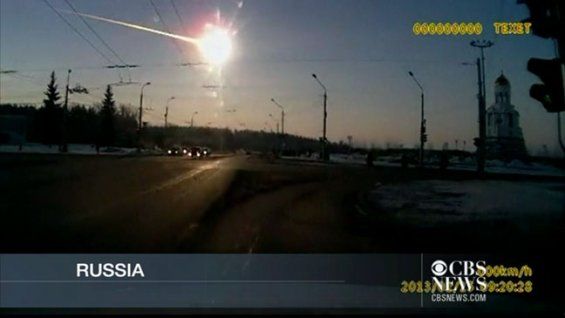
Most people, normal people, saw this event and thought "ok, what's going on here? This is clearly unusual!" NASA apparently saw it and thought "Hmm, maybe this is an opportunity for us to get our budget increased? Quick, someone draft a BS proposal and send it to the White House! Tell them it's in the interest of protecting the planet or something like that."
The proposed $17.7 billion NASA budget unveils plans to develop technologies partly intended to ultimately protect the Earth from potentially dangerous collisions with asteroids.


Comment: Note the carefully chosen words - "partly intended to ultimately protect"... in other words, lip-service to protecting Americans from the real threat out there.


The National Aeronautics and Space Administration envisions launching robotic missions to a small asteroid before the end of the decade, later tugging it into an orbit near the moon and eventually sending astronauts to bring home samples after 2025.


Comment: So, the best idea for planetary defense NASA can come up with, at this eleventh hour, is to launch rockets towards an asteroid sometime before 2020, "tug" it into an orbit near the moon (good luck with that!) and then send astronauts to said small asteroid (presumably by landing on it?) to "bring home samples."

City-destroying fragments will have been and gone long before any of these 'plans' get off the ground.


The agency's overall spending proposal, basically flat from previously enacted spending levels, identifies such asteroid exploration as the capstone for years of heavy NASA spending on a powerful new rocket and manned capsule championed by congressional leaders.

Info

Ants lead the way on earthquake prediction

Ant Mounds
© Gabriele BerberichRed wood ant mounds on an earthquake fault in Germany.
Ants with the world's worst taste in real estate seem to sense earthquakes before they strike, according to research presented today (April 11) at the European Geosciences Union annual meeting in Vienna.

Active faults, fractures where the Earth violently ruptures in earthquakes, are the preferred housing site for red wood ants in Germany. Researcher Gabriele Berberich of the University Duisburg-Essen in Germany has counted more than 15,000 red wood ant mounds lined up along Germany's faults, like candy drops on a conveyor belt.

For three years, Berberich and her colleagues tracked the ants 24-7 with video cameras, using special software to catalog behavioral changes. There were 10 earthquakes between magnitude 2.0 and 3.2 during the study period, 2009 to 2012, and many smaller temblors. The ants only changed behavior for quakes larger than magnitude 2.0, which also happens to be the smallest quakes that humans can feel.