Science & TechnologyS


Telescope

Is biggest, closest full moon on June 23, 2013 a Supermoon?

Image
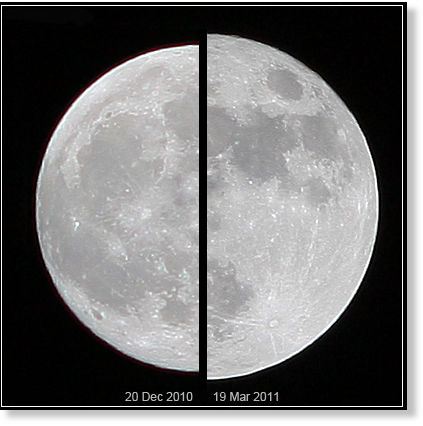
© Marco Langbroek, the Netherlands, via Wikimedia CommonsThe supermoon of March 19, 2011 (right), compared to an average moon of December 20, 2010 (left).
Yes, many will call the June 2013 full moon a supermoon. The upcoming full moon on June 23, 2013, will not only be the closest and largest full moon of the year. It'll also present the moon's closest encounter with Earth for all of 2013.

This year's closest and largest full moon will occur on June 23 at precisely 11:32 Universal Time. At United States' time zones, that means the moon will turn full on June 23 at 7:32 a.m. EDT, 6:32 a.m. CDT, 5:32 a.m. MDT and 4:32 a.m. PDT. We astronomers call this sort of close full moon a perigee full moon. The word perigee describes the moon's closest point to Earth for a given month. Two years ago, when the closest and largest full moon fell on March 19, 2011, many used a term we'd never heard before: supermoon. Last year, we heard this term again to describe the year's closest full moon on May 6, 2012.

This year, we also hear the term supermoon referring to the year's closest full moon on June 23, 2013. What does supermoon mean exactly? And how special is the June 23, 2013 supermoon?

Robot

DARPA building robots with 'real' brains

Electronics with Brains
© Thinkstock
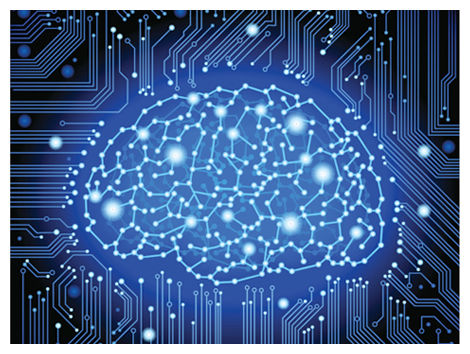
The next frontier for the robotics industry is to build machines that think like humans. Scientists have pursued that elusive goal for decades, and they believe they are now just inches away from the finish line.

A Pentagon-funded team of researchers has constructed a tiny machine that would allow robots to act independently. Unlike traditional artificial intelligence systems that rely on conventional computer programming, this one "looks and 'thinks' like a human brain," said James K. Gimzewski, professor of chemistry at the University of California, Los Angeles.

Gimsewski is a member of the team that has been working under sponsorship of the Defense Advanced Research Projects Agency on a program called "physical intelligence." This technology could be the secret to making robots that are truly autonomous, Gimzewski said during a conference call hosted by Technolink, a Los Angeles-based industry group.

This project does not use standard robot hardware with integrated circuitry, he said. The device that his team constructed is capable, without being programmed like a traditional robot, of performing actions similar to humans, Gimzewski said.

Participants in this project include Malibu-based HRL (formerly Hughes Research Laborary) and the University of California at Berkeley's Freeman Laboratory for Nonlinear Neurodynamics. The latter is named after Walter J. Freeman, who has been working for 50 years on a mathematical model of the brain that is based on electroencephalography data. EEG is the recording of electrical activity in the brain.

Sun

'Biggest solar flare of the year' knocks out radio transmissions - NASA on alert for more after-effects

Early this morning the sun erupted, sending billions of solar particles into space at over 600 miles per second, raising the prospect of solar radiation storms above the Earth, according to NASA. A spokesman said the resulting emissions sparked a short-lived radio communications blackout on Earth. The radio disruption has since subsided. The appearance of the strongest solar storm of 2013 is part of an increasingly common sight as astronomers say this is connected to the sun's 11-year activity cycle. More intense solar eruptions are expected later in the year.


Info

Implantable electronics disappear in the body

Implantable electronics
© Beckman Institute, University of Illinois and Tufts UniversityImplantable electronics work for a while and then disappear completely.
Imagine pain-relieving electronics devices that go into your body, work, and then disappear completely when they're done. This week scientists showed off advancements in what they're calling "transient electronics."

Materials scientists and biomedical engineers presented key advancements they'd made in creating disappearing devices at a national meeting of the American Chemical Society in New Orleans on Monday. Engineering professor John A. Rogers is leading the research with colleagues from the University of Illinois at Urbana-Champaign. He's known for creating unusual electronics, including ones that can be printed on skin.

"Bioresorbable" medical devices aren't necessarily new, but Rogers told the ACS that his team has made devices in the lab that have significant advantages over other ones. For a start, theirs can dissolve entirely in water or bodily fluids after a specific period of time without leaving behind a residue - sort of like modern sutures.

Question

Iranian scientist claims to have invented 'time machine'

Time Machine
© Rex FeaturesThe DeLorean time machine - no word if Ali Razeghi has used this as a template.
Ali Razeghi, a Tehran scientist has registered "The Aryayek Time Traveling Machine" with the state-run Centre for Strategic Inventions.

The device can predict the future in a print out after taking readings from the touch of a user, he told the Fars state newsagency.

Razaeghi, 27, said the device worked by a set of complex algorithims to "predict five to eight years of the future life of any individual, with 98 percent accuracy".

As the managing director of Iran's Centre for Strategic Inventions, Razeghi is a serial inventor with 179 other inventions listed under his own name. "I have been working on this project for the last 10 years," he said.

"My invention easily fits into the size of a personal computer case and can predict details of the next 5-8 years of the life of its users. It will not take you into the future, it will bring the future to you."

Arrow Down

Made-to-order embryos create new legal issues

Fetus
© ShutterstockHuman fetus illustration.
People in the United States who want to have children have been able to purchase donated sperm and eggs separately for some time, but the relatively recent practice of selling embryos introduces new ethical and legal issues that should be addressed, experts say.

Most recently, a fertility clinic in Davis, Calif., began combining donor eggs and sperm to create embryos, which can then be used in fertility treatments for a price tag of $9,800 for a pregnancy, much cheaper than what it costs to become pregnant via traditional in vitro fertilization (IVF), according to the Los Angeles Times. The clinic is able to offer the treatment at a lower cost because it creates a batch of embryos from a single sperm and single egg donor together, and then sells the embryos to multiple patients, the Times reported. Couples who opt for this method of fertility treatment would have no genetic relation to their children.

"I am horrified by the thought of this," Andrew Vorzimer, a Los Angeles fertility lawyer, told the Times. "It is nothing short of the commodification of children."

For some time, couples have been able to adopt embryos left over from other couples' IVF treatments in a process known as "embryo donation." But in these cases, embryos are created with the initial intent of being used by a specific couple seeking fertility treatment, whereas, in the case of the Davis fertility-clinic, embryos are created for the explicit purpose of selling them. A fertility clinic in Texas provided a similar service of made-to-order embryos in 2007.

Bizarro Earth

The find of a lifetime: Bizarre 'panda bat' discovered in South Sudan

Researchers say the bat is an entirely new genus
Black and white fur make it look uncannily like a panda


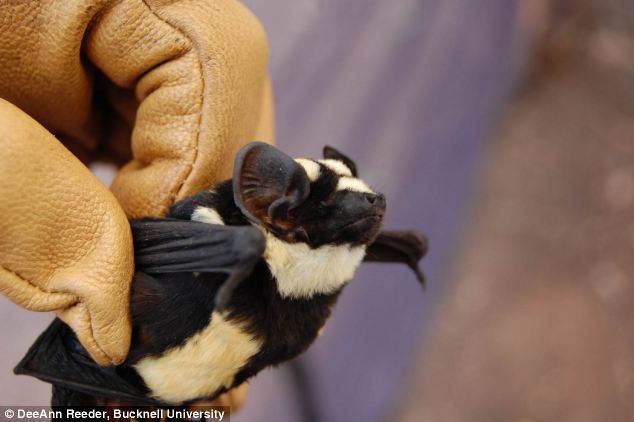
Researchers have hailed a bat that looks uncannily like a panda bear as 'the find of a lifetime'.

The bat, discovered in South Sudan, is so rare researchers believe it is an entirely new genus.

'My attention was immediately drawn to the bat's strikingly beautiful and distinct pattern of spots and stripes,' said Bucknell Associate Professor of Biology DeeAnn Reeder, who made the discovery.

'It was clearly a very extraordinary animal, one that I had never seen before - I knew the second I saw it that it was the find of a lifetime.'

Image
© Dee Ann ReederThe newly discovered genus Niumbaha superba, dubbed the 'panda bat' and discovered in South Sudan

Info

Children of blind mothers learn new modes of communication

Baby and Mother
© iStockphoto/ThinkstockBack at you. Babies of blind mothers can still read the faces of the sighted.
A loving gaze helps firm up the bond between parent and child, building social skills that last a lifetime. But what happens when mom is blind? A new study shows that the children of sightless mothers develop healthy communication skills and can even outstrip the children of parents with normal vision.

Eye contact is one of the most important aspects of communication, according to Atsushi Senju, a developmental cognitive neuroscientist at Birkbeck, University of London. Autistic people don't naturally make eye contact, however, and they can become anxious when urged to do so. Children for whom face-to-face contact is drastically reduced - babies severely neglected in orphanages or children who are born blind - are more likely to have traits of autism, such as the inability to form attachments, hyperactivity, and cognitive impairment.

To determine whether eye contact is essential for developing normal communication skills, Senju and colleagues chose a less extreme example: babies whose primary caregivers (their mothers) were blind. These children had other forms of loving interaction, such as touching and talking. But the mothers were unable to follow the babies' gaze or teach the babies to follow theirs, which normally helps children learn the importance of the eyes in communication.

Info

Richard Byrd's historic flight over North Pole probably didn't happen, research reveals

Richard Byrd
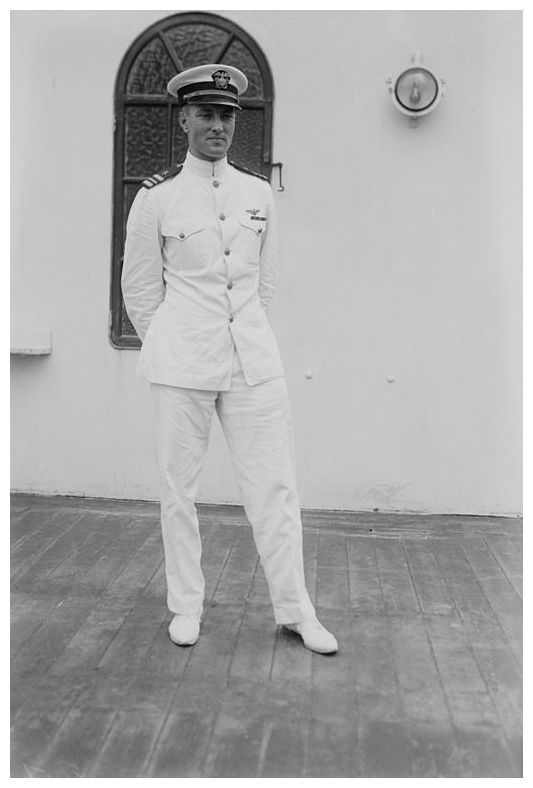
© WikiCommonsAn Ohio State University professor's analysis shows that Richard Byrd most likely did not actually fly over the North Pole when he claimed to have been the first to do it in 1926.
New computer simulations from a researcher at Ohio State University cast even more doubt on acclaimed explorer Richard E. Byrd and whether the first-ever flight to the North Pole was truly a success.

According to Byrd, on May 9, 1926 he and co-pilot Floyd Bennett beat the competition and became the first men to fly over the North Pole, reportedly making the trip much faster than anticipated.

Even at the time his trip was met with skepticism, but Byrd stuck to his story and left a legacy as first person to fly over the North Pole. He was ultimately awarded the Medal of Honor for the flight and went on to explore the Antarctic. Skeptics went on to question Byrd's own notes and airspeed calculations long after he died.

"The flight was incredibly controversial," Gerald Newsom, emeritus professor of astronomy at Ohio State said in a statement. "The people defending Byrd were vehement that he was a hero, and the people attacking him said he was one of the world's greatest frauds. The emotion! It was incredibly vitriolic."

Now, Newsom reports that his supercomputer simulations of atmospheric conditions on the day of the flight and analysis of Byrd's navigation techniques show that Byrd came close - that he was geographically near the North Pole - but likely didn't make it to the pinpoint North Pole.

"I worked out that if Byrd did make it, he must have had very unusual wind conditions. But it's clear that he really gave it a valiant try, and he deserves a lot of respect," Newsom said.

"This type of analysis by itself will not resolve any controversy over whether Byrd reached the pole. But it does indicate that he was considerably more likely to have ended up short of his goal than to have exceeded it."

Newsom's study appears in a recent issue of the journal Polar Record.

Info

CT reveals Ötzi's poor oral health

Otzi's Teeth_1
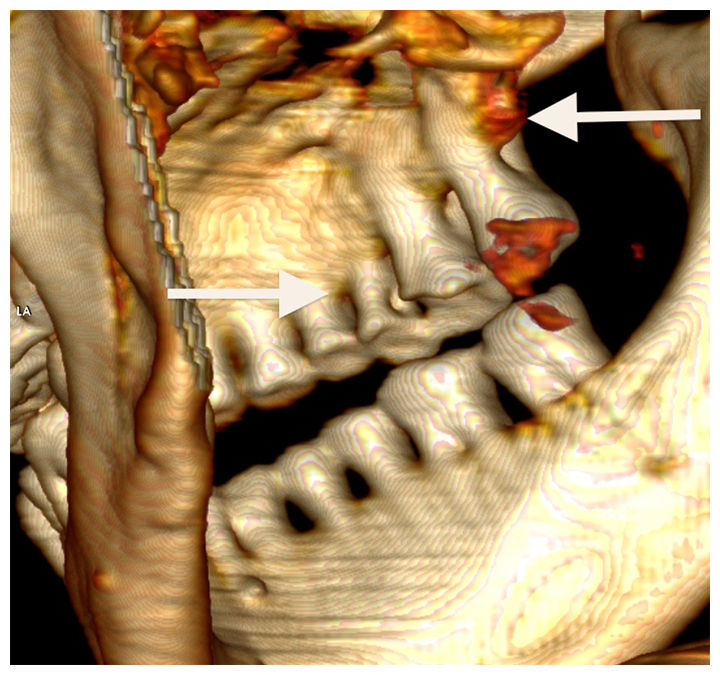
© Centre for Evolutionary Medicine, University of ZurichView of the right side of the rows of teeth (3D reconstruction). Arrow pointing right: Deep carious lesions. Arrow pointing left: Severe bone loss around the molars.
A team of international researchers has found evidence of periodontitis, tooth decay, and accident-related dental damage in a mummy from 3,300 BC known as Ötzi.

Their findings provide clues about the dietary patterns of the Neolithic iceman and on the evolution of medically significant oral pathologies (European Journal of Oral Sciences, April 9, 2013).

The Neolithic mummy Ötzi, which was discovered 20 years ago, displays an astoundingly large number of oral diseases and dentition problems that are still widespread today, the researchers noted.

He suffered from heavy dental abrasions, had several carious lesions -- some severe -- and had mechanical trauma to one of his front teeth, likely due to an accident, according to lead author Frank Rühli, MD, PhD, from the Centre for Evolutionary Medicine at the University of Zurich.

Co-author Roger Seiler, DMD, examined Ötzi's teeth using computed tomography and concluded that the loss of the periodontium has always been a very common disease, as the discovery of Stone Age skulls and the examination of Egyptian mummies has previously shown.