Science & TechnologyS


Comet

New Comet: C/2013 G1 (KOWALSKI)

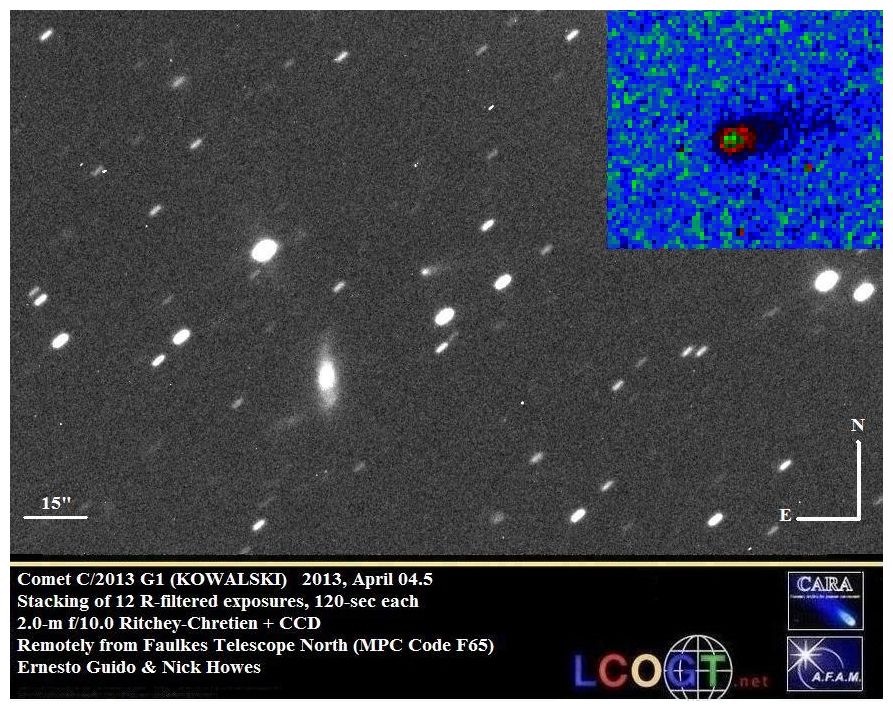
Cbet nr. 3454, issued on 2013, April 04, announces the discovery of a new comet (discovery magnitude ~18.5) by R. A. Kowalski on CCD images obtained with the Mount Lemmon 1.5-m reflector on April 02.4. The new comet has been designated C/2013 G1 (KOWALSKI).

We performed follow-up measurements of this object, while it was still on the neocp. Stacking of 12 R-filtered exposures, 120-sec each, obtained remotely from Haleakala-Faulkes Telescope North on 2013, April 4.5, through a 2.0-m f/10.0 Ritchey-Chretien + CCD, shows that this object is a comet with a tail nearly 12" long in PA 285 and a coma about 5" in diameter.

Below you can see our image.
C/2013 G1
© Remanzacco Observatory
M.P.E.C. 2013-G13 assigns the following preliminary parabolic orbital elements to comet C/2013 G1: T 2014 Jan. 19.01; e= 1.0; Peri. = 86.85; q = 2.18; Incl.= 6.22

Info

Computers can 'see' people's dreams

Dreams
© DreamstimeDreams continue to perplex scientists, and sleepers alike, but recent research is shedding light on why we dream and even ways to control dreams.
A computer can predict what you're dreaming about based on brain wave activity, new research suggests.

By measuring people's brain activity during waking moments, researchers were able to pick out the signatures of specific dream imagery - such as keys or a bed - while the dreamer was asleep.

"We know almost nothing about the function of dreaming," said study co-author Masako Tamaki, a neuroscientist at Brown University. "Using this method, we might be able to know more about the function of dreaming."

The findings, which were published today (April 4) in the journal Science, could also help scientists understand what goes on in the brain when people have nightmares.

Sleepy mystery

Exactly why people dream is a mystery. Whereas the founder of psychoanalysis Sigmund Freud may have thought dreams were about wish fulfillment, others believe dreams are irrelevant byproducts of the sleep cycle. And yet another theory holds that dreams allow the mind to continue working on puzzles faced during the day. In general, most people believe their dreams have meaning.

Scientists have dreamt of being able to look inside the brain's sleepy wonderland. Past studies had suggested that people's brain activity can be decoded to reveal what they are thinking about: For instance, scientists have decoded movie clips from brain waves.

Galaxy

Black hole awakens to swallow planet-sized object

Image
© AFP Photo
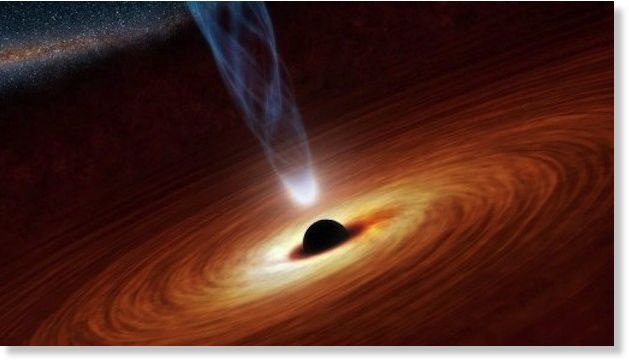
Astrophysicists have witnessed the rare event of a black hole awakening from its slumber to snack on a planet-sized object in a galaxy 47 million light years away, the University of Geneva said Tuesday.

The observation made using the European Space Agency's INTEGRAL satellite project, revealed a black hole that had been slumbering for years chomping on a giant, low-mass object that had come too close.

Scientists at the Swiss university analyse the data collected by INTEGRAL, launched in 2002 to study gamma rays and throw light on events far from Earth's galaxy.

They spotted a light flare coming from a black hole in the centre of the NGC 4845 galaxy, which has a mass more than 300,000 greater than the Sun and had been dormant for more than 30 years, the university said in a statement.

Matter-sucking black holes normally lurk dormant and undetected at the centre of galaxies, but can occasionally be tracked by the scraps left over from their stellar fests.

Fish

Eating seafood linked to longer lifespan: study

Image
© AFP Photo
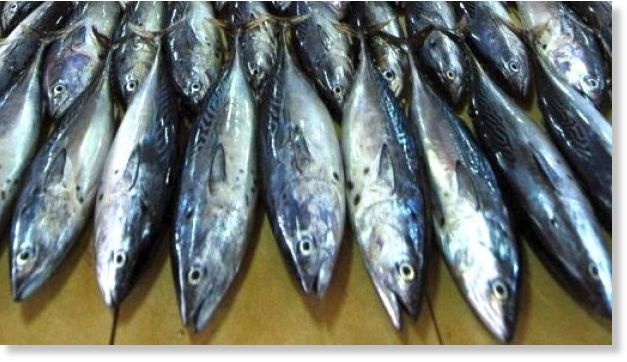
People age 65 and older who eat fish may live an average of two years longer than people who do not consume the omega-3 fatty acids found mainly in seafood, a US study suggested on Monday.

People with higher levels of omega-3 fatty acids also had an overall risk of dying that was 27 percent lower, and a risk of dying from heart disease that was 35 percent lower than counterparts who had lower blood levels, said the study.

The research was led by scientists at the Harvard School of Public Health and was published in the Annals of Internal Medicine.

While other studies have demonstrated a link between omega-3 fatty acids and lower risk of heart disease, this research examined records of older people to determine any link between fish-eating and death risk.

Researchers scanned 16 years of data on about 2,700 US adults aged 65 or older. Those considered for the study were not taking fish oil supplements, to eliminate any confusion over the use of supplements or dietary differences.

Info

Crucial step in human DNA replication observed using fluorescent tags

DNA Replication
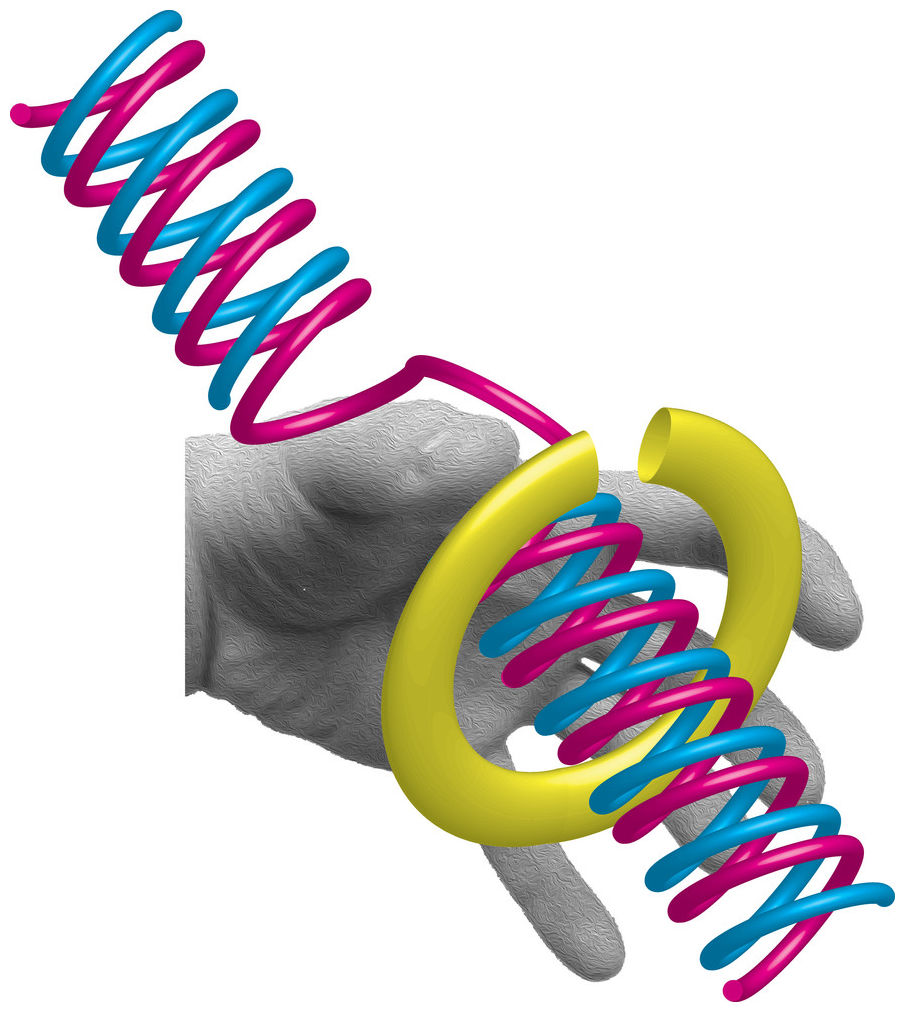
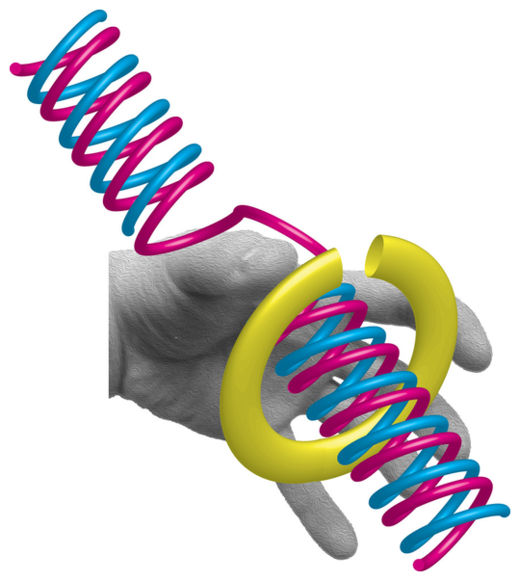
© Benkovic lab, Penn State UniversityStephen J. Benkovic, Mark Hedglin, and other members of Professor Benkovic's research team have studied the importance of "clamp loader" enzymes and their activities during DNA replication. In this image, the clamp loader is represented, for illustrative purposes, by a hand, which is loading the sliding clamp ring onto DNA.
University Park, Pennsylvania -- For the first time, an elusive step in the process of human DNA replication has been demystified by scientists at Penn State. According to senior author Stephen J. Benkovic, an Evan Pugh Professor of Chemistry and Holder of the Eberly Family Chair in Chemistry at Penn State, the scientists "discovered how a key step in human DNA replication is performed." The results of the research was published today (April 2) in the journal eLife.

Part of the DNA replication process -- in humans and in other life forms -- involves loading of molecular structures called sliding clamps onto DNA. This crucial step in DNA replication had remained somewhat mysterious and had not been well studied in human DNA replication. Mark Hedglin, a post-doctoral researcher in Penn State's Department of Chemistry and a member of Benkovic's team, explained that the sliding clamp is a ring-shaped protein that acts to encircle the DNA strand, latching around it like a watch band.

The sliding clamp then serves to anchor special enzymes called polymerases to the DNA, ensuring efficient copying of the genetic material. "Without a sliding clamp, polymerases can copy very few bases -- the molecular 'letters' that make up the code of DNA -- at a time. But the clamp helps the polymerase to stay in place, allowing it to copy thousands of bases before being removed from the strand of DNA," Hedglin said.

Hedglin explained that, due to the closed circular structure of sliding clamps, another necessary step in DNA replication is the presence of a "clamp loader," which acts to latch and unlatch the sliding clamps at key stages during the process. "The big unknown has always been how the sliding clamp and the clamp loader interact and the timing of latching and unlatching of the clamp from the DNA," said Hedglin.

"We know that polymerases and clamp loaders can't bind the sliding clamp at the same time, so the hypothesis was that clamp loaders latched sliding clamps onto DNA, then left for some time during DNA replication, returning only to unlatch the clamps after the polymerase left so they could be recycled for further use."

Moon

NASA discovers Moon and large asteroids have a lot in common

Image
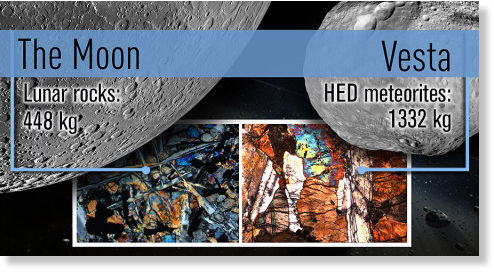
© Image credit: NASA/GSFC/ASU/JPL-Caltech/UCLA/MPS/DLR/IDAThe left-hand mosaic of the far side of the moon is based on data from NASA’s Lunar Reconnaissance Orbiter. On the right is an image of the giant asteroid Vesta from data obtained by NASA’s Dawn spacecraft. The insets show thin sections of the lunar sample 10069-13 and eucrite NWA1978.
NASA and international researchers have discovered that Earth's moon has more in common than previously thought with large asteroids roaming our solar system.

Scientists from NASA's Lunar Science Institute (NLSI), Moffett Field, CA, discovered that the same population of high-speed projectiles that impacted our lunar neighbor four billion years ago, also hit the asteroid Vesta and perhaps other large asteroids.

The research unveils an unexpected link between Vesta and the moon, and provides new means for studying the early bombardment history of terrestrial planets. The findings are published in the March issue of Nature Geoscience.

"It's always intriguing when interdisciplinary research changes the way we understand the history of our solar system," said Yvonne Pendleton, NLSI director. "Although the moon is located far from Vesta, which is in the main asteroid belt between the orbits of Mars and Jupiter, they seem to share some of the same bombardment history."

The findings support the theory that the repositioning of gas giant planets like Jupiter and Saturn from their original orbits to their current location destabilized portions of the asteroid belt and triggered a solar system-wide bombardment of asteroids billions of years ago called the lunar cataclysm.

Question

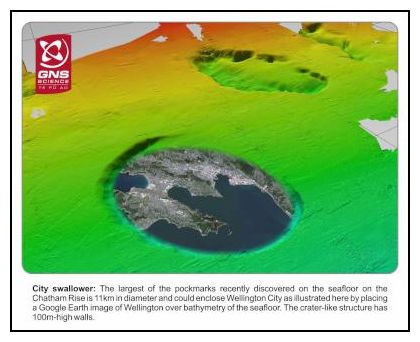
Scientists find mysterious giant pockmarks on Chatham Rise

Giant Pockmarks
© GNS Science
New Zealand, German and American scientists have found what may be the world's biggest pockmarks on the seafloor of the Chatham Rise, about 500km east of Christchurch.

Pockmarks are crater-like structures on the seafloor caused by fluids and gases erupting through sediments into the ocean.

Three giant pockmarks, the largest being 11km by 6km in diameter and 100m deep, are possibly twice the size of the largest pockmarks recorded in scientific literature. Scientists believe they are the ancient remnants of vigorous degassing from under the seafloor into the ocean.

The structures are at water depths of about 1000m and there is currently no sign of gas being emitted from them.

They are part of a much larger field of many thousands of smaller pockmarks that extends eastward along the Chatham Rise for several hundred kilometres from Banks Peninsula. This vast field covers an estimated 20,000km of seafloor.

An international group of scientists investigated the larger seafloor structures on the German research ship Sonne recently. Their aim was to determine the geological origin of the structures, which were first noted in 2007.

Comment: Could this pockmarks possibly be caused by impact events?


Comet 2

New Comet: C/2013 F3 (McNAUGHT)

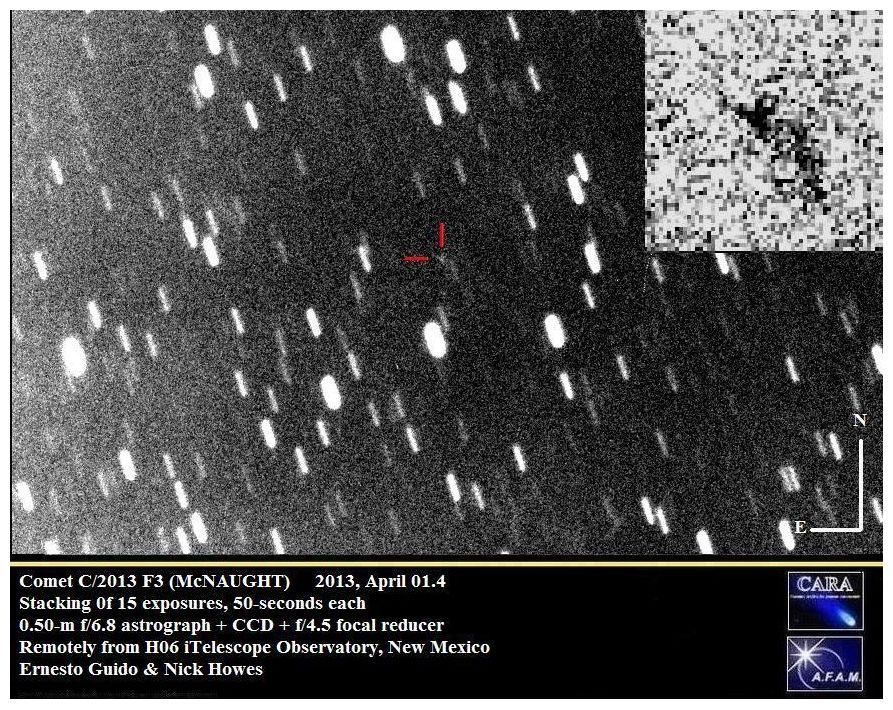
Cbet nr. 3450, issued on 2013, April 01, announces the discovery of a new comet (discovery magnitude ~17) by R. H. McNaught on CCD images obtained with the 0.5-m Uppsala Schmidt telescope at Siding Spring on March 29.7. The new comet has been designated C/2013 F3 (McNAUGHT).

We performed follow-up measurements of this object remotely, from the iTelescope network (New Mexico - MPC code H06) on 2013, April 01.4, through a 0.50-m f/6.8 astrograph + CCD + f/4.5 focal reducer.

Below you can see our image, stack of 15x50-second exposures.
C/2013 F3
© Remanzacco Observatory
M.P.E.C. 2013-G02 assigns the following preliminary parabolic orbital elements to comet C/2013 F3: T 2013 May 21.47; e= 1.0; Peri. = 17.09; q = 2.27; Incl.= 85.02.

Beaker

Pesticide makes bees forget the scent for food, new study finds

Bees and pesticides
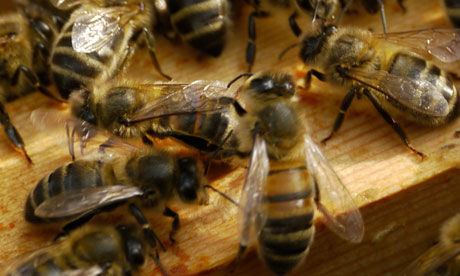
© C.N.Connolly/PABees exposed to widely-used pesticides were slow to make or forgot completely the link between floral scents and food.

Neonicotinoids block part of brain bees use for learning, leaving them unable to make link between floral scents and nectar

Widely used pesticides have been found in new research to block a part of the brain that bees use for learning, rendering some of them unable to perform the essential task of associating scents with food. Bees exposed to two kinds of pesticide were slower to learn or completely forgot links between floral scents and nectar.

These effects could make it harder for bees to forage among flowers for food, thereby threatening their survival and reducing the pollination of crops and wild plants.

The findings add to existing research that neonicotinoid pesticides are contributing to the decline in bee populations.

It has also been revealed that a separate government field study on the impact of the pesticides on bees was seriously compromised by contamination because the chemicals are so widespread in the environment.

Comet

Best of the Web: This is not an April Fools joke: Four asteroids flash past Earth in one day

Image
Earth is experiencing an unusual cosmic bombardment as four large asteroids pass it in just one day. Fortunately astronomers don't seem to joking when saying none are expected to pose danger.


Comment: Uhm, isn't that claim kind of meaningless after an asteroid/comet fragment totally blindsided everyone in Russia on February 15th?


The largest is 4034 Vishnu, which is 800 meters across - the length of the Burj Khalifa in Dubai - though much greater in mass. In comparison, the Tunguska meteorite that devastated hundreds of miles of Siberian wilderness when it landed in 1908 was estimated to be no bigger than 100 meters. The asteroid that may have led to the extinction of dinosaurs 65 million years ago may have been up to 10 kilometers across.

But 4034 Vishnu - which was discovered in 1986 - will pass nearly 23 million kilometers from the Earth's surface. The closest of the four, EN 89, will be just over 5 million kilometers away from the planet. The asteroid was only discovered a fortnight ago.

Comment: Wow, so now they're putting a price on civilization-destroying space rocks. What price human extinction?