Science & TechnologyS


Info

Migrating planets caused meteor storm

Planetary Migration
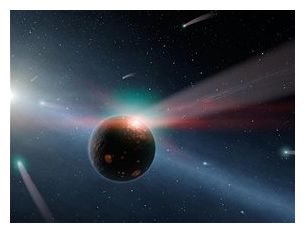
© NASANew research supports the theory of planetary migration sparking a massive meteor storm that rocked the inner solar system 3.9 billion years ago.
Migration of giant gas planets such as Jupiter created the biggest meteor storm in our solar system's history, according to a new study.

The research in the journal Nature Geoscience paints the clearest picture yet of the causes of the Late Heavy Bombardment, a cosmic tempest 3.9 billion years ago, which shaped the solar system we have today.

Scientists have long hypothesised the bombardment was caused by planetary migration, as Jupiter and Saturn moved closer in towards the Sun, while Neptune and Uranus moved further out from where they formed.

The gravitational effects caused by these migrations flung large numbers of meteors towards the inner solar system, where they collided with the terrestrial planets, including the Earth and Moon.

They are also credited with sending the asteroids and comets into the orbits they have today.

The new paper by researchers including lead author Dr Simone Marchi from the Southwest Research Institute, in Boulder Colorado, supports this hypothesis based on a new study of Apollo 16 Moon rocks, and two major types of meteoroids.
Info

Surprises in Venus' south pole vortex

Venus Vortex
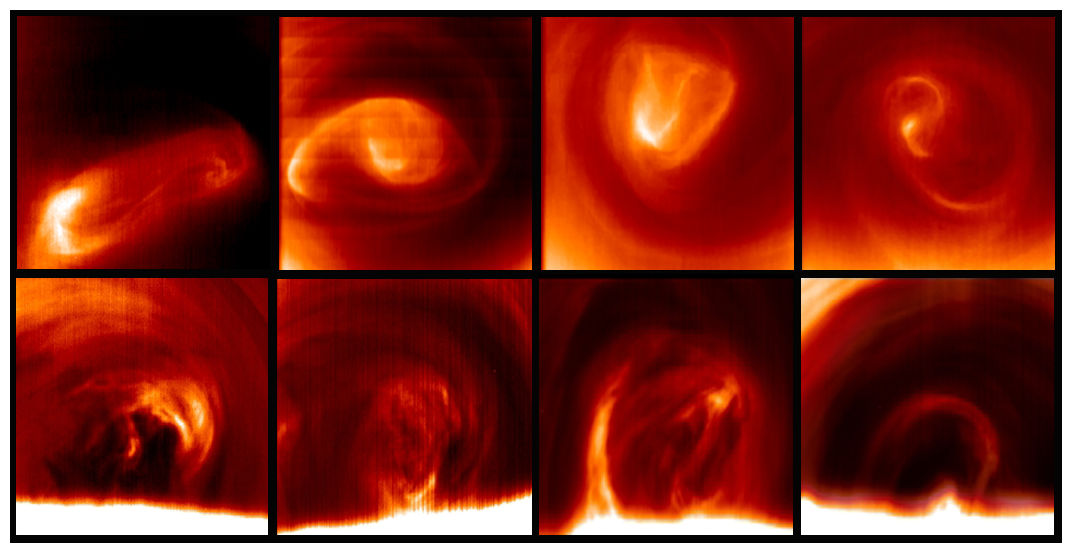
© Grupo de Ciencias Planetarias, UPV/EHU.The south polar vortex of Venus changes shape every day. The images at the top of the figure show the upper cloud of Venus, 65 km above the planet’s surface. The images at the bottom depict the south polar vortex of Venus 20 km further down showing the vertical extension and variability of the vortex.
The planet next door, Venus, has two vortices (whirlwinds) above its south pole, and two more above its north pole. Astronomers in the Planetary Science Group of the University of the Basque Country (UPV/EHU) have been closely monitoring the complicated movement of the south pole vortices of slow-rotating Venus.

The south pole vortex is a huge double whirlwind the size of Europe. Double? Yes. In the south polar vortex of Venus, there are two main cloud layers separated by a distance of about 20 kilometers (about 12 miles). These scientists announced today (March 24, 2013) that they've confirmed the "erratic" movement of air in the double vortex at Venus' south pole. And, surprisingly they said, each part of the vortex forms a separate "tube," which "goes its own way." Itziar Garate-Lopez, head researcher, said in a press release:
We knew it was a long-term vortex; we also knew that it changes shape every day. But we thought that the centers of the vortex at different altitudes formed only a single tube, but that is not so. Each center goes its own way, yet the global structure of the atmospheric vortex does not disintegrate.
These scientists published their results online in the journal Nature Geoscience.

Blue Planet

'Lost' tectonic plate found beneath California

Found tectonic plate California
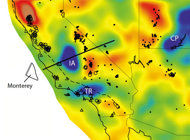
© Forsyth Lab/Brown UniversityThe Isabella anomaly in California is in line with known remnants of the long-gone Farallon plate
A tectonic plate that disappeared under North America millions of years ago still peeks out in central California and Mexico, new research finds.

The Farallon oceanic plate was once nestled between the Pacific and North American plates, which were converging around 200 million years ago at what would become the San Andreas fault along the Pacific coast. This slow geological movement forced the Farallon plate under North America, a process called subduction.

Much of the Farallon plate got pushed down into the mantle, the gooey molten layer below the Earth's crust. Off the coast, parts of the plate fragmented, leaving some remnants at the surface, stuck to the Pacific plate.

Now, new research published Monday (March 18) in the journal Proceedings of the National Academy of Sciences, finds that these pieces of Farallon plate are attached to much larger chunks at the surface. In fact, part of the Baja region of Mexico and part of central California near the Sierra Nevada mountains sit upon slabs of Farallon plate.

Info

What is nothing? Physicists debate

Nothing
© Clara Moskowitz/LiveScienceWhat is nothing? Empty space? The absence of something? Scientists are hard-pressed to define the concept.
New York - It was all much ado about nothing as physicists and thinkers came together to debate the concept of nothing Wednesday (March 20) here at the American Museum of Natural History.

The simple idea of nothing, a concept that even toddlers can understand, proved surprisingly difficult for the scientists to pin down, with some of them questioning whether such a thing as nothing exists at all.

The first, most basic idea of nothing - empty space with nothing in it - was quickly agreed not to benothing. In our universe, even a dark, empty void of space, absent of all particles, is still something.

"It has a topology, it has a shape, it's a physical object," philosopher Jim Holt said during the museum's annual Isaac Asimov Memorial Debate, which this year was focused on the topic of "The Existence of Nothing."

As moderator Neil deGrasse Tyson, director of the museum's Hayden Planetarium, said, "If laws of physics still apply, the laws of physics are not nothing."

Sherlock

Study: Ancient megavolcanoes killed half the world's species

Image
© AFP Photo
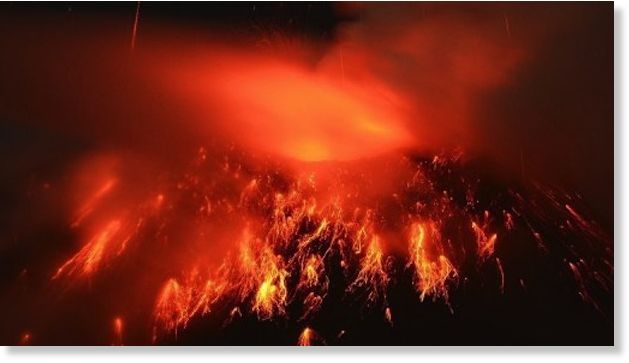
New rock dating techniques have helped narrow the timeframe of a chain of massive volcanic eruptions that wiped out half the world's species 200 million years ago, a study said Thursday.

The result is the most precise date yet - 201,564,000 years ago - for the event known as the End-Triassic Extinction, or the fourth mass extinction, said the study in the journal Science.

The eruptions "had to be a hell of an event," said co-author Dennis Kent, a paleomagnetism expert at Columbia University's Lamont-Doherty Earth Observatory.

They may offer a historic parallel to the human-caused climate change happening today, by showing how sharp increases in carbon dioxide can outpace vulnerable species' ability to adapt, researchers said.

The new analysis winnows the estimated date from its previous range of up to three million years to 20,000 years at most, a blink of an eye in geological terms.

Eggs Fried

Monster double eggs laid by 'miracle chicken' in China

A Chinese chicken lays an egg that weighs half a pound, has two yolks inside and contains another fully-formed egg. The hen has been laying these extraordinary items for three weeks, according to its owner. She also says she thought the bird was dying as it struggled to lay the first mammoth egg.

Comet

Large asteroid colliding with Earth 'probable this century'

Physicist and former Nasa astronaut, Dr. Ed Lu, discusses the possible threat that near-Earth asteroids pose to our planet. Lu claims there is a 30% chance of a five mega tonne impact happening this century. He says technologies exist that may prevent impacts to Earth, but without years of advance notice there would be 'no option'.

Comet 2

Dinosaur-killing space rock 'was a comet'

Image
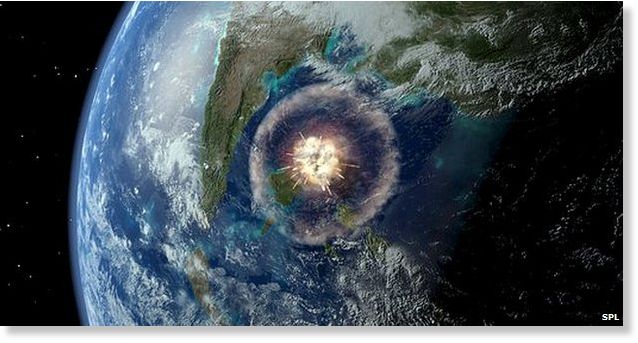
The space rock that hit Earth 65 million years ago and is widely implicated in the end of the dinosaurs was likely a speeding comet. That is the conclusion of research which suggests the 180km-wide Chicxulub crater in Mexico was carved out by a smaller object than previously thought. Many scientists consider a large and relatively slow moving asteroid to have been the likely culprit.


Comment: The latest research indicates that it's not the multi-million-year larger space rocks that we need to be concerned about, but the swarms of smaller objects that wreak havoc on human civilizations far more often than people realise... Celestial Intentions: Comets and the Horns of Moses


Details were outlined at the 44th Lunar and Planetary Science Conference. But other researchers were more cautious about the results. "The overall aim of our project is to better characterise the impactor that produced the crater in the Yucatan peninsula [in Mexico]," Jason Moore, from Dartmouth College in New Hampshire, told BBC News.

The space rock gave rise to a global layer of sediments enriched in the chemical element iridium, in concentrations much higher than naturally occurs; it must have come from outer space.

Info

Rare blood mystery solved: Why Vel-negative type rejects transfusions

Blood Transfusion
© Medical Daily
In a breakthrough for personalized medicine, researchers have identified the genetic and molecular basis of the rare Vel-negative blood type, which carries a risk of severe blood transfusion rejection.

Since the 1950's, scientists have been baffled by the elusive blood type. Vel-negative blood contains an antibody that makes blood transfusions dangerous, but the blood type is difficult to identify and supply. The antibody can cause violent rejection of transfused blood, and successive blood transfusions can lead to kidney failure or death for Vel-negative patients.

Doctors have unsuccessfully hunted for the cause of this blood type for decades, but a new study may have finally solved the mystery of how to detect it.

Researchers led by Bryan Ballif of the University of Vermont (UVM) and the Lionel Arnaud of the French National Institute of Blood Transfusion have discovered a small protein molecule called SMIM1 that is responsible for the debilitating effects of the Vel-negative blood type, and identified two rapid DNA tests for identifying Vel-negative blood in patients.

Their results were published online in the journal EMBO Molecular Medicine on March 18.

Cell Phone

Scientists claim to have built hologram-projecting cell phone

Image
© AFP Photo
Fancy watching a movie on your mobile phone, where figures leap out from the screen in 3D, rather as Princess Leia did in that scene from "Star Wars"?

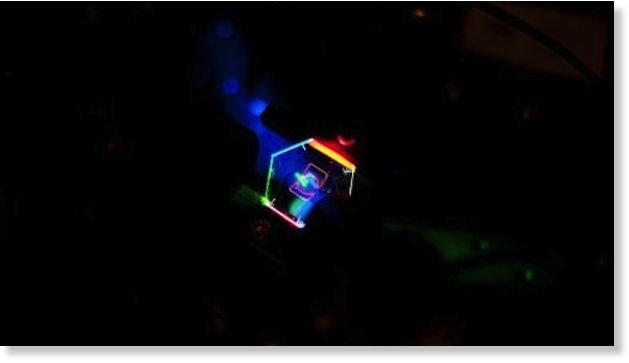
That's the claim made by US researchers, who on Wednesday reported they had made a display which gives a three-dimensional image that can be viewed without special glasses and is intended for cellphones, tablets and watches.

Unlike the holographic projection used in George Lucas' movie fantasy, their small prototype display is flat and backlit.

It uses a technology called diffractive optics to give 3D images that can be viewed from multiple angles, even if the device is tilted.

"Unlike a lot of technology out there that only does so-called horizontal parallax, which means that you only see 3D when you move your head left and right, we actually are talking about a technology that gives 3D for full parallax," said David Fattal, who led a team at Hewlett-Packard Laboratories in Palo Alto, California.

"For example, if you were to display a 3D image of Planet Earth with the North Pole facing out from the screen, by turning your head around the display, you would actually be able to have a view of any country on the globe, you would be able to see all the way around," Fattal told journalists in a telebriefing.