Science & TechnologyS


Magnify

Scientists excited by discovery of 'Underground Galapagos'

Image
© Shutterstock
Diverse underground ecosystems buried deep beneath the Earth's crust may offer clues to the origins of life on Earth, several recent studies have revealed.

Whether it is tiny worms found wriggling in the depths of a South African mine or micro-organisms discovered six kilometers (3.7 miles) under the surface in China, subterranean life forms are found everywhere.

"We are making incredible discoveries about the nature and distribution of deep microbial life," said Robert Hazen, executive director of the Carnegie Institution's Deep Carbon Observatory geophysical laboratory.

"If you are near the surface from a few centimeters to many kilometers, there is microbial life anywhere you go.

"You drill deep holes, you bring up the core and there are microbes living in the rocks."

Comet 2

Is Comet Pan-Starrs fragmenting?

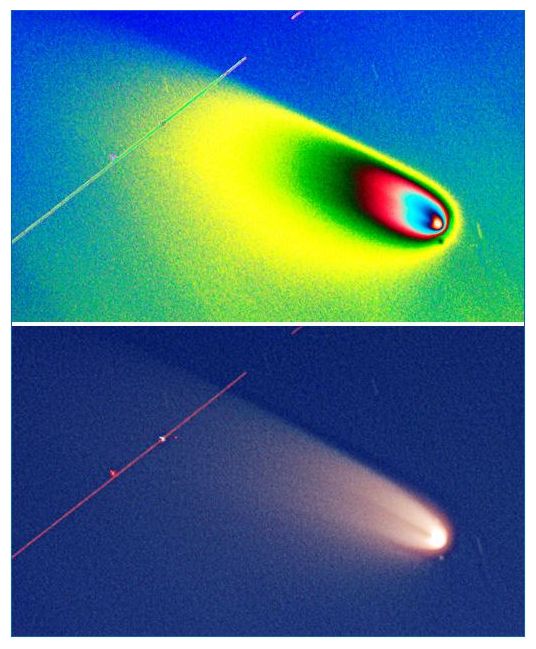
Veteran astrophotographer Peter Rosen has been monitoring Comet Pan-STARRS, and his latest images obtained on March 15th seem to show a fragment emerging from the nucleus. It is the speck just below and to the right of the comet's head:
Comet Pan-Starrs
© Peter Rosen
"It is visible also in two or three other image stacks," says Rosen. He notes how the stars in the image are trailed, but the apparent fragment is not. "It seems to follow the comet, not the stars. A plane passed through the field of view during the exposure, making a red streak through the comet's tail."

Comet 2

Electric Universe: Comet PanStarrs provides more evidence for cometary induction of CMEs


My thanks to Michele Casati for drawing my attention to the video above from NASA showing a double coronal mass ejection as comet Panstarrs passes overhead. This is more evidence for a link between sungrazing comets and CME's last discussed here in late 2011.

It also ties in with observations and successful predictions made by NASA scientist Ching Cheh Hung in his 2007 paper showing a correlation between the motions of the inner planets and overall levels of solar activity.

Question

Could there be 100 billion potentially habitable planets in the galaxy?

Unsen Red Dwarfs
© D. Aguilar & C. Pulliam (CfA)A visualization of the “unseen” red dwarfs in the night sky. See Animated Image Here
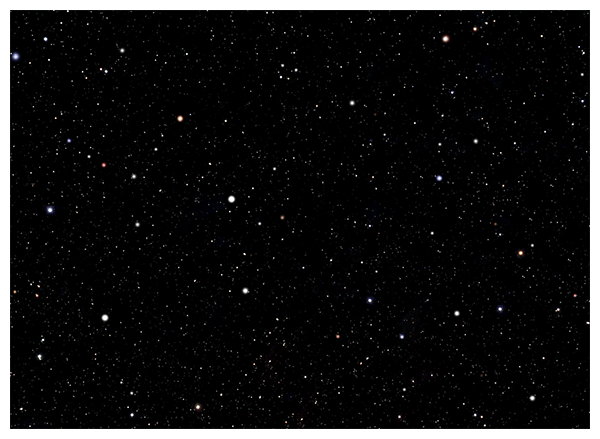
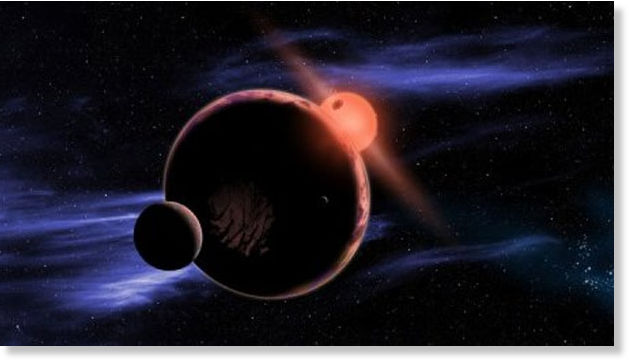
As we've reported recently, the likelihood of findings habitable Earth-sized worlds just seems to keep getting better and better. But now the latest calculations from a new paper out this week are almost mind-bending. Using what the authors call a "very careful extrapolation" of the rate of small planets observed around M dwarf stars by the Kepler spacecraft, they estimate there could be upwards of 100 billion Earth-sized worlds in the habitable zones of M dwarf or red dwarf stars in our galaxy. And since the population of these stars themselves are estimated to be around 100 billion in the Milky Way, that's - on average - an Earth-sized world for every red dwarf star in our galaxy.

Whoa.

And since our solar system is surrounded by red dwarfs - very cool, very dim stars not visible to the naked eye (less than a thousandth the brightness of the Sun) - these worlds could be close by, perhaps as close as 7 light-years away.

With the help of astronomer Darin Ragozzine, a postdoctoral associate at the University of Florida who works with the Kepler mission (see our Hangout interview with him last year), let's take a look back at the recent findings that brought about this latest stunning projection.

Einstein

Scientists predict thousands will die from earthquake expected anytime on U.S. West Coast

Image
© Reuters / Miyako City Office
Researchers say a massive earthquake and tsunami could soon strike the Northwest US coast, killing more than 10,000 people, flooding entire towns, and causing economic damages totaling $32 billion.

An alarming report published by the Oregon Seismic Safety Policy Advisory Commission warns about the dire effects of the quake and claims that it is imminent and could strike anytime. The report, which was compiled by a group of more than 150 volunteer experts, was requested by the Oregon legislature in order to adequately prepare for the looming disaster.

The last high magnitude earthquake in the region occurred in the year 1700 in the Cascadia Subduction Zone. The quake had a magnitude between 8.7 and 9.2, and geologists in 2010 predicted that there is a 37 percent change of another such quake occurring within 50 years. The new report claims that there is a 100 percent chance of a monster earthquake occurring in the region - but scientists don't know when.

"This earthquake will hit us again," Kent Yu, an engineer and chairman of the commission, told lawmakers. "It's just a matter of how soon."

Comet 2

New Comet: C/2013 E2 (IWAMOTO)

Cbet nr. 3439, issued on 2013, March 14, announces the discovery of a new comet (discovery magnitude ~14) by Masayuki Iwamoto (Awa, Tokushima-ken, Japan) on three 60-s CCD frames taken on March 10.8 & 11.8 with a Pentax 100-mm f/4 lens and a Canon EOS 5D digital camera. The new comet has been designated C/2013 E2 (IWAMOTO).

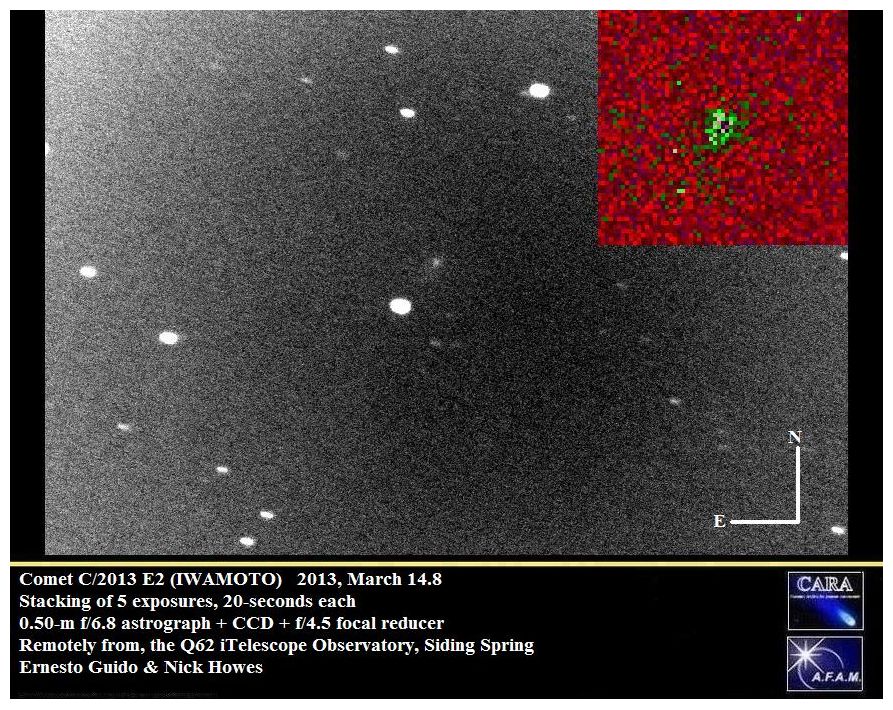
We performed follow-up measurements of this object remotely, from the iTelescope network (Siding Spring - MPC code Q62) on 2013, March. 14.8, through a 0.50-m f/6.8 astrograph + CCD + f/4.5 focal reducer.

Below you can see our image, stack of 5x20-second exposures obtained at the twilight (few minutes before the sunrise) with the Sun only 10 degree below the horizon and the comet +27 degree above the horizon.
C/2013 E2
© Remanzacco Observatory
Here you can see a short animation (composed of 5x20-seconds exposures and spanning 5 minutes) showing the movement of the comet.

M.P.E.C. 2013-E67 assigns the following preliminary parabolic orbital elements to comet C/2013 E2: T 2013 Mar. 5.5; e= 1.0; Peri. = 92.93; q = 1.39; Incl.= 21.90.

Sherlock

Fossils show primitive birds had four wings: study

Image
© AFP Photo
Some primitive birds boasted four wings, before evolution led them to ditch their hind feathers in favor of webbed or scaly feet, scientists in China said on Thursday.

Previous research had uncovered the existence of bird-like dinosaurs with hind limb feathers, but evidence has remained slim in birds, which are widely believed to have evolved from dinosaurs.

And even though the latest discovery documents new evidence of feathered feet in early birds, the question remains whether the plumes were actually a help or a hindrance in flight.

The Chinese scientists behind the study, published in the US journal Science, said the 11 newly described fossil specimens offer evidence the leg feathers were used as a part of a four-winged system for flying.

Researchers found the new trove of data by poring over fossils at China's Shandong Tianyu Museum of Nature, said lead researcher Xing Xu, a well-known dinosaur researcher.

Cow Skull

Best of the Web: Original 'Fall of Eden'? Agriculture is a "profoundly unnatural activity" and the "worst mistake in human history"

Image
© GettyCereal killer: The introduction of agriculture was followed by malnutrition and disease.
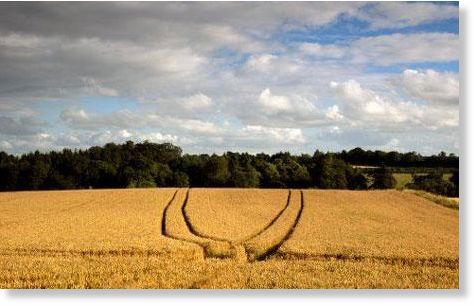
Last week, Sir Paul McCartney urged us, amid a blaze of publicity, to curb our carnivorous lifestyles and go meat-free on Mondays, in order to reduce the damage that modern agriculture does to the planet. But for all the recent talk about the pros and cons of farming, and how the methods we use are affecting the environment, a more basic point has been missed that growing crops might be damaging not just to the environment but to the development of our own species. Could it be that rather than being a boon to mankind, the invention of agriculture was, in the words of one academic, "the worst mistake in human history"?

To understand why this extraordinary suggestion could make sense, you need to visit the Leverhulme Centre for Human Evolutionary Studies in Cambridge, a shrine to modern anthropology. Its gates resemble a Cubist take on the DNA double-helix and its clouded glass windows are etched with phrases from Darwin's Origin of Species.

According to Prof Diamond, agriculture evolved about 12,000 years ago, and since then humans have been malnourished and disease-ridden compared with their hunter-gatherer ancestors. Worse, because agriculture allows food to be stockpiled and enables some people to do things other than look for food, it led to the invention of more and better weapons, soldiers, warfare, class divisions between those who had access to food and those who did not, and inequality between the sexes. This idea has been picked up again in a recent book, An Edible History of Humanity, by Tom Standage, which argues that agriculture is a "profoundly unnatural activity".

Comment: Check out last week's SOTT Talk Radio show on this very topic:

Paleo food: Staying Healthy in a GMO world


Magnify

Gravitational lensing - and a new telescope - reveal ancient starbursts

Image
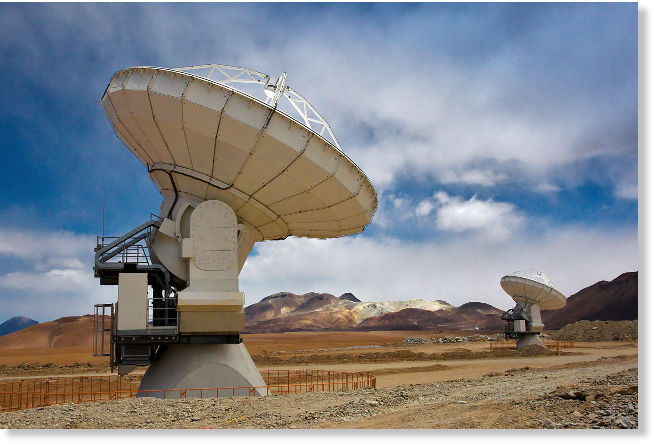
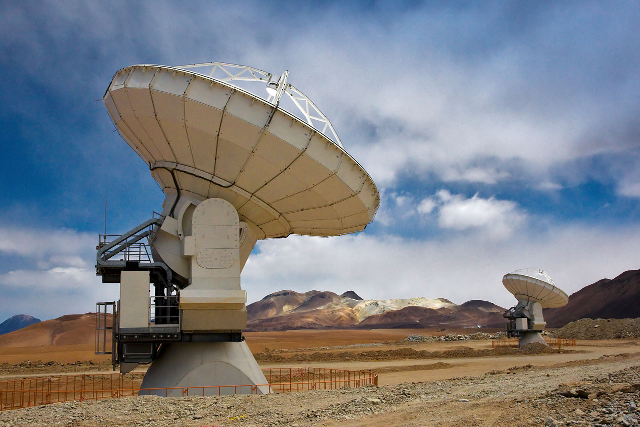
© Iztok Bončina/ALMA (ESO/NAOJ/NRAO)Two of the telescopes comprising ALMA (the Atacama Large Millimeter/submillimeter Array) in Chile.
The galaxies of the Universe's youth worked busily at making stars - that much is certain. However, what did those galaxies look like? How many were there, and how were they distributed in space and time?

Over such huge distances, those galaxies appear faint to us, so it's only within the last decade or so that astronomers have been able to start obtaining a reasonable view of them. The newly inaugurated ALMA (Atacama Large Millimeter/submillimeter Array) is one of the most promising telescope arrays in the world for making observations of the early Universe.

As reported in a new Nature paper, ALMA scientists measured the distances to 23 early star-forming galaxies in a patch of sky in the Southern Hemisphere. Out of that sample, at least 10 emitted their light when the Universe was less than 1.5 billion years old, placing them among some of the earliest galaxies observed.

Over the last ten years, astronomers discovered that the ratios of galaxy types shifted greatly over time. One particular type of galaxy - known as a dusty starburst galaxy - was nearly 1,000 times more common in the past than it is today. These galaxies, as their name suggests, form stars at a high rate and are swathed in the molecules collectively known as dust. (Lighter molecules, such as hydrogen H2, oxygen O2, or water H2O, behave as gases, whereas heavier molecules can stick together via static electricity, much as dust bunnies gather under your bed.)

Unshielded light from newborn stars is frequently dominated by blue and ultraviolet emission, but dust absorbs most of those wavelengths. This heats the dust, however, making it glow strongly in the infrared. The result: dusty starburst galaxies are intense infrared emitters.


Telescope

Astronomers find water vapor in atmosphere of distant planet

Image
© AFP Photo
But planet HR8799c unlikely to harbour life, as surface temperature exceeds 1,000C

Astronomers have detected water vapour and carbon monoxide in the atmosphere of a planet 130 light years away from Earth. However, the planet, known only as HR8799c, is devoid of methane, a gas that can indicate life, the researchers said.

Their analysis was performed using the most precise atmospheric measurements ever made of a planet outside our solar system. The levels of gases shed light on how the planet formed, from a cluster of ice crystals tens of millions of years ago.

Since the 1990s, astronomers have detected more than 1,000 planets beyond our solar system. HR8799c is colossal: about seven times the mass of Jupiter, the largest planet in our solar system. It circles a star with at least three other planets.

To take their readings, scientists peered at the planet through a telescope at the Keck Observatory in Hawaii, and used an instrument called Osiris to record incoming infrared light. At only 30m years old, the planet is young, extraordinarily hot, and easy to see in the infrared range.