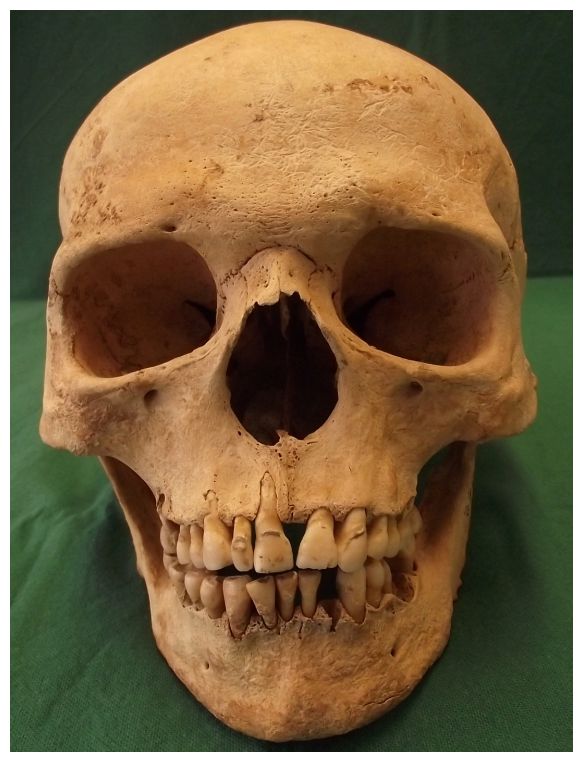
© University of WinchesterLeprosy causes deformities of the skull, seen in this medieval skull from Winchester, UK.
Researchers sequenced the surprisingly well-preserved genome of the leprosy bacterium in skeletons exhumed from medieval graves in Europe. It's the first time an ancient genome has been sequenced "from scratch" (without a reference genome), and reveals that medieval leprosy strains were nearly identical to modern leprosy strains.
Leprosy, also known as Hansen's disease, is due to a chronic infection of the bacterium Mycobacterium leprae. The disease causes skin lesions that can permanently damage the skin, nerves, eyes and limbs.
While it doesn't cause body parts to fall off, those infected with leprosy can become deformed as a result of secondary infections. The disease often strikes during the peak reproductive years, but it develops very slowly, and can take 25 to 30 years for symptoms to appear.
The disease was extremely common in Europe throughout the Middle Ages, especially in southern Scandinavia. "It was a major public health problem," said study co-author Jesper Boldsen, a biological anthropologist at the University of Southern Denmark.
But leprosy declined precipitously during the 16th century. To understand why, Boldsen's colleagues sequenced DNA from five medieval skeletons, and from biopsies of living people with leprosy.