
A new asteroid has been discovered by two students from a Delhi school and the find has been confirmed by the international space community, an NGO for popularising space said Saturday. Shourya Chambial and Gaurav Pati from Amity International school in south Delhi's Pushp Vihar made the discovery as part of the All India Asteroid Search Campaign.
"The discovery has been confirmed by the international scientific community and the asteroid has been provisionally named as 2013 LS28," said Science Popularization Association of Communicators and Educators (SPACE) who organized the campaign with International Astronomical Search Collaboration (IASC).
"We are waiting for it to be placed in the world's official minor body catalogue maintained by International Astronomical Union (Paris)," it added.
According to Space, which has been organizing such camps since 2012 and is providing training to students and amateur astronomers for asteroid hunting, the project was started with an aim to increase the love for science, astronomy and scientific research in Indian students.
"The project has provided opportunities to more than 500 students and amateurs in India to discover asteroids till now, 15 new asteroids discoveries have been discovered," said Space.
Sachin Bahmba, of Space said: "Indian students have beaten students all over the world in asteroid discoveries and India is now looked upon as a leader in bringing revolutionary changes in the field of astronomy and space science education and research."
SOTT
SIGNS
OF THE
TIMES
OF THE
TIMES
Welcome to Sott.net
The World for People who Think












Comment: In an ideal world, most of the above would sound all fine and dandy, but in realty research science today been mostly corrupted and is beholden to vast, vested commercial interests.
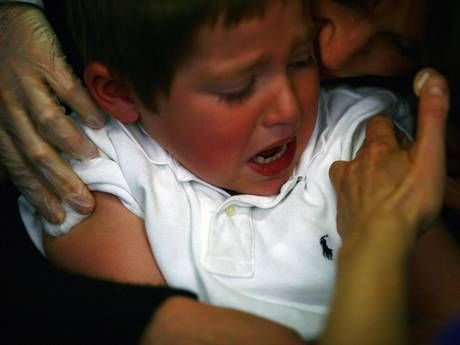
Turning reality on its head right from the outset ,this article mentions the now infamous Dr Andrew Wakefield affair, where he warned of the dangers of the MMR vaccine and the links to autism in the Lancet (which initially accepted his paper with no qualms). Due to commercial pressure, corrupted science then set out in an attempt to destroy him and his reputation rather than stand up for the truth and integrity.
Read about the despicable treatment he endured below -
http://www.sott.net/article/202336-Lancet-caves-in-retracts-study-tying-MMR-vaccine-to-Autism
http://www.sott.net/article/222197-Dr-Wakefield-demands-retraction-from-BMJ-after-documents-prove-innocence-from-allegations-of-vaccine-autism-data-fraud
http://www.sott.net/article/242656-British-Court-Throws-Out-Conviction-of-Autism-Vaccine-Doctor